
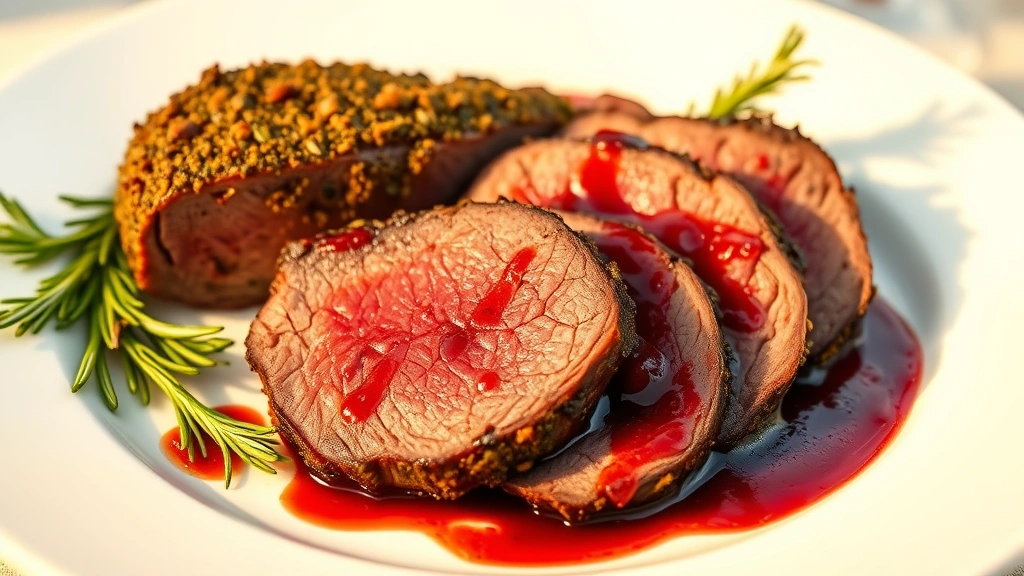
There’s something absolutely magical about a perfectly roasted boneless prime rib that graces your holiday table or special dinner gathering. This elegant cut of beef is truly the star of any occasion, and the wonderful news is that it’s surprisingly simple to prepare beautifully at home. A boneless prime rib roast is one of the most forgiving cuts to cook, making it perfect for both seasoned home cooks and those tackling their first impressive roast.
The key to achieving that restaurant-quality result lies in understanding a few fundamental techniques: proper seasoning, bringing your meat to room temperature, using a reliable meat thermometer, and allowing adequate resting time. When you follow these steps, you’ll end up with a roast that has a gorgeous caramelized crust on the outside and a perfectly pink, juicy interior that will have your guests asking for your secret.
I love serving this alongside pickled red onions for brightness, creamy mashed potatoes, and roasted vegetables. The beauty of prime rib is that it’s luxurious enough to stand on its own, but it also plays beautifully with classic accompaniments. What makes this recipe so special is that you’re not doing anything complicated—you’re just respecting the quality of the meat and letting it shine.
Prime rib has been a classic choice for special occasions for generations, and for good reason. The marbling throughout the meat ensures incredible flavor and tenderness, and the bones (if you keep them on, though this recipe uses boneless) add depth. Even without the bones, a boneless prime rib roast delivers that same luxurious eating experience. Whether you’re celebrating the holidays, hosting an anniversary dinner, or simply treating yourself to something spectacular, this recipe will deliver impressive results every single time.
One of the things I appreciate most about this recipe is its flexibility. The timing adjusts based on your roast size and your oven, so you have room to work with your specific situation. I always recommend investing in a good meat thermometer—it’s the single best tool for ensuring perfect doneness. There’s no guessing, no cutting into the meat to check, just reliable temperature readings that take the stress out of cooking this special cut.
The resting period after cooking is absolutely crucial and cannot be skipped. This is when the juices redistribute throughout the meat, ensuring every slice is tender and moist. If you cut into the roast immediately, all those precious juices run out onto the cutting board instead of staying in your meat. Those 15-20 minutes of resting time make the difference between a good roast and an absolutely perfect one.
Ingredients
- 1 boneless prime rib roast (4-6 pounds)
- 3 tablespoons kosher salt
- 2 tablespoons freshly ground black pepper
- 4 tablespoons fresh rosemary, finely chopped
- 3 tablespoons fresh thyme, finely chopped
- 6 cloves garlic, minced
- 3 tablespoons Dijon mustard
- 4 tablespoons olive oil
- 2 cups beef broth
- 1 cup red wine
- 2 tablespoons butter
- 1 tablespoon cornstarch
- 2 tablespoons water
Instructions
- Remove your boneless prime rib roast from the refrigerator and place it on the counter for 60-90 minutes to bring it to room temperature. This is absolutely essential for even cooking throughout the meat. A cold roast will cook unevenly, with the outside overdone before the inside reaches the proper temperature.
- While the roast is coming to room temperature, preheat your oven to 450°F. Position your oven rack so the roast will sit in the center of the oven with at least 3 inches of clearance above it.
- In a small bowl, combine the kosher salt, freshly ground black pepper, chopped rosemary, and chopped thyme. Mix these together thoroughly to create your herb rub.
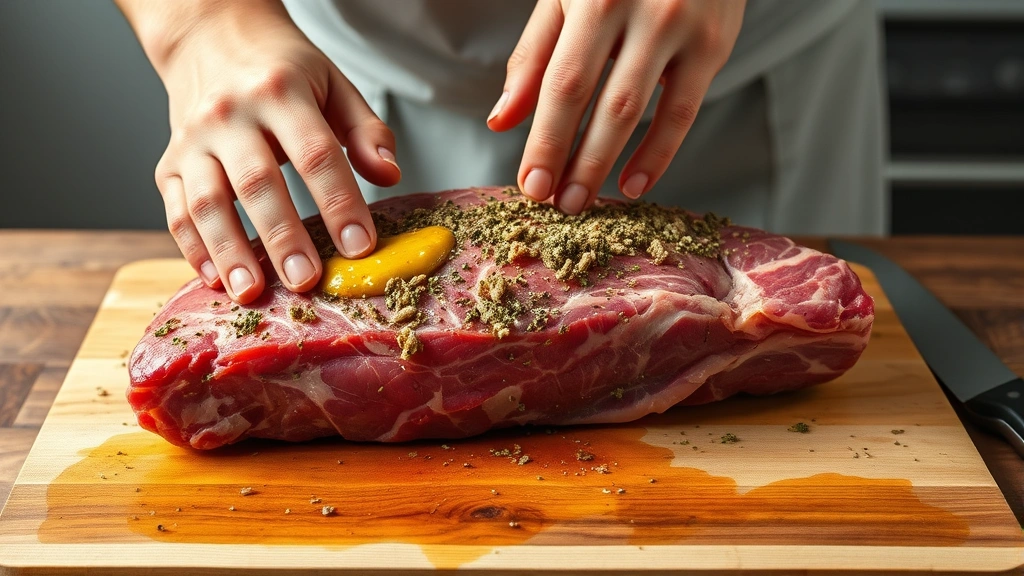
- In another small bowl, mix together the minced garlic, Dijon mustard, and olive oil to create a paste. This mixture will help the herbs adhere to the meat and add incredible flavor.
- Pat the boneless prime rib roast completely dry with paper towels. Moisture on the surface will prevent proper browning and crust formation, so don’t skip this step.
- Rub the mustard-garlic-oil paste all over the roast, covering all sides evenly. Work the mixture into the meat gently but thoroughly.
- Sprinkle the herb salt mixture generously over the entire roast, patting gently so the herbs stick to the paste you’ve already applied. Make sure all sides are well coated.
- Place your roast fat-side up on a roasting pan or rimmed baking sheet. You can place it directly on the pan or use a roasting rack if you have one—both methods work beautifully.
- Insert a meat thermometer into the thickest part of the roast, making sure the tip doesn’t touch the pan. Position it so you can read it easily without removing the roast from the oven.
- Place the roast in the preheated 450°F oven and roast for 20 minutes to develop a beautiful brown crust on the exterior.
- After 20 minutes at high heat, reduce the oven temperature to 325°F and continue roasting. The total cooking time will be approximately 13-15 minutes per pound for medium-rare (130-135°F internal temperature).
- Pour the beef broth and red wine into the bottom of the roasting pan around the roast—not over it. These liquids will create a delicious sauce and keep your roast moist.
- Continue roasting, basting with the pan juices every 20-30 minutes. This step keeps the exterior moist and builds flavor into your sauce.
- Begin checking the internal temperature of the roast when it reaches 120°F on your meat thermometer. Check every 5-10 minutes after this point, as the temperature rises more quickly as you approach your target.
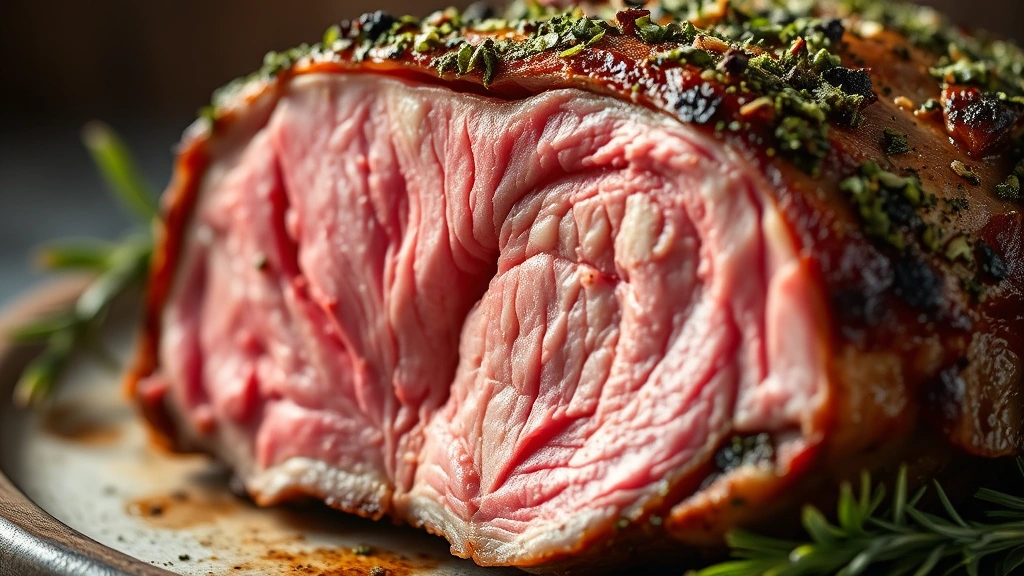
- Remove the roast from the oven when the internal temperature reaches 130°F for medium-rare. Remember that the temperature will continue to rise 5-10 degrees while the roast rests.
- Transfer the roast to a warm platter or cutting board and loosely tent it with foil. Let it rest for 15-20 minutes. This resting period is absolutely crucial—do not skip it.
- While the roast is resting, place the roasting pan on the stovetop over medium-high heat. Scrape up all the browned bits from the bottom of the pan—this is pure flavor.
- Let the pan juices simmer for 2-3 minutes to reduce slightly and concentrate the flavors. You can strain out any herbs or small bits if you prefer a smooth sauce.
- In a small bowl, whisk together the cornstarch and water to create a slurry. Pour this into the simmering pan juices while whisking constantly to prevent lumps.
- Continue whisking and simmering until the sauce thickens slightly, about 1-2 minutes. Remove from heat and stir in the butter until it melts into the sauce.
- Slice your rested boneless prime rib roast against the grain into ¾-inch thick slices. Serve immediately with the warm pan sauce drizzled over top.
- For an elegant presentation, arrange slices on a platter and serve with rich cream sauce options or fresh salads for balance
Pro Tips
o Invest in a reliable instant-read meat thermometer. It’s the difference between guessing and knowing exactly when your roast is perfectly cooked. Digital thermometers with probes are particularly helpful.
o The resting period allows carryover cooking to finish the meat while allowing juices to redistribute. This prevents a dry roast and ensures maximum tenderness and juiciness.
o Don’t skip the high-heat sear at the beginning. Those 20 minutes at 450°F create the flavorful brown crust (called a Maillard reaction) that makes prime rib so delicious.
o Basting every 20-30 minutes keeps the exterior moist and builds layers of flavor. If you’re busy, you can skip some bastings, but aim for at least three or four throughout cooking.
o The cooking time varies based on your specific oven, the shape of your roast, and its exact weight. That’s why a meat thermometer is essential—it removes all guesswork.
o For medium (135-140°F), cook a few minutes longer. For medium-well (145-150°F), continue cooking, though this is not recommended for prime rib as it can become dry.
o The pan sauce is incredible and shouldn’t be ignored. Those browned bits contain concentrated beef flavor that elevates your entire meal.
o Leftovers are wonderful. Slice cold roast thin and serve on rolls, or warm slices gently in the oven and serve with horseradish cream for an elegant lunch.
o This recipe works beautifully with decadent pasta sides or creamy sauces for an impressive presentation.
o For a boneless prime rib, make sure your butcher removes the fat cap cleanly so it cooks evenly. Ask them to tie it if needed for even thickness.
o Red wine in the sauce can be replaced with additional beef broth if you prefer, though the wine adds wonderful depth of flavor.
o Season your roast generously. Prime rib is a large cut and needs bold seasoning to develop proper flavor throughout.