
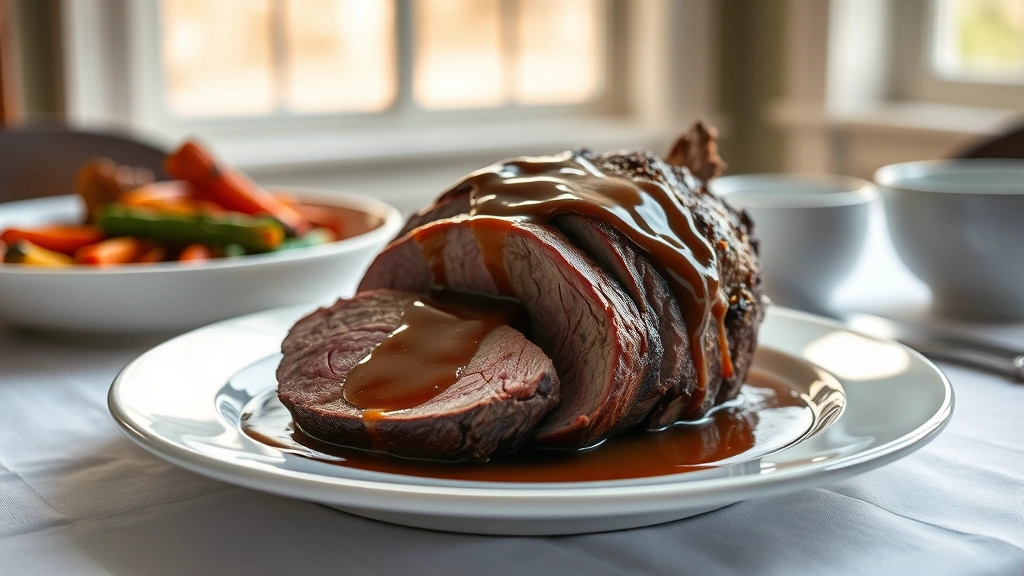
There’s nothing quite like a perfectly cooked bottom round roast – it’s the kind of dish that fills your home with the most incredible aromas and brings everyone to the dinner table with anticipation. This cut of beef, while often overlooked, is absolutely magical when prepared with the right technique and a little patience. The bottom round comes from the hind leg of the cow, and while it’s naturally leaner than other cuts, that’s exactly what makes it perfect for slow roasting to tender perfection.
What I love most about this bottom round roast recipe is how elegantly simple it is, yet how impressive the results turn out to be. You don’t need fancy techniques or complicated ingredients – just quality beef, aromatic vegetables, and time. The magic happens when you sear that meat to develop a gorgeous golden crust, then let it roast low and slow until it becomes fall-apart tender. This is the kind of meal that tastes like you’ve been cooking all day, but honestly, most of the work is just hands-off oven time.
I’ve been making this roast for years, and I’ve learned all the little tricks that make the difference between a good roast and an absolutely spectacular one. From selecting the right cut at the butcher counter to understanding the perfect internal temperature, I’m sharing everything I know. This recipe serves a crowd beautifully and leftovers are absolutely divine – perfect for sandwiches or pasta dishes. The pan drippings make an incredible gravy that you’ll want to drizzle over everything on your plate.
Whether you’re cooking for a special Sunday dinner or planning your holiday menu, this bottom round roast recipe will not disappoint. It’s elegant enough for company, comforting enough for family, and foolproof enough that you’ll find yourself making it again and again. The technique I’m sharing comes from years of testing and refinement, and I’m so excited to share it with you today.
Ingredients
- 1 bottom round roast (4-5 pounds)
- 3 tablespoons kosher salt
- 2 tablespoons freshly ground black pepper
- 2 tablespoons garlic powder
- 1 tablespoon dried thyme
- 1 tablespoon dried rosemary
- 3 tablespoons olive oil
- 1 large yellow onion, roughly chopped
- 4 medium carrots, cut into 2-inch pieces
- 4 celery stalks, cut into 2-inch pieces
- 8 cloves garlic, smashed
- 2 cups beef broth
- 1 cup red wine (optional but recommended)
- 2 bay leaves
- 4 sprigs fresh thyme
- 2 tablespoons butter
- 2 tablespoons all-purpose flour
- 1 tablespoon Dijon mustard
- 1 teaspoon Worcestershire sauce
Instructions
- Remove your bottom round roast from the refrigerator 45 minutes to 1 hour before cooking. This allows the meat to come to room temperature, which ensures even cooking throughout. Pat the roast completely dry with paper towels – this is crucial for achieving that beautiful golden crust.
- Preheat your oven to 325°F. While it’s heating, combine the kosher salt, black pepper, garlic powder, dried thyme, and dried rosemary in a small bowl. This seasoning mixture is your foundation for incredible flavor.
- Rub the seasoning mixture generously all over the roast, making sure to coat every surface including the sides and ends. Don’t be shy – this is where your flavor comes from. Let the seasoned roast sit for about 10 minutes to allow the seasonings to adhere.
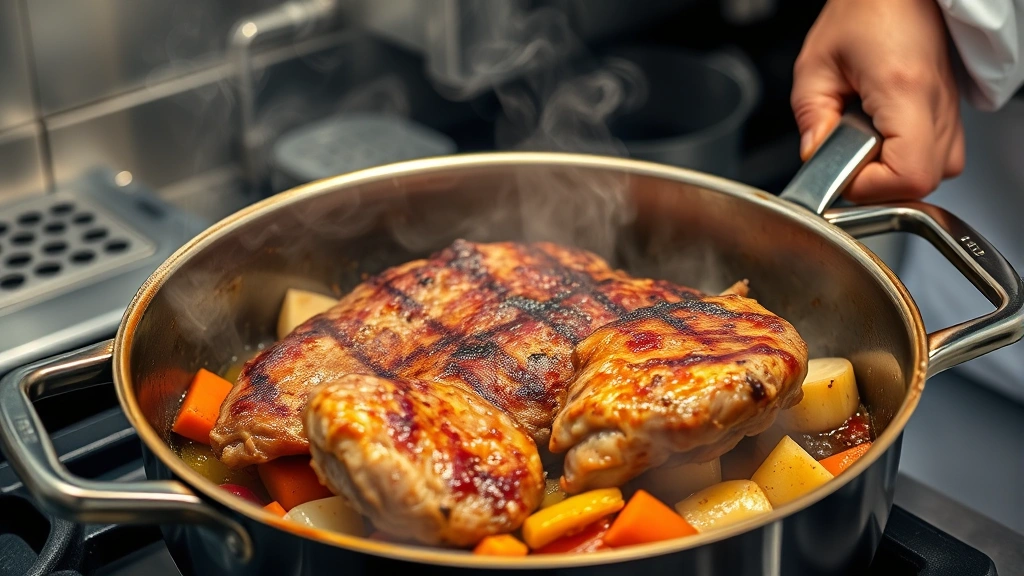
- Heat the olive oil in a large, heavy-bottomed Dutch oven or roasting pan over medium-high heat. Once the oil is shimmering and very hot, carefully place the roast in the pan. You want to hear that satisfying sizzle.
- Sear the roast for 3-4 minutes on the first side without moving it. This develops that gorgeous caramelized crust. Flip and sear for another 3-4 minutes on the second side. Continue turning and searing on all remaining sides until the entire exterior is golden brown, about 12-15 minutes total. Transfer the roast to a plate.
- In the same pot with the rendered beef fat, add your chopped onions, carrots, and celery. Sauté for 5-7 minutes, stirring occasionally, until the vegetables begin to soften and caramelize slightly. This creates an aromatic base that will infuse the entire roast with incredible flavor.
- Add the smashed garlic cloves to the vegetables and cook for another minute until fragrant. You should smell that beautiful garlic aroma wafting through your kitchen.
- Deglaze the pot by pouring in the red wine, scraping up all those flavorful browned bits from the bottom with a wooden spoon. These bits, called fond, are liquid gold and contain all the concentrated beef flavor. Let the wine reduce by half, about 3-4 minutes.
- Pour in the beef broth and add the bay leaves and fresh thyme sprigs. Nestle the seared roast back into the pot, positioning it so it sits on top of the vegetable mixture. The liquid should come about halfway up the sides of the roast.
- Cover the Dutch oven with its lid or with heavy-duty aluminum foil and place it in your preheated 325°F oven. Set a timer for 2 hours. This low and slow cooking method breaks down the connective tissue in the meat, making it incredibly tender.
- After 2 hours, carefully remove the lid and check the roast with a meat thermometer. It should register 135°F for medium-rare, which is perfect. If you prefer it more done, cook for another 15-30 minutes and check again. The internal temperature will continue to rise slightly as it rests.
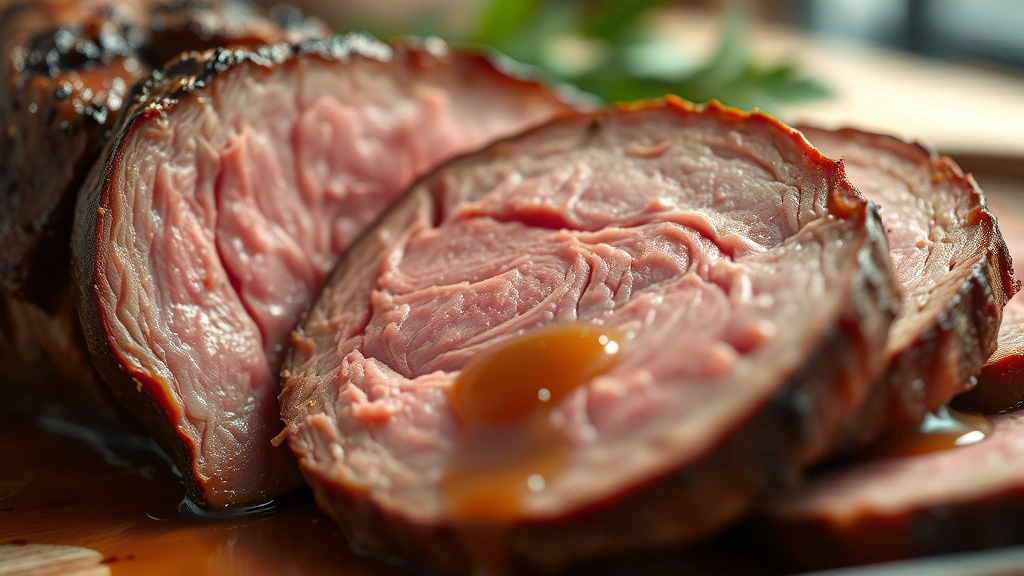
- Once the roast reaches your desired temperature, carefully remove it from the oven and transfer it to a cutting board. Tent it loosely with foil and let it rest for 15 minutes. This resting period is essential – it allows the juices to redistribute throughout the meat, ensuring every slice is juicy and tender.
- While the roast rests, strain the cooking liquid through a fine-mesh sieve into a saucepan, pressing on the vegetables to extract all their flavor. Discard the vegetables and bay leaves. You should have about 2 cups of liquid.
- For the gravy, melt the butter in the saucepan over medium heat. Whisk in the flour to create a paste, cooking for about 1 minute while stirring constantly. Gradually whisk in the strained cooking liquid, stirring constantly to prevent lumps from forming.
- Add the Dijon mustard and Worcestershire sauce to the gravy, stirring well to incorporate. Simmer for 3-5 minutes until the gravy thickens to your desired consistency. Taste and adjust seasonings with salt and pepper as needed.
- Slice your rested roast against the grain into quarter-inch thick slices. Arrange on a serving platter and drizzle generously with the warm gravy. Serve immediately with the remaining gravy on the side.
Pro Tips
TEMPERATURE MATTERS: Invest in a reliable meat thermometer. This is the single best way to ensure your roast is cooked perfectly. Medium-rare (135°F) is ideal for this cut, but if your family prefers well-done, you can cook it to 160°F. Just know that it will be slightly less tender at higher temperatures.
Make this a weeknight winner by using a slow cooker: Sear the roast as directed, then transfer everything to a slow cooker on LOW for 8 hours or HIGH for 5 hours. The results are equally delicious.
Leftovers are absolutely incredible. Slice cold roast thin and serve on crusty bread with horseradish sauce, or shred it for creamy pasta dishes. Leftover roast keeps refrigerated for up to 4 days.
Wine selection: A dry red wine like Cabernet Sauvignon, Merlot, or Pinot Noir works beautifully. The wine adds depth and complexity to both the roast and the gravy. If you prefer not to use wine, simply use an additional cup of beef broth.
Vegetable add-ins: Feel free to customize the vegetables based on what you love. Parsnips, potatoes, mushrooms, and Brussels sprouts all roast beautifully in the pan drippings. Add heartier vegetables for the full cooking time and more delicate ones in the last 45 minutes.
For a fresh side, serve with bright acidic pickled onions to cut through the richness of the roast.
Make-ahead tip: Prepare the seasoning rub the night before and refrigerate the roast. In the morning, let it come to room temperature before searing. You can also sear the roast and prepare the vegetables up to 4 hours ahead, then simply pop it in the oven when ready.
Gravy secrets: For extra silky gravy, strain it through cheesecloth after adding the flour mixture. For deeper flavor, add a splash of balsamic vinegar or a teaspoon of tomato paste to the finished gravy.