
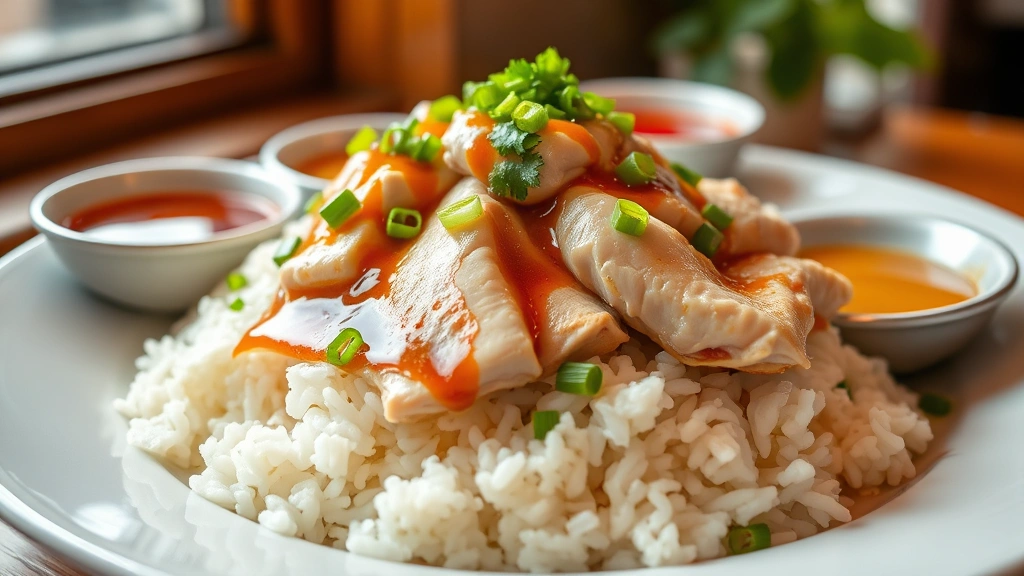
Hainanese chicken rice is one of those magical dishes that seems simple on the surface but delivers incredible flavor in every bite. This beloved Southeast Asian classic features tender, poached chicken served alongside fragrant coconut-infused rice and a trio of delicious dipping sauces. What makes this dish so special is how the chicken poaching liquid becomes the base for the rice, creating layers of subtle flavor that make your taste buds sing.
The beauty of this chicken hainan rice recipe lies in its elegant simplicity. You don’t need fancy techniques or hard-to-find ingredients—just quality chicken, good rice, and a few pantry staples. The result is a restaurant-quality meal that tastes like you’ve been cooking all day, when really it comes together in under an hour. Whether you’re cooking for your family on a weeknight or impressing guests at dinner, this recipe delivers every single time.
I love serving this with pickled red onions on the side for a bright, tangy contrast. The combination of the creamy coconut rice, silky chicken, and zesty condiments creates a perfectly balanced meal. For more inspiration on complementary sides, check out this chickpea salad recipe that pairs beautifully with Asian-inspired dishes.
What sets this version apart is the technique of using the chicken poaching liquid to cook the rice. This infuses the rice with incredible chicken flavor that you simply can’t achieve any other way. Combined with coconut milk and a touch of ginger, you get rice that’s aromatic, creamy, and utterly craveable. The chicken stays impossibly tender and moist because it’s gently poached rather than roasted, which means no dry chicken ever.
If you’re looking to expand your Asian cooking repertoire, this recipe is a perfect starting point. It teaches you fundamental techniques like proper poaching and the importance of building flavor through quality ingredients and proper cooking methods. Once you master this, you’ll find yourself making it regularly—it’s that good and that easy.
For more sauce inspiration, check out this alfredo sauce recipe for understanding how to build creamy, flavorful sauces. While completely different flavor profiles, understanding sauce-making techniques transfers across cuisines. You can also explore cream-based pasta dishes to understand how dairy and aromatics work together in cooking.
The three sauces that accompany this dish are essential to the experience. The ginger-scallion sauce is bright and fresh, the chile sauce adds heat and depth, and the soy-based sauce rounds everything out with umami richness. Each sauce serves a purpose, and together they elevate the chicken and rice from simple to spectacular. This is comfort food at its finest—the kind of meal that makes you feel nourished and satisfied.
Learn more about complementary Asian cooking techniques by checking out this bacon carbonara recipe to understand how building layers of flavor works across different cuisines.
Ingredients
- 1 whole chicken (3-4 pounds), cleaned and patted dry
- 8 cups water or chicken stock
- 4 slices fresh ginger, about 1/4-inch thick
- 4 scallions, white and light green parts, smashed
- 2 teaspoons salt
- 2 cups jasmine rice, rinsed
- 1 can (13.5 ounces) coconut milk
- 2 tablespoons ginger, minced fresh
- 2 tablespoons vegetable oil
- 3 cloves garlic, minced
- For the ginger-scallion sauce: 1/2 cup neutral oil, 4 scallions chopped, 3 tablespoons fresh ginger minced, 2 teaspoons salt
- For the chile sauce: 2-3 red Thai chilies, minced, 2 cloves garlic minced, 2 tablespoons lime juice, 1 tablespoon sugar, 1 teaspoon salt
- For the soy sauce: 1/2 cup soy sauce, 2 tablespoons water, 1 tablespoon sesame oil, 1 teaspoon sugar
Instructions
- Place the whole chicken in a large pot and cover with 8 cups of cold water or chicken stock. Add the ginger slices, smashed scallions, and 2 teaspoons of salt.
- Bring the water to a gentle boil over medium-high heat. Once boiling, reduce heat to medium-low and maintain a gentle simmer.
- Poach the chicken for 25-30 minutes, until the internal temperature reaches 165°F when measured in the thickest part of the thigh. The chicken should be cooked through but still tender and moist.
- Remove the chicken from the poaching liquid and set aside on a cutting board to cool slightly. Reserve the poaching liquid for cooking the rice.
- Strain the poaching liquid through a fine-mesh sieve, discarding the ginger and scallions. Measure out 3 cups of the poaching liquid.
- Heat 2 tablespoons of vegetable oil in a medium saucepan over medium heat. Add the minced garlic and cook for about 30 seconds until fragrant.
- Add the minced fresh ginger to the pan and cook for another 30 seconds, stirring constantly.
- Add the rinsed jasmine rice to the pan and stir for 1-2 minutes, coating the rice with the oil and aromatics.
- Pour in the 3 cups of reserved poaching liquid and the entire can of coconut milk. Stir well to combine.
- Bring the mixture to a boil, then reduce heat to low, cover with a lid, and simmer for 15-18 minutes until the rice is tender and has absorbed all the liquid.
- Remove from heat and let the rice rest, covered, for 5 minutes. Fluff with a fork.
- While the rice cooks, prepare the three sauces. For the ginger-scallion sauce: heat 1/2 cup neutral oil until it just begins to smoke, then pour over chopped scallions, minced ginger, and salt in a bowl. Stir to combine.
- For the chile sauce: combine minced red Thai chilies, minced garlic, lime juice, sugar, and salt in a small bowl. Mix well.
- For the soy sauce: whisk together soy sauce, water, sesame oil, and sugar in a small bowl until sugar dissolves.
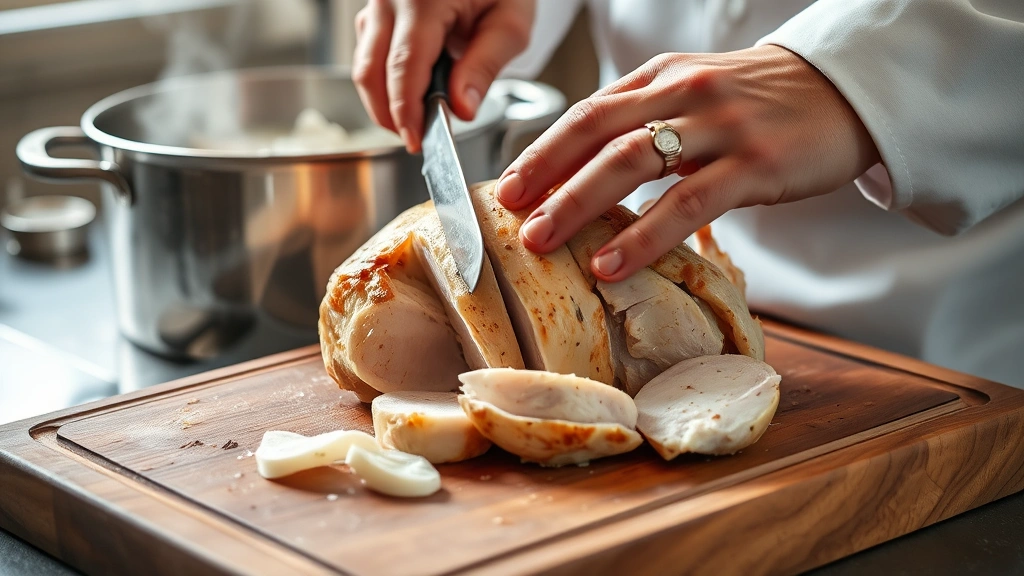
- Cut the cooled chicken into pieces, keeping the skin intact. Arrange the chicken on a serving platter.
- Serve the coconut ginger rice alongside the chicken, with the three sauces in small bowls for dipping and drizzling.
- Garnish with fresh cilantro and sliced scallions if desired, and serve immediately while everything is still warm.
Pro Tips
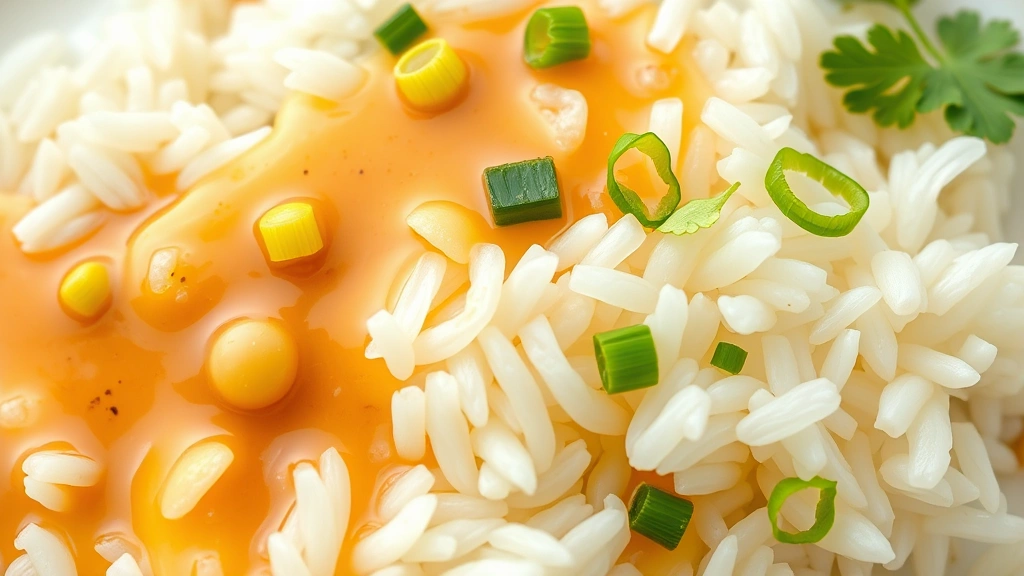
The poaching liquid is liquid gold in this recipe. It carries all the subtle chicken flavor that makes this dish special. Never skip straining it properly, as any sediment can affect the final rice texture.
Coconut milk varies significantly by brand. Full-fat varieties produce the best, creamiest rice. Don’t use lite coconut milk as it won’t provide the same richness and mouthfeel.
Timing is crucial when poaching chicken. Overcooking results in dry meat, while undercooking is unsafe. Use an instant-read thermometer inserted into the thickest part of the thigh without touching bone. It should read 165°F.
The three sauces are not optional—they’re essential components of the dish. Each provides different flavor notes that make every bite interesting. Guests may have preferences, so offering all three allows everyone to customize their experience.
Ginger-scallion sauce should be made just before serving. The oil must be hot enough to slightly wilt the scallions and ginger, releasing their oils and creating that characteristic fragrant sauce.
Chile sauce can be made spicier or milder depending on preference. Remove seeds from chilies for less heat, or add more chilies for extra kick. The lime juice is important for balance—don’t skip it.
Leftover chicken and rice keep well refrigerated for up to three days. Reheat gently in the microwave or on the stovetop with a splash of water to restore moisture.
This dish is naturally gluten-free if you use tamari instead of regular soy sauce for the dipping sauce.
For meal prep, you can cook everything ahead and serve at room temperature or reheated. The flavors actually deepen after a day or two.
If you can’t find jasmine rice, long-grain white rice works as a substitute, though jasmine provides superior fragrance and slightly sticky texture that complements this dish.