
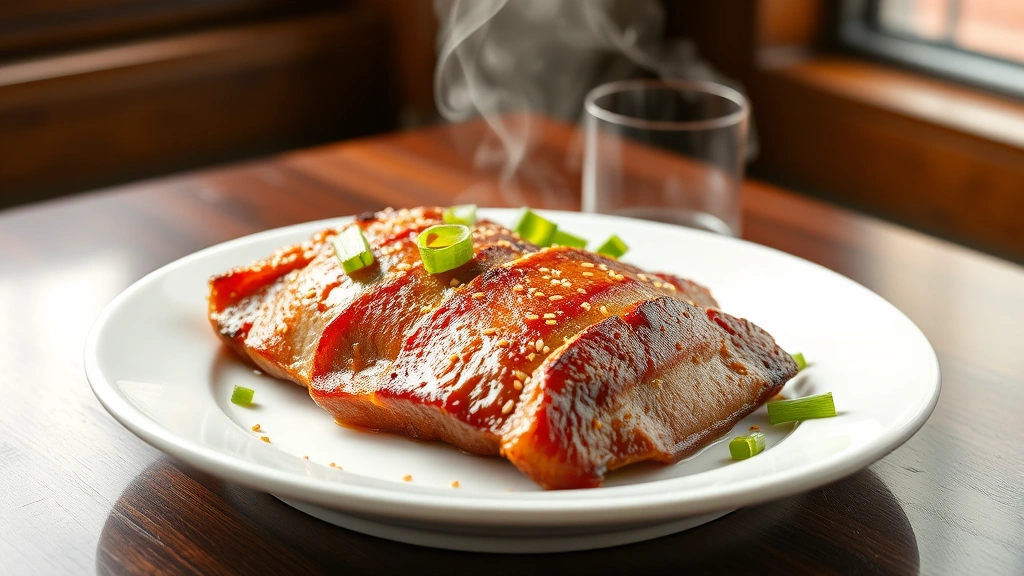
Chinese BBQ pork, or char siu, is one of those restaurant-quality dishes that seems intimidating but is absolutely achievable at home. The magic happens when you combine the right balance of sweet, savory, and umami flavors with a proper marinade and cooking technique. This recipe will walk you through creating that gorgeous caramelized exterior with a tender, juicy interior that makes this Cantonese classic so irresistible.
The beauty of Chinese BBQ pork is its versatility. You can serve it sliced over steamed rice, tucked into bao buns, tossed through fried rice, or even enjoyed on its own as an appetizer. The marinade is the real star here—combining hoisin sauce, soy sauce, honey, and five-spice powder creates that signature deep mahogany color and complex flavor profile that keeps people coming back for more.
What makes this recipe stand out is the two-stage cooking process. We start with a low-and-slow oven roast to gently cook the pork through, then finish with a high-heat broil to caramelize and crisp that gorgeous exterior. This method ensures you won’t end up with dry, overcooked meat, which is the biggest mistake most home cooks make with this dish. The result is restaurant-quality char siu that will have your family and friends absolutely amazed.
If you’re looking for other amazing pork dishes to master, check out our Quick Tasty Bacon Carbonara Recipe for a different flavor profile. For side dishes, our Easy Pickled Red Onion Recipe adds a bright, tangy element that pairs beautifully with BBQ pork.
Let me walk you through the complete process of making this authentic Chinese BBQ pork from scratch. The marinade alone is worth the effort, and once you master this technique, you’ll find yourself making it again and again. For more inspiration on Asian flavors and techniques, check out this Serious Eats guide to Asian cooking. The combination of traditional Cantonese methods with modern home cooking makes this recipe accessible for everyone, regardless of your experience level.
The key to success is giving your pork enough time in the marinade—at least 4 hours, but preferably overnight. This allows the flavors to penetrate deep into the meat, creating that authentic taste you’re craving. Don’t rush this step. Also, make sure to use pork shoulder or pork butt, as these cuts have enough fat to stay juicy during cooking. Leaner cuts like pork loin will dry out too quickly. For more information on marinades and their chemistry, New York Times Cooking has excellent resources on how flavors work together.
Ingredients
- 3 pounds pork shoulder or pork butt, cut into 2-inch thick strips
- 1/2 cup hoisin sauce
- 1/4 cup soy sauce
- 3 tablespoons honey
- 2 tablespoons rice vinegar
- 2 tablespoons sesame oil
- 4 cloves garlic, minced
- 1 tablespoon grated fresh ginger
- 1 teaspoon five-spice powder
- 1/2 teaspoon white pepper
- 1 tablespoon cornstarch
- 2 tablespoons water
- 1 tablespoon vegetable oil
- 2 tablespoons honey, for glazing
- 1 tablespoon sesame seeds, for garnish
- 2 green onions, sliced for garnish
- Fresh cilantro, optional for garnish
Instructions
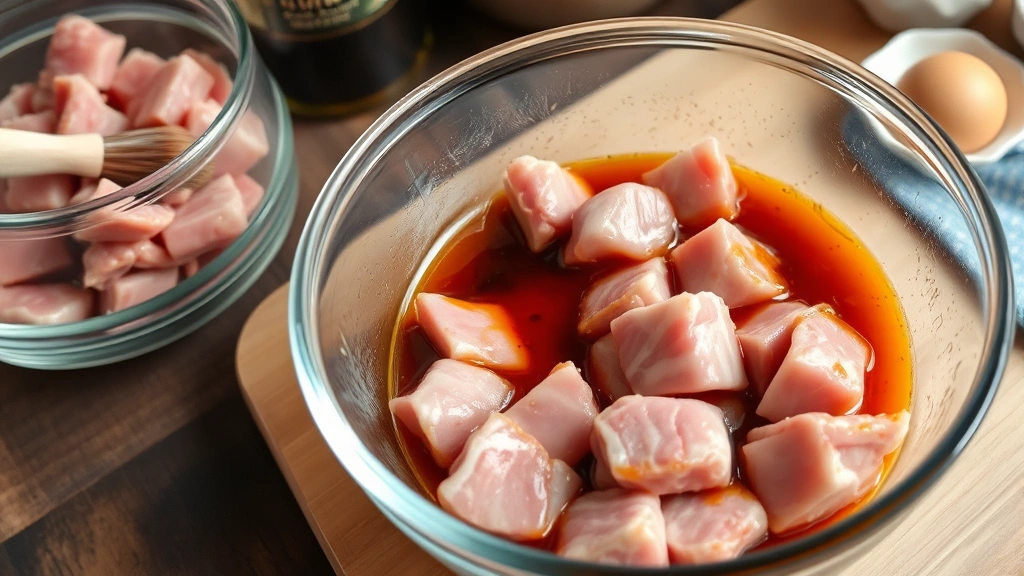
- In a large mixing bowl, combine hoisin sauce, soy sauce, honey, rice vinegar, sesame oil, minced garlic, grated ginger, five-spice powder, and white pepper. Stir well until all ingredients are fully incorporated and the mixture is smooth.
- Pat the pork shoulder strips dry with paper towels to help the marinade adhere better. This step is crucial for achieving good flavor penetration.
- Add the pork strips to the marinade bowl and toss thoroughly, making sure each piece is well coated on all sides.
- Cover the bowl with plastic wrap and refrigerate for at least 4 hours, but preferably overnight. The longer marinating time allows the flavors to develop more deeply.
- Remove the pork from the refrigerator about 30 minutes before cooking to bring it closer to room temperature, which ensures more even cooking.
- Preheat your oven to 325°F (163°C). Line a large baking sheet with aluminum foil and place a wire rack on top.
- Transfer the marinated pork strips to the wire rack, spacing them about an inch apart. Reserve the remaining marinade in a separate bowl.
- Place the baking sheet in the preheated oven and roast for 45-50 minutes, until the pork reaches an internal temperature of 165°F (74°C) when measured with a meat thermometer at the thickest part.
- While the pork is roasting, prepare a glaze by mixing the reserved marinade with cornstarch and water in a small saucepan. Heat over medium heat, stirring constantly, until the mixture thickens and becomes glossy, about 3-4 minutes. Remove from heat.
- Once the pork is cooked through, remove it from the oven and brush generously with the prepared glaze on all sides.
- Increase the oven temperature to broil (high setting). Return the glazed pork to the oven, placing it about 4-5 inches from the broiler element.
- Broil for 5-7 minutes, watching carefully to prevent burning. The exterior should become caramelized and develop those beautiful dark, sticky edges.
- Flip the pork strips and brush the other side with additional glaze. Broil for another 5-7 minutes until evenly caramelized on all sides.
- Remove the pork from the oven and let it rest on a cutting board for 5 minutes before slicing.
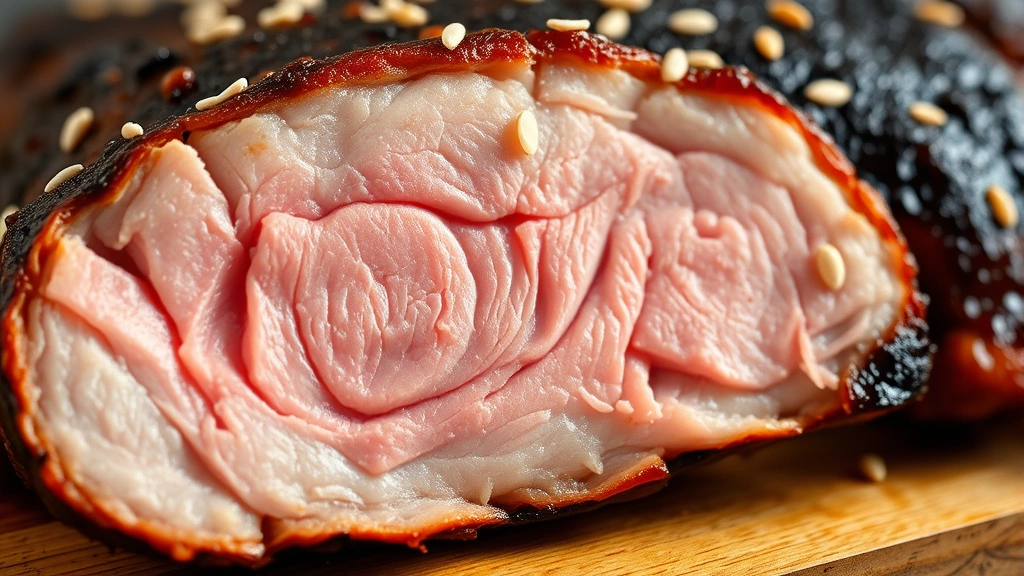
- Slice the pork against the grain into thin pieces for maximum tenderness. If the slices are too thick, they’ll be tough; if too thin, they’ll dry out.
- Transfer the sliced pork to a serving platter and drizzle with any remaining glaze. Garnish with sesame seeds, sliced green onions, and fresh cilantro if desired.
- Serve immediately while still warm, or let cool to room temperature depending on your preference and serving style.
Pro Tips
Cutting guide: Always slice your pork against the grain for maximum tenderness. This means cutting perpendicular to the direction the muscle fibers run.
Meat selection: Pork shoulder is ideal because it has marbling throughout, which keeps it moist during cooking. Avoid lean cuts like pork loin.
Glazing technique: The two-stage glazing process (one before broiling, one during) creates multiple layers of caramelized flavor and prevents excessive burning.
Oven variation: If you don’t have a broiler or prefer not to use it, you can increase the final oven temperature to 450°F (232°C) for 10-12 minutes instead.
Marinade customization: Add a tablespoon of Sriracha for heat, or a splash of bourbon for depth. Some cooks add a teaspoon of white miso paste for extra umami.
Serving suggestions: Serve with steamed jasmine rice, in soft bao buns with cucumber and hoisin sauce, over fried rice, or in lettuce wraps for a lighter option.
Storage: Leftover pork keeps refrigerated for up to 4 days. Reheat gently in a 325°F oven with a splash of water to prevent drying out. It also freezes well for up to 3 months.
Texture note: The exterior should be slightly sticky and caramelized, not crispy. If it’s too crispy, you broiled it too long or at too high a temperature.
Five-spice powder: This is essential for authentic char siu flavor. It typically contains star anise, cloves, cinnamon, Sichuan pepper, and fennel.
Internal temperature: Don’t skip using a meat thermometer. Pork is safe at 145°F (63°C), but 165°F ensures any bacteria are eliminated while still keeping it juicy.