
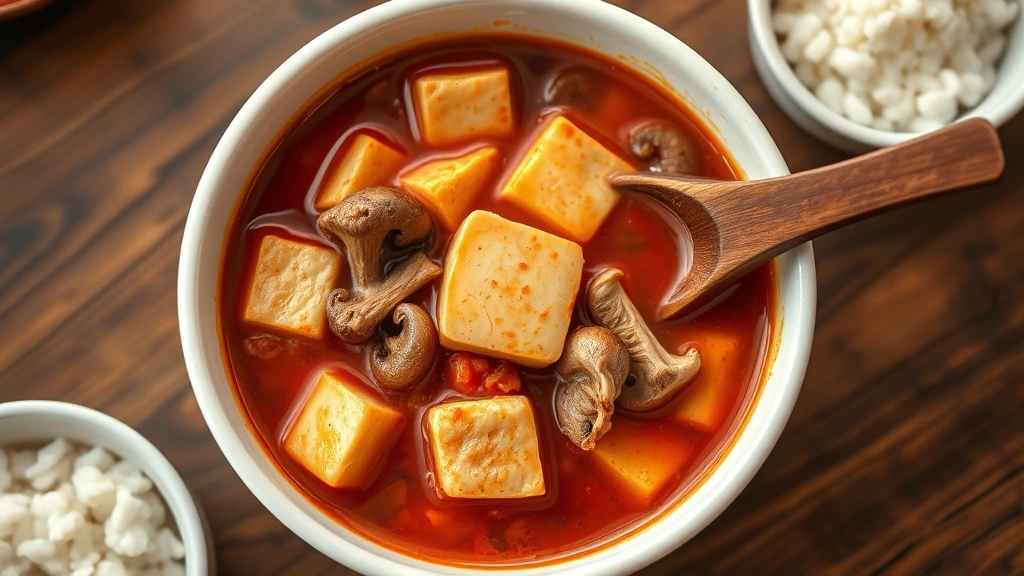
Kimchi stew, or kimchi jjigae, is a beloved Korean comfort food that transforms simple ingredients into a deeply flavorful, warming bowl of pure comfort. This traditional stew combines the funky, spicy kick of fermented kimchi with tender pork, silky tofu, and aromatic broth, creating layers of umami that will have everyone asking for seconds.
What makes this kimchi stew recipe so special is how the fermented kimchi acts as the flavor base, infusing the entire pot with its distinctive tangy heat. Unlike other stews that build flavor gradually, this one starts strong and only gets better as everything simmers together. The beauty of kimchi jjigae lies in its simplicity—you don’t need fancy ingredients or complicated techniques, just quality components and patience.
I absolutely love making this on chilly evenings when I want something that feels like a warm hug from the inside out. The recipe is forgiving and adaptable, which is why Korean families have been perfecting their versions for generations. Whether you’re a kimchi enthusiast or new to Korean cuisine, this stew will become a regular rotation in your kitchen.
One of my favorite aspects of this recipe is how customizable it is. While the traditional version uses pork belly, you can substitute with ground pork, beef, or even seafood like shrimp or squid. Check out our Perfect Breakfast Bowl Recipe for more ideas on building delicious, layered dishes at home. The tofu can be silken or firm depending on your preference, and you can load it up with vegetables like mushrooms, zucchini, or green onions.
For those interested in exploring more fermented foods and Asian cuisines, we have some wonderful resources. The key to an excellent kimchi stew is not rushing the process—let everything simmer gently so the flavors meld beautifully. This isn’t a recipe to hurry through; it’s meant to be savored and enjoyed.
I recommend serving this stew with steamed rice, which helps balance the heat and allows you to enjoy every last drop of that precious broth. A bowl of this on the table immediately transports you to a Korean home kitchen, and honestly, that’s the whole point. For more comfort food inspiration, explore our Best Brioche French Toast Recipe for breakfast options.
The fermentation process of kimchi is what gives this stew its soul. Those beneficial probiotics and complex flavors can’t be rushed or replicated with fresh cabbage, so don’t be tempted to substitute. If you don’t have homemade kimchi, store-bought works beautifully too. Just check that it’s actually fermented and not just spicy pickled cabbage.
This recipe serves about 4 people as a main course, though in Korean dining, it’s often part of a larger meal with multiple banchan (side dishes). The stew reheats wonderfully, and some say it tastes even better the next day as the flavors continue to develop. Learn more about building complete meals by checking our Best Cream Cheese Fruit Dip Recipe for entertaining ideas.
For authentic guidance on Korean cooking techniques, Serious Eats offers excellent resources on Asian cuisines. Temperature control is important here—you want a gentle simmer, not a rolling boil, which can make the broth cloudy and cause ingredients to break down too much.
I often double this recipe and freeze half for busy weeknights. Just let it cool completely before freezing, and it keeps for up to three months. Reheat gently on the stovetop with a splash of water if needed.
For more Korean comfort food recipes and technique guides, New York Times Cooking has wonderful resources. The beauty of this stew is that it brings people together—it’s humble, honest food that nourishes both body and soul.
Ingredients
- 2 cups well-fermented kimchi, roughly chopped (plus 2-3 tablespoons kimchi juice)
- 8 ounces pork belly or ground pork, sliced or crumbled
- 14 ounces firm or silken tofu, cut into ¾-inch cubes
- 4 cups anchovy or vegetable broth (dashi works beautifully)
- 1 tablespoon gochugaru (Korean red chili flakes), or more to taste
- 1 tablespoon gochujang (Korean red chili paste)
- 1 tablespoon sesame oil
- 4 cloves garlic, minced
- 1 teaspoon sugar or honey
- 3-4 green onions (scallions), chopped (white and green parts separated)
- 4-5 ounces mushrooms (shiitake or cremini), sliced
- 1 tablespoon fish sauce
- ½ teaspoon salt, or to taste
- Water as needed
- Sesame seeds for garnish (optional)
- Fresh cilantro for garnish (optional)
Instructions
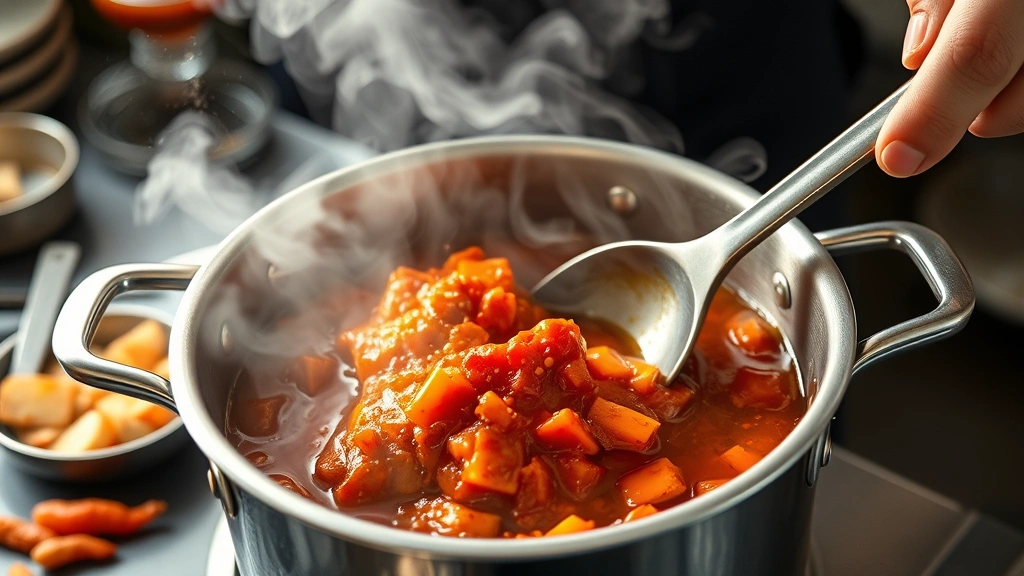
- Heat the sesame oil in a large pot or heavy-bottomed Dutch oven over medium-high heat. Once shimmering, add the pork and cook, stirring occasionally, until it begins to brown and render its fat, about 4-5 minutes. Don’t worry about cooking it completely—it will finish cooking in the broth.
- Add the minced garlic to the pot and stir constantly for about 30 seconds until fragrant, being careful not to let it burn. This releases the garlic’s oils and adds depth to the base.
- Add the chopped kimchi directly to the pot and stir everything together, cooking for about 2 minutes. This allows the kimchi to release its flavors and creates the aromatic foundation of your stew.
- Sprinkle the gochugaru (red chili flakes) over the mixture and stir well to combine, toasting the spices for about 1 minute. This blooms the spices and intensifies their flavors rather than adding raw heat.
- Add the gochujang paste and stir until everything is well combined and the paste is evenly distributed throughout, about 1 minute. The mixture should look dark and fragrant.
- Pour in the broth and the reserved kimchi juice, stirring to combine. Bring the mixture to a gentle boil, then reduce heat to medium and let it simmer for about 8-10 minutes so the flavors can meld together.
- While the broth simmers, gently add the tofu cubes to the pot. Stir very carefully to avoid breaking the tofu—use a wooden spoon and move gently. Let the tofu cook in the broth for 3-4 minutes.
- Add the sliced mushrooms and the white parts of the green onions to the pot. Stir gently and let everything simmer together for another 3-4 minutes until the mushrooms begin to soften.
- Add the fish sauce and sugar, stirring to combine. Taste the broth and adjust seasoning as needed—you may want more salt, more spice, or more umami depending on your preference and the strength of your kimchi.
- Add the green parts of the green onions and fresh cilantro if using, stirring gently into the pot. These fresh aromatics brighten the dish and add color.
- Simmer the stew for another 2-3 minutes to allow all the flavors to come together and the mushrooms to finish cooking. The broth should be fragrant, flavorful, and slightly spicy.
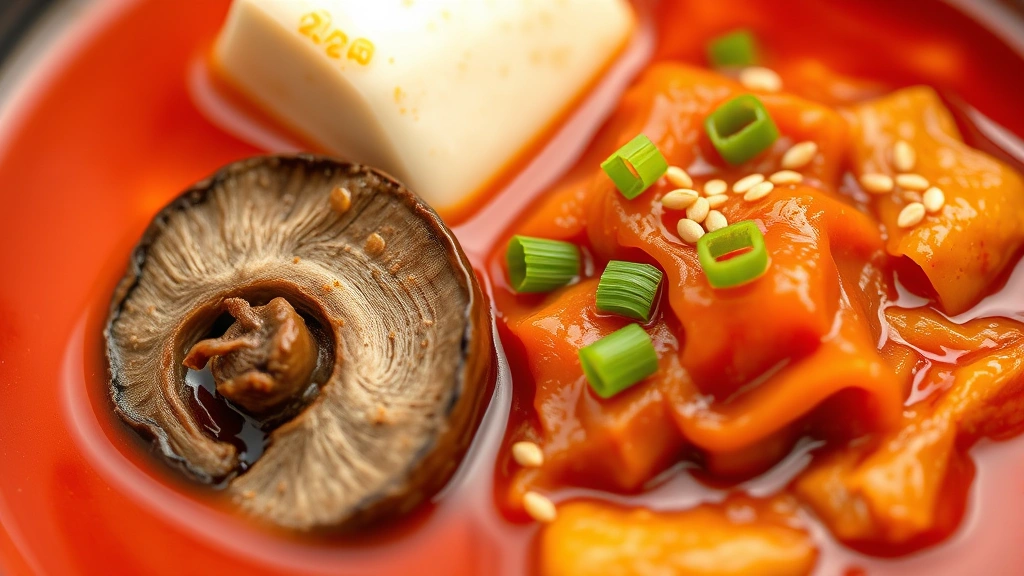
- Ladle the stew into bowls, making sure each bowl gets some broth, pork, tofu, vegetables, and kimchi. Garnish with sesame seeds if desired and serve immediately with steamed rice on the side.
Pro Tips
Pork belly is traditional and contributes wonderful fat and flavor to the broth, but ground pork is more accessible and works equally well; beef, chicken, or seafood can also be substituted based on preference and availability
Tofu selection matters; silken tofu creates a more delicate texture that breaks apart easily, while firm tofu holds its shape better; choose based on how you want the stew to feel
Broth choice significantly impacts flavor; anchovy dashi provides authentic umami depth, but vegetable broth works for vegetarian versions; never use chicken broth as it’s too light for this stew
Gochugaru and gochujang are not interchangeable—gochujang is fermented paste while gochugaru is dried chili flakes; both contribute different flavor profiles and heat levels
Heat level can be adjusted to your preference; reduce gochugaru and gochujang for a milder stew, or add more for extra heat; you can always start conservatively and adjust as you go
Do not skip the fish sauce even if it seems intimidating; it adds essential umami depth and doesn’t make the stew taste fishy when used correctly
Sesame oil at the end would overpower delicate flavors, so use it at the beginning to cook the pork; this distributes the flavor throughout the stew
Leftovers keep in the refrigerator for up to 4 days and actually taste better as flavors continue to develop; reheat gently over medium heat, adding a splash of water or broth if the stew has thickened
This stew freezes beautifully for up to 3 months; cool completely before transferring to freezer-safe containers; thaw overnight in the refrigerator and reheat gently on the stovetop
Serving with steamed rice is traditional and helps balance the heat from the chili while allowing you to enjoy every drop of the flavorful broth
Vegetarian version can be made by omitting the pork and fish sauce, using vegetable broth, and adding extra mushrooms or vegetables for substance
Green onions can be prepared ahead and stored in the refrigerator; add the white parts early and green parts at the very end for freshness