
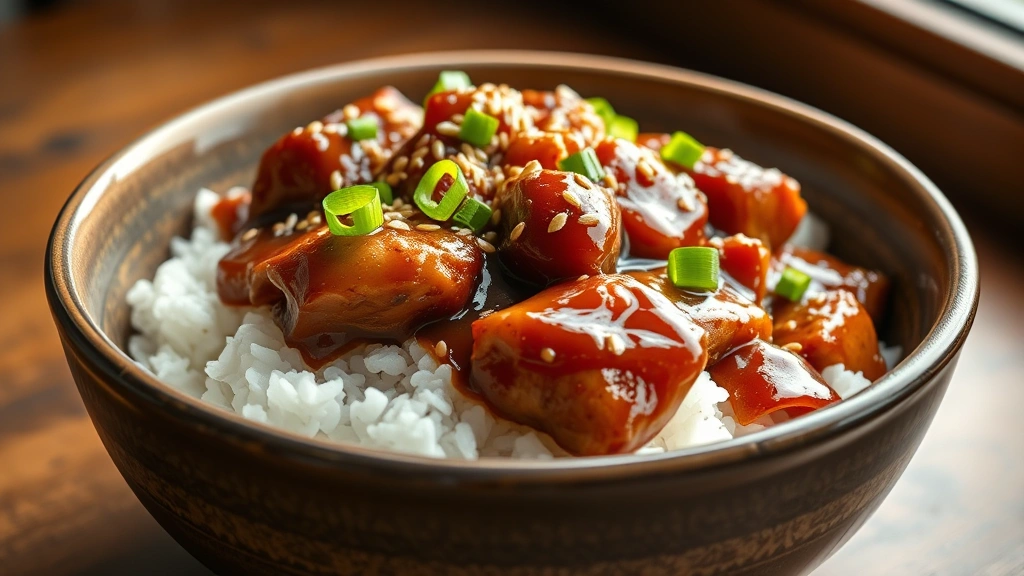
There’s something absolutely magical about Korean chicken dishes that keeps us coming back for more! Whether you’re craving something sweet and spicy, crispy and crunchy, or savory and aromatic, Korean cuisine has perfected the art of chicken preparation in ways that will make your taste buds dance with joy. These beloved dishes have become staples in Korean households for generations, and once you master the techniques, you’ll understand why they’re celebrated worldwide.
Korean chicken dishes are all about balance—balancing bold flavors with subtle notes, crispy textures with tender meat, and heat with sweetness. The secret lies in the marinade, the cooking method, and the quality of your ingredients. From the iconic Dakgangjeong (crispy soy garlic chicken) to the fiery goodness of Buldak (fire chicken), each dish tells a story of Korean culinary tradition. What makes these recipes so special is how accessible they are; you don’t need fancy equipment or hard-to-find ingredients. Most of what you need is probably already in your pantry or easily available at your local grocery store.
I’ve spent countless hours perfecting these recipes, testing different marinades, adjusting cooking times, and experimenting with presentation to bring you the most authentic yet approachable versions. The beauty of Korean cooking is that it celebrates bold, unapologetic flavors. There’s no need to hold back—Korean cuisine is all about making a statement on the plate. These chicken dishes are perfect for weeknight dinners, impressive enough for entertaining guests, and absolutely crave-worthy as leftovers.
One of the reasons I love making Korean chicken dishes is the versatility. You can serve them over steamed rice, toss them in a bibimbap bowl, stuff them into Korean fried rice, or simply enjoy them as a standalone protein. They pair beautifully with simple sides like complementary Korean side dishes, and they’re sure to impress at any gathering. The techniques you’ll learn here are foundational to Korean cooking, so mastering them opens up a whole world of culinary possibilities.
Let me walk you through my absolute favorite Korean chicken recipes that have become staples in my kitchen. These are the dishes my family requests again and again, and I’m thrilled to share them with you. Each recipe includes detailed instructions, pro tips, and variations so you can make them exactly how you like them. Get ready to elevate your dinner game with these showstopping Korean chicken dishes that taste like they came straight from a Seoul restaurant!
Ingredients
- 2 lbs boneless, skinless chicken thighs, cut into bite-sized pieces
- 1/2 cup soy sauce
- 3 tablespoons sesame oil
- 4 cloves garlic, minced
- 2 tablespoons gochujang (Korean red chili paste)
- 1 tablespoon gochugaru (Korean red chili flakes)
- 2 tablespoons honey
- 1 tablespoon rice vinegar
- 1 teaspoon freshly grated ginger
- 2 green onions, chopped
- 2 tablespoons cornstarch
- 1 tablespoon vegetable oil for cooking
- 1/4 cup water
- 1 teaspoon sugar
- 2 tablespoons toasted sesame seeds
- 1 tablespoon butter
- Optional: 1-2 dried red chilies for garnish
Instructions
- Prepare your chicken by cutting boneless, skinless chicken thighs into bite-sized pieces, approximately 1.5 to 2 inches each. Pat the chicken dry with paper towels—this is crucial for achieving crispy edges and ensuring the marinade adheres properly to the meat.
- In a large bowl, whisk together soy sauce, 2 tablespoons of sesame oil, minced garlic, gochujang, gochugaru, honey, rice vinegar, and grated ginger. Stir until the gochujang is fully incorporated and the mixture is smooth and well-combined.
- Add the dried chicken pieces to the marinade bowl and toss thoroughly until every piece is evenly coated. Let the chicken marinate for at least 15-20 minutes at room temperature, or up to 2 hours in the refrigerator for deeper flavor development.
- While the chicken marinates, prepare a small bowl and combine cornstarch with 2 tablespoons of water to create a slurry. This will help thicken your sauce later, creating that glossy, coating consistency that makes Korean chicken dishes so irresistible.
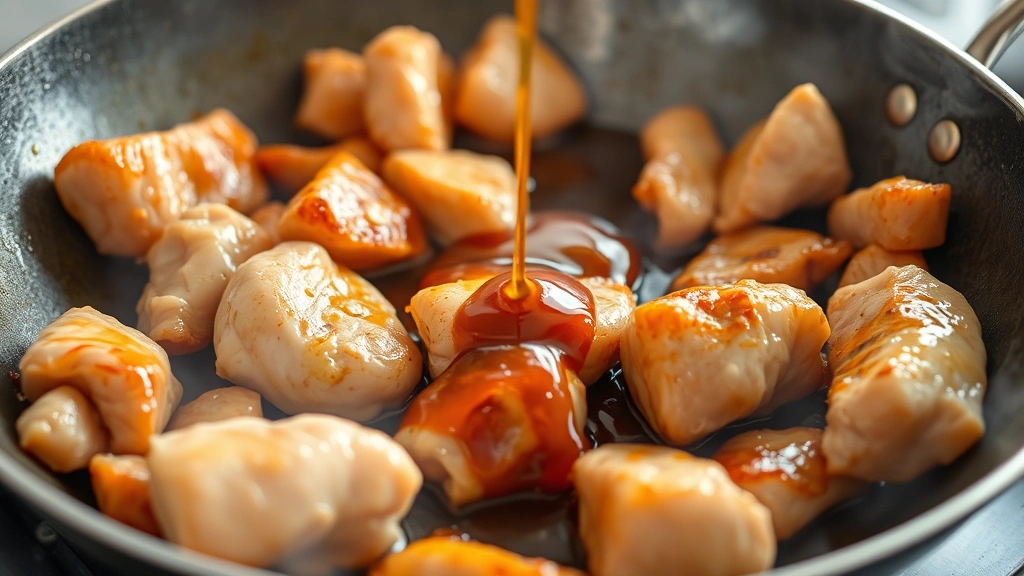
- Heat 1 tablespoon of vegetable oil in a large skillet or wok over medium-high heat until it shimmers and is just about to smoke. Working in batches to avoid overcrowding the pan, carefully add the marinated chicken pieces, reserving the marinade in the bowl.
- Sear the chicken for 3-4 minutes on the first side without stirring, allowing it to develop a golden-brown crust. Flip each piece and cook for another 3-4 minutes until the chicken is cooked through and has beautiful caramelized edges.
- Once all the chicken is cooked and removed from the pan, reduce heat to medium and add the reserved marinade back to the skillet along with 1/4 cup water and 1 teaspoon sugar. Stir well to combine and scrape up any browned bits from the bottom of the pan.
- Bring the sauce to a gentle simmer and let it cook for 2-3 minutes, allowing the flavors to meld. Slowly pour in the cornstarch slurry while stirring constantly to prevent lumps. The sauce should thicken noticeably within 1-2 minutes.
- Add 1 tablespoon of butter to the sauce and stir until it’s fully melted and incorporated, creating a silky, glossy coating. Return the cooked chicken to the pan and toss gently until every piece is evenly coated with the sauce.
- Cook for an additional 1-2 minutes, stirring occasionally, until the chicken is heated through and the sauce clings beautifully to each piece.
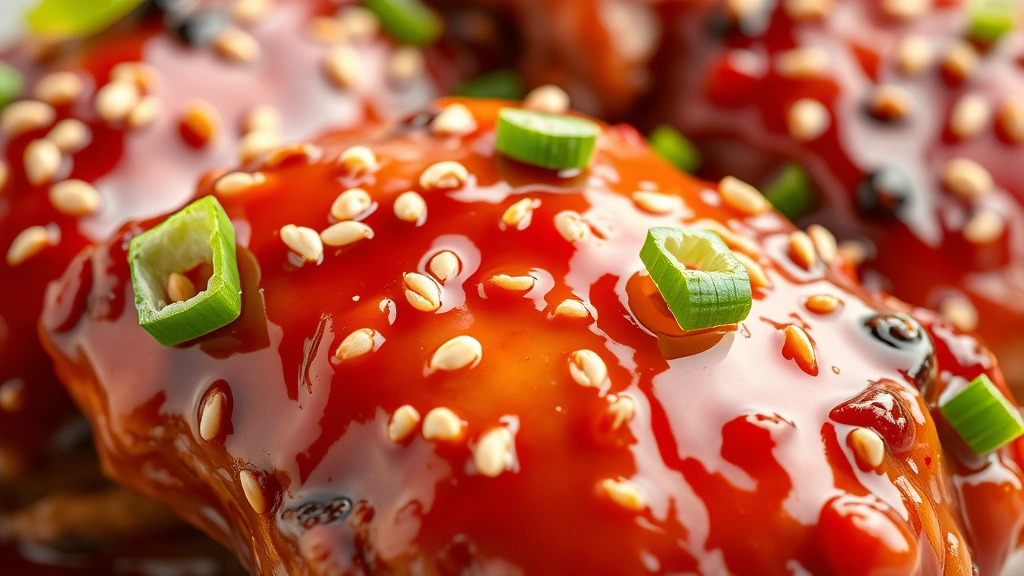
- Remove from heat and transfer to a serving platter. Garnish generously with toasted sesame seeds, chopped green onions, and optional dried red chilies. Drizzle with the remaining 1 tablespoon of sesame oil for an extra touch of authentic Korean flavor.
- Serve immediately over steamed white rice, brown rice, or cauliflower rice. This dish is best enjoyed fresh, while the sauce is still glossy and the chicken is at its most tender.
Pro Tips
o If you cannot find gochujang or gochugaru, you can substitute with sriracha or sambal oelek, though the flavor profile will be slightly different. Start with less and adjust to your heat preference.
o For extra crispy chicken, toss the pieces in cornstarch before searing them in the oil. This creates an irresistibly crunchy exterior while maintaining a tender interior.
o This recipe doubles beautifully for feeding a crowd. Simply multiply all ingredients and cook in batches, then combine everything at the end for a show-stopping dish.
o Leftover Korean chicken keeps well in the refrigerator for up to 3 days in an airtight container. Reheat gently in a skillet over low heat with a splash of water to restore the sauce’s glossy finish.
o For a lighter version, use skinless chicken breasts instead of thighs, though cooking time may be slightly shorter—watch carefully to avoid drying them out.
o The sauce can be made ahead and stored in the refrigerator for up to one week. Simply reheat and add freshly cooked chicken for a quick weeknight meal.
o Green onions are traditionally used for garnish, but you can also add sesame seeds, sliced red chilies, or even crushed peanuts for additional texture and visual appeal.
o Serve alongside traditional Korean sides like kimchi, steamed vegetables, or fresh cucumber salad for an authentic Korean meal experience.
o For an extra umami boost, add 1 teaspoon of soy sauce and 1/2 teaspoon of fish sauce to the marinade. These ingredients are pantry staples in Korean cooking and intensify the savory depth.
o This dish pairs beautifully with cold beer or Korean rice wine (makgeolli) for an authentic dining experience.
o You can prepare this recipe as meal prep for the week. Portion into containers and reheat portions as needed for quick, satisfying lunches or dinners.