
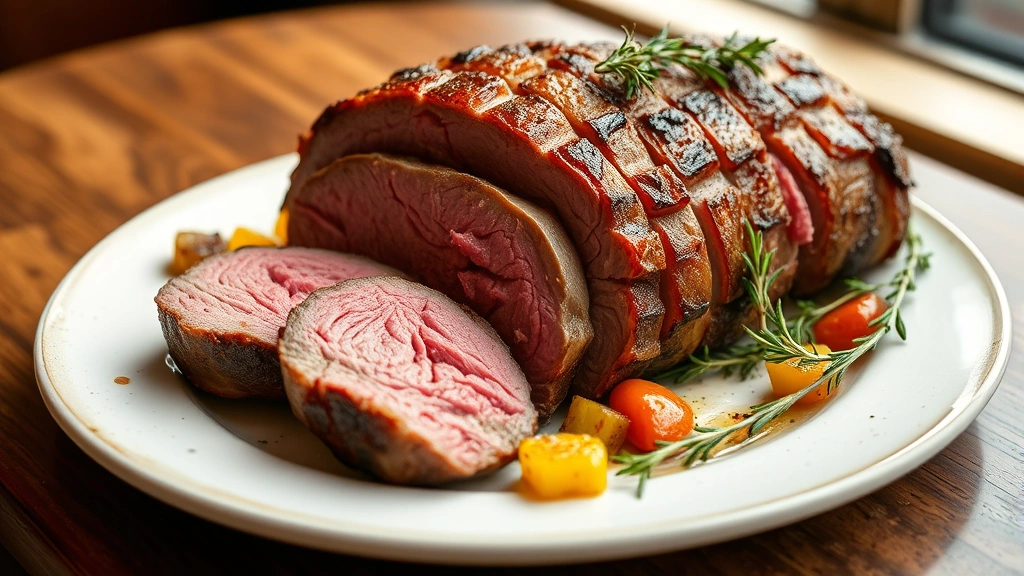
There’s nothing quite like a perfectly roasted sirloin to bring elegance and comfort to your dinner table. This sirloin roast recipe is easier than you might think, requiring just a few quality ingredients and a bit of patience. The key to achieving that beautiful golden crust and perfectly pink interior lies in understanding proper seasoning, temperature control, and resting time.
Sirloin roast is one of my favorite cuts to work with because it’s forgiving, flavorful, and budget-friendly compared to pricier cuts like ribeye or tenderloin. Whether you’re cooking for a special occasion or a Sunday family dinner, this straightforward approach will have everyone asking for seconds. I love serving this alongside creamy mashed potatoes and roasted vegetables for a complete meal that feels restaurant-quality but comes together in your own kitchen.
The beauty of this recipe lies in its simplicity. You’ll start with a quality sirloin roast, season it generously, sear it to develop flavor, and then finish it in a hot oven. The result is a tender, juicy roast with a perfectly caramelized exterior. Many home cooks are intimidated by roasting large cuts of meat, but once you master this technique, you’ll find yourself making it regularly. For more tips on perfecting your roasting technique, check out our guide on mastering oven temperatures.
I recommend investing in a good meat thermometer—it’s the single best tool for ensuring your roast turns out perfectly every time. You’ll also want to let your roast sit at room temperature for about an hour before cooking, as this ensures even cooking throughout. This step makes a tremendous difference in achieving that perfect medium-rare result.
One of the questions I get most often is about seasoning. Don’t be shy! A sirloin roast needs bold seasoning to really shine. I use a combination of kosher salt, freshly cracked black pepper, garlic, and herbs like rosemary and thyme. If you want to explore more flavor combinations, check out our seasoning guide for additional inspiration.
The searing step is crucial because it creates a flavorful crust through the Maillard reaction. This is what gives your roast that restaurant-quality appearance and taste. Don’t skip this step, even though it adds a few minutes to your cooking time. The payoff is absolutely worth it. For more information on this cooking technique, Serious Eats has an excellent primer on searing.
After searing, you’ll transfer your roast to a preheated 400°F oven. The exact cooking time will depend on the size of your roast and how well-done you prefer it, but generally you’re looking at about 15-20 minutes per pound for medium-rare. This is where that meat thermometer becomes invaluable—you’re aiming for an internal temperature of 130-135°F for medium-rare.
Perhaps the most important step—and one that many home cooks skip—is resting your roast after it comes out of the oven. This allows the juices to redistribute throughout the meat, ensuring each slice is tender and juicy rather than dry. Plan for at least 15-20 minutes of resting time. I like to tent my roast loosely with foil during this time to keep it warm.
For additional roasting insights and techniques, Bon Appétit’s beef roasting guide is an excellent resource. You might also enjoy exploring complementary side dishes to round out your meal.
This sirloin roast recipe serves 8-10 people generously, making it perfect for dinner parties or family gatherings. The leftovers are fantastic for sandwiches the next day, so don’t hesitate to make a larger roast. For more entertaining ideas and side dish inspiration, explore our entertaining collection.
I encourage you to read through the entire recipe before you start cooking. Understanding each step will make the process feel more intuitive and help you troubleshoot any issues. Cooking is as much about confidence as it is about following instructions, and this recipe is designed to build both. For detailed cooking techniques and methods, the New York Times cooking guide offers excellent step-by-step photography and explanations. Happy roasting!
Ingredients
- 1 sirloin roast (4-5 pounds)
- 3 tablespoons kosher salt
- 2 tablespoons freshly cracked black pepper
- 6 cloves garlic, minced
- 3 tablespoons fresh rosemary, finely chopped
- 2 tablespoons fresh thyme, finely chopped
- 3 tablespoons olive oil
- 2 tablespoons butter
- 1 medium onion, halved
- 2 cups beef broth
- 1 tablespoon balsamic vinegar
- Optional: 4-5 whole garlic cloves, crushed
Instructions
- Remove your sirloin roast from the refrigerator and let it sit at room temperature for 1 hour. This is crucial for even cooking throughout the meat.
- Preheat your oven to 400°F. Position the oven rack to the middle position.
- While the roast comes to temperature, prepare your seasoning mixture by combining kosher salt, freshly cracked black pepper, minced garlic, rosemary, and thyme in a small bowl.
- Pat the sirloin roast completely dry using paper towels. Moisture on the surface will prevent proper browning.
- Generously rub the entire surface of the roast with the seasoning mixture, making sure to coat all sides evenly and pressing the seasonings into the meat.
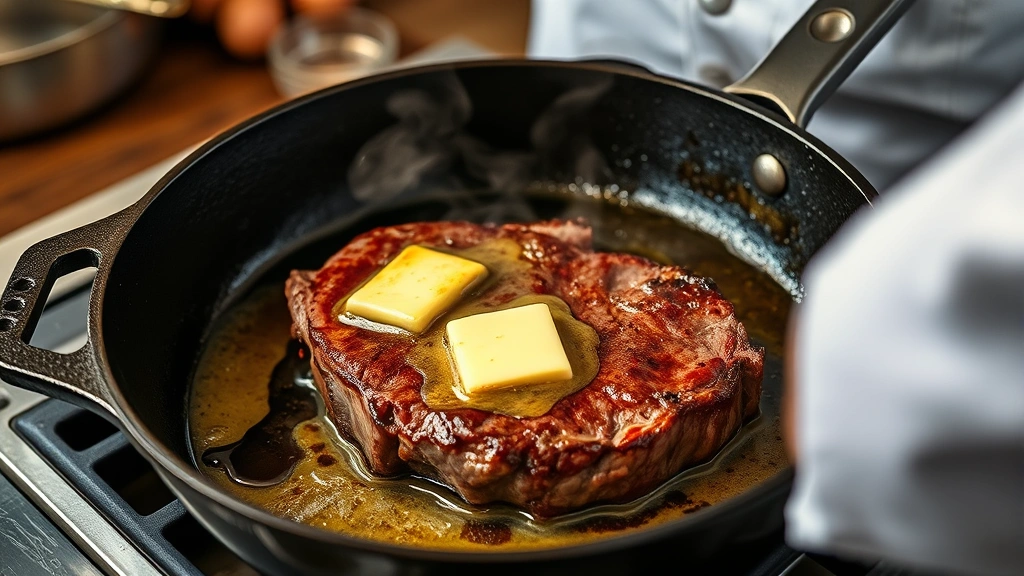
- Heat olive oil and butter in a large, oven-safe skillet over medium-high heat until the butter foams and just begins to brown, about 3-4 minutes.
- Carefully place the seasoned roast in the hot skillet. You should hear an immediate sizzle. Do not move the roast for the first 3-4 minutes to develop a golden crust.
- Sear the first side for 3-4 minutes until deeply browned, then carefully flip and sear the remaining sides for 3-4 minutes each (approximately 12-16 minutes total searing time for all sides).
- Add the halved onion and crushed garlic cloves (if using) to the skillet around the roast.
- Pour the beef broth around (not over) the roast, and add the balsamic vinegar to the liquid.
- Transfer the entire skillet to the preheated 400°F oven. The roast should be at least partially submerged or surrounded by liquid.
- Roast for approximately 15-20 minutes per pound, depending on your desired doneness. Insert a meat thermometer into the thickest part of the roast, being careful not to touch bone.
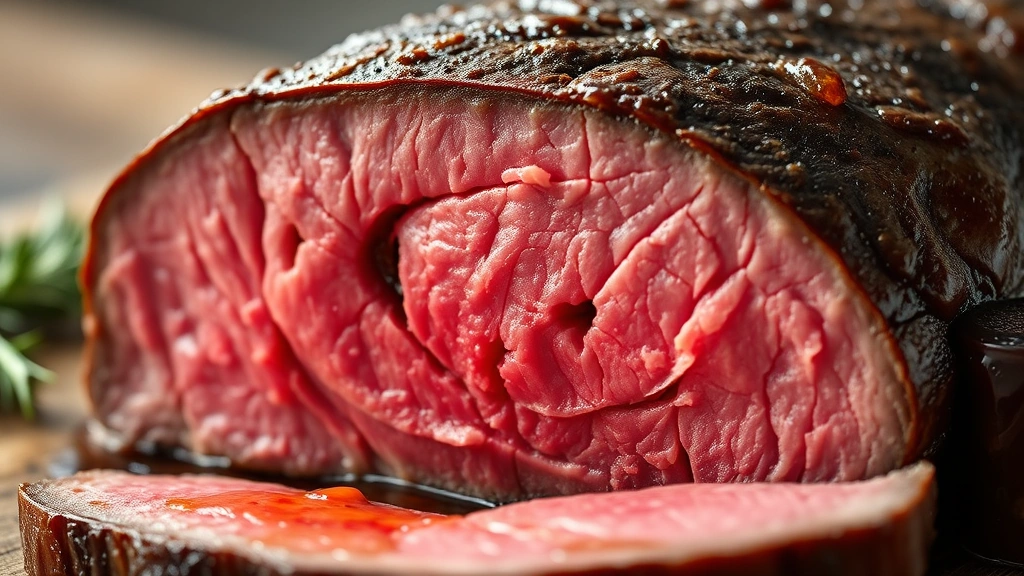
- Check the internal temperature starting at 1 hour of cooking time. You’re aiming for 130-135°F for medium-rare, 135-140°F for medium.
- When the roast reaches your target temperature, carefully remove it from the oven using oven mitts and place it on a cutting board.
- Tent the roast loosely with aluminum foil and let it rest for 15-20 minutes. This crucial step allows juices to redistribute throughout the meat.
- While the roast rests, strain the pan drippings through a fine-mesh sieve into a small saucepan, discarding solids.
- Place the saucepan over medium heat and simmer the pan sauce for 3-5 minutes, stirring occasionally, until it reaches your desired consistency.
- Slice the sirloin roast against the grain into ½-inch to ¾-inch thick slices using a sharp carving knife.
- Arrange the sliced roast on a serving platter and drizzle with the warm pan sauce.
- Serve immediately with your choice of sides, such as mashed potatoes, roasted vegetables, or a fresh green salad.
Pro Tips
- Always use a meat thermometer for accuracy. Visual cues can be misleading, especially with larger cuts. This tool removes all guesswork from roasting.
- The quality of your sirloin roast matters. Look for a cut with good marbling (fat throughout) as this contributes to tenderness and flavor. Ask your butcher for their recommendation.
- Don’t skip the resting period. During this time, carryover cooking continues to gently raise the internal temperature by 3-5°F, and the muscle fibers relax, allowing juices to reabsorb.
- If your kitchen tends to run cool, you may need to add 5-10 minutes to the cooking time. Conversely, if you have a very hot oven, start checking at the lower end of the time range.
- For a well-done roast, cook to an internal temperature of 145-150°F. Keep in mind this may result in a less tender roast than medium-rare.
- Leftover roast keeps in an airtight container in the refrigerator for up to 4 days. Slice thinly and use for sandwiches, or reheat gently in the oven with a bit of broth.
- Fresh herbs make a significant difference in this recipe. If you only have dried herbs available, use one-third the amount called for, as dried herbs are more concentrated.
- The pan sauce can be made richer by whisking in 1 tablespoon of cornstarch mixed with 2 tablespoons of water to create a more velvety consistency, if desired.
- For a more elegant presentation, garnish sliced roast with fresh herb sprigs and fleur de sel (fancy sea salt) before serving.
- This roast is excellent served at room temperature the next day if you prefer cold roast beef for lunches or light dinners.