
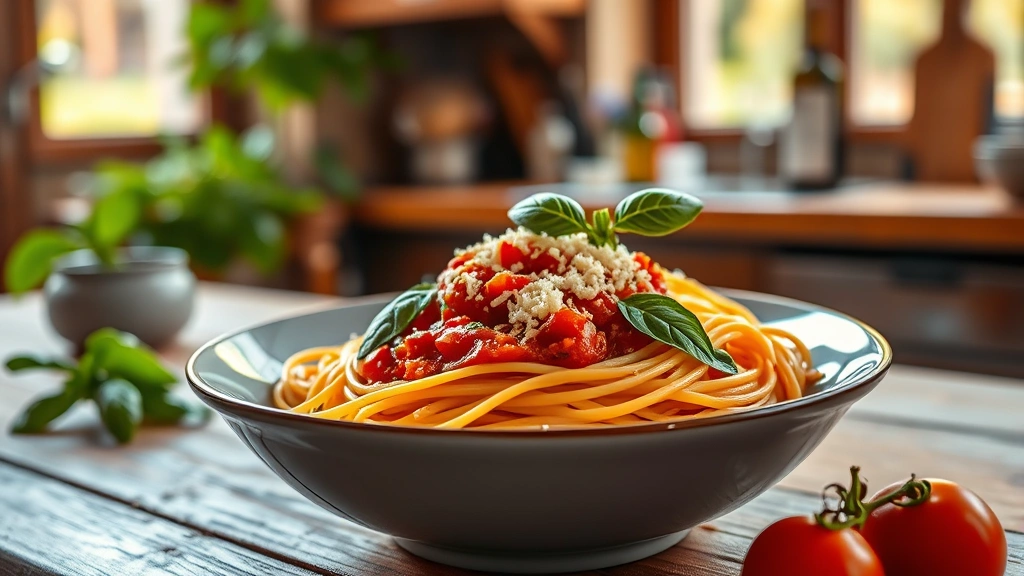
There’s something truly magical about a classic Italian pasta dish—it’s simple, elegant, and absolutely delicious. This quick and easy recipe celebrates the beauty of authentic Italian cooking, where quality ingredients and proper technique create something extraordinary.
Italian pasta is all about respecting tradition while embracing simplicity. Unlike heavy, complicated sauces, classic Italian preparations let the pasta shine through with just a few essential components: quality pasta, fresh tomatoes or cream, aromatic garlic and herbs, and good olive oil. The key to mastering this dish lies in understanding the balance between these elements and cooking with intention.
What makes this recipe so special is its versatility and speed. You can have a restaurant-quality pasta dinner on your table in under 30 minutes, making it perfect for busy weeknights or impressive last-minute entertaining. Whether you choose a bright marinara, creamy Alfredo, or aglio e olio, you’re honoring centuries of Italian culinary tradition.
I’ve designed this recipe to be approachable for beginners while still offering enough depth for experienced cooks. The techniques you’ll learn here—like emulsifying pasta water into your sauce and tasting for proper seasoning—are foundational skills that will elevate all your pasta dishes. These are the same methods used in trattorias throughout Italy, passed down through generations.
The beauty of classic Italian pasta is that it teaches us an important lesson: you don’t need complicated ingredients or lengthy cooking times to create something magnificent. Instead, you need fresh, quality components, respect for the cooking process, and a willingness to let simplicity speak for itself. This recipe embodies that philosophy perfectly.
I recommend using imported Italian pasta made from durum wheat—it has a superior texture and bite that makes all the difference. Pair this with San Marzano tomatoes if making a red sauce, or good quality butter and Parmigiano-Reggiano for creamier variations. These small choices elevate your dish from good to genuinely spectacular.
Serve this pasta immediately after finishing it, as the sauce will continue to set as it cools. Have your bowls warming and your guests seated before plating—this is one dish that waits for no one! The final garnish of fresh basil, quality olive oil, and freshly grated cheese transforms it into something restaurant-worthy.
For more pasta inspiration, check out our Best Chocolate Truffles Recipe for dessert pairings, or explore our Best Sweet Potato Brownie Recipe for Italian-inspired treats. You might also enjoy our Quickest Microwave Fudge Recipe for quick desserts, or indulge in our Best Cookie S’mores Recipe for outdoor entertaining.
For detailed pasta technique guidance, visit Serious Eats or New York Times Cooking for expert tips. You can also find beautiful plating inspiration at Bon Appétit.
Ingredients
- 1 pound imported Italian pasta (spaghetti, penne, or fettuccine)
- 4 cloves fresh garlic, thinly sliced
- 1/4 cup extra virgin olive oil
- 1 can (28 ounces) San Marzano tomatoes, crushed by hand
- 1 teaspoon kosher salt, plus more to taste
- 1/2 teaspoon freshly ground black pepper
- 1/4 teaspoon red pepper flakes, optional
- 8-10 fresh basil leaves, torn by hand
- Freshly grated Parmigiano-Reggiano cheese for serving
- 2 tablespoons reserved pasta water
- Sea salt for finishing
Instructions
- Fill a large pot with 6 quarts of water and bring to a rolling boil. Once boiling, add kosher salt until the water tastes like the sea—this is crucial for seasoning your pasta properly.
- While waiting for water to boil, prepare your sauce base by adding the sliced garlic and olive oil to a large skillet over medium heat.
- Cook the garlic gently in the olive oil for 2-3 minutes, stirring occasionally, until it becomes fragrant and just begins to turn golden. Be careful not to let it brown, as this will create a bitter flavor.
- Add the red pepper flakes to the garlic and oil, stirring to combine, then let it cook for another 30 seconds to infuse the flavors.
- Carefully add the crushed San Marzano tomatoes to the skillet along with the salt and pepper. Stir gently to combine all ingredients.
- Reduce heat to medium-low and allow the sauce to simmer gently for 10-12 minutes, stirring occasionally. The sauce should bubble gently around the edges but never boil vigorously.
- While the sauce simmers, add the pasta to your boiling water and cook according to package directions, but reduce the time by 1 minute—you want it al dente, with a slight firmness to the bite.
- Reserve 1 cup of pasta water before draining the pasta into a colander. Do not rinse the pasta, as the starch will help emulsify your sauce.
- Check your sauce for seasoning and adjust salt and pepper as needed. The flavors should be bright and well-balanced.
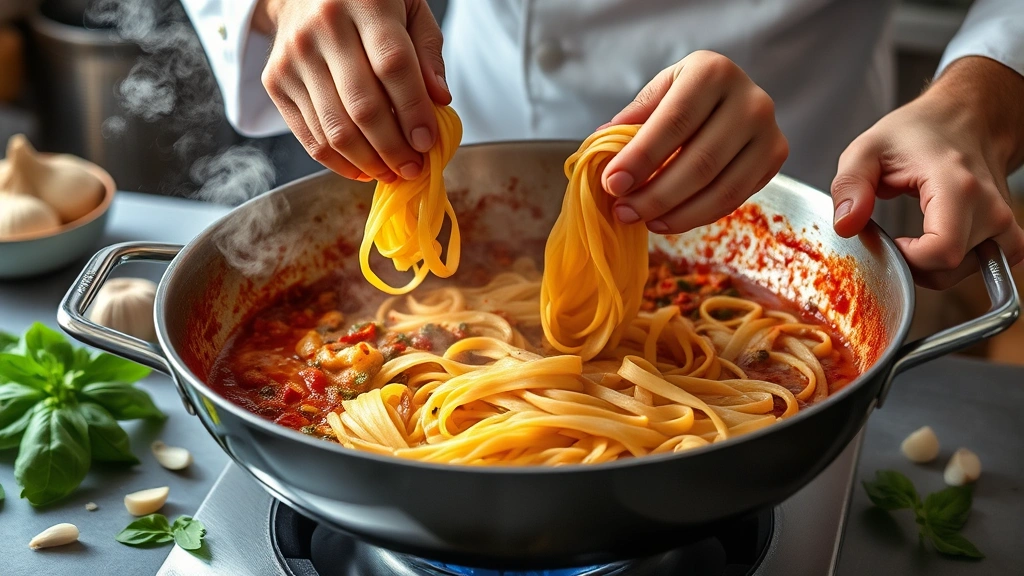
- Add the hot drained pasta directly to the simmering sauce, stirring gently to combine.
- Pour in 2 tablespoons of reserved pasta water and stir gently for 1-2 minutes. The pasta water’s starch will help create a silky emulsion that coats each piece of pasta beautifully.
- Remove from heat and gently tear the fresh basil leaves into the pasta, stirring to distribute evenly.
- Divide the pasta among four warm bowls immediately, as the sauce will continue to set as it cools.
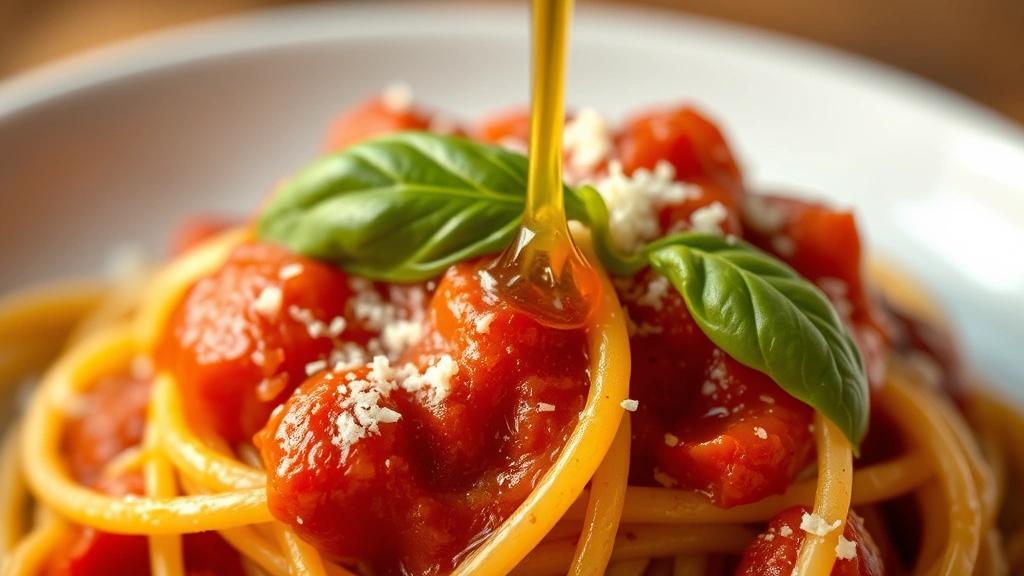
- Top each serving with freshly grated Parmigiano-Reggiano cheese, a drizzle of excellent extra virgin olive oil, and a pinch of sea salt.
- Serve immediately while the pasta is at its peak temperature and the sauce clings beautifully to each strand.
Pro Tips
- This recipe showcases the Italian principle of simplicity—quality ingredients matter tremendously here. Don’t skip the imported Italian pasta or San Marzano tomatoes; they make a noticeable difference in the final result.
- The key to perfect pasta is cooking it al dente, which means it should have a slight firmness when bitten. Overcooked pasta becomes mushy and won’t hold the sauce properly.
- Reserving pasta water is essential to classic Italian pasta preparation. The starch in this water helps create an emulsion that coats the pasta evenly and creates that signature silky sauce texture.
- Fresh basil should always be torn by hand, never cut with a knife, as cutting bruises the delicate leaves and causes them to oxidize and lose flavor.
- If using canned tomatoes isn’t ideal, substitute with 1.5 pounds of fresh, ripe summer tomatoes, roughly chopped. During winter months, San Marzano canned tomatoes are superior to fresh.
- For a creamier version, add 2-3 tablespoons of unsalted butter and 1/4 cup heavy cream to the sauce in the final minute of cooking, stirring until silky.
- The pasta cooking water should be added gradually to your sauce. Start with 2 tablespoons and add more if needed—the goal is a sauce that coats the pasta without being watery.
- Warm your serving bowls before plating. Cold bowls will cool the pasta too quickly and the sauce won’t cling as beautifully.
- This recipe serves 4 as a main course or 6 as a starter. The sauce can be made ahead and gently reheated before tossing with freshly cooked pasta.
- Proper seasoning is crucial in Italian cooking. Taste constantly throughout cooking and adjust salt and pepper as needed. Remember that Parmigiano-Reggiano adds saltiness, so season your sauce slightly under where you think it should be.
- Quality extra virgin olive oil should be used for finishing, not cooking. The heat damages its delicate flavors and aroma.
- This dish is best served immediately. Italian pasta is meant to be enjoyed at peak temperature and texture—waiting will diminish its appeal.