
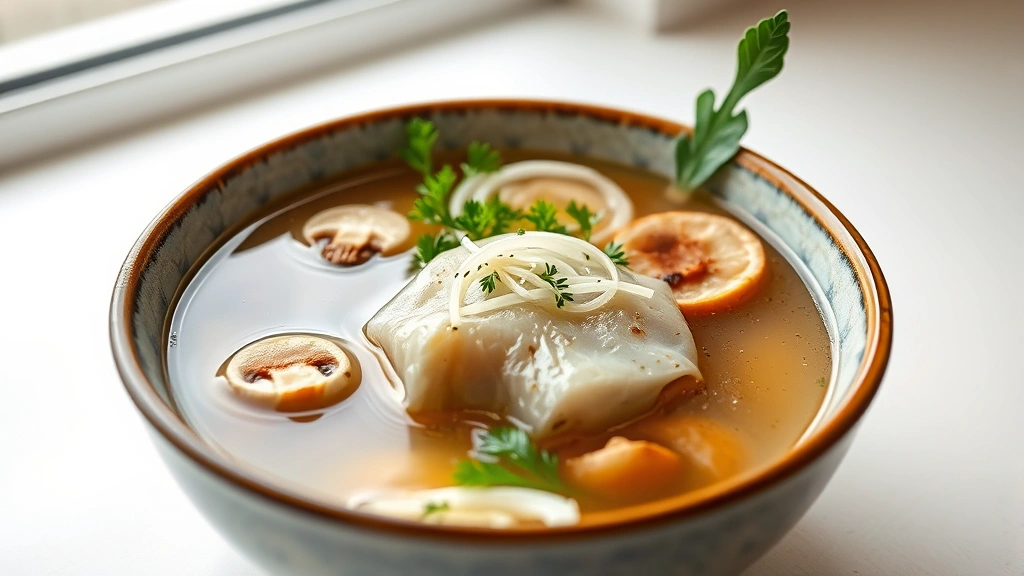
Japanese clear soup, or sumashi-jiru, is an absolutely elegant and delicate dish that brings sophistication to any table. This traditional soup showcases the Japanese philosophy of simplicity and purity, letting each ingredient shine with its own subtle flavor. Unlike heavy, cream-based soups, this clear broth is light, refined, and perfect for any season—whether served as a starter to a multi-course meal or enjoyed on its own.
What makes this Japanese clear soup recipe so special is its dedication to clean, pure flavors. The foundation begins with a beautiful dashi broth, which is the soul of Japanese cuisine. Dashi is made from kombu (seaweed) and bonito flakes, creating an umami-rich base that’s utterly delicious and naturally vegetarian-friendly if you prefer. The beauty of this soup lies in its versatility—you can customize it with seasonal vegetables, proteins, and garnishes that reflect what’s available and what you’re craving.
This recipe is incredibly approachable for home cooks of all skill levels. You don’t need fancy equipment or hard-to-find ingredients; most items can be sourced from your local grocery store or a quick online order. The technique is straightforward, focusing on proper timing and gentle handling to maintain the soup’s delicate clarity and pristine appearance. Once you master this basic technique, you’ll find yourself making it again and again, tweaking it seasonally and enjoying the meditative process of creating something so beautifully simple.
The attention to detail in Japanese cooking really shines through in clear soup preparation. Every element matters, from the temperature of your broth to the precise cutting of your vegetables. This recipe teaches you fundamental skills that will elevate your overall cooking confidence. Serve this stunning soup in beautiful bowls, and you’ll impress dinner guests without spending hours in the kitchen.
I absolutely love how this Japanese clear soup recipe brings restaurant-quality elegance to a weeknight dinner. The broth is aromatic and comforting, while the carefully selected ingredients add visual appeal and complementary flavors. Whether you’re new to Japanese cuisine or a seasoned enthusiast, this recipe will become a cherished favorite in your cooking repertoire.
For more inspiration on creating beautiful dishes, check out this guide to precision in recipe execution. The same care and attention you’ll learn here applies to all your cooking adventures. Let’s dive into creating this magnificent Japanese clear soup!
Ingredients
- 4 cups water
- 1 piece (4-inch) kombu (dried kelp), wiped clean with damp cloth
- 1 cup bonito flakes (katsuobushi)
- 2 cups chicken or vegetable broth (optional, for enhanced flavor)
- 1 teaspoon salt, divided
- 2 tablespoons mirin (sweet rice wine)
- 1 tablespoon soy sauce
- 8 ounces chicken breast, thinly sliced or cubed
- 8 ounces daikon radish, julienned or cut into thin matchsticks
- 4 shiitake mushrooms, sliced thinly
- 1 carrot, julienned or cut into thin matchsticks
- 4 pieces tofu puffs (age-dofu) or regular silken tofu, cubed
- 4 shrimp, peeled and deveined
- 2 cups fresh spinach or mizuna (Japanese mustard greens)
- 4 pieces kamaboko (fish cake), sliced into half-moons
- 2 scallions, sliced into 1-inch pieces
- Fresh yuzu juice or lemon juice to taste
- Ichimi togarashi (red chili pepper) for garnish
- Shichimi togarashi (seven spice blend) optional
Instructions
- Begin by making your dashi broth, which is the foundation of this beautiful Japanese clear soup. Fill a large pot with 4 cups of water and place it over medium-high heat. Once the water is steaming (just before it boils), add your kombu piece to the pot.
- Let the kombu steep in the hot water for 5-10 minutes, allowing its delicate umami flavors to infuse into the broth. You want the water to be hot but not boiling, as boiling will make the broth cloudy and bitter.
- Remove the kombu from the pot using tongs or a slotted spoon. Discard the kombu or save it for another use if desired.
- Slowly add the bonito flakes to the hot water, stirring gently. Let them bloom and infuse for about 5 minutes.
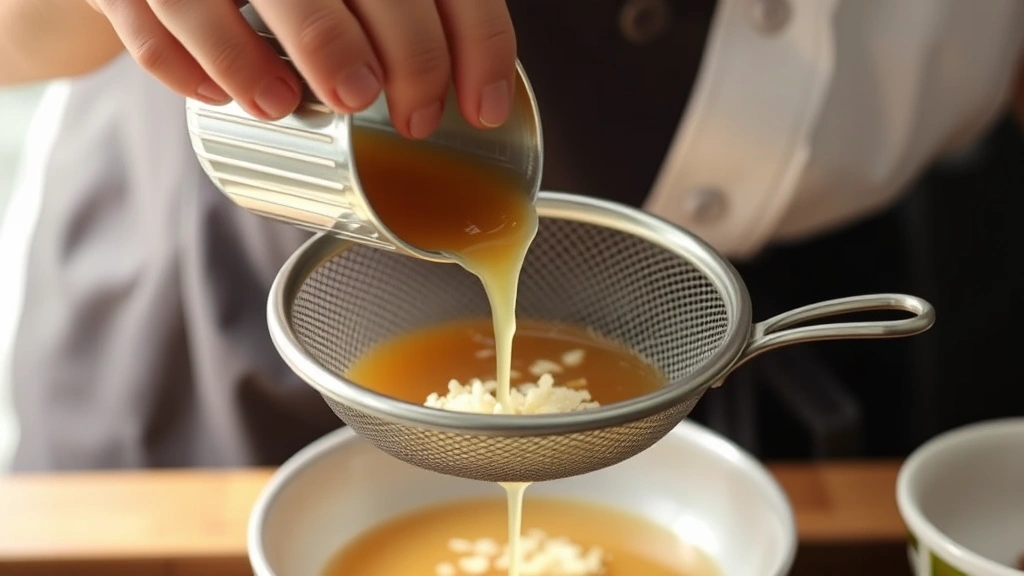
- Place a fine-mesh strainer lined with cheesecloth over a clean pot or large bowl. Carefully pour the broth through the strainer to catch all the bonito flakes, creating a crystal-clear, aromatic dashi.
- Return the strained dashi to your pot and place it over medium heat. If you’re using additional broth, add it now for extra depth of flavor.
- Season the broth with half of the salt (about 1/2 teaspoon), the mirin, and the soy sauce. Stir gently to combine. Taste and adjust seasonings as needed.
- Bring the seasoned broth to a gentle simmer over medium heat.
- While the broth is simmering, prepare all your ingredients. This mise en place approach ensures smooth cooking and prevents overcrowding the pot. Arrange your chicken, vegetables, tofu, shrimp, and garnishes on a cutting board within easy reach.
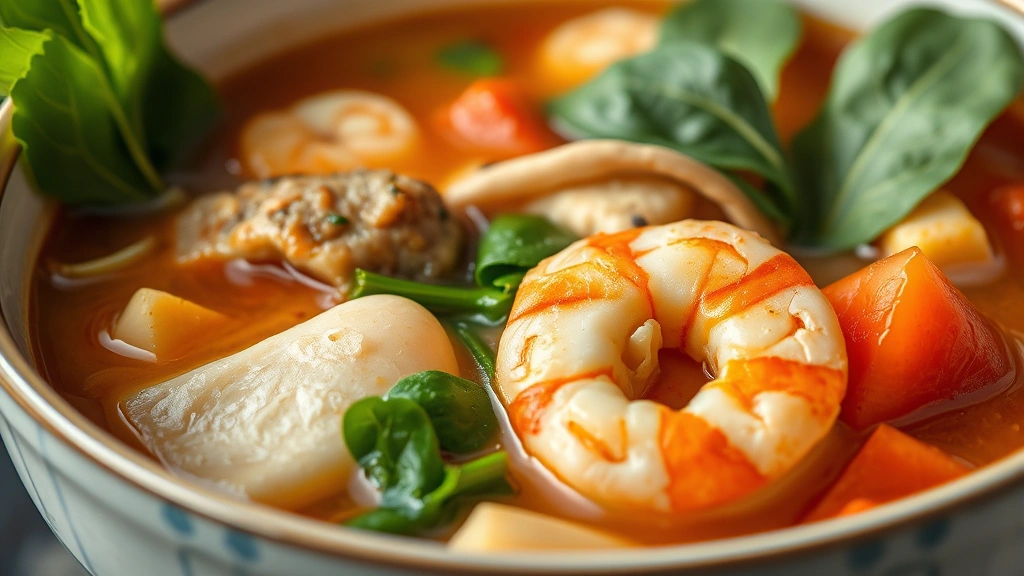
- Once the broth reaches a gentle simmer, add the chicken pieces first. Stir gently and cook for 3-4 minutes until the chicken is no longer pink.
- Add the daikon radish and carrot to the broth. These vegetables should cook for about 2-3 minutes until just tender but still maintaining their shape and slight crunch.
- Add the shiitake mushrooms and tofu puffs to the pot. Simmer for another 2 minutes, allowing these ingredients to warm through while maintaining their texture.
- Add the shrimp to the broth and cook for 1-2 minutes until they turn pink and are just cooked through. Be careful not to overcook the shrimp, or they’ll become tough.
- Add the fresh spinach or mizuna to the pot and stir gently until just wilted, about 1 minute.
- Remove the pot from heat and add the fish cake slices and scallions.
- Taste the soup and adjust seasoning with additional salt, soy sauce, or a squeeze of fresh yuzu or lemon juice if desired.
- Carefully ladle the soup into four beautiful serving bowls, distributing the ingredients evenly among each bowl.
- Garnish each bowl with a light sprinkle of ichimi togarashi or shichimi togarashi if you like a touch of heat.
- Serve immediately while the soup is still hot, and enjoy the delicate, pristine flavors of this elegant Japanese clear soup.
Pro Tips
Temperature Matters: Japanese clear soup should be served piping hot in warmed bowls. Dip your serving bowls in hot water just before ladling to maintain the perfect temperature throughout the meal.
Customization by Season: Spring calls for fresh bamboo shoots and young peas. Summer is perfect for cucumber and delicate white fish. Autumn welcomes chestnuts and seasonal mushrooms. Winter is ideal for hearty vegetables like carrots and daikon.
Protein Options: While this recipe features chicken, you can substitute with thinly sliced beef, delicate white fish like sea bream, or keep it vegetarian by using additional tofu and vegetables.
Making Dashi Ahead: You can prepare your dashi broth up to two days in advance and store it in the refrigerator. This makes weeknight preparation incredibly convenient.
Clarifing Your Broth: For the clearest possible broth, use a coffee filter instead of cheesecloth when straining. This takes a bit longer but yields restaurant-quality clarity.
Garnish Importance: In Japanese cuisine, garnishes aren’t just decoration—they add flavor, texture, and visual appeal. Don’t skip them! Fresh scallions and a delicate sprinkle of spice make all the difference.
Broth Seasoning: Start with less seasoning than you think you need. You can always add more, but you can’t remove it. The broth should taste subtly flavored, not aggressively seasoned.
Vegetable Cutting: Uniformly cut vegetables not only look beautiful but also cook evenly. This attention to detail is essential in Japanese cuisine.
No Cloudy Broth: Never stir the broth vigorously or let it boil once the bonito flakes are added. This creates cloudiness and muddy flavors.
Serving Suggestions: This soup is traditionally served in small portions as part of a larger Japanese meal. It pairs beautifully with elegant accompaniments and complementary dishes that maintain the refined aesthetic.