
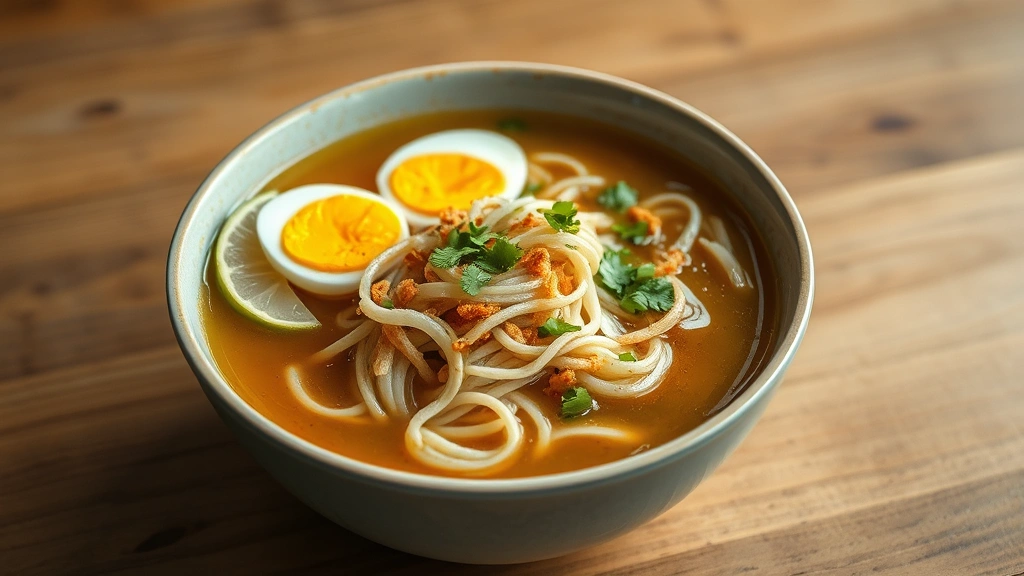
Mohinga is Burma’s most beloved national dish—a fragrant, deeply satisfying fish soup that’s as comforting as it is complex. This creamy, aromatic broth is traditionally served for breakfast, but honestly, it’s perfect any time of day. The magic happens when you layer fish, aromatics, and spices into a silky coconut-based sauce that coats tender rice noodles and crispy fried onions.
What makes mohinga so special is how it balances so many flavors and textures at once. You’ve got the earthiness of fish paste, the brightness of ginger and garlic, the subtle heat of chili, and the richness of coconut milk all working together in perfect harmony. The crispy fried onions and boiled eggs add textural contrast, while fresh herbs and lime juice brighten everything up at the end.
I fell in love with mohinga during a trip to Myanmar, and I’ve been perfecting my version ever since. This recipe honors the traditional preparation while making it accessible for home cooks. Don’t be intimidated by the ingredient list—most of these are pantry staples, and the actual cooking process is quite straightforward. You’ll start by making a fragrant base of aromatics, build your fish stock, and then create that signature creamy broth that makes mohinga absolutely irresistible.
The beauty of this dish is that while it looks fancy enough to serve to guests, it’s actually quite forgiving and comes together in under an hour. You can prep components ahead of time, and leftovers taste even better the next day as flavors continue to meld. Whether you’re a seasoned cook exploring Southeast Asian cuisine or someone looking for a new weeknight dinner favorite, this comforting soup will become a regular rotation in your kitchen.
Serve it family-style with all the toppings on the side so everyone can customize their bowl. The combination of the silky broth, tender noodles, and crispy elements creates a symphony of flavors that’s simply unforgettable. This is the kind of dish that warms you from the inside out and makes you feel like you’re traveling through the streets of Yangon.
Ingredients
- 3 tablespoons vegetable oil
- 1 large yellow onion, roughly chopped
- 3 tablespoons minced fresh ginger
- 6 cloves garlic, minced
- 2 tablespoons fish paste (ngapi)
- 1 pound white fish fillets (cod, halibut, or snapper), cut into chunks
- 6 cups fish or chicken stock
- 1 can (13.5 oz) coconut milk
- 2 tablespoons chickpea flour (besan), mixed with 3 tablespoons water
- 1-2 teaspoons red chili powder or cayenne pepper
- 1 teaspoon turmeric powder
- 1 teaspoon shrimp paste (optional but recommended)
- 2 tablespoons fish sauce
- 1 tablespoon brown sugar
- Salt and white pepper to taste
- 1 pound fresh egg noodles or rice noodles
- 4 hard-boiled eggs, halved
- 1 cup crispy fried onions
- Fresh cilantro, chopped
- Fresh mint leaves, chopped
- Lime wedges
- Sliced red chilies
- Bean sprouts (optional)
Instructions
- Heat the vegetable oil in a large pot or Dutch oven over medium heat. Add the chopped onion and sauté for 3-4 minutes until it becomes translucent and starts to soften.
- Add the minced ginger and garlic to the pot, stirring constantly for about 1-2 minutes until fragrant. Be careful not to burn the garlic, as this will make the soup taste bitter.
- Stir in the fish paste and shrimp paste (if using), mixing well with the aromatics. Cook for 1-2 minutes to allow the pastes to infuse into the oil and create a flavorful base.
- Add the fish chunks to the pot and stir gently to coat them with the aromatic mixture. Cook for 2-3 minutes to lightly sear the fish.
- Pour in the fish or chicken stock, stirring well to combine all ingredients. Bring the mixture to a gentle simmer and let it cook for 8-10 minutes until the fish is cooked through and starting to break apart.
- Using a slotted spoon or fine mesh strainer, remove the fish chunks from the broth and set aside on a plate. This step helps clarify the soup and makes it easier to incorporate the fish back in later.
- Pour the broth through a fine mesh strainer into a clean pot, pressing on the solids to extract all the flavorful liquid. This creates a clear, refined broth that’s characteristic of excellent mohinga.
- Return the strained broth to the pot and bring it back to a simmer over medium heat. Stir in the coconut milk, breaking up any clumps, and let it heat through for 2-3 minutes.
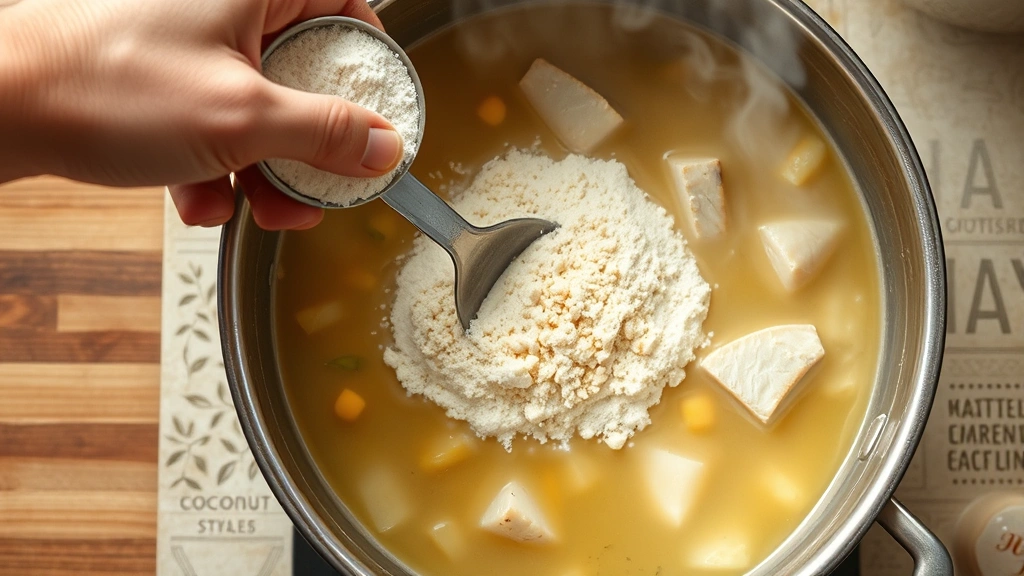
- In a small bowl, mix the chickpea flour with water until you have a smooth, lump-free slurry. Slowly pour this mixture into the simmering broth while stirring constantly. This thickens the soup and gives it that signature creamy texture.
- Add the turmeric powder and red chili powder to the pot, stirring well to distribute the spices evenly throughout the broth. These spices give mohinga its characteristic color and warmth.
- Gently return the cooked fish to the pot along with the fish sauce, brown sugar, salt, and white pepper. Stir gently to avoid breaking up the fish too much.
- Taste the soup and adjust seasonings as needed. The soup should be aromatic, slightly spicy, and have a good balance of savory, sweet, and tangy flavors. You can add more fish sauce if it needs more depth, more chili powder if you want more heat, or more sugar if it needs balancing.
- Let the mohinga simmer for another 5 minutes to allow all the flavors to meld together beautifully.
- While the soup simmers, cook the egg noodles according to package directions in a separate pot of boiling salted water. Drain well and divide among serving bowls.
- Ladle the hot mohinga soup over the noodles in each bowl, making sure each serving gets plenty of broth, fish, and aromatics.
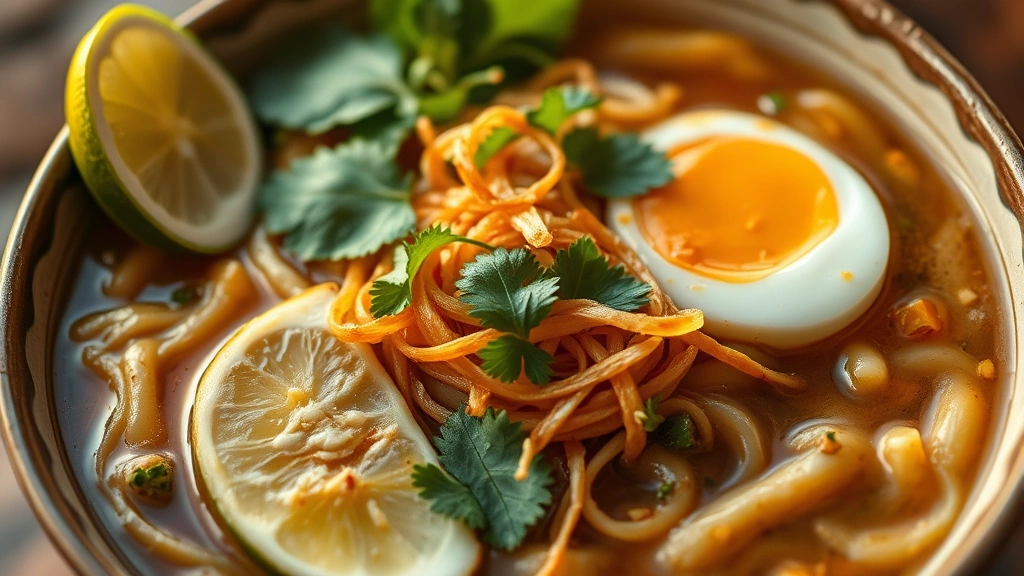
- Top each bowl with halved hard-boiled eggs, a generous handful of crispy fried onions, fresh cilantro, and fresh mint.
- Serve immediately with lime wedges, sliced red chilies, and bean sprouts on the side so diners can customize their bowls to their preference.
- Encourage your guests to squeeze fresh lime juice over their soup and add extra chili for heat if desired. The fresh citrus and herbs really brighten all the rich, complex flavors.
Pro Tips
The chickpea flour slurry is what gives mohinga its characteristic creamy consistency without using heavy cream. Make sure to mix it smoothly before adding to avoid lumps.
You can make the broth up to 2 days ahead and store it in the refrigerator. Reheat gently before serving, and cook the noodles and prepare toppings fresh.
For a vegetarian version, substitute the fish with extra mushrooms and use vegetable stock instead. Use soy sauce instead of fish sauce and omit the fish paste.
The fried onions are crucial—they provide textural contrast and won’t get soggy if added just before serving. You can make your own by thinly slicing onions and frying them until golden and crispy.
Fresh herbs like cilantro and mint are traditional and really make the dish sing. Don’t skip them.
Mohinga tastes even better the next day as flavors continue to develop. Store leftovers in an airtight container for up to 3 days.
You can use any firm white fish for this recipe. Cod, halibut, snapper, and tilapia all work beautifully. Avoid delicate fish like sole as they’ll fall apart too much.
For extra richness, you can add a splash of condensed milk or evaporated milk along with the coconut milk.
If you can’t find fresh egg noodles, dried rice noodles or even ramen noodles work well as substitutes.
The soup should have a silky, pourable consistency—not too thick and not too thin. If it’s too thin, make another slurry and add it gradually. If it’s too thick, add more broth.