
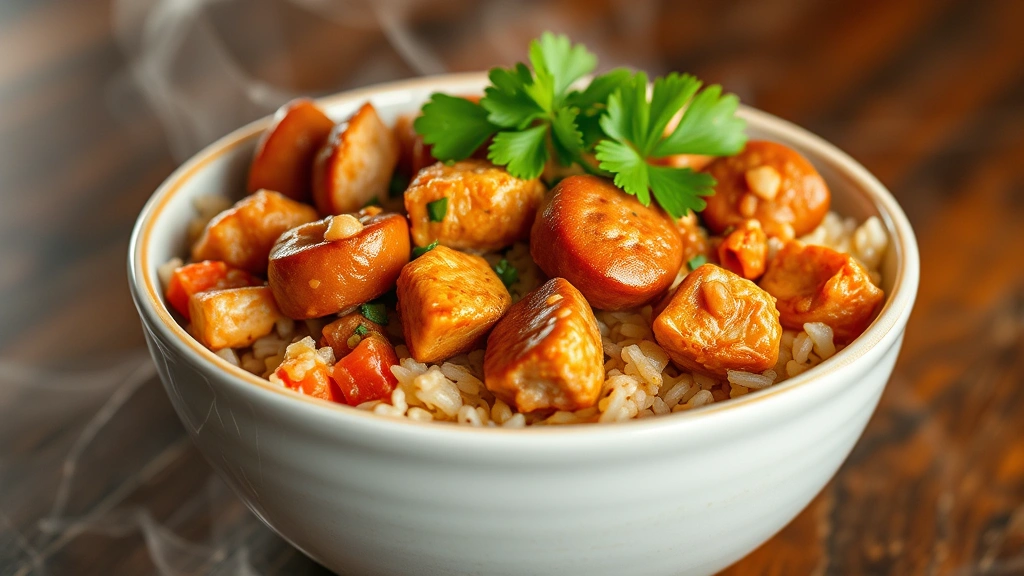
An authentic jambalaya recipe is one of those magical dishes that brings people together around the table. This easy Creole classic captures all the warmth, flavor, and soul of New Orleans cooking in just 30 minutes—no complicated techniques or hard-to-find ingredients required.
I fell in love with jambalaya the first time I tasted it at a little café in the French Quarter. The way the spices danced on my tongue, how the rice soaked up all those incredible flavors, the perfect balance of smoky sausage and tender chicken—it was pure magic. What surprised me most? Making an authentic version at home turned out to be way easier than I expected. This recipe has become my go-to when I want to impress guests or simply transport myself back to those magical streets.
Jump To Section
Why This Recipe Works
The secret to incredible jambalaya lies in building layers of flavor from the very first moment you heat that oil. We start by creating a quick roux—nothing fancy, just enough to give the dish body and depth. The holy trinity of Creole cooking (onions, celery, and bell pepper) forms the aromatic foundation that makes this dish sing.
What makes this version truly authentic is the combination of smoked sausage and chicken, which gives you two distinct proteins that complement each other beautifully. The sausage adds smokiness and richness, while the chicken keeps things light and balanced. Additionally, cooking everything in one pot means less cleanup and more time enjoying your meal.
The 30-minute timeline works because we’re using quick-cooking ingredients and techniques that don’t sacrifice flavor. Meanwhile, the rice cooks directly in the seasoned broth, absorbing every bit of that delicious spice-infused liquid. This method ensures every single grain tastes incredible—no bland rice here.
Ingredient Tips & Substitutions
Smoked sausage is the backbone of authentic jambalaya, and I recommend using andouille if you can find it—that’s the traditional Creole choice. However, any quality smoked sausage works beautifully. The smokiness is what you’re after, so don’t skip this ingredient or use plain sausage as a substitute.
For the chicken, boneless, skinless breasts are perfect for this recipe and cook quickly. If you prefer darker meat, thighs work wonderfully too—just add a minute or two to the cooking time. The beauty of this dish is its flexibility; you can also add shrimp, okra, or tomatoes depending on what you have on hand or what you’re craving.
The spice blend is where jambalaya gets its personality. Cayenne pepper gives it heat, while paprika adds color and mild smokiness. Don’t be shy with these seasonings—they’re essential to creating that authentic Creole flavor profile. For instance, if you like things spicier, bump up the cayenne by a quarter teaspoon.
I always use long-grain white rice for jambalaya. It holds its shape beautifully and absorbs the broth without becoming mushy. Chicken broth versus beef broth is a matter of preference—chicken is more traditional and lets the other flavors shine, but beef broth adds deeper richness if that appeals to you.
Serving Suggestions
Jambalaya is absolutely perfect served on its own, steaming hot from the pot with nothing but a cold drink and good company. The one-pot nature of this dish makes it ideal for weeknight dinners when you want something impressive but don’t want to spend hours cooking. However, a simple side salad like our Quick and Tasty Olive Garden Salad Recipe adds a fresh, crisp contrast that balances the richness beautifully.
For a complete meal, consider pairing jambalaya with cornbread or crusty French bread to soak up every drop of that incredible sauce. A fresh Best Mexican Corn Salad Recipe brings brightness and sweetness that complements the spiced rice perfectly. Green salads work wonderfully too, especially ones with a vinegar-based dressing that cuts through the richness.
This dish feeds a crowd beautifully, making it perfect for casual entertaining or family gatherings. The flavors actually improve if you make it ahead and let everything meld together for a few hours. Serve it family-style right from the pot for that authentic New Orleans experience.
Storage & Reheating
Jambalaya keeps wonderfully in the refrigerator for up to four days in an airtight container. The flavors actually deepen and become more complex as it sits, so leftovers are often even better than the original meal. This makes it an excellent choice for meal prep or cooking ahead for busy weeks.
To reheat, simply place the jambalaya in a pot over medium heat and add a splash of chicken broth to restore moisture. Stir occasionally until everything is heated through, about five to seven minutes. You can also reheat individual portions in the microwave—just add a tablespoon of broth and cover loosely before heating for two to three minutes, stirring halfway through.
For longer storage, jambalaya freezes beautifully for up to three months. Cool it completely, then transfer to freezer-safe containers, leaving a bit of headspace for expansion. Thaw overnight in the refrigerator before reheating using the same method as above.
The New Orleans Connection
Jambalaya represents everything wonderful about Louisiana cooking—it’s resourceful, flavorful, and deeply rooted in cultural tradition. The dish likely evolved from Spanish paella, blended with African cooking techniques and Creole ingredients to create something entirely unique. Understanding this history helps you appreciate why every element matters and why this authentic jambalaya recipe has endured for generations.
The word “jambalaya” itself has mysterious origins, possibly derived from Spanish “jambeau” or French “jambon” (ham). What’s certain is that this dish became a staple of New Orleans home cooking because it’s forgiving, delicious, and makes everyone happy. When you make this recipe, you’re not just cooking dinner—you’re connecting to a rich culinary heritage.
If you’re looking for similar one-pot comfort dishes, check out our Simple Old Fashioned Vegetable Beef Soup Recipe or our Best Traditional Pasta Fagioli Recipe. Both offer that same satisfying, warming quality that makes you feel like you’re being hugged from the inside out. For something spicier, our Best Mexican Soup Recipe delivers similar bold flavors in a completely different format.
According to Serious Eats, proper technique in building flavor layers is crucial for authentic Creole cooking. New York Times Cooking emphasizes the importance of quality ingredients like smoked sausage in regional recipes. Bon Appétit celebrates jambalaya as a cornerstone of American regional cuisine.
This authentic jambalaya recipe delivers restaurant-quality results in your own kitchen. The combination of tender chicken, smoky sausage, aromatic vegetables, and perfectly seasoned rice creates a dish that’s both comforting and exciting. Best of all? It comes together in just 30 minutes, making it perfect for any night of the week when you want something special.
Ingredients
- 2 tablespoons olive oil
- 8 ounces smoked andouille sausage, sliced into half-moons
- 1 pound boneless, skinless chicken breasts, cut into bite-sized pieces
- 1 medium yellow onion, diced
- 1 red bell pepper, diced
- 2 celery stalks, diced
- 3 cloves garlic, minced
- 1½ cups long-grain white rice
- 3 cups chicken broth
- 1 can (14.5 oz) diced tomatoes with their juices
- 2 teaspoons paprika
- 1 teaspoon cayenne pepper
- 1 teaspoon dried oregano
- ½ teaspoon dried thyme
- 1 teaspoon salt, plus more to taste
- ½ teaspoon black pepper
- ¼ teaspoon garlic powder
- 2 bay leaves
- Chopped fresh parsley for garnish (optional)
Instructions
- Heat the olive oil in a large pot or Dutch oven over medium-high heat until it shimmers, about one minute. Add the sliced sausage and cook for three minutes, stirring occasionally, until it develops a light golden color and releases some of its oils. Remove the sausage to a plate, leaving the flavorful oil behind.
- Add the chicken pieces to the same pot and cook for four to five minutes, stirring occasionally, until they’re no longer pink on the outside. You don’t need to cook them all the way through—they’ll finish cooking with the rice. Transfer the chicken to the plate with the sausage.
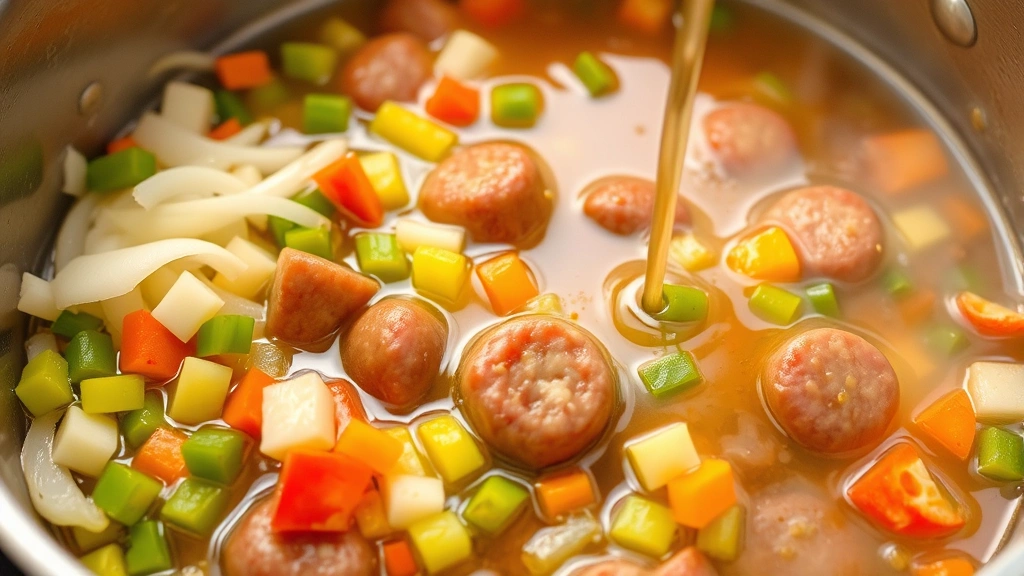
- In the same pot, add the diced onion, bell pepper, and celery—this is your holy trinity of Creole cooking. Stir frequently for four to five minutes until the vegetables soften and become fragrant. This is where you’re building the flavor foundation that makes jambalaya so special.
- Add the minced garlic and stir constantly for about 30 seconds until it becomes incredibly fragrant. Be careful not to burn it—you just want to wake up those garlic flavors.
- Stir in the paprika, cayenne pepper, oregano, thyme, salt, black pepper, and garlic powder. Mix everything together thoroughly and cook for one minute, allowing the spices to bloom and release their essential oils. This step is crucial for developing that authentic Creole flavor.
- Add the rice to the pot and stir well, coating each grain with the spiced oil. Cook for two minutes, stirring occasionally, to lightly toast the rice. This adds nuttiness and helps the rice maintain its texture.
- Pour in the chicken broth and diced tomatoes with their juices, scraping up any browned bits from the bottom of the pot. Add the bay leaves, then return the sausage and chicken to the pot along with any accumulated juices.
- Bring everything to a boil, then reduce the heat to medium-low and cover the pot with a lid. Simmer for 15 minutes without lifting the lid—this allows the rice to cook perfectly and absorb all those incredible flavors.
- After 15 minutes, carefully remove the lid and check that the rice is tender and has absorbed most of the liquid. If there’s still liquid remaining, cover and cook for another two to three minutes. If the rice seems dry, add a splash more broth.
- Remove from heat and let the jambalaya rest for five minutes with the lid on. This allows the flavors to settle and the rice to fully absorb any remaining moisture.
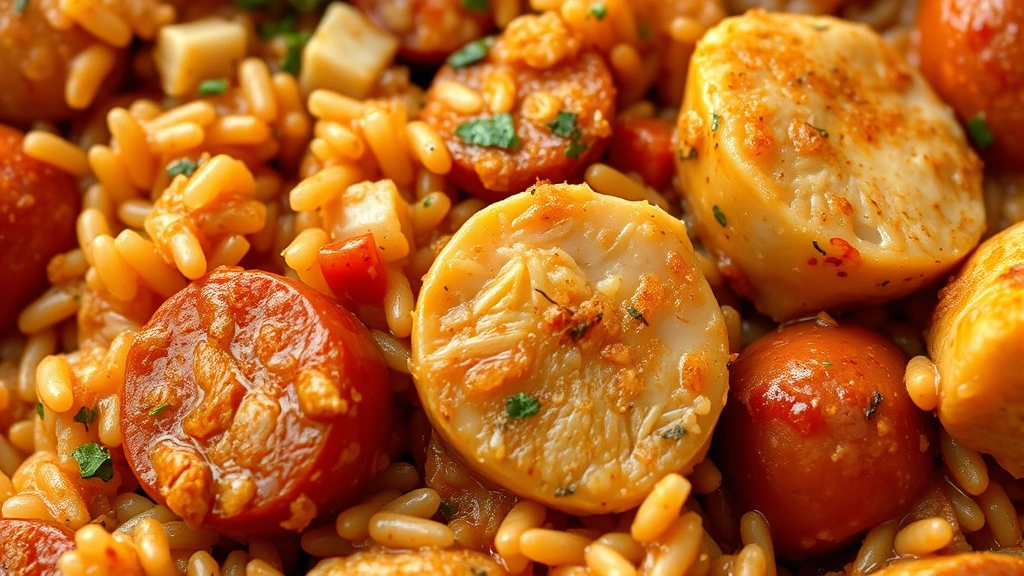
- Remove the bay leaves, fluff the rice gently with a fork, and taste for seasoning. Add more salt and cayenne if needed to suit your preference. Serve immediately in bowls, garnished with fresh chopped parsley if desired.
Pro Tips
The holy trinity—onions, celery, and bell pepper—is the aromatic foundation of all authentic Creole cooking. These three vegetables must be diced to a similar size so they cook evenly and distribute flavor throughout the dish. Don’t skip this step or rush it; this is where the magic begins.
Smoked andouille sausage is traditional and gives jambalaya its signature smoky depth. However, if you can’t find andouille, any quality smoked sausage works beautifully. The key is using smoked sausage rather than fresh—that smokiness is essential to authentic flavor.
Chicken breasts work perfectly here because they cook quickly and keep the dish light. If you prefer dark meat, use thighs and add another minute or two to the cooking time. For a surf-and-turf version, add shrimp during the last five minutes of cooking.
The spice blend gives jambalaya its personality and heat. Start with the amounts listed, then adjust to your preference. If you like things spicier, increase the cayenne gradually—you can always add more, but you can’t take it out. Meanwhile, if you prefer milder heat, reduce it slightly.
Don’t lift the lid while the rice is cooking. This releases steam and disrupts the cooking process, potentially resulting in unevenly cooked rice. Trust the process—30 minutes total is perfect timing for this recipe.
For substitutions, you can use chicken thighs instead of breasts, add okra or shrimp, or include diced tomatoes if you prefer a brothier jambalaya. Some cooks add a splash of hot sauce or Worcestershire sauce for extra depth. Additionally, if you want to make this vegetarian, substitute the sausage and chicken with extra vegetables like mushrooms, zucchini, and black beans.
Leftovers keep beautifully in the refrigerator for four days and actually taste better the next day as flavors continue to meld. Freeze for up to three months in airtight containers. Reheat gently with a splash of broth to restore moisture.
This dish serves four to six people depending on appetite. For a crowd, simply double the recipe and use a larger pot. The cooking time remains the same since you’re just increasing volume proportionally.