
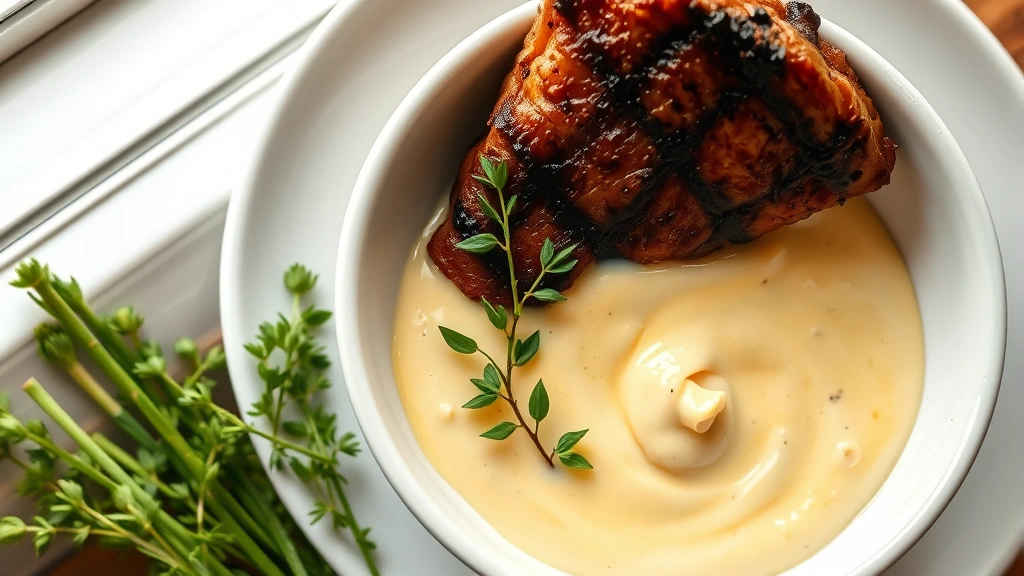
This bearnaise sauce recipe is an absolute game-changer for elevating your favorite dishes in just 10 minutes. I’m so excited to share this classic French sauce with you because it’s honestly easier than most people think—and once you master it, you’ll find yourself making it constantly.
Béarnaise is that luxurious, velvety sauce that makes steaks sing, transforms eggs Benedict into something magical, and turns simple vegetables into restaurant-worthy sides. The beautiful thing about this sauce is that it’s made with just a handful of pantry staples: egg yolks, butter, shallots, tarragon, and vinegar. No fancy ingredients required.
Jump To Section
I remember the first time I attempted béarnaise at home. I was terrified—and honestly, my first batch broke into a greasy mess. But after understanding the technique and temperature control, I realized how forgiving this sauce actually is. Now I make it without thinking twice, and it’s become one of my go-to recipes for impressing guests without spending hours in the kitchen.
Why This Bearnaise Sauce Recipe Works
The magic of béarnaise lies in the emulsification process, which creates that silky, luxurious texture everyone craves. By slowly whisking butter into egg yolks while maintaining the perfect temperature, you create a stable emulsion that’s absolutely divine. The key is patience—rushing this step is where most home cooks run into trouble.
Additionally, the combination of fresh tarragon and shallots gives béarnaise its distinctive flavor profile. Unlike hollandaise, which is more straightforward, béarnaise has this subtle herbaceous quality that makes it incredibly versatile. For instance, it works beautifully over grilled steak, asparagus, or even poached fish.
The vinegar reduction is another crucial element that often gets overlooked. This concentrated base provides acidity and prevents the sauce from being too heavy or cloying. It’s what separates a good béarnaise from a truly exceptional one.
Ingredient Tips & Substitutions
Fresh tarragon is absolutely essential for authentic béarnaise—don’t skip it or substitute it with dried unless you absolutely must. However, if fresh tarragon is genuinely unavailable, you can use fresh chervil or even a small amount of fresh dill in a pinch. The flavor profile will shift slightly, but the sauce will still be delicious.
Room temperature ingredients are your secret weapon here. I always let my eggs and butter sit out for about 15 minutes before starting. This prevents temperature shock and makes the emulsification process much smoother and more forgiving.
The type of butter matters too—use good quality, unsalted butter if possible. This gives you control over the salt content and ensures a cleaner, more refined flavor. Meanwhile, for the shallots, mince them as finely as possible so they dissolve into the sauce rather than creating little chunks.
If you’re avoiding raw eggs, you can use pasteurized eggs from the grocery store, which are perfectly safe and work beautifully in this recipe. The gentle heat from the sauce will also provide additional safety margin.
The 10-Minute Method
What makes this bearnaise sauce recipe so quick is the streamlined approach to the vinegar reduction. Rather than letting it simmer for ages, a high-heat reduction in just a few minutes concentrates the flavors beautifully. This is where I’ve shaved off precious minutes without sacrificing taste.
Using a double boiler or a heat-proof bowl over simmering water keeps the temperature controlled and prevents scrambling. The gentle, indirect heat is absolutely critical—you’re looking for about 160°F, which you can check with an instant-read thermometer if you’re nervous.
Whisking constantly ensures even heat distribution and smooth emulsification. I use a wire whisk and maintain a steady, rhythmic motion. The sauce will gradually transform from thin and separated to thick and creamy—it’s genuinely satisfying to watch happen.
Serving Suggestions
Béarnaise is traditionally served with grilled steak, but honestly, the applications are endless. I love it over roasted asparagus, grilled vegetables, poached eggs, or even simple broiled fish. The sauce elevates whatever it touches.
For a truly impressive dinner, try it over seared scallops or grilled salmon. The richness of the sauce complements seafood beautifully. Additionally, a spoonful over roasted potatoes transforms them into something restaurant-quality.
I also love serving béarnaise alongside grilled vegetables or even over simple scrambled eggs for an elevated brunch situation. The sauce brings elegance to any plate without requiring much additional effort. However, remember that a little goes a long way—you don’t need much to make an impact.
Storage & Reheating Tips
Béarnaise is best served immediately, but you can make it up to 2 hours ahead and keep it warm in a thermos or in a bowl set over warm (not hot) water. The key is preventing it from getting too hot, which causes the emulsion to break. Gentle warmth is your friend here.
If your sauce breaks during cooking, don’t panic—it’s actually quite fixable. Start with a fresh egg yolk in a clean bowl and slowly whisk in the broken sauce. It usually comes back together beautifully. I’ve salvaged many batches this way, so don’t give up.
For next-day storage, keep leftover béarnaise in an airtight container in the refrigerator for up to 3 days. To reheat, place the bowl over warm (not simmering) water and whisk gently until it reaches serving temperature. Adding a tiny splash of warm water or broth can help restore the creamy texture if needed.
Unlike some sauces, béarnaise doesn’t freeze well because the emulsion breaks down during thawing. However, you can freeze the vinegar reduction component separately and prepare the sauce fresh when you need it. This hybrid approach gives you some make-ahead convenience while maintaining quality.
I typically make béarnaise to order—and honestly, once you practice it a few times, you’ll realize it’s genuinely quicker than reheating. The 10-minute timeframe becomes your standard, and you’ll find yourself whipping up this classic French mother sauce with complete confidence.
According to Bon Appétit’s classic method, the most important factor is temperature control throughout the process. Meanwhile, serious food enthusiasts often reference the New York Times approach as a gold standard for consistency.
This bearnaise sauce recipe has become a staple in my kitchen because it’s elegant, impressive, and genuinely foolproof once you understand the fundamentals. Whether you’re cooking for yourself or entertaining guests, this sauce delivers restaurant-quality results every single time. Happy cooking!
Ingredients
- 3 tablespoons white wine vinegar or tarragon vinegar
- 1 tablespoon water
- 2 shallots, minced very finely
- 1/4 teaspoon whole black peppercorns
- 3 egg yolks, room temperature
- 1/2 cup (1 stick) unsalted butter, melted and warm but not hot
- 1 tablespoon fresh tarragon, finely chopped (or 1/2 teaspoon dried tarragon)
- 1/2 teaspoon fresh lemon juice
- Pinch of cayenne pepper
- Sea salt and freshly ground black pepper to taste
Instructions
- Combine the white wine vinegar, water, minced shallots, and black peppercorns in a small saucepan over medium-high heat. Reduce the mixture to about 1 tablespoon (this should take 3-4 minutes). The liquid will look syrupy and concentrated. Strain through a fine-mesh sieve, discarding the peppercorns and shallots, and let the reduction cool slightly.
- Fill a larger saucepan or skillet with about 1 inch of water and bring it to a gentle simmer. Place a heat-proof bowl that fits snugly over the saucepan without touching the water (this is your double boiler setup). Make sure the bowl is completely dry.
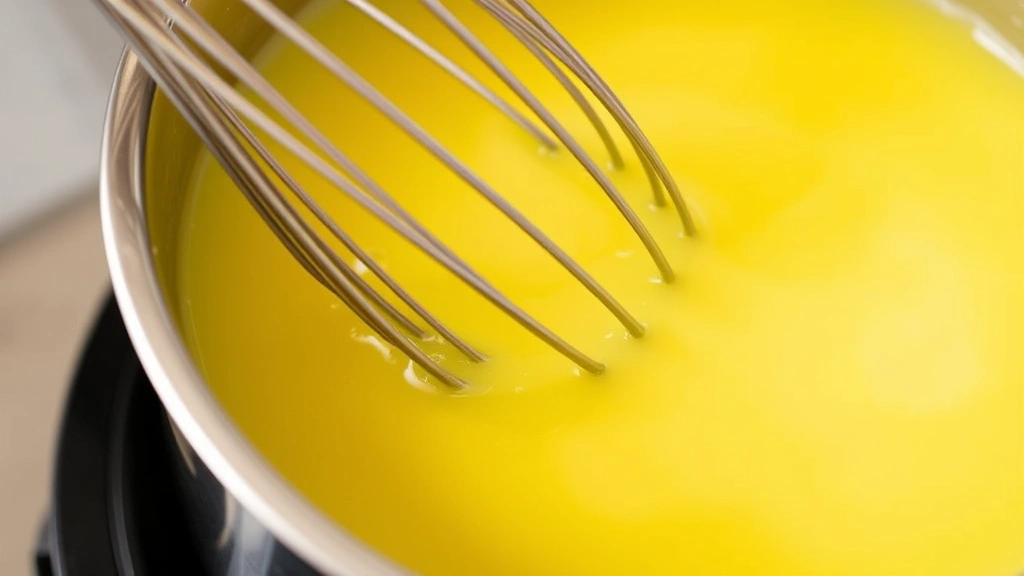
- Add the egg yolks and the strained vinegar reduction to the heat-proof bowl. Whisk constantly and continuously, keeping the bowl over the gentle heat. The mixture should gradually become pale, thick, and ribbon-like. This will take about 2-3 minutes.
- Once the egg mixture has thickened and reaches about 160°F (you can check with an instant-read thermometer), begin adding the warm melted butter very slowly while whisking constantly. Add it just a few drops at a time at first—patience is absolutely essential here to prevent the emulsion from breaking.
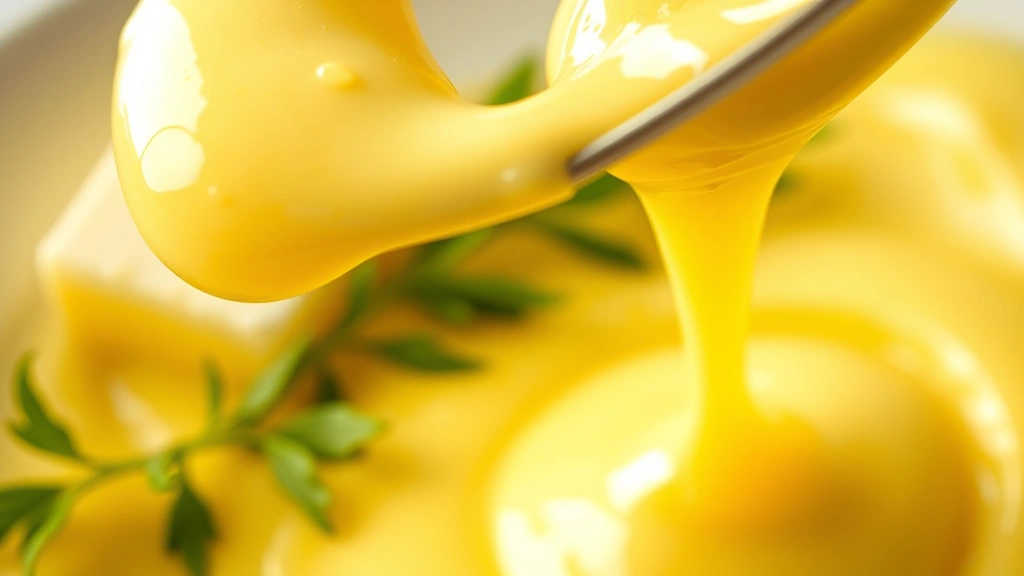
- As the sauce begins to emulsify and thicken, you can add the butter in a slightly faster but still steady stream while continuing to whisk. The sauce should become smooth, creamy, and luxuriously thick.
- Once all the butter is incorporated, remove the bowl from the heat. Stir in the fresh tarragon, lemon juice, cayenne pepper, and a pinch of sea salt. Taste and adjust seasonings as needed with additional salt and pepper.
- Serve the béarnaise immediately over your prepared dish—steaks, asparagus, eggs, or grilled fish are all excellent choices. If you need to hold the sauce briefly, keep it warm in a thermos or over a bowl of warm water.
- If at any point the sauce appears to be breaking or looks grainy, immediately transfer it to a clean bowl and start fresh with one egg yolk, then slowly whisk in the broken sauce until it comes back together.
Pro Tips
Temperature control is genuinely the most important factor in making béarnaise sauce successfully. The double boiler method prevents direct heat from scrambling the eggs, and the gentle warmth allows proper emulsification. If you don’t have a double boiler, you can create one using any heat-proof bowl that fits over a saucepan of simmering water.
The vinegar reduction is worth doing properly—this concentrated base provides essential acidity and prevents the sauce from being overly rich. Some cooks skip this step and regret it; the difference is noticeable. However, if you’re truly short on time, you can use 2 tablespoons of white wine vinegar mixed with 1 tablespoon of water without the reduction step, though the flavor will be slightly less concentrated.
Fresh tarragon really cannot be substituted without changing the character of the sauce. If you absolutely must use dried tarragon, use only 1/2 teaspoon instead of the full tablespoon of fresh. Additionally, you can prepare the vinegar reduction hours ahead and store it in the refrigerator—this makes the actual sauce preparation even quicker when you’re ready to serve.
If your sauce breaks during cooking, don’t throw it away. Start with a fresh egg yolk in a clean bowl and slowly whisk in the broken sauce until it emulsifies again. This rescue technique works remarkably well and has saved countless batches. Meanwhile, understanding that breaking happens to even experienced cooks helps reduce kitchen anxiety.
For make-ahead convenience, you can prepare the vinegar reduction the day before and store it in the refrigerator. When you’re ready to make the sauce, simply bring it back to room temperature (or gently warm it) and proceed with the recipe. The actual emulsification process takes only about 5-7 minutes once you have your ingredients ready.
If you’re hesitant about using raw eggs, pasteurized eggs from the grocery store work perfectly and are completely safe. Additionally, the gentle heat from the double boiler brings the temperature to a safe level. Some cooks also use a candy thermometer to monitor the egg mixture and ensure it reaches 160°F throughout.
Storage in the refrigerator should be in an airtight container for up to 3 days. To reheat, place the sauce in a bowl over warm (never hot) water and whisk gently. If it seems too thick, add a small splash of warm chicken broth or water while whisking to restore the creamy texture. However, honestly, making it fresh is so quick that reheating is rarely necessary.
This sauce pairs beautifully with grilled steaks, asparagus, poached eggs, and delicate fish fillets. It’s also wonderful over roasted vegetables or simple grilled chicken breast. The versatility of béarnaise means you’ll find countless uses for it once you master the basic technique.