
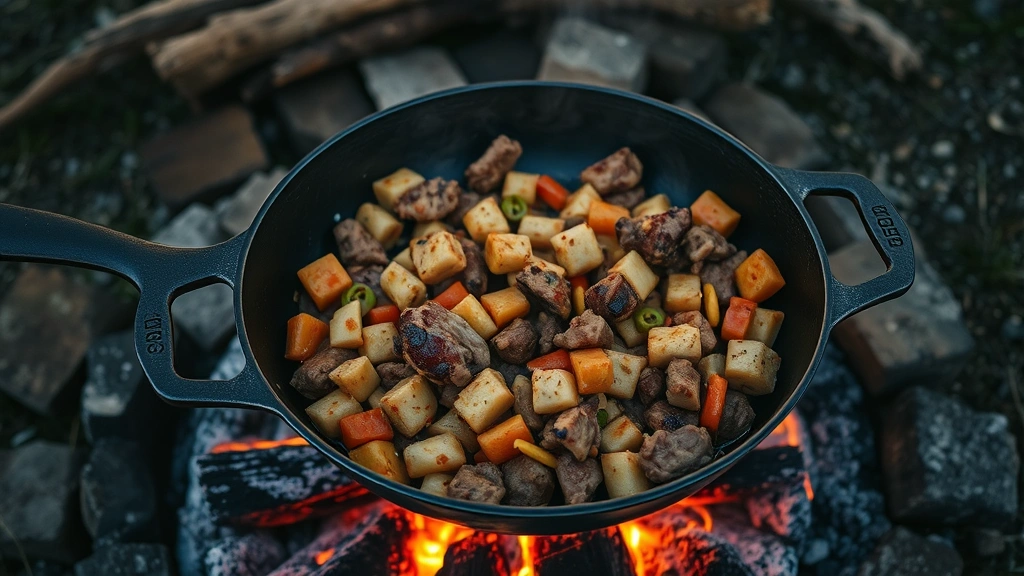
Camping fire recipes are the heart and soul of outdoor adventures, transforming simple ingredients into unforgettable meals under the stars. There’s something magical about cooking over an open flame—the way the smoke curls up into the night sky, the crackle of the fire, and the incredible flavors that come from cooking outdoors. Whether you’re a seasoned camper or planning your first trip into the wilderness, having a solid collection of easy campfire meals makes all the difference between a stressful experience and pure camping bliss.
The beauty of camping fire recipes lies in their simplicity and adaptability. You don’t need fancy equipment or complicated techniques to create delicious food that everyone will love. Most of these meals require just a cast iron skillet, a grill grate, or foil packets—items you probably already have or can easily pack. Plus, food genuinely tastes better when you’re eating it outdoors, surrounded by nature and good company.
Jump To Section
Why Campfire Cooking Is Worth the Effort
Cooking over a campfire creates memories that stick with you long after the trip ends. Kids remember the taste of their favorite foods cooked outside far more vividly than meals at home. There’s a primal satisfaction in building a fire, managing heat, and creating something nourishing from scratch. Additionally, campfire cooking forces you to slow down and be present—no distractions, no rushing through dinner.
The challenge of cooking without modern conveniences actually makes you a better cook. You learn to understand heat management, timing, and how to work with what you have. When you master taco chili recipes over an open flame, you’re building skills that enhance your cooking everywhere. Meanwhile, the smoky flavors from campfire cooking add depth that’s nearly impossible to replicate at home.
Essential Tips for Successful Campfire Meals
First, invest in proper equipment before your trip. A sturdy cast iron skillet is non-negotiable—it distributes heat evenly and can go straight from stove to table. Bring heavy-duty tongs, a long-handled spatula, and thick oven mitts rated for high heat. A grill grate or tripod setup gives you better control than balancing cookware directly on flames.
Temperature control makes or breaks campfire cooking. The hottest part of your fire (directly over flames) is perfect for searing and quick cooking. However, move your cookware to the cooler edges for simmering and slower cooking. You’ll want to build your fire ahead of time so you have hot coals ready when you’re ready to cook—not trying to manage flames while hungry campers wait around.
Prep everything at home or at camp before cooking begins. Chop vegetables, marinate proteins, and measure out seasonings into small containers. This makes the actual cooking process smooth and stress-free. For instance, pre-portioning ingredients into labeled bags saves space and prevents forgotten items.
One-Pan and Foil Packet Winners
One-pan camping fire recipes are absolute lifesavers because they minimize cleanup and maximize flavor. Try building a hearty skillet breakfast with hash browns, eggs, and whatever proteins you brought. Breakfast over a campfire sets the tone for an amazing day ahead. Similarly, try slow cooker soup recipes adapted for foil packets—they’re essentially the same concept but cooked with direct heat.
Foil packets are camping fire recipes’ secret weapon. Layer vegetables, protein, seasoning, and a bit of fat in heavy-duty foil, seal it up, and place it in hot coals for 15-20 minutes. Fish cooks beautifully this way, staying moist and tender. Vegetable medleys with herbs become tender and flavorful. The best part? Minimal cleanup—just toss the foil when you’re done.
Skillet dinners like vegetable beef soup recipes adapted into heartier versions work wonderfully over flames. Brown some ground beef, add diced vegetables, broth, and seasonings, then simmer until everything comes together. These one-pot meals feed a crowd without requiring multiple cooking vessels or excessive fuel.
Building Flavor Without Modern Conveniences
Smoky campfire flavor comes naturally when you’re cooking outdoors, but you can enhance it intentionally. Pack quality spices, fresh garlic, and acidic ingredients like lemon or vinegar to brighten dishes. Butter and oils are your friends—they carry flavor and help everything cook evenly over unpredictable heat sources.
Don’t overlook fresh ingredients you can buy at camp. Local farmers markets near popular camping areas often have incredible produce. A handful of fresh herbs from the store transforms simple camping fire recipes into something restaurant-quality. Additionally, consider bringing cheese, good quality meats, and ingredients for simple cucumber salad recipes to add freshness and variety to your meals.
Marinades prepared before your trip are game-changers. Proteins marinating overnight in your cooler develop incredible flavor that shines once cooked over fire. Even a simple mixture of oil, vinegar, garlic, and herbs transforms basic chicken or beef into something special. This approach also tenderizes tougher cuts, which is helpful when you’re working with less expensive proteins.
Easy Protein Options for the Campfire
Ground beef is the MVP of camping fire recipes because it’s forgiving and versatile. Brown it in your skillet, then build endless variations—tacos, chili, pasta sauce, or rice bowls. You can prepare shrimp burrito recipes if you pack frozen shrimp and thaw it at camp for something more adventurous.
Chicken breasts cook quickly over medium heat and pair with virtually any seasoning profile. Sausages are nearly foolproof—just brown them and serve with bread and toppings. Fish is underrated for campfire cooking; it cooks fast and stays moist in foil packets. However, don’t forget about vegetarian proteins like beans, lentils, and hearty vegetables for inclusive camping fire recipes that satisfy everyone.
Eggs are breakfast superstars and surprisingly versatile for dinner too. Scrambles with vegetables and cheese feed crowds efficiently. Fried eggs on toast over a campfire taste infinitely better than at home. Cast iron skillets are perfect for everything from omelets to frittatas when you’re cooking for groups.
Smart Sides and Complementary Dishes
Sides don’t get enough credit in camping fire recipes, but they make meals feel complete and satisfying. Foil packet potatoes roasted in hot coals become tender and delicious with just butter and seasoning. Fresh bread toasted over the fire with garlic butter becomes something magical. Rice cooked in a pot over medium heat provides filling carbs without much fuss.
Consider bringing salad in a jar recipes prepared at home—they stay fresh in your cooler and add crucial vegetables and freshness. Simple slaw made from cabbage and a basic vinaigrette is lightweight and refreshing. Grilled vegetables in foil packets become tender and flavorful, making it easy to include everyone’s favorite produce.
Don’t underestimate the power of simple additions. Fresh fruit, nuts, and cheese require no cooking but round out meals beautifully. Bread for sandwiches, tortillas for wraps, and crackers for snacking should all make your packing list. These easy add-ons transform basic camping fire recipes into more complete, satisfying meals.
Cooking camping fire recipes successfully means planning ahead, bringing the right equipment, and keeping things simple. Start with recipes requiring just a few components, master those, then gradually explore more complex dishes. Your campfire cooking skills will impress everyone in your group and make every outdoor adventure more delicious and memorable. Most importantly, remember that the goal isn’t perfection—it’s creating amazing food and memories with people you love under open skies.
Ingredients
- 2 tablespoons butter or oil
- 1 pound ground beef or protein of choice
- 1 medium onion, diced
- 2 cloves garlic, minced
- 2 cups diced vegetables (bell peppers, zucchini, carrots)
- 1 can (14.5 oz) diced tomatoes
- 1 cup beef broth or water
- 1 teaspoon dried oregano
- 1 teaspoon dried basil
- Salt and pepper to taste
- Optional: 1/2 cup shredded cheese
- Optional: fresh herbs for garnish
Instructions
- Build your campfire to a manageable heat level with hot coals ready. Position your cast iron skillet on the grill grate over medium heat, allowing it to warm for 2-3 minutes.
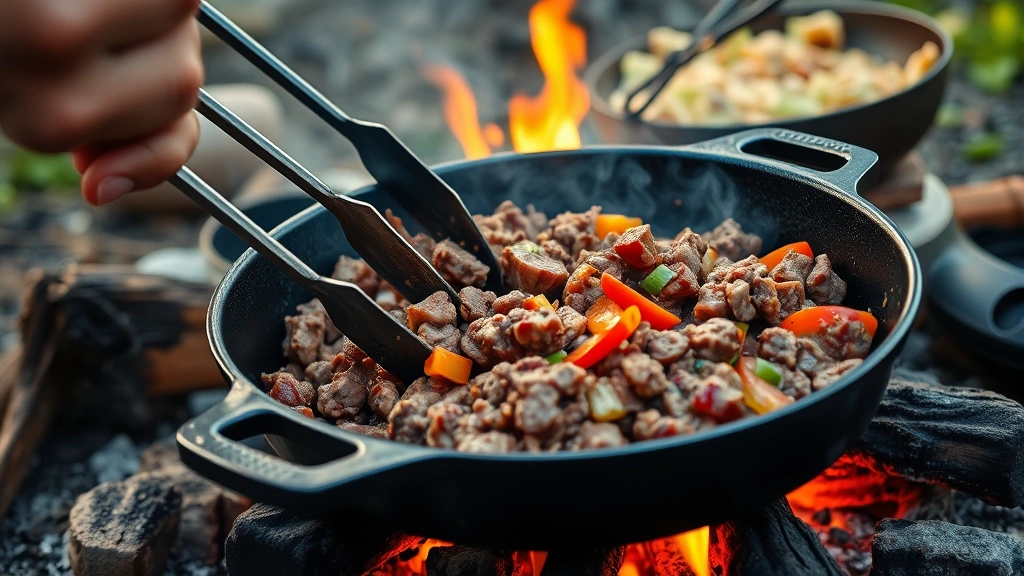
- Add butter or oil to the heated skillet, then add your ground beef. Break it apart with your tongs or spatula, stirring frequently until browned, about 5-7 minutes. Drain excess fat if needed.
- Add diced onion to the skillet and stir continuously for 2-3 minutes until it begins to soften. The onion should become translucent and fragrant.
- Stir in minced garlic and cook for 1 minute, allowing the garlic to become fragrant and activate its oils.
- Add your diced vegetables to the skillet, stirring well to combine with the meat and aromatics. Cook for 3-4 minutes until vegetables begin to soften slightly.
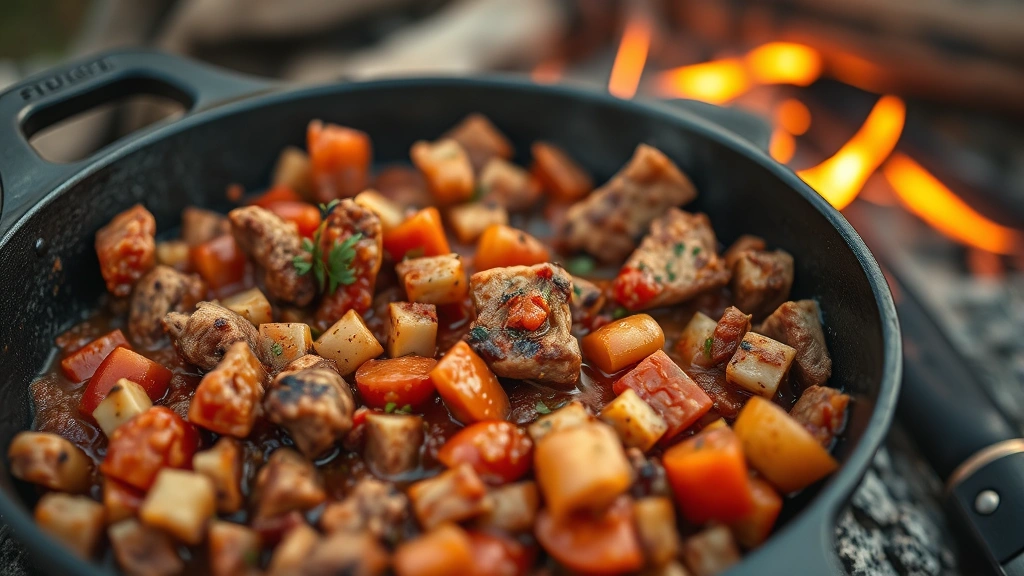
- Pour in the canned diced tomatoes with their juice and the broth. Add oregano, basil, salt, and pepper. Stir everything together thoroughly.
- Reduce heat to low-medium (move skillet slightly away from the hottest flames) and allow the mixture to simmer for 10-12 minutes. Stir occasionally and adjust heat as needed to prevent sticking.
- Taste and adjust seasonings as needed. Add more salt, pepper, or herbs according to your preference.
- If using cheese, sprinkle it over the top in the final minute of cooking and stir until melted. Garnish with fresh herbs if available.
- Transfer to bowls or plates and serve immediately while hot. This dish pairs wonderfully with bread, rice, or tortillas cooked over the fire.
Pro Tips
This camping fire recipe is intentionally flexible because cooking conditions vary greatly outdoors. If your fire is hotter than expected, move your skillet to the cooler outer edge to prevent burning. Conversely, if heat is low, carefully move closer to flames to maintain a proper simmer. The cooking time might shift by a few minutes depending on your specific fire conditions.
Protein substitutions work beautifully here. Turkey, chicken, or plant-based meat alternatives cook similarly to ground beef. For a vegetarian version, simply skip the meat and increase vegetables to 4-5 cups, adding a can of beans for protein and heartiness. The flavor profile remains delicious regardless of protein choice.
Vegetable selection depends on what’s available and what your group enjoys. Mushrooms, corn, green beans, and celery all work wonderfully. Consider pre-chopping vegetables at home in a sealed container—this saves significant prep time at camp and prevents fumbling with a cutting board over uneven terrain. However, if you prefer fresh chopping, bring a sharp knife and small cutting board specifically for camp cooking.
Storage and reheating are straightforward with this dish. Leftovers keep well in a sealed container in your cooler for 2-3 days. Reheat gently over low fire heat, stirring frequently to prevent sticking. You can also eat leftovers cold the next day as a hearty lunch. Additionally, this recipe doubles or triples easily if you’re feeding larger groups—just use a larger skillet or cook in batches.
For seasoning depth, consider bringing smoked paprika, cumin, or chili powder from home. These additions transform the basic recipe into something with more complexity. Fresh lime juice squeezed over finished bowls brightens everything beautifully. Don’t forget salt and pepper as your baseline—these humble seasonings are often what’s missing when camping meals taste flat.
Cooking time management matters when camping. Prep all ingredients before starting to cook so nothing burns while you’re chopping. Keep a small water bottle nearby to quickly douse any flames that get too enthusiastic. Never leave your skillet unattended over an active fire—campfire cooking requires attention and presence, which is part of its appeal.