
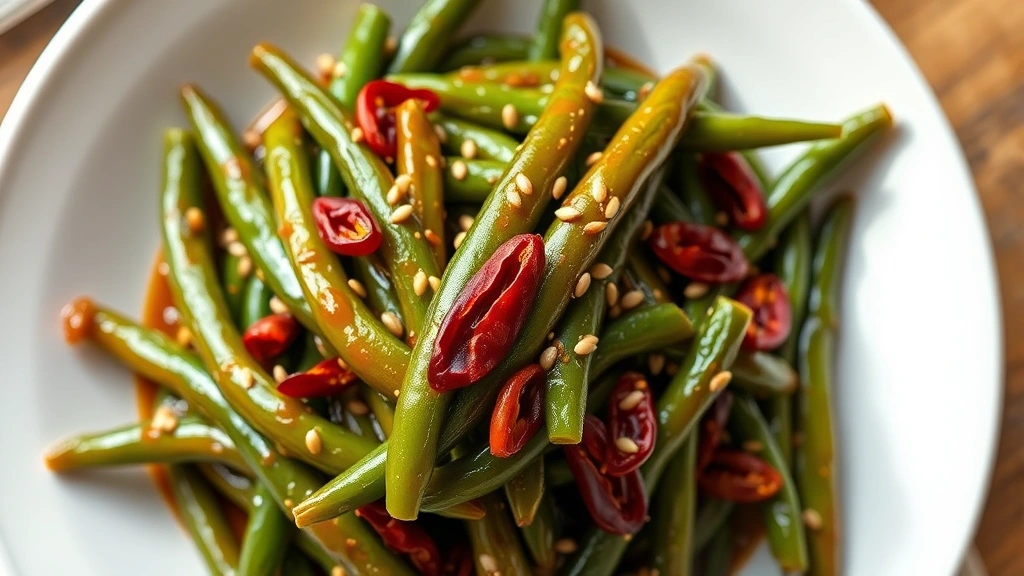
The Din Tai Fung green bean recipe is one of those restaurant dishes that seems impossibly delicious—crispy on the outside, tender on the inside, with a savory-sweet glaze that makes you want to order another plate immediately. Here’s the secret: it’s actually straightforward to recreate at home, and once you do, you’ll understand why this humble vegetable has earned cult status at the iconic dumpling house.
I first discovered these magical green beans during a business dinner in San Francisco, and I couldn’t stop thinking about them for weeks. The combination of textures and flavors was unlike anything I’d experienced before. Most people assume restaurant-quality dishes require fancy equipment or obscure ingredients, but this recipe proves otherwise. With just a few key techniques and quality green beans, you can nail this dish in your own kitchen.
Jump To Section
Why This Recipe Works
The magic of Din Tai Fung’s green beans lies in the cooking method and the balance of flavors. The beans are cooked until they’re deeply caramelized and slightly wrinkled, which concentrates their natural sweetness while creating an irresistible textured exterior. This isn’t boiling—it’s a high-heat sear that transforms simple green beans into something extraordinary.
Additionally, the aromatics matter tremendously. Garlic, ginger, and dried chilies create a flavor foundation that’s both bold and sophisticated. The soy sauce and rice wine bring umami depth, while a touch of sugar balances everything perfectly. Meanwhile, the technique of cooking in stages ensures the beans develop that signature caramelized quality without becoming mushy.
What makes this dish special is the textural contrast. You get that satisfying crunch when you bite through the blistered skin into the tender-crisp interior. The stir fry sauce technique applies perfectly here, though the green bean recipe uses a slightly different approach that allows the vegetables to shine.
Ingredient Tips & Substitutions
Fresh green beans are essential—look for ones that are bright green, firm, and relatively uniform in size. Farmer’s markets typically have superior varieties compared to supermarket options. If you can’t find fresh beans, frozen ones work in a pinch, though you’ll want to thaw and pat them completely dry first to ensure proper caramelization.
The type of garlic you use actually impacts the final result. Fresh garlic cloves work beautifully, but if you’re short on time, minced garlic is perfectly acceptable. However, avoid jarred garlic—it tends to burn and taste bitter at the high heat required for this dish. Fresh ginger is equally important; it adds a subtle warmth that complements the soy sauce without overpowering the beans.
For the dried chilies, Sichuan peppercorns or Thai bird’s eye chilies both work wonderfully. The goal isn’t to make the dish fiery—it’s to add a gentle heat that builds gradually. You can absolutely adjust the spice level based on your preferences. Additionally, if you want to explore more Asian-inspired recipes, our P.F. Chang’s lettuce wraps recipe offers another fantastic restaurant copycat with similar flavor profiles.
The Cooking Technique Breakdown
High heat is non-negotiable for this recipe. You need a wok or large skillet that can handle intense temperature without cooling down when the beans hit the pan. A traditional carbon steel wok is ideal, but a large stainless steel or cast iron skillet works beautifully too. The key is having enough surface area and thermal mass to maintain the heat throughout cooking.
The initial cook happens dry—no oil initially. This might seem counterintuitive, but it allows the beans to release their moisture and begin caramelizing naturally. Once they’re slightly blistered and wrinkled, that’s when you add the oil and aromatics. This two-stage approach is what separates restaurant-quality results from standard home cooking.
Timing matters significantly here. The entire cooking process takes roughly 15-20 minutes, but it requires attention and occasional stirring. You’re not looking away to check your phone—you’re actively engaged with the cooking process, adjusting heat and watching for that perfect caramelization. Think of it as meditative cooking that yields spectacular results.
Serving Suggestions & Pairings
These green beans are the perfect complement to steamed jasmine rice and any protein you love. They shine alongside roasted chicken, pan-seared tofu, or grilled shrimp. For a complete meal, pair them with our ramen bowl recipe for an impressive homemade Asian-inspired dinner. The umami flavors work harmoniously together.
Alternatively, serve these beans as part of a larger spread with other stir-fried vegetables and dishes. They make an excellent appetizer when plated elegantly, or a side dish at casual weeknight dinners. The recipe yields enough to feed 4-6 people as a side, making it ideal for family gatherings. For entertaining, you can prepare the ingredients ahead and cook everything fresh right before serving.
If you’re building a complete Chinese feast at home, consider adding an easy Chinese salad recipe for textural variety and freshness. The cool, crisp salad balances beautifully against these warm, caramelized vegetables.
Storage & Reheating Tips
Leftover green beans keep beautifully in an airtight container for 3-4 days in the refrigerator. Unlike some stir-fried vegetables that deteriorate quickly, these beans actually maintain their texture reasonably well. The flavors even deepen slightly as they sit, making them a great make-ahead component for meal prep.
To reheat, simply warm them gently in a skillet over medium-high heat for 2-3 minutes, stirring occasionally. You can also microwave them, though a quick stovetop reheat preserves more of the original texture. If the beans seem dry after reheating, add a splash of water or a tiny drizzle of sesame oil to refresh them. The key is reheating gently rather than blasting them at high temperatures again.
However, I’ll be honest—these beans taste best when freshly cooked. If you’re planning to serve them at a dinner party, consider cooking them just before guests arrive. The bright flavors and perfect texture are really worth that extra effort. You can prepare all your ingredients in advance and have everything ready for a quick final cook.
For longer storage, you can freeze cooked green beans for up to two months in a freezer bag. Thaw them in the refrigerator overnight before reheating. While freezing changes the texture slightly, they’re still delicious and perfect for quick weeknight dinners when you’re craving that restaurant taste.
This Din Tai Fung green bean recipe truly captures the essence of what makes restaurant cooking so special—technique, quality ingredients, and proper heat management coming together in perfect harmony. Once you master this dish, you’ll be amazed at how simple it really is, and you’ll find yourself making it regularly. Your family will request it, your friends will ask for the secret, and you’ll feel that satisfying pride that comes from recreating restaurant magic in your own home.
Ingredients
- 1.5 pounds fresh green beans, trimmed and rinsed
- 3 tablespoons vegetable oil, divided
- 6 cloves garlic, minced
- 1 tablespoon fresh ginger, minced
- 2-3 dried red chilies, whole (or 1/2 teaspoon dried chili flakes)
- 3 tablespoons soy sauce
- 1 tablespoon Chinese rice wine or dry sherry
- 1 teaspoon sugar
- 1/2 teaspoon sesame oil
- 1/4 teaspoon white pepper
- 2 tablespoons water
- 1 teaspoon cornstarch (optional, for thicker sauce)
Instructions
- Pat the green beans completely dry with paper towels—moisture is the enemy of caramelization. Spread them on a clean kitchen towel if needed.
- Heat a large wok or skillet over high heat until smoking. This usually takes 2-3 minutes. You want the pan genuinely hot before adding anything.
- Add the green beans directly to the dry, hot pan without any oil. Stir occasionally for 5-7 minutes until the beans develop dark blistered spots and become slightly wrinkled. This is crucial for developing flavor and texture.
- Push the beans to the side of the pan and add 2 tablespoons of vegetable oil to the empty space. Allow it to heat for 20 seconds until shimmering.
- Add the minced garlic, ginger, and whole dried chilies to the hot oil. Stir constantly for about 30 seconds until fragrant, being careful not to burn the garlic.
- Return the green beans to the center of the pan and toss everything together for about 1 minute, distributing the aromatics evenly.
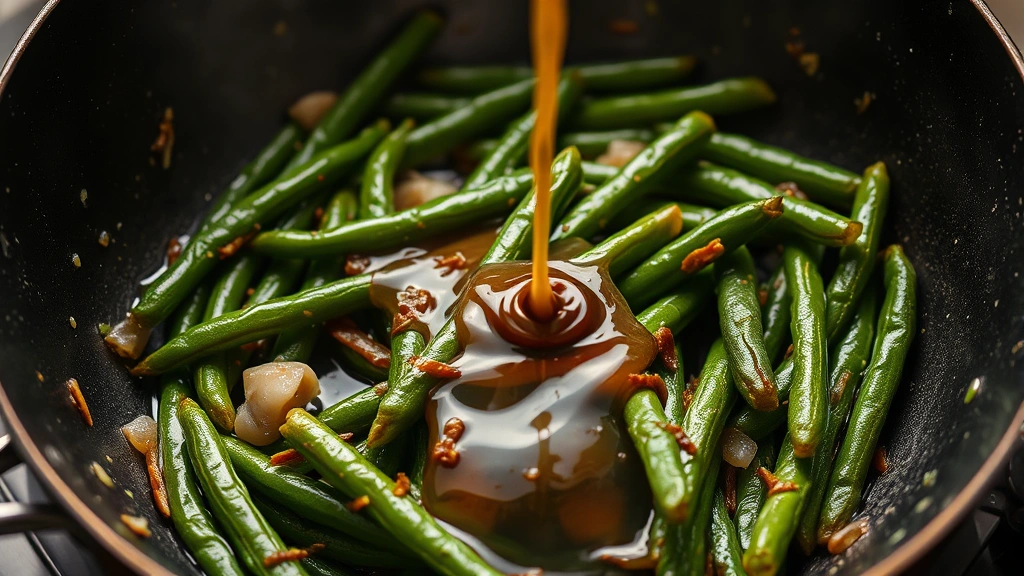
- In a small bowl, whisk together soy sauce, rice wine, sugar, sesame oil, white pepper, and water. If you prefer a thicker sauce, whisk the cornstarch into this mixture first.
- Pour the sauce over the beans and toss everything together for 2-3 minutes, allowing the liquid to reduce and coat the beans evenly. The sauce should become glossy and concentrate around the vegetables.
- Taste and adjust seasonings if needed—add more soy sauce for saltiness, more sugar for sweetness, or more sesame oil for depth. Remove the whole dried chilies before serving if you prefer less visible spice.
- Transfer to a serving platter immediately while still hot. Serve alongside steamed rice and your favorite protein.
Pro Tips
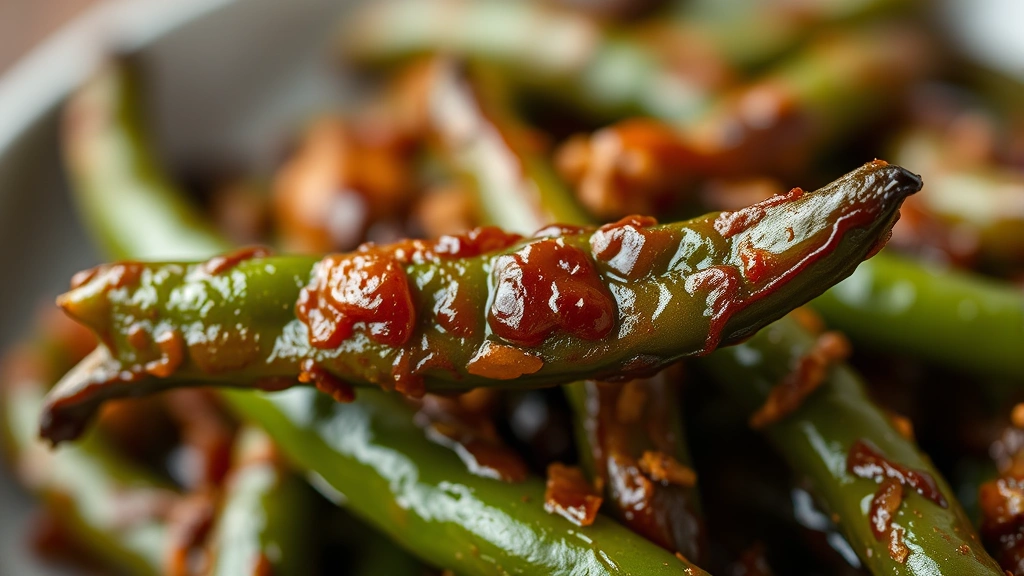
The most critical step is achieving proper caramelization on the green beans before adding the sauce. Don’t rush this—those 5-7 minutes of dry cooking are what transform ordinary green beans into something extraordinary. The beans should look slightly shriveled with dark spots; this isn’t overdone, it’s perfect.
If your pan isn’t hot enough initially, the beans will steam rather than sear. You want that intense, dry heat. Additionally, make sure your green beans are completely dry before cooking. Any excess moisture will create steam and prevent browning. Pat them thoroughly with paper towels.
The dried chilies add gentle heat and wonderful flavor without making the dish spicy-hot. However, if you prefer milder food, reduce them to just one chili or substitute with a single star anise for flavor without heat. Meanwhile, if you love spice, add an extra chili or increase the chili flakes.
Fresh ginger is essential here—powdered ginger won’t provide the same brightness and complexity. The same applies to garlic; fresh cloves beat any substitute. These aren’t places to cut corners if you want authentic results.
For vegetarian or vegan diets, this recipe is naturally plant-based. Simply ensure your soy sauce and rice wine are suitable for your dietary preferences. The dish requires no meat or animal products whatsoever.
If you’re doubling this recipe for a larger crowd, resist the urge to use a larger batch in the same pan. Instead, cook two separate batches. Overcrowding the pan lowers the temperature and prevents proper caramelization. Quality over quantity always produces better results.
The sesame oil at the end is worth using—it adds a distinctive nutty aroma that’s impossible to replicate with other oils. Use genuine sesame oil rather than synthetic versions for the most authentic flavor.