
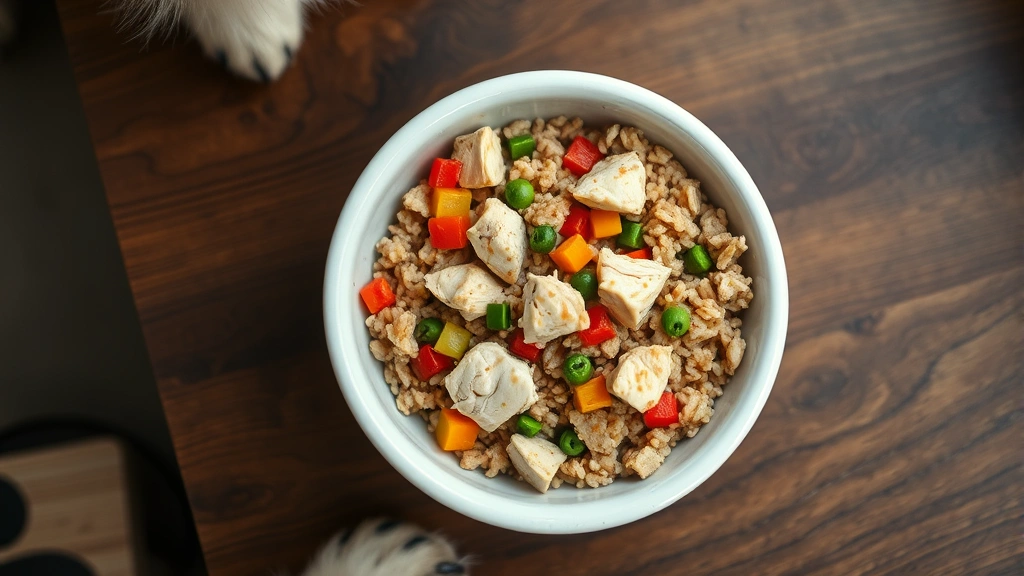
Making dog food recipes at home is one of the most loving things you can do for your furry best friend. I started cooking for my golden retriever after he developed sensitivities to commercial kibble, and it completely transformed his health and energy levels. There’s something truly special about preparing meals for your pup with whole, recognizable ingredients you trust completely.
Homemade dog meals give you complete control over what goes into your dog’s bowl. No mystery ingredients, no artificial preservatives, and no guessing about nutritional content. Plus, your pup will absolutely lose their mind over the aroma of fresh-cooked chicken and vegetables simmering on your stove.
Jump To Section
Why Homemade Dog Food Recipes Matter
Many store-bought dog foods contain fillers, by-products, and additives that don’t serve your dog’s nutritional needs. When you prepare homemade dog food recipes, you’re starting with premium ingredients like lean proteins, fresh vegetables, and healthy grains that you’d be happy to eat yourself.
The benefits go beyond nutrition. Dogs often develop shinier coats, clearer eyes, and healthier digestion when switched to quality homemade meals. Your veterinarian can help ensure the recipes meet your specific dog’s dietary requirements, especially for puppies, senior dogs, or those with health conditions.
Additionally, home cooking allows you to accommodate food allergies and sensitivities that plague so many pets today. If your dog reacts poorly to chicken or beef, you can easily swap in turkey, fish, or lamb without hunting through ingredient labels.
Essential Ingredients for Healthy Dog Food Recipes
Every balanced dog meal needs three main components: protein, vegetables, and a carbohydrate source. The protein should make up about 40-50% of the meal and can include chicken, beef, turkey, fish, or eggs. This is where the nutritional powerhouse comes from.
Vegetables should comprise about 30-40% of the bowl and provide essential vitamins and fiber. Safe options include carrots, green beans, sweet potatoes, peas, and broccoli. However, always avoid dangerous vegetables like onions, garlic, grapes, and raisins, which are toxic to dogs.
The remaining 10-20% should be a digestible carbohydrate like brown rice, oatmeal, or sweet potato. These ingredients provide energy and help bind the meal together. Meanwhile, you’ll want to add a small amount of healthy fat, typically from fish oil or a bit of coconut oil, to support skin and coat health.
Calcium supplementation is crucial since homemade diets often lack adequate calcium. Talk to your vet about adding a pet-safe calcium supplement to ensure proper bone development and maintenance.
Ingredient Tips & Substitutions
Rotating proteins keeps meals interesting and ensures your dog receives a diverse nutrient profile. Alternate between chicken, beef, turkey, and fish throughout the month. This variety also reduces the likelihood of developing food sensitivities.
For vegetables, seasonal choices work beautifully. Summer brings zucchini and green beans, while fall offers pumpkin and squash. Always cook vegetables thoroughly to improve digestibility, though some dogs do well with lightly steamed or raw options.
If your dog has a sensitive stomach, stick to easily digestible ingredients like white rice, plain chicken, and carrots initially. You can gradually introduce more variety as their system adjusts. For athletic or working dogs, increase the protein percentage and add more calorie-dense ingredients.
Portion sizes depend on your dog’s weight, age, and activity level. Generally, adult dogs need about 2-3% of their body weight in food daily. A 50-pound dog would need roughly 1 to 1.5 pounds of food per day, split into two meals.
Storage & Food Safety Guidelines
Homemade dog meals keep refrigerated for 3-4 days, making it practical to cook several days’ worth at once. For longer storage, freeze portions in ice cube trays or small containers for up to three months. This approach lets you thaw exactly what you need each day.
Always cool cooked food completely before refrigerating or freezing to prevent bacterial growth. When reheating, warm to room temperature rather than serving cold straight from the fridge, which can upset sensitive stomachs. Never leave prepared dog food sitting at room temperature for more than two hours.
Practice the same food safety standards you’d use for human cooking. Use separate cutting boards for raw meat, wash hands thoroughly, and discard any food that smells off. Your dog’s digestive system is more resilient than ours, but foodborne illness still poses risks.
Consulting Your Veterinarian
Before switching to homemade dog food recipes, schedule a consultation with your vet. They can assess your dog’s specific nutritional needs based on age, size, health status, and activity level. This conversation is especially important for puppies, senior dogs, or those with medical conditions.
Your veterinarian might recommend working with a veterinary nutritionist to create balanced meal plans. While this requires an investment upfront, it ensures your dog receives optimal nutrition without deficiencies. Many vets can review recipes you’ve found online to confirm they meet nutritional standards.
Some dogs thrive on completely homemade diets, while others do better with a combination of commercial food and home-cooked supplements. Your vet can guide you toward the best approach for your individual pup. Regular check-ups help monitor your dog’s health and adjust recipes as needed.
Preparing Your First Batch
Start simple with a basic chicken and vegetable combination before experimenting with more complex recipes. Cook a large batch on Sunday to have meals ready throughout the week. This meal prep approach saves time and ensures consistency in your dog’s nutrition.
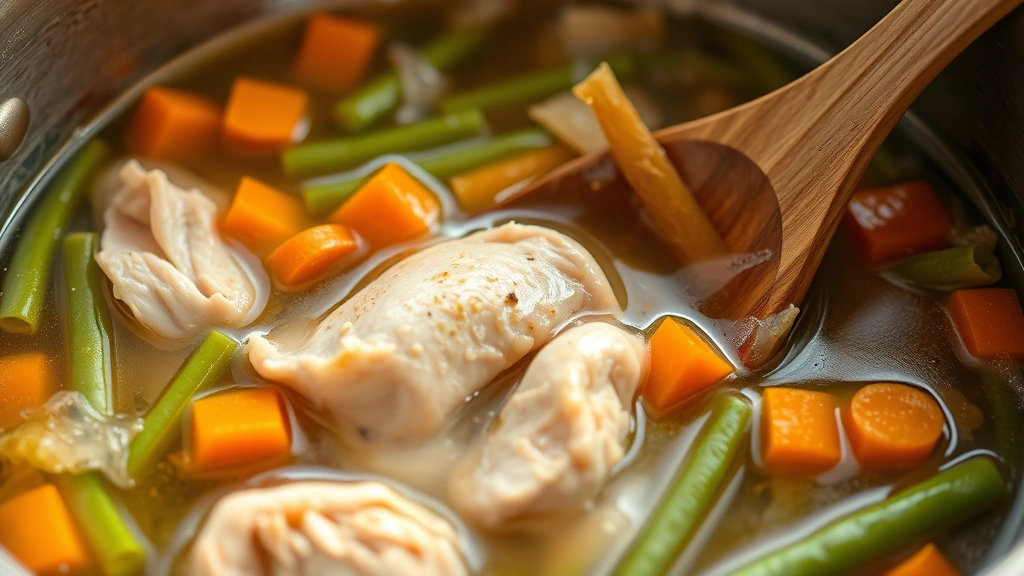
Use a large pot to simmer chicken breasts with chopped vegetables until everything is tender. Break the chicken into bite-sized pieces once cooled. Mix in cooked rice or oatmeal, then portion into containers for the week.
Your first homemade meal will likely spark pure joy in your dog. That tail wag, that excited dance, that genuine enthusiasm for dinner—it’s all worth the minimal effort required. Many dog owners find the process meditative and deeply rewarding, turning meal preparation into quality time devoted to their pet’s wellbeing.
Making dog food recipes at home transforms your pup’s health, happiness, and the bond you share. With basic knowledge about balanced nutrition and proper food safety, you’re equipped to provide meals that rival anything a commercial manufacturer offers. Your dog will thank you with a lifetime of good health and endless enthusiasm at dinner time.
Ingredients
- 2 pounds boneless, skinless chicken breasts
- 2 cups carrots, diced small
- 2 cups green beans, chopped
- 1 cup sweet potato, cubed
- 1.5 cups brown rice, uncooked
- 4 cups low-sodium chicken broth or water
- 1 tablespoon fish oil or coconut oil
- 1 teaspoon bone meal or pet-safe calcium supplement
Instructions
- Rinse the brown rice under cold water until the water runs clear, then set aside to drain completely.
- Chop all vegetables into bite-sized pieces appropriate for your dog’s size—smaller for toy breeds, slightly larger for big dogs.
- Cut chicken breasts into 1-inch cubes to ensure even cooking throughout.
- In a large pot, bring the broth or water to a rolling boil over medium-high heat.
- Add the cubed chicken and return to a boil, then reduce heat to medium and simmer for 10 minutes, skimming any foam that rises to the surface.
- Stir in the brown rice, carrots, green beans, and sweet potato, ensuring everything is submerged in the liquid.
- Reduce heat to low and cover the pot with a lid, simmering for 30-35 minutes until the rice is tender and vegetables are very soft.
- Remove from heat and let cool completely—this is important for food safety and prevents burns.
- Once cooled, stir in the fish oil and calcium supplement, mixing thoroughly to distribute evenly throughout the batch.
- Break the chicken into smaller pieces if needed, depending on your dog’s size and chewing ability.
- Portion into airtight containers, leaving some room for expansion if freezing, and label with the date prepared.
Pro Tips
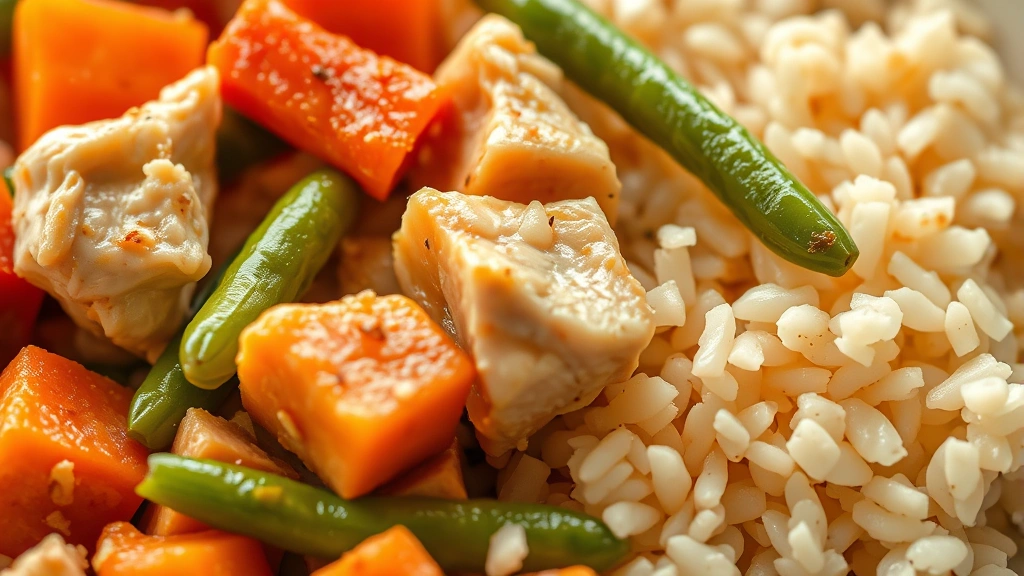
This recipe creates a complete, balanced meal that most dogs absolutely love. The chicken provides lean protein, the vegetables offer vitamins and fiber, and the brown rice supplies sustained energy. This combination supports healthy digestion, promotes a shiny coat, and keeps your pup satisfied between meals.
Substitution Ideas: If your dog doesn’t tolerate chicken well, swap in ground turkey, lean beef, or even salmon for variety. Meanwhile, you can substitute the vegetables based on what your dog enjoys and tolerates best. Some dogs prefer peas and carrots over green beans, while others do better with plain pumpkin instead of sweet potato.
For dogs with grain sensitivities, replace brown rice with sweet potato or white potato as the carbohydrate base. Additionally, you can add other dog-safe vegetables like zucchini, peas, or spinach in place of some of the carrots or green beans. Just maintain similar proportions—roughly 40% protein, 40% vegetables, and 20% carbs.
Calcium Supplementation: This step is non-negotiable for long-term health. Homemade diets without adequate calcium can lead to serious bone problems, especially in growing puppies. Your vet can recommend the appropriate supplement and dosage for your dog’s age and size.
Storage Instructions: Refrigerate prepared meals in airtight containers for up to 4 days. For longer storage, freeze in individual portions using ice cube trays or small containers—frozen portions last up to 3 months. Thaw overnight in the refrigerator and serve at room temperature. Never leave prepared dog food sitting out longer than 2 hours.
Portion Guidance: Adult dogs typically need 2-3% of their body weight daily. A 50-pound dog needs approximately 1 to 1.5 pounds of food per day, divided into two meals. Adjust portions based on your dog’s weight, age, and activity level. Monitor your pup’s weight monthly and adjust as needed to maintain ideal body condition.
Transition Tips: When switching from commercial food to homemade meals, transition gradually over 7-10 days. Mix 25% homemade food with 75% old food for the first few days, then gradually increase the homemade portion. This slow transition prevents digestive upset and allows your dog’s system to adjust. Some dogs experience slightly softer stools initially, which usually normalizes within a week.
Veterinary Consultation: Before making this a permanent diet, discuss the recipe with your veterinarian. They may recommend adding or adjusting certain ingredients based on your dog’s specific health needs. This conversation is especially important for puppies, senior dogs, pregnant or nursing dogs, and those with existing health conditions.