
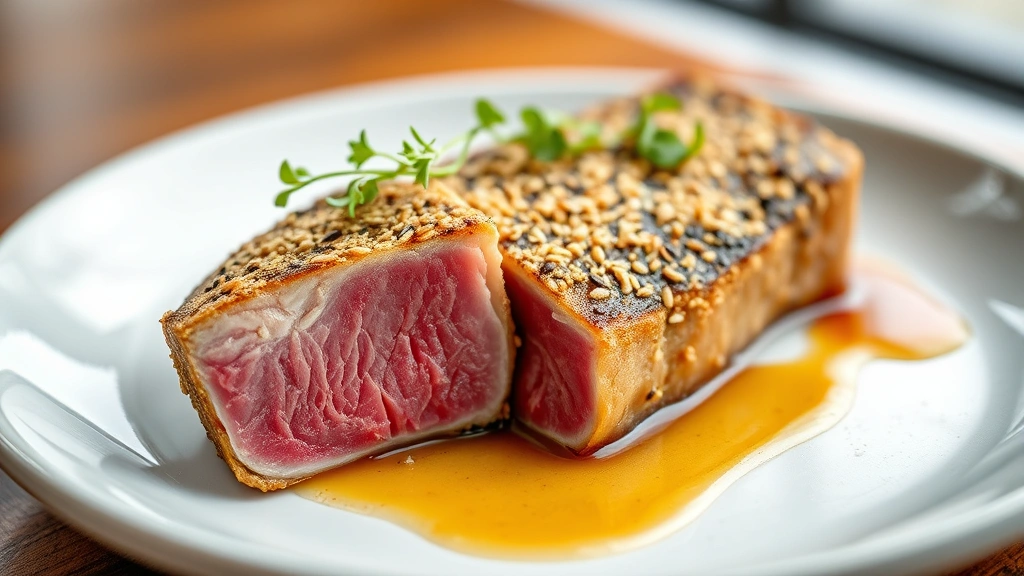
Yellowfin tuna is one of the most versatile and delicious fish you can cook at home, and when prepared properly, it rivals any restaurant preparation. This showstopping recipe delivers restaurant-quality results with a beautiful seared crust and perfectly rare center that melts on your tongue. The key to exceptional yellowfin tuna lies in selecting the highest quality fish, using proper searing techniques, and keeping your hands off it while it cooks—something many home cooks struggle with.
I’ve been making this recipe for years, and it never fails to impress dinner guests. The beauty of yellowfin tuna is its firm texture and mild, slightly sweet flavor that takes beautifully to bold seasonings and simple preparations. Whether you’re looking to elevate your weeknight dinner or create an impressive dish for entertaining, this recipe delivers spectacular results every single time.
The technique here is straightforward but requires attention to detail. You’ll want to start with sushi-grade yellowfin tuna from a reputable fishmonger—this is non-negotiable. The fish should smell like the ocean, not fishy, and should have a deep red color. I like to season mine simply with sea salt, freshly cracked black pepper, and a touch of garlic powder, allowing the beautiful flavor of the tuna to shine through. Some variations include a sesame crust or Asian-inspired glaze, which we’ll explore in the notes section.
One of my favorite aspects of this recipe is its flexibility. You can serve it warm and rare with a vibrant ponzu sauce and microgreens, or slice it thin and serve it as part of a sushi bowl with avocado, cucumber, and spicy mayo. The seared ahi tuna technique works beautifully for entertaining because you can sear it just before serving, ensuring maximum flavor and texture. For a lighter preparation, try pairing it with a bright lemon butter sauce or fresh citrus. This recipe also pairs wonderfully with perfectly cooked sushi rice for a more elaborate presentation.
According to Serious Eats’ guide to cooking tuna, the internal temperature should reach about 110-115°F for a rare center, which creates that signature melting texture. I always use a reliable instant-read thermometer to ensure perfect doneness. The Bon Appétit approach to seared tuna emphasizes the importance of a smoking hot pan and minimal handling—two principles I follow religiously.
What makes this yellowfin tuna recipe truly the best is the combination of quality ingredients, proper technique, and respect for the fish itself. When you take these three elements seriously, you end up with a dish that’s elegant, delicious, and surprisingly simple to execute. Whether you’re a seafood enthusiast or someone looking to branch out from typical weeknight proteins, this recipe will become a staple in your kitchen. The New York Times’ seared ahi tuna recipe confirms that the simplest preparations often yield the most stunning results. I promise that once you master this technique, you’ll be making it regularly for yourself and impressing everyone at your table.
Ingredients
- 1.5 pounds sushi-grade yellowfin tuna, cut into 4 steaks (1.25 inches thick)
- 2 tablespoons fine sea salt
- 1 tablespoon freshly cracked black pepper
- 1 teaspoon garlic powder
- 1 teaspoon ground ginger
- 3 tablespoons sesame seeds (white and black, mixed)
- 3 tablespoons high-heat cooking oil (avocado or vegetable)
- 2 tablespoons unsalted butter
- 3 cloves garlic, smashed
- 2 sprigs fresh thyme
- Juice of 1 lemon
- Fleur de sel for finishing
- Microgreens for garnish
- Ponzu sauce for serving
Instructions
- Pat the yellowfin tuna steaks completely dry with paper towels. This is crucial—any moisture will prevent proper searing and create steam instead of a crust.
- In a small bowl, combine the sea salt, black pepper, garlic powder, and ground ginger. Mix thoroughly to ensure even distribution of seasonings.
- Place the sesame seeds on a shallow plate. Press each tuna steak into the sesame seeds, coating all sides evenly. This creates a beautiful crust and adds a delicate nutty flavor.
- Season the sesame-coated tuna steaks generously on both sides with your salt and spice mixture. Don’t be shy—the seasoning should be visible on the surface.
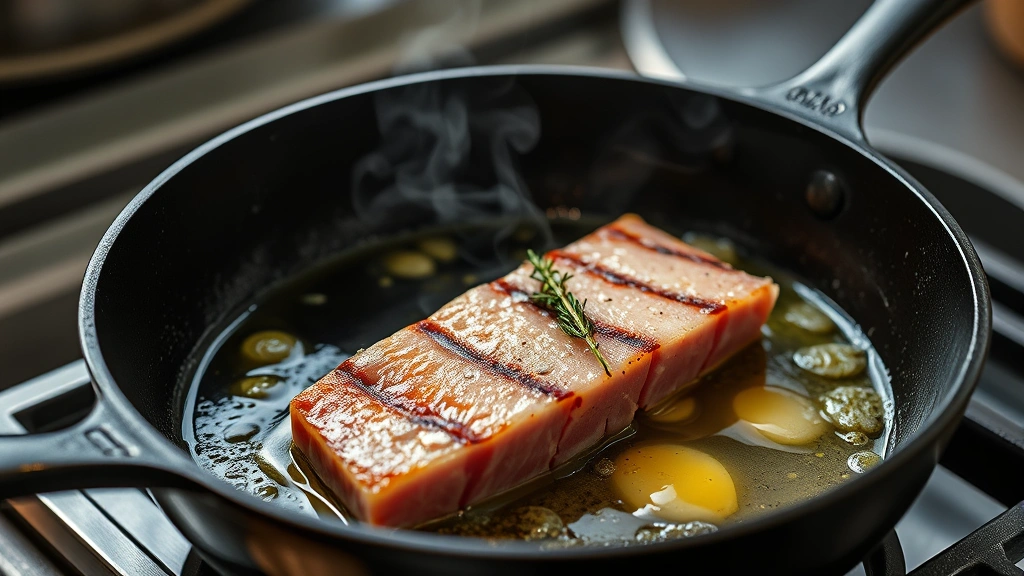
- Place a large stainless steel or cast iron skillet over medium-high heat. Allow it to heat for 3-4 minutes until it’s smoking hot. This is non-negotiable for proper searing.
- Add the high-heat cooking oil to the pan and let it heat until it shimmers and just begins to smoke, about 1 minute. The oil should be almost smoking before you add the fish.
- Carefully place the tuna steaks in the hot pan, working away from you to avoid any splattering. Do not move the fish—let it sear undisturbed for exactly 2 minutes to develop a beautiful golden crust.
- Using a thin spatula or tongs, carefully flip each tuna steak and sear the other side for exactly 2 minutes. The key to rare, perfectly cooked tuna is respecting these timing guidelines.
- Add the butter, smashed garlic, and fresh thyme to the pan, tilting the pan so the butter pools to one side. Baste the tuna steaks with this foaming butter for the remaining 2-3 minutes of cooking.
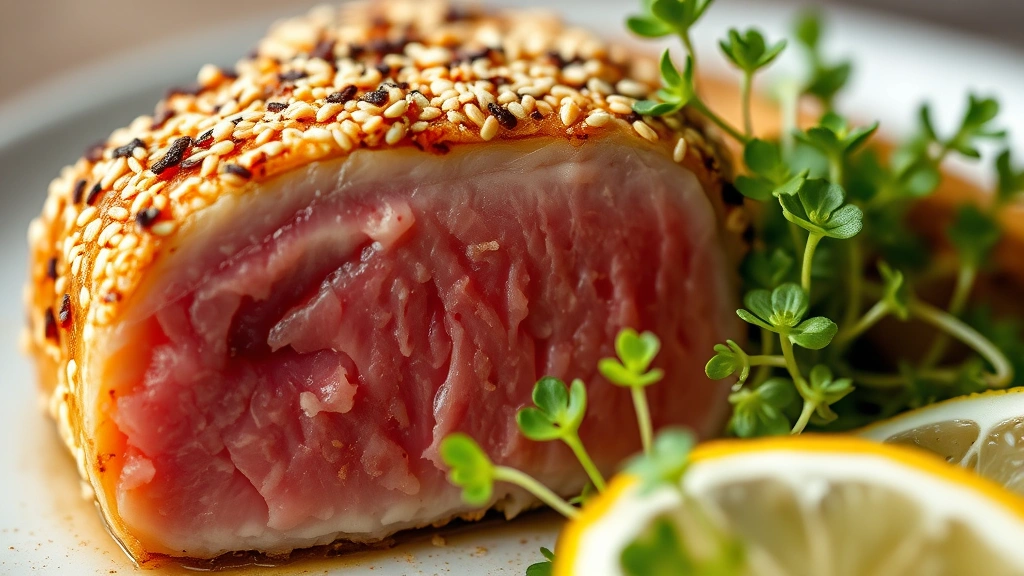
- Using an instant-read thermometer, check the internal temperature of the thickest steak. It should read 110-115°F for a perfect rare center. Remove from heat immediately when this temperature is reached.
- Transfer the tuna steaks to a clean cutting board or serving platter. Squeeze fresh lemon juice over each steak while it’s still hot.
- Let the tuna rest for 2-3 minutes. This allows the exterior to set while keeping the interior perfectly rare and tender.
- Finish each steak with a pinch of fleur de sel and fresh microgreens. Serve immediately with ponzu sauce on the side for dipping or drizzling.
Pro Tips
- Quality matters tremendously with this recipe. Sushi-grade yellowfin tuna from a reputable fishmonger is essential. Ask your fishmonger to cut the steaks to 1.25 inches thick—this thickness is perfect for achieving a seared crust while maintaining a rare center.
- Pat the tuna completely dry before cooking. Any surface moisture will interfere with crust formation. I often pat the fish dry, let it sit uncovered in the refrigerator for 30 minutes, then pat dry again just before cooking.
- The pan temperature is absolutely critical. Use an infrared thermometer to ensure your pan reaches 400-425°F before adding oil. A cooler pan will result in a gray, cooked-through tuna rather than a rare center with a beautiful crust.
- Don’t be tempted to move the fish while it sears. Resist the urge to poke it, flip it, or move it around. Those 2 minutes of undisturbed cooking create the perfect crust. This is where most home cooks go wrong.
- An instant-read thermometer is your best friend here. Aim for 110-115°F internal temperature for rare tuna. Remember that the fish will continue cooking slightly after you remove it from heat, so pull it at 110°F if you prefer it extremely rare.
- Sesame seed variations: Try pressing the tuna into white sesame seeds only for a more delicate appearance, or use black sesame seeds for drama. You can also skip the sesame entirely and just rely on the salt and pepper crust—equally delicious.
- Serving suggestions: Serve with a simple green salad dressed with lemon vinaigrette, or create a composed plate with avocado, cucumber ribbons, and pickled ginger. This pairs beautifully with jasmine rice or sushi rice.
- Sauce options: While ponzu is traditional and my top choice, you can also serve with sriracha mayo, a miso-butter sauce, or a simple beurre blanc. A squeeze of fresh lime juice is always welcome.
- Storage and make-ahead: Yellowfin tuna is best served immediately after cooking. However, if you have leftovers, store them in an airtight container in the refrigerator for up to 2 days. Slice cold tuna thin and serve over salad or in grain bowls.
- Wine pairing: This elegant dish pairs beautifully with crisp white wines like Sauvignon Blanc or Pinot Grigio, or light rosés. For red wine lovers, a chilled Pinot Noir works surprisingly well.
- Scaling the recipe: This recipe easily scales up for entertaining. Simply add 8-10 minutes to your total time to allow the pan to reheat between batches. Never overcrowd your pan—proper spacing ensures even searing.