
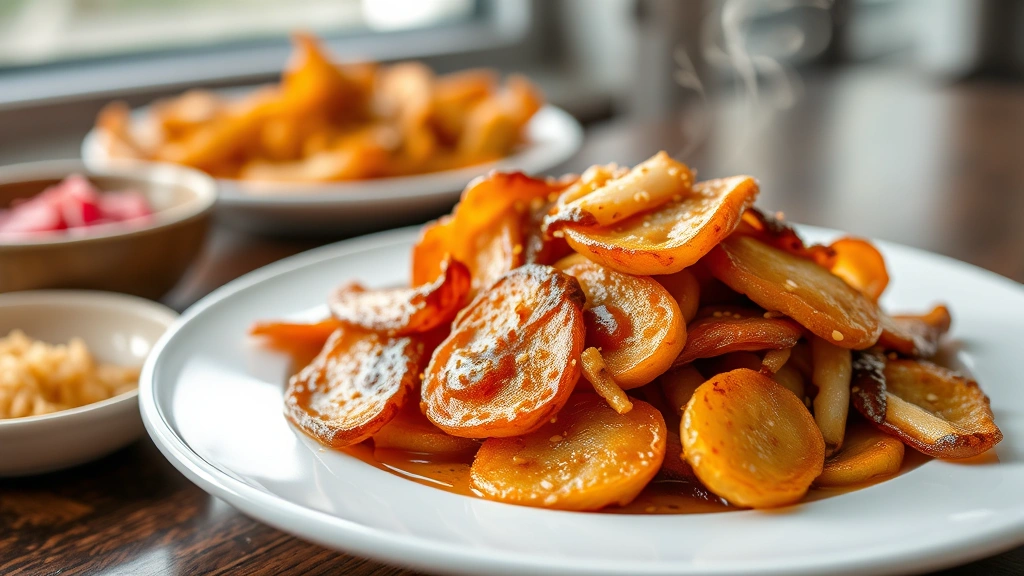
Lotus root is one of those magical vegetables that transforms completely when cooked—crispy on the outside, tender on the inside, with a delicate sweetness that pairs beautifully with bold Asian flavors. This stir-fry celebrates that transformation, combining paper-thin slices of lotus root with garlic, ginger, and a perfectly balanced sauce that lets the vegetable shine. I’ve been making this recipe for years, and it never fails to impress both family and guests who’ve never encountered lotus root before.
The secret to the BEST lotus root stir-fry lies in three key techniques: first, you’ll want to slice the lotus root thinly and evenly so it cooks uniformly; second, blanching it briefly before the final stir-fry ensures it maintains that perfect crispy-tender texture; and third, timing is everything—you want high heat and quick cooking to preserve the delicate flavor and nutritional benefits.
Lotus root is packed with fiber, vitamin C, and potassium, making this not just delicious but genuinely good for you. It’s naturally low in calories and has a subtle, slightly nutty flavor that works beautifully in both Asian and fusion cooking. If you’re looking to expand your vegetable repertoire beyond the usual suspects, this vegetable stir-fry guide will inspire you to experiment with different preparations.
I first discovered lotus root at a farmers market in Chinatown, and the vendor explained that the holes running through the root symbolize good luck and connection in Asian culture. Now I seek it out whenever possible, and this stir-fry has become my go-to way to prepare it. The recipe is naturally vegetarian and vegan-friendly, making it perfect for mixed dietary preferences.
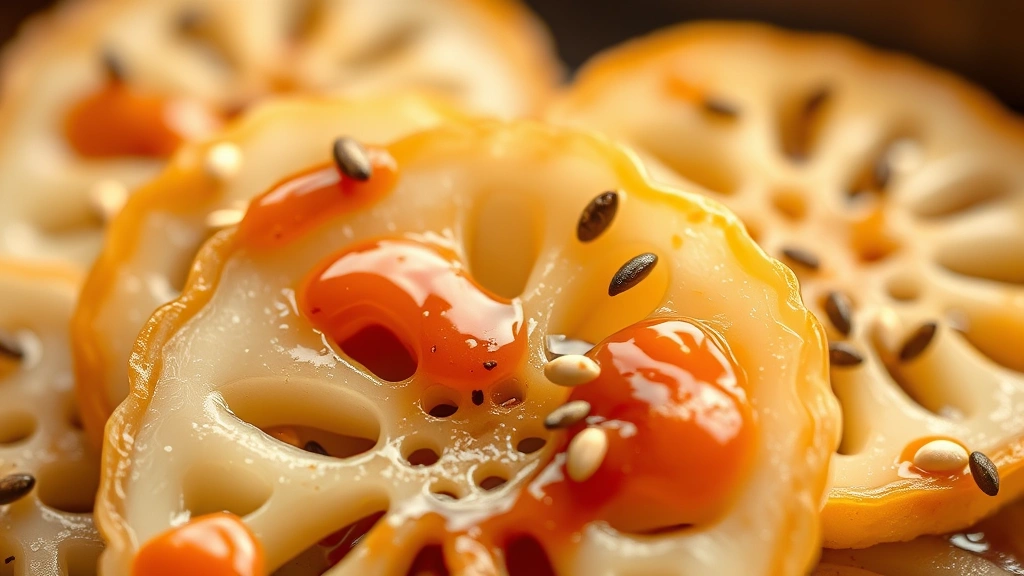
For the best results, source your lotus root from an Asian market where it’s likely to be fresher and more reasonably priced. You’ll recognize it by its distinctive appearance—it looks like a long, tan root vegetable, but when you slice it, those beautiful holes become visible. This is what makes it so special and photogenic!
This stir-fry works beautifully as a side dish alongside crispy tofu or steamed rice, but it’s also substantial enough to serve over noodles for a light main course. I love making extra because the leftovers are fantastic cold in salads or as part of a composed grain bowl the next day.
If you’re new to wok cooking, this is an excellent recipe to practice with because the quick cooking time means you can focus on technique without worrying about the vegetable overcooking. For more wok cooking techniques, check out our comprehensive guide.
The beauty of this recipe is its flexibility—you can add cashews for crunch, incorporate mushrooms or water chestnuts for variation, or adjust the sauce ingredients based on what you have on hand. I’ve included notes below with several delicious variations to try.
One final tip: don’t be intimidated by the lotus root’s unusual appearance. Once you understand how to select, clean, and slice it, you’ll find it’s actually quite straightforward to work with. Many home cooks overlook this vegetable simply because they’re unsure how to prepare it—but this recipe will change that! Learn more about Asian vegetables to expand your culinary horizons.
Whether you’re a seasoned stir-fry maker or trying your hand at wok cooking for the first time, this lotus root stir-fry recipe will become a regular in your rotation. It’s the kind of dish that tastes like you spent hours in the kitchen, but comes together in under 20 minutes. Let’s get cooking!
Ingredients
- 1 pound fresh lotus root
- 3 tablespoons vegetable oil or peanut oil
- 6 cloves garlic, thinly sliced
- 1 tablespoon fresh ginger, minced
- 3 dried red chilies, deseeded and chopped (or 1/2 teaspoon red pepper flakes for less heat)
- 3 tablespoons soy sauce
- 1 tablespoon rice vinegar
- 1 teaspoon sesame oil
- 1 teaspoon sugar
- 1/4 cup vegetable broth or water
- 2 tablespoons cashews or peanuts (optional but recommended)
- 3 green onions, cut into 1-inch pieces
- 1 teaspoon cornstarch mixed with 1 tablespoon water (slurry)
- Sesame seeds for garnish
- Salt and white pepper to taste
Instructions
- Clean the lotus root thoroughly under running water, using a vegetable brush to remove any dirt from the exterior. Pat dry completely with paper towels.
- Using a sharp vegetable peeler, peel away the thin brown skin from the lotus root. Don’t worry if some of the flesh comes away with the skin—this is normal.
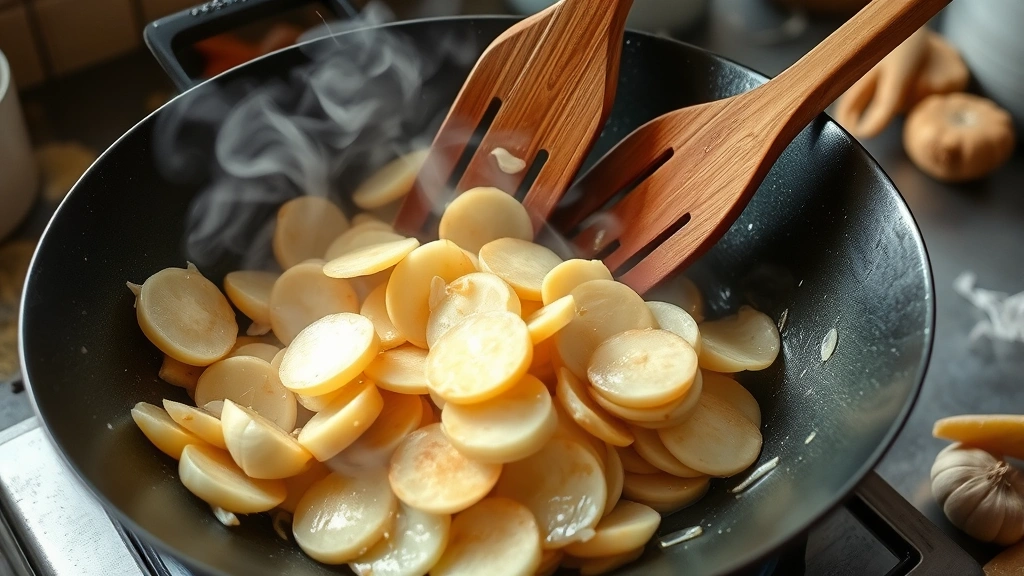
- Slice the peeled lotus root into thin rounds, approximately 1/8-inch thick. The thinner and more uniform your slices, the more evenly they’ll cook. If your knife skills aren’t perfect, a mandoline slicer works beautifully here.
- Fill a large pot with water and bring to a boil. Add the lotus root slices and blanch for 3-4 minutes until they’re just barely tender but still have a slight firmness. Drain in a colander and set aside.
- Pat the blanched lotus root slices dry with paper towels—removing excess moisture is crucial for achieving that crispy exterior.
- Heat the vegetable oil in a wok or large skillet over high heat until it shimmers and just begins to smoke, approximately 2-3 minutes.
- Add the sliced garlic and minced ginger to the hot oil, stirring constantly for 30 seconds until fragrant. Be careful not to let them burn.
- Add the chopped dried chilies and stir for another 15 seconds to release their heat and flavor into the oil.
- Carefully add the blanched lotus root slices to the wok, using a wooden spoon or wok turner to toss them continuously for 2-3 minutes. You want them to develop some light browning and crispiness.
- In a small bowl, whisk together the soy sauce, rice vinegar, sesame oil, sugar, and vegetable broth to create your sauce.
- Pour the sauce mixture over the lotus root and toss everything together for 1-2 minutes, ensuring all the slices are well coated.
- If using nuts, add them now and toss to combine, cooking for another 30 seconds.
- Pour the cornstarch slurry into the wok while stirring constantly—this will thicken the sauce slightly and help it cling to the lotus root slices.
- Add the green onions and toss everything together for the final 20-30 seconds of cooking.
- Season with salt and white pepper to taste, remembering that the soy sauce already provides saltiness.
- Transfer to a serving platter and garnish generously with sesame seeds. Serve immediately while the lotus root is still crispy and warm.
Pro Tips
- **Selecting Lotus Root**: Look for firm roots without soft spots or blemishes. Avoid any that feel spongy or have a strong unpleasant smell. Fresh lotus root should feel solid and substantial. If you can’t find fresh lotus root at your local grocery store, check Asian markets, specialty produce shops, or online retailers—it’s increasingly available nationwide.
- **Prep-Ahead Tips**: You can peel and slice the lotus root up to 4 hours ahead of time. Store the slices in a bowl of cold water in the refrigerator to prevent discoloration. Drain and pat dry completely before cooking. However, don’t blanch until just before your final stir-fry, as this is best done close to serving time.
- **Substitutions and Variations**: If you can’t find lotus root, water chestnuts make a decent substitute, though the flavor and texture aren’t identical. You can also add shiitake mushrooms, bok choy, or bell peppers to this stir-fry. For a heartier dish, serve over brown rice or noodles. Add tofu for additional protein, or incorporate cashew chicken or shrimp for a non-vegetarian version.
- **Heat Level Adjustment**: This recipe provides a moderate amount of heat from the dried chilies. If you prefer it milder, remove the chili seeds before adding them or reduce the quantity. For a spicier version, add Sichuan peppercorns for a numbing sensation or increase the red pepper flakes. Some cooks love adding a touch of chili garlic sauce (such as sriracha) at the end.
- **Sauce Customization**: Feel free to adjust the sauce to your preference. If you like it sweeter, add an extra 1/2 teaspoon of sugar. For more acidity, increase the rice vinegar. Some cooks add a teaspoon of oyster sauce or fish sauce for additional umami depth, though this moves away from vegetarian territory.
- **Wok vs. Skillet**: While a traditional wok is ideal for stir-frying because of its sloped sides and heat distribution, a large skillet works perfectly well. The key is having enough surface area and high, even heat. Cast iron skillets are excellent for this recipe.
- **Oil Selection**: Peanut oil is traditional and has a high smoke point, making it ideal for stir-frying. Vegetable oil and canola oil work too. Avoid olive oil, which has a lower smoke point and would impart an unfamiliar flavor to this Asian-inspired dish.
- **Texture Tips**: The blanching step is crucial for achieving the perfect texture—it partially cooks the lotus root so that the final stir-fry crisps the exterior without leaving the interior too soft. If you skip this step, increase the final cooking time to 4-5 minutes.
- **Make It Creamy**: For a different preparation, stir in 1/4 cup coconut milk after adding the sauce. This creates a silky, Thai-inspired version that’s equally delicious.
- **Storage**: Leftovers keep refrigerated in an airtight container for 3-4 days. Reheat gently in a skillet over medium heat, or enjoy cold in grain bowls and salads. The texture will soften slightly, but the flavor remains excellent.