

There’s something absolutely magical about homemade pepperoni bread—it’s the kind of recipe that transforms your kitchen into an Italian bakery and has everyone asking for seconds (and thirds!). This isn’t just any pepperoni bread; it’s the BEST version you’ll ever make, with a perfectly golden, crispy crust, soft and pillowy interior, and pockets of flavorful pepperoni throughout that get slightly crispy at the edges.
I grew up watching my grandmother make variations of this bread, and over the years, I’ve perfected the technique to create something truly spectacular. The secret lies in using quality ingredients, proper fermentation time, and a few insider tricks that make all the difference. This pepperoni bread recipe is perfect for game day appetizers, lunch boxes, or whenever you’re craving that irresistible combination of bread, cheese, and cured meat.
What makes this recipe stand out is the balance of flavors and textures. We’re using a combination of mozzarella and provolone cheese, which creates that gorgeous stretch and rich, savory taste. The pepperoni isn’t just scattered randomly—it’s strategically placed to ensure every bite is loaded with flavor. Plus, we’re finishing the loaf with a special seasoning blend that gives it that restaurant-quality appearance and taste.
This recipe is more forgiving than you might think, and even if you’re new to bread baking, you’ll have wonderful results. The dough comes together easily, and the long fermentation actually gives you flexibility with timing. You can make this in the morning and bake it for dinner, or prepare it the night before for a weekend brunch. Check out our other Italian bread recipes for more inspiration, or explore our complete recipe collection for similar comfort food favorites.
The beauty of homemade pepperoni bread is that you control every element. Want it spicier? Add red pepper flakes to the dough. Prefer it less cheesy? Reduce the cheese amount. This is YOUR pepperoni bread, and these instructions will guide you to perfection. Whether you’re serving this at a party, packing it for lunch, or simply treating yourself to a warm slice with a glass of wine, this recipe delivers every single time.
I’ve tested this recipe dozens of times to ensure foolproof results, and I’m confident you’ll create something absolutely delicious. The combination of techniques—proper dough hydration, slow fermentation, and careful cheese and pepperoni placement—ensures that your pepperoni bread will have the perfect crust and an incredibly flavorful, moist crumb. Let’s get started on creating your new favorite bread!
Ingredients
- 3 1/2 cups all-purpose flour
- 1 1/2 teaspoons instant yeast
- 1 1/2 teaspoons salt
- 1 1/4 cups warm water (about 110°F)
- 2 tablespoons olive oil
- 1 1/2 cups shredded whole milk mozzarella cheese
- 1/2 cup shredded provolone cheese
- 1 cup pepperoni slices (about 4-5 ounces), cut in half
- 1/2 teaspoon garlic powder
- 1/2 teaspoon Italian seasoning
- 1/4 teaspoon red pepper flakes (optional, for heat)
- 1 egg, beaten (for egg wash)
- 1 tablespoon water (for egg wash)
- 2 tablespoons grated Parmesan cheese
- Fresh basil for garnish (optional)
Instructions
- In a large mixing bowl, whisk together the flour, instant yeast, and salt until well combined. This ensures the yeast and salt are evenly distributed throughout the dry ingredients.
- Create a well in the center of the flour mixture and pour in the warm water and olive oil. Using a wooden spoon or your hands, mix until a shaggy dough forms. The dough should come together but will still be slightly sticky.
- Transfer the dough to a lightly floured work surface and knead for 8-10 minutes until the dough becomes smooth and elastic. You can also use a stand mixer with the dough hook attachment for 6-7 minutes on medium speed.
- Place the dough in a lightly oiled bowl, turning it to coat all sides. Cover with a damp kitchen towel or plastic wrap and let it rise at room temperature for 1 hour, or until it has increased in size by about 50 percent.
- After the first rise, turn the dough out onto a lightly floured surface and gently press out most of the air. Roll or stretch the dough into a large rectangle, approximately 12 x 10 inches.
- In a small bowl, combine the shredded mozzarella, provolone, garlic powder, Italian seasoning, and red pepper flakes (if using). Mix until evenly distributed.
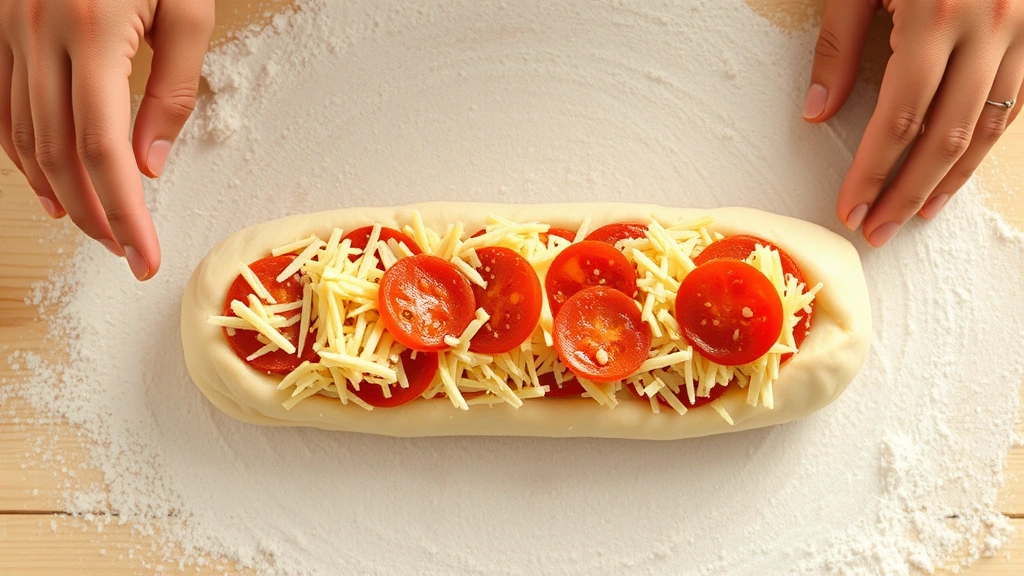
- Spread about half of the cheese mixture evenly over the dough, leaving a 1/2-inch border on all sides. Layer half of the pepperoni slices over the cheese.
- Sprinkle the remaining cheese mixture over the pepperoni, then top with the remaining pepperoni slices. The layering ensures that every slice of bread will have cheese and pepperoni throughout.
- Starting from the long side, tightly roll the dough into a log, pinching the seam as you go to seal it. You want a tight roll to keep all the fillings intact during baking.
- Place the rolled dough seam-side down on a parchment-lined baking sheet. Cover loosely with plastic wrap and let it rise for 45 minutes to 1 hour, until it’s puffy and has increased in size.
- While the dough is rising, preheat your oven to 400°F (200°C). In a small bowl, whisk together the beaten egg and water to create an egg wash.
- Once the dough has finished its second rise, brush the entire surface with the egg wash using a pastry brush. This creates that beautiful golden-brown color.
- Sprinkle the grated Parmesan cheese evenly over the egg-washed dough. You can also add a pinch more Italian seasoning or red pepper flakes if desired.
- Using a sharp knife or bread lame, make 3-4 diagonal slashes across the top of the bread, about 1/4-inch deep. This allows steam to escape and helps the bread expand during baking.
- Place the baking sheet in the preheated oven and bake for 35-40 minutes, until the bread is golden brown and sounds hollow when tapped on the bottom. The internal temperature should reach 190°F (88°C).
- Remove the pepperoni bread from the oven and let it cool on a wire rack for 10 minutes before slicing. This cooling time allows the crumb structure to set properly.
- Slice and serve warm, optionally garnishing with fresh basil. This bread is best enjoyed fresh but can be stored in an airtight container for up to 2 days or frozen for up to 3 months.

Pro Tips
- **Dough Temperature Matters**: Warm water should be around 110°F (43°C). If it’s too hot, it can kill the yeast; if it’s too cold, the dough won’t rise properly. Use an instant-read thermometer for best results.
- **Cheese Selection**: Whole milk mozzarella works best because it has better stretch and flavor than low-moisture varieties. Provolone adds a sharp, savory note that complements the pepperoni beautifully.
- **Pepperoni Placement**: Cutting the pepperoni in half prevents large pieces from creating air pockets. The smaller pieces distribute more evenly and ensure better cheese adhesion.
- **Make-Ahead Option**: You can prepare the dough through step 9, refrigerate overnight, and bake the next day. Simply remove from the refrigerator 30 minutes before baking to allow it to come to room temperature.
- **Freezing Instructions**: Cool the bread completely, wrap tightly in plastic wrap and aluminum foil, and freeze for up to 3 months. Thaw at room temperature or reheat directly from frozen in a 350°F oven for 15-20 minutes.
- **Egg Wash Alternatives**: If you don’t have eggs, you can use a simple mixture of water and cornstarch or milk for a nice golden finish.
- **Flavor Customizations**: Add fresh herbs like oregano or thyme to the cheese mixture, or include sun-dried tomatoes for extra flavor complexity.
- **Baking Sheet Tip**: Use a pizza stone or baking steel if available—these create an even crispier bottom crust.
- **Cooling is Important**: Resist the urge to slice immediately after removing from the oven. The crumb needs those 10 minutes to set up properly.
- **Leftover Ideas**: Slice leftover pepperoni bread and use it for sandwiches, tear it into pieces for salads, or reheat in a 300°F oven until warm for a quick snack.
- **Hydration Level**: This recipe uses a moderate hydration level (about 62%) which creates a tender crumb while remaining easy to work with. Don’t add extra water even if the dough seems stiff initially.