
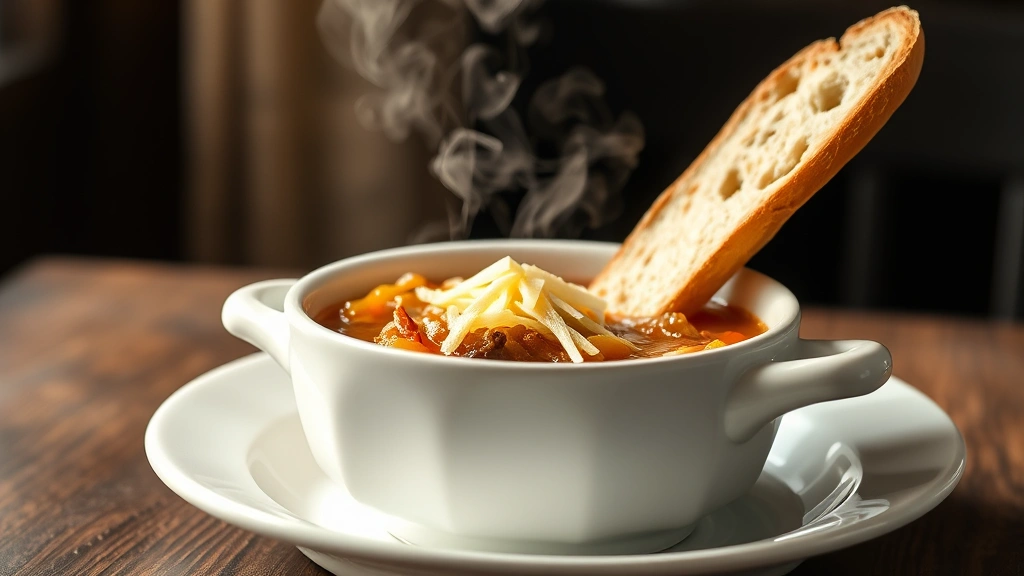
French onion soup, or soupe à l’oignon gratinée, is the ultimate comfort food that transforms humble onions into liquid gold. This classic bistro dish has graced tables in Paris for centuries, and once you master this recipe, you’ll understand why it’s considered one of the greatest soups in culinary history.
The magic of French onion soup lies in patience and technique. Unlike quick weeknight soups, this masterpiece demands time—specifically, time to caramelize those onions until they’re deep golden brown and intensely sweet. Many home cooks rush this step, but that’s where the soul of the soup lives. When you take 45 minutes to an hour to slowly coax the natural sugars from the onions, you’re building layers of flavor that no shortcut can replicate.
What makes this recipe special is the combination of technique and quality ingredients. We start with a generous amount of yellow onions—don’t be intimidated by the quantity; they shrink dramatically as they cook. A combination of beef and chicken stock creates a rich, balanced base that’s more nuanced than using just one type. A splash of dry white wine adds brightness and complexity, while fresh thyme and bay leaves provide aromatic depth. The Gruyère cheese topping is essential—it’s not just decoration but a crucial component that creates that iconic crusty, melty layer.
This soup is perfect for dinner parties, cozy weeknights, or meal prep. It actually tastes better the next day, making it ideal for advance preparation. Serve it in individual oven-safe bowls for the full restaurant experience, or ladle it into mugs for a more casual approach. Either way, you’re about to create something truly spectacular.
For more rich broth-based soups, check out our collection. You might also enjoy learning about caramelizing onions to perfect this fundamental technique. If you love bistro classics, explore our French cuisine collection for more authentic dishes. For vegetable preparation tips, see our knife skills guide. Want to understand stocks better? Read our stock and broth guide.
External inspiration: Check out Bon Appétit’s French onion soup, Serious Eats’ detailed analysis, and New York Times’ classic version for additional perspectives on this timeless recipe.
Ingredients
- 6 tablespoons unsalted butter
- 4 tablespoons olive oil
- 3 pounds yellow onions (about 8-10 large onions), sliced into thin half-moons
- 2 teaspoons kosher salt, plus more to taste
- 1 teaspoon freshly ground black pepper
- 3 cloves garlic, minced
- 2 tablespoons tomato paste
- 1 cup dry white wine (such as Sauvignon Blanc)
- 4 cups beef stock, preferably homemade
- 3 cups chicken stock
- 3 sprigs fresh thyme
- 2 bay leaves
- 1 tablespoon balsamic vinegar
- 1 teaspoon fresh lemon juice
- 1 baguette, cut into ½-inch thick slices
- 2 tablespoons butter, for toasting bread
- 2 cups shredded Gruyère cheese
- ½ cup grated Parmigiano-Reggiano cheese
- 2 tablespoons fresh parsley, finely chopped
Instructions
- Slice your onions: Cut the yellow onions in half lengthwise, then place the flat side down on your cutting board. Slice them into thin, uniform half-moons about ¼-inch thick. Uniform slicing ensures even cooking. Set the sliced onions aside in a large bowl.
- Heat your Dutch oven or large heavy-bottomed pot over medium-high heat. Add the butter and olive oil together—the combination of both fats creates the ideal cooking medium for caramelizing onions without burning.
- Once the butter is foaming and the oil is shimmering, add about one-third of the sliced onions to the pot. Sprinkle with salt and pepper. Stir occasionally until these onions begin to soften and release their moisture, about 5-7 minutes.
- Add the remaining onions in two additions, stirring well between each addition and seasoning with salt and pepper. This gradual addition allows the pot to maintain its temperature and ensures even cooking. The onions will seem like an enormous amount, but they’ll shrink dramatically.
- Continue cooking the onions over medium-high heat, stirring occasionally, for about 15 minutes. They’ll begin to release their liquid and become translucent. Resist the urge to rush this process.
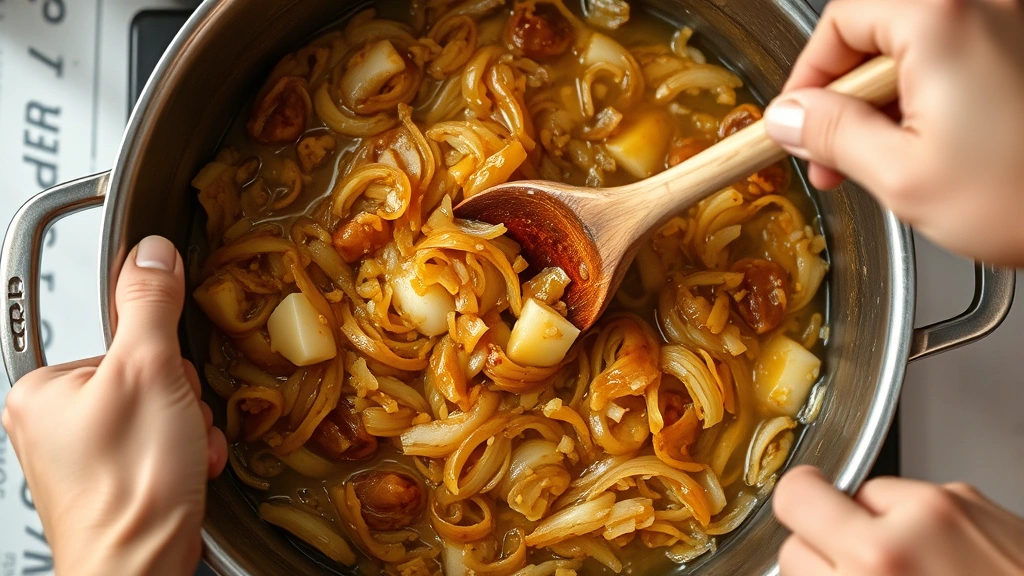
- Reduce heat to medium and continue cooking, stirring frequently to prevent sticking and ensure even browning. After another 15-20 minutes, the onions should be turning golden brown. This is where the magic happens—the Maillard reaction creates deep, complex flavors.
- Keep cooking for another 15-20 minutes, stirring more frequently as the onions darken. You want them to be a rich, deep golden-brown color, almost mahogany in appearance. Don’t be afraid of the color; this is what creates the soup’s signature depth.
- When the onions reach the desired caramelization, add the minced garlic and cook for 1-2 minutes, stirring constantly, until fragrant. Be careful not to burn the garlic.
- Add the tomato paste and stir well, coating the onions thoroughly. Cook for 1-2 minutes to caramelize the tomato paste slightly, which intensifies its flavor.
- Pour in the dry white wine, scraping the bottom of the pot with a wooden spoon to deglaze and release all the flavorful browned bits stuck to the bottom. These bits are pure flavor gold.
- Let the wine simmer for 3-4 minutes, allowing it to reduce by about half and the alcohol to cook off slightly.
- Add the beef stock and chicken stock together. The combination gives you the best of both worlds—beef stock’s richness and chicken stock’s clarity.
- Add the fresh thyme sprigs and bay leaves to the pot. Stir well and bring to a gentle simmer.
- Reduce heat to low and let the soup simmer gently for 30-40 minutes. This simmering time allows the flavors to meld and develop. Don’t let it boil vigorously, as this can make the broth cloudy.
- After simmering, taste the soup and season with additional salt and pepper as needed. Remove it from the heat and stir in the balsamic vinegar and fresh lemon juice. These acidic ingredients brighten the soup and balance the richness of the caramelized onions.
- Remove and discard the thyme sprigs and bay leaves from the soup.
- While the soup simmers, prepare the bread toasts: Preheat your oven to 375°F (190°C). Arrange baguette slices on a baking sheet in a single layer.
- Brush both sides of each bread slice lightly with melted butter. Bake for 5-7 minutes until golden and crispy but not hard. The bread should still have slight give to it. Remove from the oven and set aside.
- If serving immediately, preheat your broiler and arrange six oven-safe soup bowls on a baking sheet. Ladle the hot soup into each bowl, filling them about three-quarters full.
- Place one or two bread slices on top of each bowl of soup, pressing gently so it soaks in some broth.
- Top each bread slice with about 3 tablespoons of shredded Gruyère cheese, then sprinkle about 1 tablespoon of grated Parmigiano-Reggiano over the Gruyère.
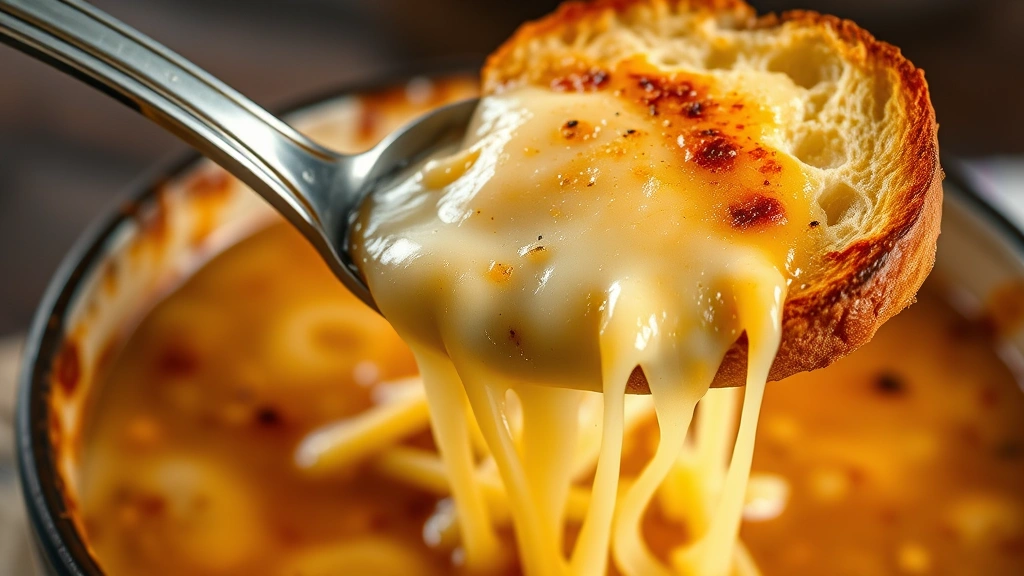
- Place the baking sheet with the bowls under the preheated broiler for 3-5 minutes, watching carefully. The cheese should melt and bubble, and the edges should turn golden brown. Don’t walk away, as cheese can burn quickly.
- Remove from the broiler carefully—the bowls will be extremely hot. Using oven mitts, transfer the bowls to serving plates or place directly on the table.
- Sprinkle fresh chopped parsley over each bowl for color and freshness. Let cool for 2-3 minutes before serving, as the soup and cheese will be extremely hot.
Pro Tips
- **Make-ahead tip:** This soup actually tastes better the next day as flavors continue to develop. Prepare the soup completely through step 15, then cool and refrigerate in an airtight container for up to 3 days. Reheat gently before topping with bread and cheese and broiling.
- **Caramelizing onions:** This is the most important step and cannot be rushed. Low and slow is the motto. The darker the onions, the more complex and delicious the soup. Aim for a deep mahogany color, not just light brown.
- **Stock matters:** Use good-quality stock—homemade is ideal, but quality store-bought works well too. Avoid low-sodium stocks as the soup needs the savory depth that regular salt levels provide.
- **Wine selection:** Use a wine you’d drink. Avoid cooking wine from the grocery store; quality Sauvignon Blanc or Pinot Grigio works beautifully. The wine adds brightness that balances the rich onions.
- **Cheese options:** Gruyère is traditional and ideal, but Swiss cheese or a combination of Gruyère and Swiss also works. Emmental creates a similar effect. Avoid pre-shredded cheese if possible, as it contains anti-caking agents that prevent smooth melting.
- **Broiler method vs. stovetop:** The broiler method is most dramatic and creates the best texture, but you can also carefully melt the cheese over gentle stovetop heat if you don’t have oven-safe bowls. The result won’t be quite the same, but it’s still delicious.
- **Serving suggestions:** Serve with a crisp green salad dressed with Dijon vinaigrette. A dry white wine or light red wine pairs beautifully. This soup is hearty enough to be a complete meal on its own.
- **Individual servings:** For a more casual presentation, you can serve this in large mugs without the broiler step. Top with toasted bread and melted cheese, but simply ladle into mugs. Perfect for fall and winter entertaining.
- **Scaling the recipe:** This recipe easily doubles for larger gatherings. The cooking time remains the same; just use a larger pot.
- **Storage:** Refrigerate leftovers in an airtight container for up to 3 days. The soup can be frozen for up to 3 months (without the bread and cheese topping). Reheat gently, then top and broil as directed.
Pingback: How to Make the Best Olive Garden Zuppa Toscana Recipe! – Simple Recipe Finder