
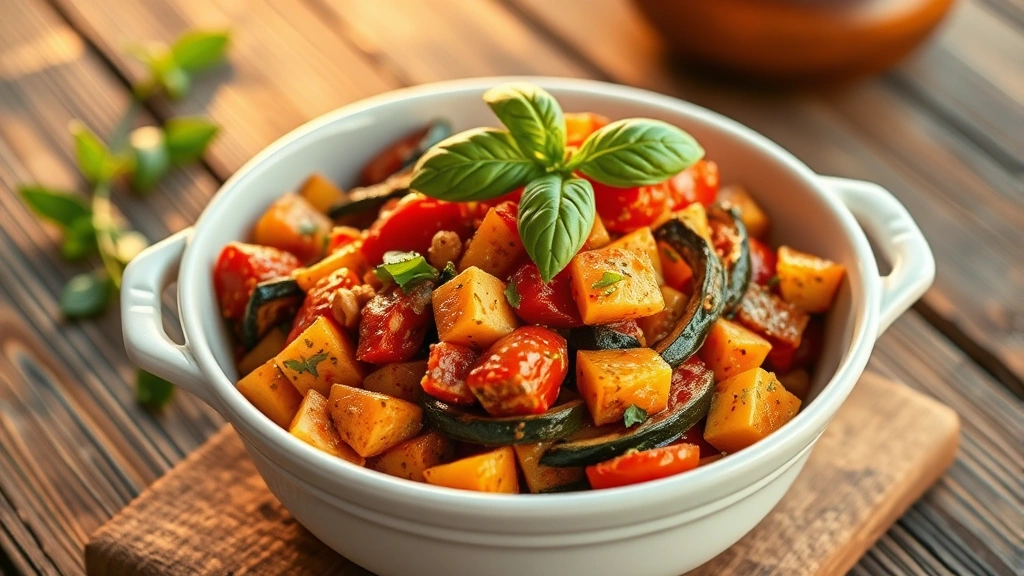
Ratatouille is the quintessential French Provençal vegetable stew that tastes like summer in every bite. This classic dish hails from Nice and the surrounding regions of southern France, where fresh, vibrant vegetables are celebrated in their purest form. What makes this recipe truly special is how the individual vegetables maintain their integrity while melding into a harmonious, flavorful whole.
I’ve been making ratatouille for years, and I’ve learned that the secret isn’t complicated—it’s all about quality ingredients, proper technique, and patience. Unlike some rustic preparations, this version features beautifully layered vegetables that create visual appeal alongside incredible taste. The key is cooking each vegetable separately before combining them, which prevents the dish from becoming mushy and ensures each component contributes its unique flavor and texture.
This dish is wonderfully versatile. Serve it warm as a main course with crusty bread, at room temperature as a sophisticated side dish, or even chilled as a refreshing summer appetizer. It’s naturally vegetarian, naturally gluten-free, and honestly, it’s one of those recipes that makes you feel like you’re dining at a Parisian bistro, even when you’re in your own kitchen.
The beauty of ratatouille lies in its simplicity and elegance—two qualities that define the best of French cooking. This recipe yields a restaurant-quality dish that’s surprisingly achievable at home. Whether you’re a seasoned cook or just beginning your culinary journey, this guide to French cooking basics will help you master this timeless classic. For more vegetable recipes, check out our collection of seasonal produce dishes. If you’re interested in Provence-inspired recipes, ratatouille is absolutely essential. You might also enjoy exploring other French vegetable dishes and Mediterranean cooking techniques. For professional insights, check out Bon Appétit’s ratatouille guide, Serious Eats’ ratatouille technique, New York Times recipe, and explore French vegetable cooking methods and Provençal cooking traditions.
Ingredients
- 3 tablespoons extra virgin olive oil, divided
- 1 large onion, diced into ½-inch pieces
- 4 cloves garlic, minced
- 1 red bell pepper, cut into ¾-inch dice
- 1 yellow bell pepper, cut into ¾-inch dice
- 1 medium eggplant, cut into ¾-inch cubes
- 2 medium zucchini, cut into half-moons, ½-inch thick
- 2 medium yellow squash, cut into half-moons, ½-inch thick
- 1 can (28 ounces) crushed San Marzano tomatoes
- 2 tablespoons tomato paste
- 1 teaspoon Herbes de Provence
- ½ teaspoon dried thyme
- 2 bay leaves
- ½ teaspoon salt, plus more to taste
- ¼ teaspoon black pepper, plus more to taste
- Pinch of sugar
- ¼ cup fresh basil, chiffonade
- 2 tablespoons fresh parsley, chopped
- 1 tablespoon balsamic vinegar, optional
- Sea salt and cracked pepper for finishing
Instructions
- Prepare all your vegetables first. Cut the onion into ½-inch dice, mince the garlic, and dice the bell peppers into ¾-inch pieces. Cut the eggplant into ¾-inch cubes and lightly salt them; let them sit for 10 minutes to release excess moisture, then pat dry with paper towels. Slice the zucchini and yellow squash into ½-inch thick half-moons. Having everything prepped and ready will make the cooking process smooth and enjoyable.
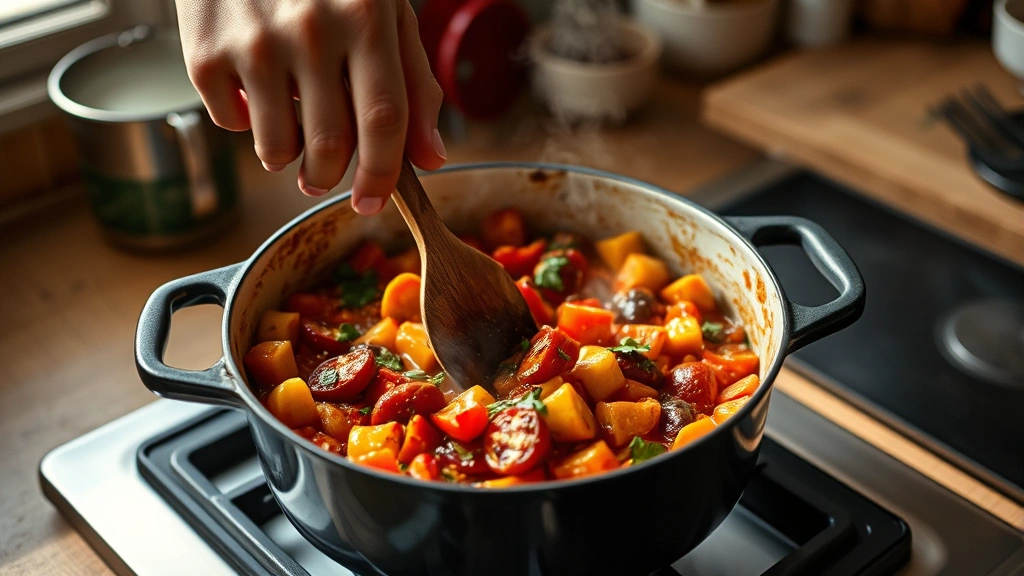
- Heat 1 tablespoon of olive oil in a large, heavy-bottomed Dutch oven or deep skillet over medium heat. Once shimmering, add the diced onion and a pinch of salt. Cook for 5-7 minutes, stirring occasionally, until the onion becomes translucent and begins to soften. This builds the flavor foundation of your dish.
- Add the minced garlic to the onion and cook for 1 minute, stirring constantly, until fragrant. Be careful not to let the garlic brown, as this can make it bitter. The aroma at this point is absolutely heavenly.
- Add the diced red and yellow bell peppers to the pot. Cook for 5-6 minutes, stirring occasionally, until they begin to soften slightly. The peppers should still have some firmness to them at this stage.
- In a separate large skillet, heat 1 tablespoon of olive oil over medium-high heat. Once hot, add the eggplant cubes and cook for 6-8 minutes, stirring occasionally, until they’re golden brown on the edges and tender. Season lightly with salt and pepper. This step prevents the eggplant from becoming waterlogged in the finished dish.
- Transfer the cooked eggplant to a plate and set aside. In the same skillet, add the remaining ½ tablespoon of olive oil, then add the zucchini and yellow squash. Cook for 5-6 minutes, stirring occasionally, until they’re lightly golden and just beginning to soften. Season with salt and pepper. Transfer to another plate.
- Return to the pot with the onions and peppers. Stir in the tomato paste and cook for 1-2 minutes, allowing it to caramelize slightly and concentrate its flavor. This deepens the tomato flavor significantly.
- Add the crushed San Marzano tomatoes to the pot, stirring well to combine with the tomato paste and vegetables. Pour in just a splash of water if needed—about ¼ cup—to create a slightly looser sauce. San Marzano tomatoes are less watery than other varieties, so you want just enough liquid to create a cohesive sauce.
- Stir in the Herbes de Provence, dried thyme, and bay leaves. Add ½ teaspoon of salt and ¼ teaspoon of black pepper. If your tomatoes lack acidity, add a small pinch of sugar to balance the flavors. Bring the mixture to a gentle simmer.
- Add the cooked eggplant and the zucchini-squash mixture back into the pot, stirring gently to combine all the vegetables and sauce. The vegetables should be partially submerged in the tomato sauce.
- Reduce the heat to low and simmer gently for 15-20 minutes, stirring occasionally and very gently to avoid breaking up the vegetables. The vegetables will continue to soften and the flavors will meld beautifully. The dish should bubble gently, not vigorously.
- Taste the ratatouille and adjust the seasoning with additional salt and pepper as needed. Remove the bay leaves. If you’d like to add a touch of brightness and depth, stir in the optional balsamic vinegar.
- Just before serving, gently stir in the fresh basil chiffonade and chopped parsley. Reserve a small amount of fresh herbs for garnishing individual servings if desired.
- Serve the ratatouille warm, at room temperature, or chilled, depending on your preference and the season. Finish with a drizzle of excellent quality olive oil, a sprinkle of sea salt, and cracked pepper. Serve alongside crusty bread, over rice, with pasta, or as a side dish to grilled proteins.
Pro Tips
- **Make-Ahead Magic**: Ratatouille actually tastes better the next day after the flavors have had time to develop and meld together. Make it up to 3 days in advance and reheat gently, or serve chilled straight from the refrigerator.
- **Vegetable Variations**: While this recipe uses the classic combination, you can absolutely substitute based on what’s available. Try adding green beans, fennel, or mushrooms. Adjust cooking times slightly based on the vegetables you choose—harder vegetables need longer cooking than softer ones.
- **Eggplant Tip**: Salting the eggplant before cooking removes excess moisture and bitterness while preventing it from absorbing too much oil. This technique is called “sweating” and is essential for perfect texture.
- **Separate Cooking Method**: The reason we cook vegetables separately before combining is crucial. This prevents the dish from becoming mushy and ensures each vegetable maintains its individual character while contributing to the whole.
- **Serving Suggestions**: Serve ratatouille as a main course with grilled bread and a simple green salad, alongside grilled fish or chicken, over creamy polenta, tossed with pasta, or even as a filling for savory crepes or pastries.
- **Storage**: Store covered in the refrigerator for up to 5 days. Ratatouille freezes beautifully for up to 3 months. Thaw overnight in the refrigerator and reheat gently on the stovetop.
- **Herb Flexibility**: While Herbes de Provence is traditional, you can use fresh thyme, oregano, and marjoram if you prefer. Add fresh herbs near the end of cooking to preserve their bright flavor.
- **Tomato Quality Matters**: San Marzano tomatoes are traditional for good reason—they have fewer seeds, less water, and a sweeter, more concentrated flavor than other varieties. They truly make a difference in this dish.
- **Temperature Considerations**: This dish is incredibly versatile regarding serving temperature. Warm ratatouille is comforting and rich, room temperature is elegant for entertaining, and chilled ratatouille is perfect for summer entertaining or light lunches.
- **Wine Pairing**: A crisp Provence rosé or Sauvignon Blanc pairs beautifully with ratatouille, complementing its fresh vegetable flavors and brightness.