
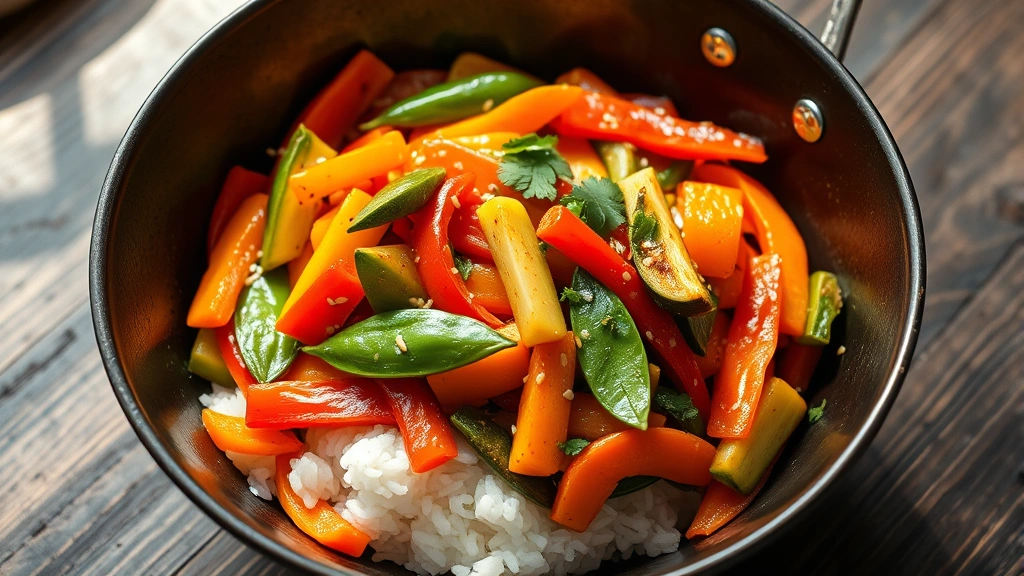
There’s nothing quite like the satisfaction of cooking with vegetables fresh from your own garden. This Garden Veggie Stir Fry recipe is the perfect way to showcase your homegrown produce in a dish that’s quick, colorful, and absolutely delicious. Whether you’re growing tomatoes, bell peppers, zucchini, snap peas, or carrots, this versatile stir fry adapts beautifully to whatever vegetables are ready to harvest.
Stir frying is one of my favorite cooking techniques because it preserves the vibrant colors and crisp-tender texture of fresh vegetables while infusing them with incredible flavor. The key to a perfect stir fry is preparation—having all your ingredients prepped and ready before you start cooking. This is called mise en place, and it makes the actual cooking process smooth and stress-free.
I absolutely love making this recipe during peak garden season when I have an abundance of fresh vegetables. The combination of garlic, ginger, and soy sauce creates an authentic Asian-inspired flavor profile that elevates simple garden vegetables into something restaurant-worthy. Serve it over steamed rice, quinoa, or noodles for a complete meal that your family will request again and again.
One of the best things about growing your own garden is knowing exactly where your food comes from and how it was grown. When you use vegetables you’ve nurtured from seed to harvest, they taste exponentially better than store-bought produce. This recipe celebrates that quality and lets your garden vegetables shine. If you’re looking for other ways to use your garden harvest, try our Garden Vegetable Pasta or these Grilled Garden Vegetables.
The beauty of stir frying is that it’s incredibly forgiving. You can use whatever vegetables you have on hand—this is the perfect recipe for using up vegetables before they overripen. The cooking time is minimal, usually just 10-15 minutes from start to finish, making it ideal for busy weeknights. Plus, stir fries are naturally lower in calories and fat, especially when you use just a small amount of oil and load up on vegetables.
For the best results, I recommend using a wok or large skillet with high sides. The high heat and constant movement of the vegetables are what create that signature stir fry texture. I also love adding a protein like chicken, tofu, or shrimp to make this a complete one-pan meal. Check out this Tofu Stir Fry for a vegetarian protein option.
When you’re harvesting vegetables from your garden, pick them at peak ripeness for maximum flavor and nutrition. Early morning is the best time to harvest, when vegetables are crisp and full of moisture. The fresher your vegetables, the better your stir fry will be. I encourage you to experiment with different combinations and find your favorite mix.
This recipe is also a wonderful way to introduce children to cooking and gardening. Kids are much more likely to eat vegetables they’ve grown themselves, and stir frying is a fun, interactive cooking method. For more garden-to-table inspiration, check out these resources from Bon Appétit’s stir fry guide and Serious Eats’ stir fry basics. You might also enjoy this New York Times stir fry techniques article.
The sauce for this stir fry is simple but flavorful—just soy sauce, garlic, ginger, and a touch of honey or brown sugar to balance the saltiness. Some people like to add a splash of rice vinegar or sesame oil for extra depth. Feel free to adjust the seasoning to your taste preferences. If you prefer a spicier version, add red pepper flakes or sriracha.
I love serving this Garden Veggie Stir Fry with jasmine rice, but it’s equally delicious over brown rice, white rice, or even cauliflower rice if you’re looking for a lower-carb option. You can also serve it over noodles—egg noodles, ramen, or rice noodles all work beautifully. Garnish with sesame seeds and fresh cilantro for an authentic finish.
One final tip: don’t overcrowd your pan when cooking the vegetables. You want them to cook quickly over high heat, which means they need space to make contact with the hot surface. If necessary, cook the vegetables in batches, then combine them at the end. This method ensures perfectly cooked, vibrant vegetables instead of steamed, dull ones.
Making stir fry from your garden vegetables is truly a celebration of homegrown food. It’s quick, healthy, and tastes infinitely better than takeout. Once you master this basic technique, you’ll find yourself making stir fries regularly. For more garden-inspired recipes, explore our Garden Fresh collection.
Ingredients
- 3 tablespoons vegetable oil or sesame oil
- 4 cloves garlic, minced
- 1 tablespoon fresh ginger, minced
- 2 medium bell peppers (any color), cut into bite-sized pieces
- 2 cups fresh snap peas, trimmed
- 2 medium zucchini, sliced into half-moons
- 1 cup cherry tomatoes, halved
- 2 medium carrots, julienned or cut into matchsticks
- 1 small red onion, thinly sliced
- 1 cup broccoli florets, cut small
- 3 tablespoons soy sauce
- 1 tablespoon honey or brown sugar
- 1 tablespoon rice vinegar
- 1 teaspoon sesame oil
- ½ teaspoon red pepper flakes (optional)
- ¼ cup low-sodium vegetable broth
- 1 teaspoon cornstarch mixed with 2 tablespoons water
- 2 tablespoons sesame seeds for garnish
- Fresh cilantro or green onions for garnish
- Cooked rice or noodles for serving
Instructions
- Prepare all vegetables by washing and cutting them into bite-sized, uniform pieces. This is your mise en place—having everything ready before you start cooking is crucial for successful stir frying.
- In a small bowl, whisk together soy sauce, honey, rice vinegar, sesame oil, and red pepper flakes if using. Set the sauce mixture aside.
- Add the cornstarch slurry to your sauce mixture and stir to combine. This will help thicken the sauce as it cooks.
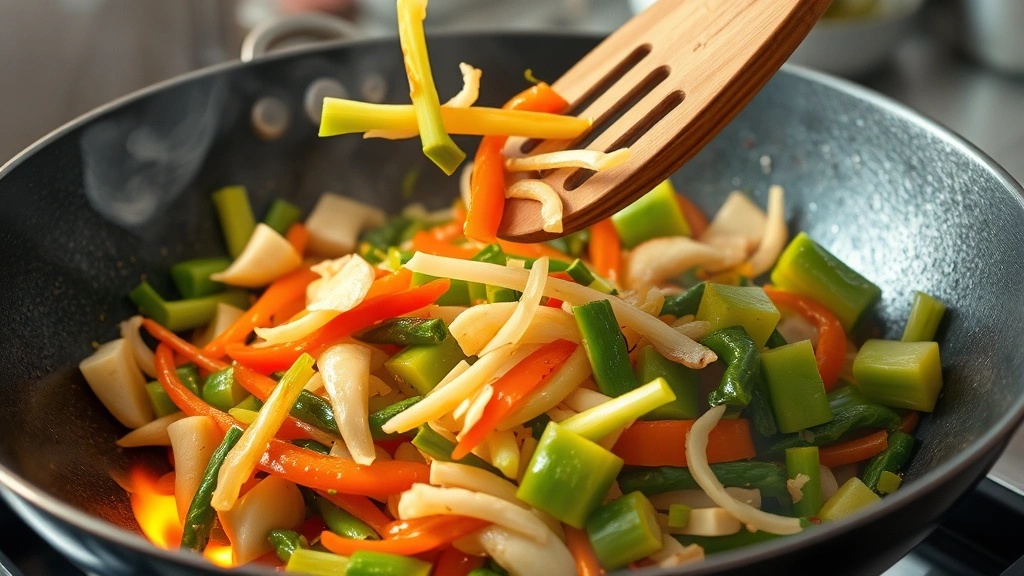
- Heat a large wok or skillet over high heat until it’s very hot, about 1-2 minutes. You want the pan to be almost smoking before you add oil.
- Add 1 tablespoon of vegetable oil to the hot wok and swirl to coat the bottom and sides of the pan evenly.
- Add the minced garlic and ginger to the hot oil and cook for about 30 seconds, stirring constantly, until fragrant. Be careful not to burn the garlic.
- Add the harder vegetables first—carrots and broccoli—to the wok. Stir fry for about 2-3 minutes, tossing and turning constantly so they cook evenly and make contact with the hot surface.
- Add the bell peppers and onion to the wok and continue stir frying for another 2 minutes, maintaining the high heat and constant movement.
- Add the zucchini and snap peas to the wok and stir fry for another 2 minutes until they’re bright green and crisp-tender.
- Add the cherry tomatoes and vegetable broth to the wok and stir everything together. The tomatoes should just begin to soften.
- Pour the sauce mixture into the wok and stir constantly for about 1-2 minutes until the sauce thickens and coats all the vegetables evenly.
- Taste the stir fry and adjust seasonings as needed—add more soy sauce for saltiness, honey for sweetness, or vinegar for acidity.
- Remove from heat and transfer to a serving platter or individual bowls.
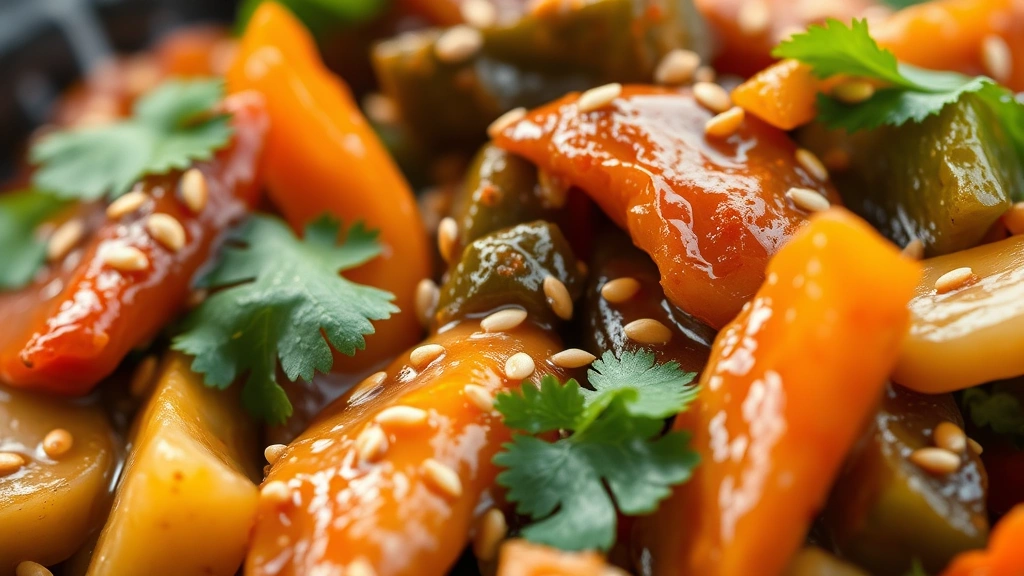
- Garnish generously with sesame seeds and fresh cilantro or sliced green onions.
- Serve immediately over steamed rice, noodles, or your preferred base while the vegetables are still hot and crisp-tender.
Pro Tips
- **Vegetable Selection**: Use whatever vegetables are ready to harvest from your garden. This recipe works beautifully with zucchini, summer squash, green beans, bok choy, mushrooms, cabbage, water chestnuts, or baby corn. Feel free to substitute or adjust quantities based on what you have available.
- **Prep Work is Essential**: Take time to cut all vegetables into uniform, bite-sized pieces. This ensures even cooking and a more attractive finished dish. Uniform sizing is one of the secrets to restaurant-quality stir fry.
- **High Heat is Key**: Don’t be shy with the heat! A wok or skillet needs to be very hot for proper stir frying. The high temperature quickly cooks the vegetables while maintaining their crisp texture and vibrant colors. Medium heat will result in steamed, dull vegetables.
- **Constant Movement**: Keep the vegetables moving throughout the cooking process. This prevents sticking and ensures even cooking. Use a wooden spoon or spatula to toss and turn the vegetables constantly.
- **Don’t Overcrowd the Pan**: If you have more vegetables than can fit comfortably in a single layer, cook them in batches. Overcrowding drops the temperature and causes steaming instead of stir frying.
- **Sauce Customization**: Adjust the sauce to your taste preferences. For a spicier version, add sriracha, chili garlic sauce, or increase the red pepper flakes. For a sweeter stir fry, add more honey. For a tangier version, add more rice vinegar.
- **Protein Additions**: This vegetable stir fry is delicious on its own, but you can add protein for a complete meal. Try diced chicken breast, shrimp, tofu, or tempeh. Cook the protein separately first if using chicken or shrimp, then add it back in at the end.
- **Oil Selection**: Use vegetable oil, peanut oil, or canola oil for cooking since they have high smoke points. Sesame oil is better used as a finishing oil rather than for cooking, as it burns easily at high temperatures.
- **Storage and Leftovers**: Stir fry is best enjoyed fresh, but you can store leftovers in an airtight container in the refrigerator for up to 3 days. Reheat gently in a wok or skillet with a splash of water or broth to refresh the vegetables.
- **Make It Ahead**: You can prep all the vegetables several hours in advance and store them in airtight containers. This makes weeknight cooking even faster. Just wait to cook until you’re ready to eat.
- **Rice or Noodles**: Choose your favorite base for serving. Jasmine rice is traditional and aromatic, but brown rice offers more nutrition. Rice noodles provide a lighter option, while egg noodles or ramen add heartiness.
- **Seasonal Variations**: In spring, use asparagus and young peas. In summer, load up on zucchini, tomatoes, and peppers. In fall, add squash and root vegetables. In winter, use hearty greens and root vegetables.
- **Garnish Ideas**: Beyond sesame seeds and cilantro, try toasted cashews, peanuts, sliced almonds, or crispy fried onions for added texture and flavor.
Pingback: How to Make the Perfect Lamb Steak Recipe – So Delicious! – Simple Recipe Finder