
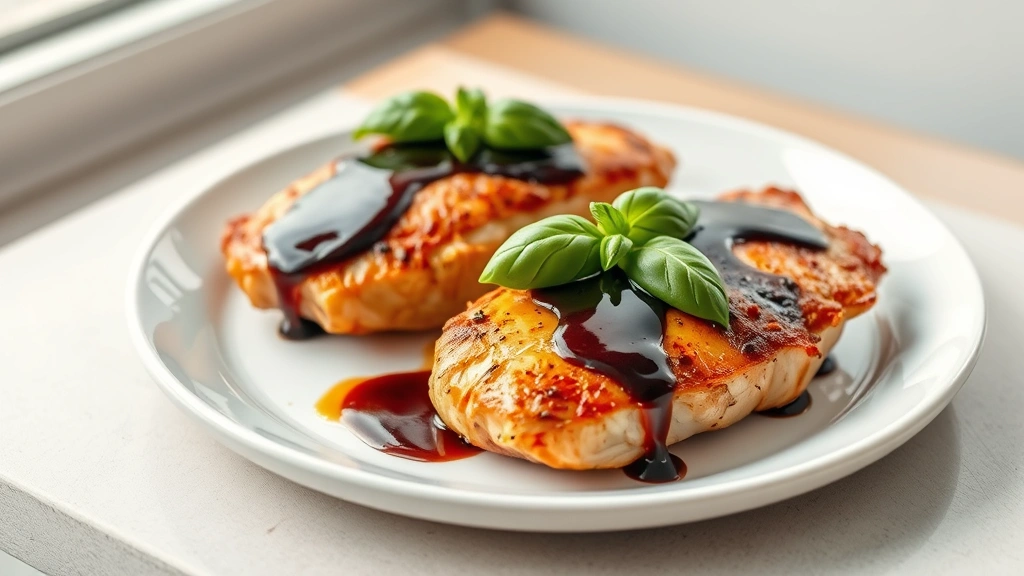
There’s something absolutely magical about balsamic vinegar that transforms simple chicken into restaurant-worthy elegance. This Quick & Tasty Balsamic Vinegar Chicken is one of my go-to weeknight dinners that feels fancy enough for entertaining but comes together in under 30 minutes. The beauty of balsamic vinegar lies in its complex sweetness and subtle tang—it creates this gorgeous glaze that caramelizes on the chicken, locking in moisture while building incredible flavor.
I first fell in love with balsamic chicken during a trip to Tuscany, where I watched a nonna whip up what seemed like magic with just a few pantry staples. She taught me that the secret isn’t in complicated techniques, but rather in understanding how heat, acid, and timing work together. Since then, I’ve made this recipe countless times, tweaking it here and there until I landed on this version that checks every single box: it’s quick, it’s tasty, and most importantly, it delivers that restaurant-quality result that makes you feel like a culinary genius.
What makes this recipe truly special is the depth of flavor you achieve with minimal effort. The balsamic vinegar reduces into a silky glaze that clings to the chicken, creating a beautiful caramelized exterior while keeping the meat incredibly juicy inside. I serve this with roasted vegetables, creamy polenta, or simply over a bed of fresh arugula for a lighter option. The best part? You probably already have everything in your pantry right now.
The beauty of this recipe is its versatility. You can easily customize it to match whatever proteins or sides you have on hand. Try pairing it with garlic butter green beans for a classic combination, or serve it alongside creamy parmesan risotto for something more indulgent. For a lighter approach, I love serving this over simple arugula salad with fresh lemon and olive oil. If you’re looking for more balsamic-forward recipes, check out this balsamic glazed vegetables side dish or try homemade balsamic reduction dressing.
For more inspiration on cooking with vinegar, I highly recommend checking out this Bon Appétit balsamic chicken guide, or this detailed Serious Eats breakdown of balsamic vinegar. The New York Times also has an excellent balsamic braised chicken recipe worth exploring, and this Bon Appétit quick weeknight chicken offers additional techniques. Don’t miss this Serious Eats guide on pan-searing chicken perfectly.
Ingredients
- 4 boneless, skinless chicken breasts (about 6-8 ounces each)
- ¾ cup balsamic vinegar
- ¼ cup honey or maple syrup
- 3 tablespoons olive oil, divided
- 4 cloves garlic, minced
- 2 teaspoons Dijon mustard
- 1 teaspoon dried Italian seasoning (or fresh thyme and oregano)
- ½ teaspoon red pepper flakes (optional)
- Salt and freshly ground black pepper to taste
- 2 tablespoons fresh basil, chopped (for garnish)
- 1 tablespoon butter
- ½ cup chicken broth or water
- Zest of 1 lemon (optional garnish)
Instructions
- Pat the chicken breasts dry with paper towels and season generously on both sides with salt and black pepper. This step is crucial—it helps the chicken brown beautifully and develop a flavorful crust.
- In a small bowl, whisk together the balsamic vinegar, honey, minced garlic, Dijon mustard, Italian seasoning, and red pepper flakes if using. Set this glaze mixture aside.
- Heat 2 tablespoons of olive oil in a large skillet over medium-high heat until it’s shimmering and just beginning to smoke slightly.
- Carefully place the seasoned chicken breasts in the hot skillet, being mindful of any splattering oil. Let them cook undisturbed for 5-6 minutes until the bottom develops a deep golden-brown crust.
- Flip the chicken breasts carefully using tongs and cook for another 4-5 minutes on the second side until golden brown. Don’t move them around—let the heat work its magic.
- Reduce the heat to medium and push the chicken to the sides of the skillet. Add the remaining 1 tablespoon of olive oil to the center.
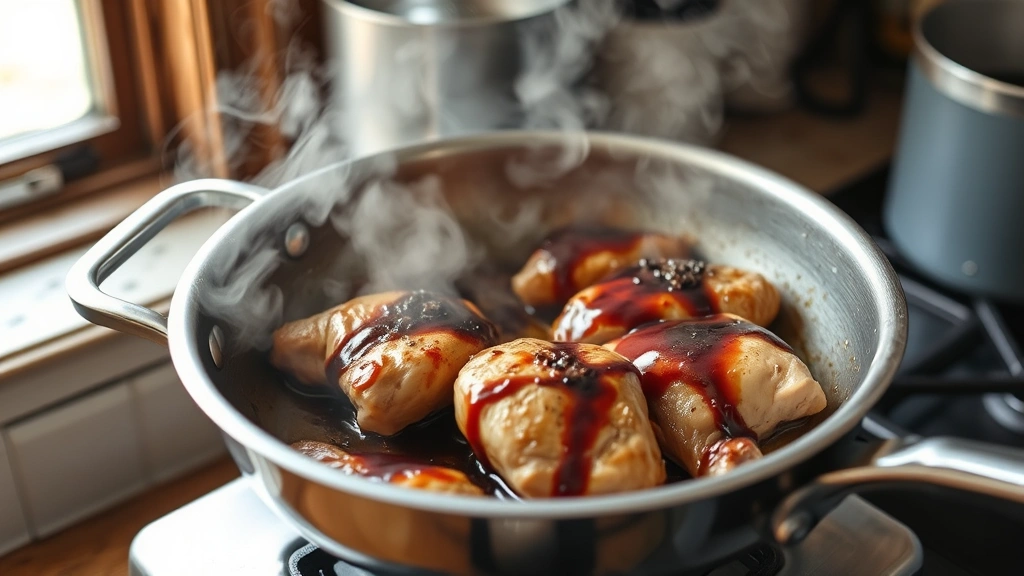
- Pour the balsamic glaze mixture into the center of the skillet and let it bubble gently for about 1-2 minutes, allowing the flavors to bloom and the glaze to slightly reduce.
- Add the chicken broth (or water) to the pan, being careful as the liquid will create some steam. Stir gently to combine the glaze with the pan juices.
- Return the chicken to the center of the pan, nestling it into the glaze. Reduce heat to medium-low and simmer for 6-8 minutes, spooning the glaze over the chicken occasionally.
- Add the butter to the pan and let it melt, basting the chicken one final time with the glossy balsamic glaze until the chicken is cooked through (internal temperature of 165°F when measured with a meat thermometer).
- Transfer the chicken to a serving platter and spoon the reduced balsamic glaze generously over the top.
- Garnish with fresh chopped basil and lemon zest if desired. Serve immediately with your choice of sides.
Pro Tips
- **Choosing the Right Chicken**: I always prefer boneless, skinless chicken breasts for this recipe because they cook quickly and evenly. If your breasts are particularly thick (over 1 inch), you can gently pound them to an even thickness before cooking. This ensures they cook through at the same rate and prevents the edges from drying out while the center finishes cooking.
- **The Quality of Balsamic Matters**: Not all balsamic vinegars are created equal. While you don’t need the most expensive aged balsamic (save that for finishing drizzles), do invest in a decent quality bottle. Look for ones that list “grape must” as the primary ingredient. Cheap balsamic tends to be thin and overly acidic, which can make your sauce taste sharp rather than balanced.
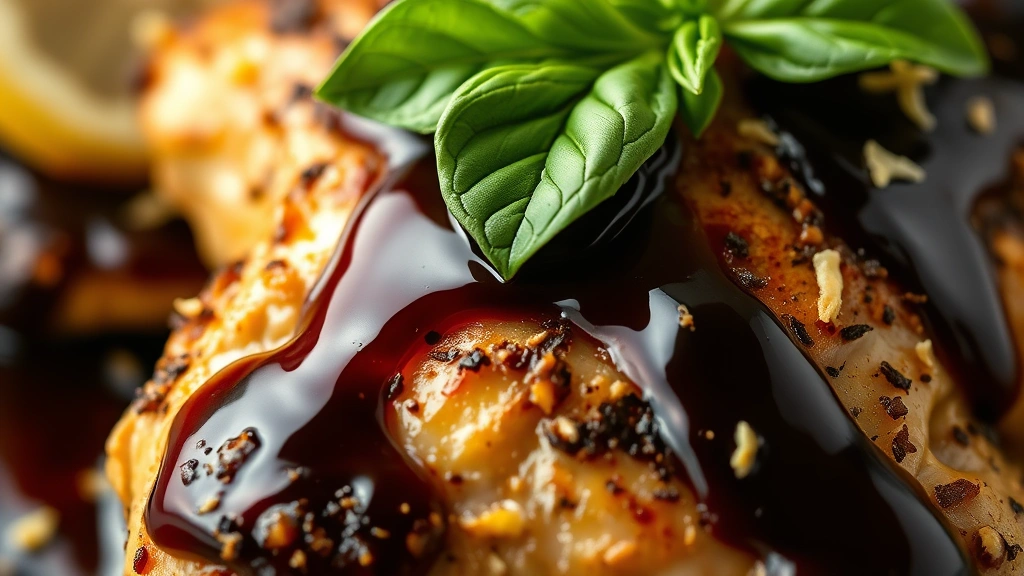
- **The Sear is Everything**: Don’t skip the initial high-heat sear. This Maillard reaction creates those beautiful caramelized flavors that make this dish taste so special. Make sure your pan is hot enough and your chicken is dry before adding it to the skillet.
- **Temperature Control**: After searing, reducing to medium-low heat prevents the outside from burning while the inside finishes cooking. The gentle simmer allows the glaze to reduce and become more concentrated without breaking or separating.
- **Make-Ahead Magic**: You can prepare the glaze mixture up to 2 days ahead and store it in an airtight container in the refrigerator. Just let it come to room temperature before using. The chicken itself is best served immediately after cooking, but leftovers keep well in the refrigerator for up to 3 days.
- **Serving Suggestions**: This chicken pairs beautifully with roasted root vegetables, creamy polenta, buttered pasta, or served atop fresh greens. The glaze is so flavorful that simple sides work best—don’t overcomplicate your plate.
- **Honey vs. Maple Syrup**: Both work equally well in this recipe. Honey creates a slightly more refined sweetness, while maple syrup adds a subtle earthy note. Choose based on your preference or what you have available.
- **Fresh Herbs**: While dried Italian seasoning works perfectly fine, fresh herbs elevate this dish noticeably. If using fresh thyme and oregano, use about 1½ teaspoons combined and add them toward the end of cooking so they maintain their bright flavor.
- **Scaling the Recipe**: This recipe doubles beautifully if you’re feeding a crowd. Just make sure your skillet is large enough or use two skillets to avoid overcrowding, which prevents proper browning.