
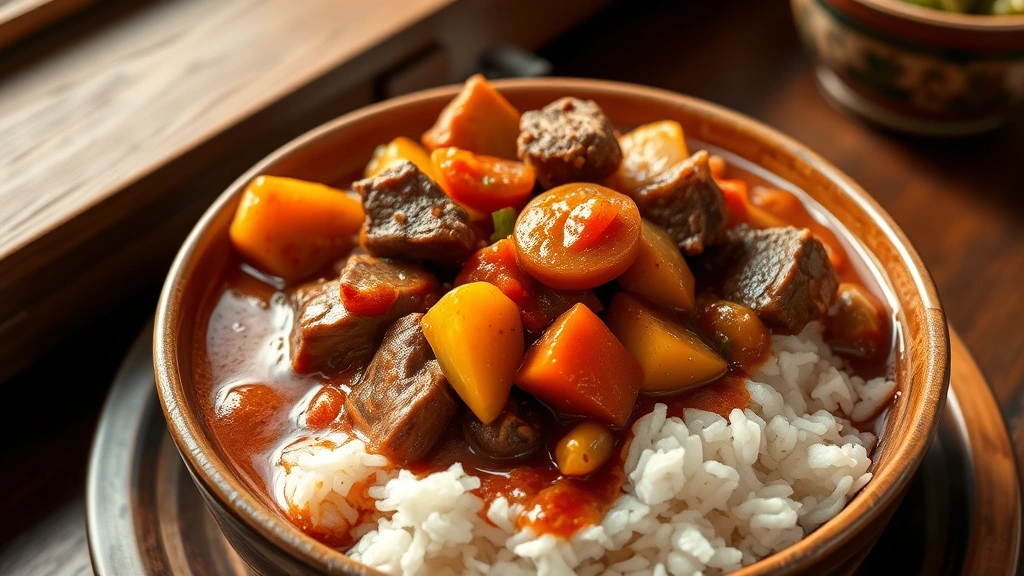
Kaldereta is a beloved Filipino stew that’s rich, hearty, and absolutely bursting with flavor! This traditional dish features tender meat cooked in a savory tomato-based sauce with potatoes, carrots, and bell peppers, creating a comforting meal that’s perfect for family gatherings and special occasions.
The beauty of kaldereta lies in its simplicity and depth of flavor. While it may seem like just another stew, the combination of tomato sauce, liver spread, and aromatic spices creates something truly magical. This recipe has been passed down through generations in Filipino households, and for good reason—it’s simply delicious.
What makes the BEST kaldereta? It’s all about patience and quality ingredients. We’re talking about slowly braising the meat until it’s fall-apart tender, building layers of flavor with caramelized onions and garlic, and letting everything simmer together so the flavors can meld beautifully. The adobo technique of marinating meat is similar in concept, though kaldereta is distinctly its own comfort food masterpiece.
Many home cooks make kaldereta with beef, but pork kaldereta is equally fantastic and often more budget-friendly. The key is choosing meat with good marbling that will become incredibly tender during the long braise. Some families add liver spread for extra richness, which is a game-changer if you’re looking for that authentic, restaurant-quality taste.
The vegetables in kaldereta are just as important as the meat. Potatoes add heartiness and help thicken the sauce naturally, while bell peppers bring brightness and a slight sweetness that balances the savory elements. Don’t skip the carrots either—they add subtle sweetness and beautiful color to the finished dish.
One thing I love about this recipe is how forgiving it is. You can adjust the spice level, add more or fewer vegetables, or even swap in different proteins. This flexibility makes it perfect for feeding a crowd or meal prepping for the week. Plus, kaldereta actually tastes better the next day once all the flavors have had time to fully develop.
Serve this beautiful stew over steamed white rice, and watch it disappear from the table in minutes. The rich, slightly spicy sauce coats the rice perfectly, and every bite is pure comfort. For more Filipino cooking inspiration and techniques, check out Serious Eats’ Filipino cooking guide and Bon Appétit’s stew recipes for additional ideas.
This kaldereta recipe feeds about 6-8 people and comes together in roughly 2 hours, making it ideal for weeknight dinners or weekend entertaining. The slow cooker variation is also fantastic if you want a more hands-off approach. Whether you’re cooking for your family or introducing someone new to Filipino cuisine, this kaldereta will impress. Let’s get cooking!
Ingredients
- 3 pounds beef chuck or pork shoulder, cut into 1.5-inch cubes
- 4 tablespoons cooking oil
- 1 medium onion, diced
- 6 cloves garlic, minced
- 2 tablespoons liver spread (pâté)
- 1 can (14 oz) tomato sauce
- 1 cup beef broth
- 1/4 cup soy sauce
- 2 tablespoons tomato paste
- 1 teaspoon paprika
- 1/2 teaspoon ground black pepper
- 1/4 teaspoon cayenne pepper (optional, for heat)
- 1 bay leaf
- 3 large potatoes, peeled and cut into chunks
- 2 large carrots, peeled and cut into rounds
- 1 red bell pepper, cut into chunks
- 1 green bell pepper, cut into chunks
- 1 cup frozen peas
- Salt and additional pepper to taste
- 2 tablespoons cornstarch mixed with 3 tablespoons water (if needed for thickening)
- Fresh parsley for garnish (optional)
Instructions
- Pat the meat dry with paper towels and season generously with salt and black pepper on all sides. This helps with browning and develops better flavor.
- Heat 2 tablespoons of oil in a large, heavy-bottomed pot or Dutch oven over medium-high heat until shimmering.
- Working in batches to avoid overcrowding the pot, brown the meat on all sides, about 3-4 minutes per side. Don’t stir too much—let it sit to develop a golden crust. Transfer browned meat to a clean plate.
- Add the remaining 2 tablespoons of oil to the pot and reduce heat to medium.
- Sauté the diced onion for about 3-4 minutes until it becomes translucent and begins to soften.
- Add the minced garlic and cook for another 1-2 minutes, stirring constantly, until fragrant. Be careful not to burn the garlic.
- Stir in the liver spread, breaking it up with your spoon so it blends smoothly into the oil and aromatics. Cook for 1 minute.
- Add the tomato paste and stir well, cooking for 2 minutes to caramelize slightly and deepen the flavor.
- Pour in the tomato sauce and beef broth, scraping up any browned bits from the bottom of the pot with a wooden spoon. These flavorful bits add tremendous depth.
- Return the browned meat to the pot along with any accumulated juices.
- Add soy sauce, paprika, black pepper, cayenne pepper if using, and bay leaf. Stir everything together until well combined.
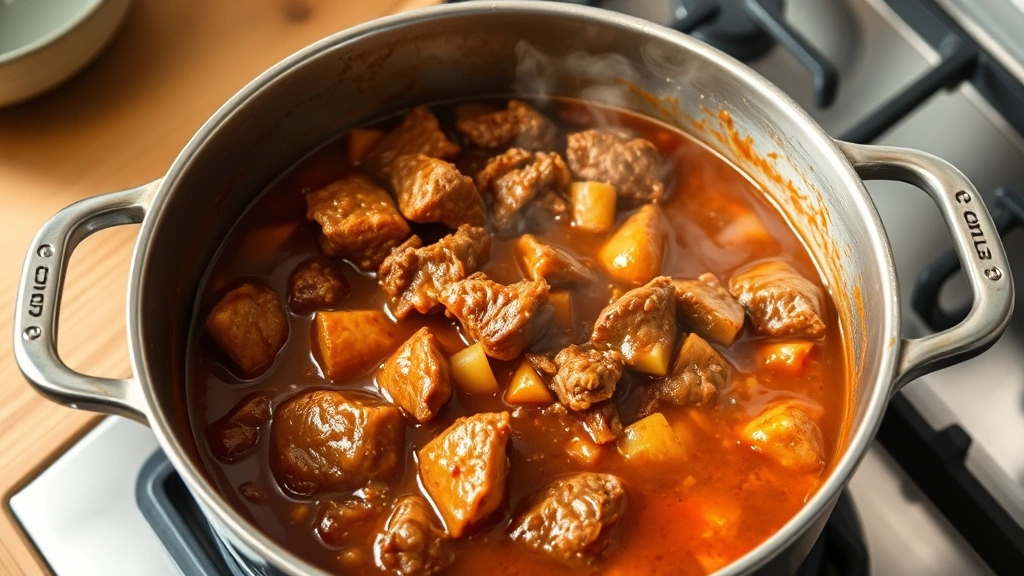
- Bring the mixture to a boil, then immediately reduce heat to low, cover with a lid, and simmer gently for about 1 hour. The meat should be becoming tender.
- After 1 hour, add the potato chunks and carrot rounds to the pot. These vegetables need more cooking time than the peppers.
- Stir well, cover, and continue simmering for about 25-30 minutes until the potatoes are almost tender.
- Add the red and green bell pepper chunks and stir gently.
- Cover and simmer for another 10 minutes until the peppers are tender-crisp and the potatoes are completely soft.
- Stir in the frozen peas and cook uncovered for 2-3 minutes until heated through.
- Taste the stew and adjust seasoning with additional salt and pepper as needed. The soy sauce provides saltiness, so taste before adding too much more salt.
- If you prefer a thicker sauce, mix the cornstarch slurry and stir it into the pot, simmering for 2-3 minutes until thickened. For a brothier stew, skip this step.
- Remove the bay leaf and discard.
- Ladle the kaldereta into bowls and serve hot over steamed white rice, garnishing with fresh parsley if desired.
Pro Tips
- **Meat Selection: While beef chuck is traditional, pork shoulder works beautifully too and is often more economical. Chicken thighs can be used for a lighter version, though cooking time will be shorter—about 45 minutes total. Avoid lean cuts like chicken breast as they dry out easily.
- **Liver Spread is Key: Don’t skip the liver spread (pâté)—it adds an incredible depth of umami flavor that makes this dish taste authentically Filipino and restaurant-quality. It dissolves into the sauce and creates richness without being detectable.
- **Browning the Meat: Taking time to properly brown the meat develops a flavorful crust through the Maillard reaction. This step isn’t just for looks; it’s essential for building flavor complexity in the final dish.
- **Make-Ahead Friendly: Kaldereta tastes even better the next day as flavors continue to develop. Make it a day ahead and reheat gently before serving. It freezes beautifully for up to 3 months.
- **Vegetable Variations: Feel free to adjust vegetables based on what you have on hand. Celery, cabbage, or green beans work well. The cooking times may vary slightly, so adjust accordingly.
- **Spice Level Control: The cayenne pepper is optional and gives a subtle heat. Start with just a pinch if your family prefers milder flavors, or increase it for more kick.
- **Sauce Consistency: Some prefer kaldereta brothier, while others like it thicker. The cornstarch slurry helps thicken it if needed, but the natural starches from the potatoes also help thicken the sauce.
- **Serving Suggestions: Always serve over hot steamed rice to soak up that delicious sauce. Many Filipino families add a fried egg on top of their rice and kaldereta for extra richness.
- **Slow Cooker Method: Brown the meat and aromatics as directed, then transfer everything to a slow cooker. Cook on low for 6-7 hours, adding potatoes and carrots after 4 hours and bell peppers in the final 30 minutes.
- **Batch Cooking: This recipe doubles easily and freezes well. Make a large batch for meal prep, freezing portions in individual containers for quick weeknight dinners.
- **Quality Ingredients Matter: Use good quality tomato sauce and fresh garlic for the best results. Canned tomato sauce is fine, but avoid the jarred minced garlic if possible—fresh is always superior.
- **Bay Leaf Removal: Always remember to remove the bay leaf before serving. It’s easy to forget, but biting into one is not pleasant!