
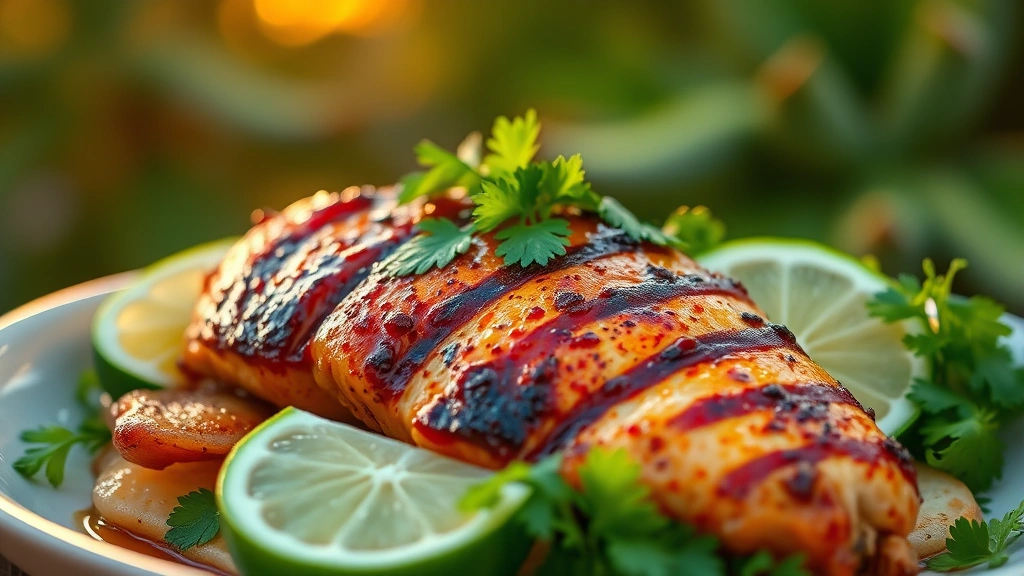
There’s nothing quite like authentic jerk marinade—that perfect balance of heat, sweetness, and aromatic spices that transforms any protein into something absolutely extraordinary. This recipe has been perfected through years of experimentation and draws inspiration from traditional Jamaican cooking methods passed down through generations. The key to the BEST jerk marinade lies in using fresh ingredients, particularly fresh scotch bonnet peppers and ginger, combined with warm spices like allspice and cinnamon that create those signature complex flavors.
What makes this jerk marinade truly special is the combination of techniques and ingredients working in harmony. The grilled chicken that results from this marinade is incredibly moist and flavorful, with a beautiful caramelized exterior and juicy interior. Whether you’re preparing for a backyard barbecue, meal prepping for the week, or simply craving something bold and delicious, this jerk marinade recipe is your answer. I’ve tested this with chicken, pork, seafood, and even vegetables, and every single application has been a showstopper.
The beauty of making your own jerk marinade from scratch is that you control the heat level, the intensity of the spices, and the overall flavor profile. Store-bought versions simply cannot compete with the fresh, vibrant taste you’ll achieve here. Plus, it’s easier than you might think! In just a few minutes with a food processor or blender, you’ll have a marinade that tastes like it came straight from a Caribbean kitchen.
For best results, I recommend marinating your protein for at least 4-8 hours, though overnight is truly ideal. This allows all those beautiful spices and flavors to really penetrate and develop. You can also use this marinade as a dry rub by reducing the wet ingredients slightly, or thin it out as a sauce for serving alongside your finished dish. Check out our complete guide to marinades for more techniques and tips.
This jerk marinade is also incredibly versatile. Beyond the traditional chicken, try it with jerk pork, shrimp, mahi-mahi, or even portobello mushrooms for a vegetarian option. The spice blend works beautifully with both grilling and baking methods. According to Serious Eats’ jerk chicken guide, the allspice and scotch bonnet combination is absolutely essential for authentic flavor.
One of my favorite applications is making a jerk marinade bowl situation—marinating chicken overnight, grilling it the next day, and serving it over rice and beans with fresh lime wedges and cilantro. The depth of flavor in this marinade means it pairs beautifully with tropical sides like coconut rice, roasted plantains, or a fresh mango salsa.
The science behind why this jerk marinade works so well comes down to the acid content (lime juice and vinegar), the enzymatic properties of fresh ginger and pineapple juice that help tenderize, and the oils from the spices that carry flavor deep into the protein. According to Bon Appétit’s jerk chicken recipe, balancing these elements is crucial for success.
I also love that this recipe is naturally lower in sodium compared to many bottled marinades, and you can adjust the ingredients based on what you have available. Don’t have fresh thyme? Use dried (though fresh is preferred). Out of pineapple juice? Apple juice works wonderfully. The flexibility of this marinade is part of what makes it so great for home cooks.
For those watching their diet, this marinade is naturally paleo, whole30-friendly (depending on your specific rules), and keto-adaptable if you’re marinating a protein rather than using it as a sauce. The focus on fresh ingredients and minimal processed components means you’re getting real, recognizable flavors in every bite.
If you’re serving this to guests, I guarantee they’ll ask for the recipe. There’s something about homemade jerk marinade that just impresses people. It tastes like you spent hours in the kitchen, when really it’s just minutes of prep time and the magic of letting good ingredients do their thing. For more Caribbean-inspired marinades, check out New York Times’ jerk spiced chicken recipe for additional inspiration and techniques.
Ingredients
- 4-6 fresh scotch bonnet peppers, seeded and roughly chopped (adjust for heat preference)
- 1 bunch fresh scallions (about 8-10), chopped
- 1/4 cup fresh cilantro, chopped
- 3 tablespoons fresh thyme leaves
- 3 tablespoons fresh ginger, peeled and roughly chopped
- 4 garlic cloves, minced
- 2 tablespoons ground allspice
- 1 tablespoon ground black pepper
- 1 teaspoon ground cinnamon
- 1/2 teaspoon ground nutmeg
- 1/4 teaspoon ground cloves
- 1/4 cup fresh lime juice (about 2-3 limes)
- 1/4 cup fresh orange juice
- 1/4 cup pineapple juice
- 3 tablespoons soy sauce (or tamari for gluten-free)
- 2 tablespoons vegetable oil
- 1 tablespoon apple cider vinegar or white vinegar
- 1 tablespoon brown sugar
- 1 teaspoon kosher salt
- 1/2 teaspoon black peppercorns, crushed
Instructions
- Prepare your ingredients by washing and chopping all fresh herbs and vegetables. For the scotch bonnet peppers, wear gloves and be careful not to touch your face—these peppers are genuinely hot! If you prefer a milder marinade, remove the seeds and white pith, which contain most of the heat.
- Add the chopped scotch bonnet peppers, scallions, cilantro, thyme, fresh ginger, and minced garlic to a food processor or blender.
- Pulse the mixture 8-10 times until you have a rough paste consistency. You want some texture here, not a completely smooth puree.
- Add the ground allspice, black pepper, cinnamon, nutmeg, and cloves to the food processor.
- Pulse another 3-4 times to incorporate the spices evenly throughout the mixture.
- Pour in the fresh lime juice, orange juice, pineapple juice, soy sauce, vegetable oil, and apple cider vinegar.
- Pulse the mixture 5-6 more times until everything is well combined but still has some texture. Don’t over-blend—you want a chunky marinade, not a completely smooth sauce.
- Stir in the brown sugar and kosher salt by hand, mixing well to ensure the sugar dissolves and the salt is evenly distributed.
- Taste the marinade and adjust seasonings as needed. Add more salt if it tastes flat, more lime juice for brightness, or more scotch bonnet if you want more heat.
- Strain the marinade through a fine-mesh sieve if you prefer a smoother consistency for a sauce application, or leave it chunky for a traditional marinade.
- Use immediately or store in an airtight container in the refrigerator for up to 5 days.
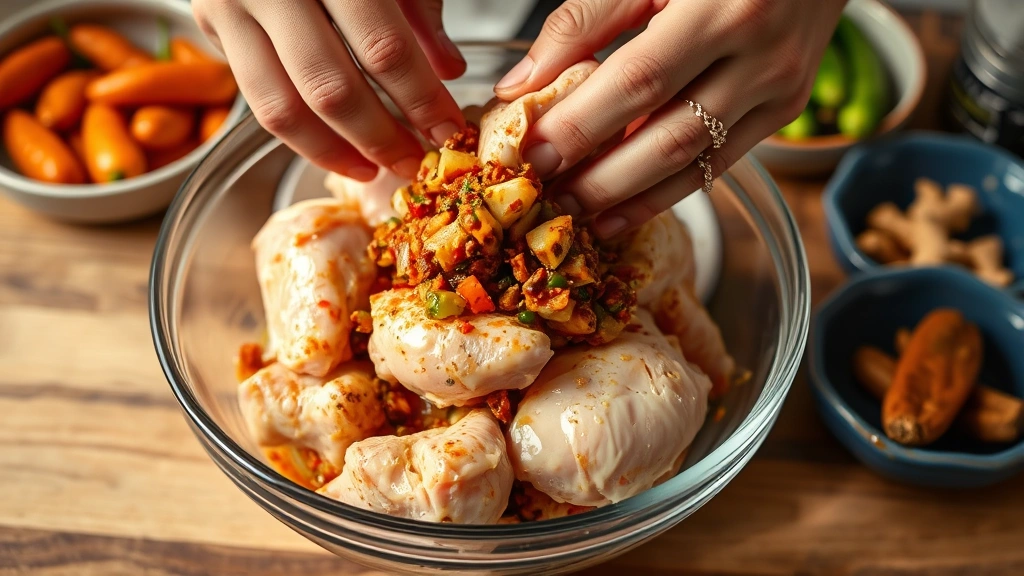
- When ready to marinate your protein, place it in a large zip-top bag or shallow dish and pour the jerk marinade over it, making sure everything is well coated.
- Refrigerate for at least 4 hours, but preferably 8-24 hours for maximum flavor development. Shake or turn the bag occasionally to ensure even marinating.
- Remove the protein from the refrigerator 30 minutes before cooking to allow it to come closer to room temperature.
- Pat the protein dry with paper towels before grilling, baking, or pan-searing to ensure proper browning and a delicious crust.
- Reserve about 1/4 cup of the marinade before adding raw protein to use as a finishing sauce if desired, or discard after cooking with the raw protein.
Pro Tips
- **Heat Level Control**: Scotch bonnet peppers are quite spicy, typically ranging from 100,000-350,000 Scoville units. If you’re sensitive to heat, start with 2-3 peppers and add more gradually. For a milder version, remove all seeds and white pith before chopping. Conversely, if you love heat, keep all the seeds and add an extra pepper or two.
- **Fresh vs. Dried Herbs**: This recipe absolutely requires fresh thyme and cilantro for the best flavor. Dried herbs are more concentrated and will make the marinade taste dusty and overpowering. Fresh herbs provide that bright, authentic Caribbean taste that makes this marinade special.
- **Ingredient Substitutions**: Can’t find scotch bonnet peppers? Habaneros are a reasonable substitute (slightly less hot), or use jalapeños if you want a much milder version. Don’t have pineapple juice? Apple juice, mango juice, or even a tablespoon of pineapple jam thinned with water works. Fresh ginger can’t really be substituted, but powdered ginger in a pinch (use about 1 tablespoon instead of 3 tablespoons fresh).
- **Storage and Shelf Life**: Store the finished marinade in an airtight container in the refrigerator for up to 5 days. You can also freeze it in ice cube trays for up to 3 months—just pop out a cube or two whenever you want to marinate something quickly.
- **Marinating Guidelines**: For chicken pieces, 8 hours is ideal but 4 hours minimum is acceptable. Whole chickens benefit from 12-24 hours. Thinner cuts like fish or shrimp need only 2-4 hours or they may become too soft. Tougher cuts like pork shoulder can marinate for 24 hours without issue.
- **Cooking Methods**: This marinade works beautifully on the grill (medium-high heat, watch for flare-ups from the sugars), in the oven at 425°F, or in a cast-iron skillet over medium-high heat. For oven cooking, place marinated protein on a foil-lined baking sheet and bake for 20-25 minutes depending on thickness.
- **Making it a Sauce**: If you want to use the leftover marinade as a finishing sauce, set aside 1/4 cup before marinating your raw protein. Alternatively, cook the marinade in a small saucepan over medium heat for 5 minutes to destroy any bacteria from raw protein contact, then use as desired.
- **Dairy-Free and Vegan**: This marinade is naturally vegan and dairy-free, making it perfect for any dietary restriction. It works wonderfully on tofu, tempeh, or hearty vegetables like portobello mushrooms and eggplant.
- **Flavor Development**: The flavors in this marinade actually improve and deepen as it sits. Make it a day or two ahead if possible—the spices will have more time to bloom and infuse into the liquid.