
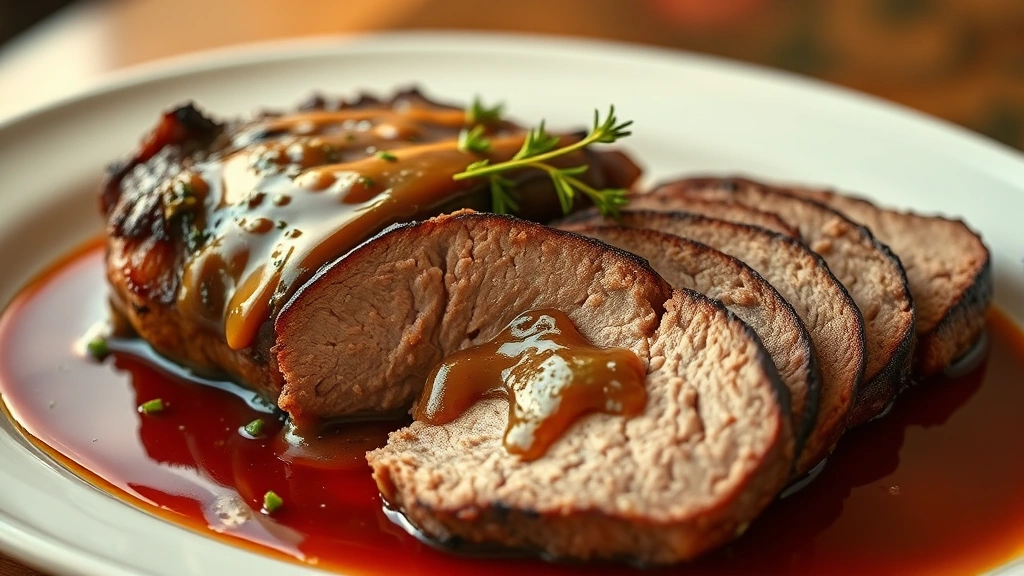
There’s nothing quite like a perfectly tender, fall-apart brisket for your Passover Seder table. This isn’t just any brisket recipe—it’s the one that will have your guests asking for seconds and thirds. I’ve spent years perfecting this recipe, and I’m thrilled to share it with you today.
This Passover brisket is all about low and slow cooking, which allows the meat to become incredibly tender while the flavors develop beautifully. The secret lies in a few key components: a flavorful dry rub, a rich braising liquid, and plenty of time in the oven. Unlike some recipes that rely on flour or cornstarch for thickening, this one keeps everything Passover-approved while still delivering that gorgeous, glossy sauce.
What I love most about this recipe is its versatility. You can make it a day ahead, which actually improves the flavors and makes your Seder day so much easier. The brisket also freezes beautifully, so you can prepare it weeks in advance. Whether you’re hosting a large family gathering or a smaller intimate dinner, this brisket scales perfectly.
I recommend using a beef brisket with good marbling—the fat is what creates that tender, juicy result. Don’t trim it all away! This cut of meat is naturally lean, and the fat adds incredible flavor. You’ll also want a heavy-bottomed Dutch oven or roasting pan with a lid. Cast iron works wonderfully if you have it.
The braising liquid in this recipe combines beef broth, red wine, and a variety of aromatics and spices that complement the beef beautifully. Garlic, onions, and fresh herbs create a foundation of flavor, while a touch of honey adds subtle sweetness that balances the savory elements. For more Passover side dish inspiration, check out our complete holiday menu guide.
This recipe serves 10-12 people comfortably, making it perfect for your Seder celebration. The cooking time is approximately 4-5 hours, but most of that is hands-off oven time. For additional Passover main course options, we have several variations worth exploring.
I’ve also included tips for making this recipe your own—perhaps adjusting the spice level or adding root vegetables to cook alongside the brisket. Some families love adding dried fruit like apricots or prunes for a slightly sweet-savory profile. The beauty of this recipe is that it’s a wonderful foundation you can build upon.
If you’re looking for complementary recipes, consider pairing this with our favorite Passover potato dishes or roasted Passover vegetables. Don’t forget about amazing Passover desserts to finish your meal!
For even more inspiration, check out these trusted sources: Bon Appétit’s Passover collection, Serious Eats holiday recipes, and New York Times Cooking section for additional holiday inspiration.
Let me walk you through this recipe step-by-step, and I promise you’ll have a showstopping brisket that becomes a family tradition.
Ingredients
- 1 beef brisket (5-6 pounds), preferably with good marbling
- 3 tablespoons kosher salt
- 2 tablespoons freshly ground black pepper
- 2 tablespoons garlic powder
- 1 tablespoon onion powder
- 1 tablespoon paprika
- 2 tablespoons olive oil
- 2 large yellow onions, sliced into thick rings
- 1 head of garlic, halved horizontally
- 4 cups beef broth (Passover-approved)
- 1 cup dry red wine (Passover-approved)
- 3 tablespoons honey
- 3 tablespoons red wine vinegar
- 4 fresh thyme sprigs
- 3 fresh rosemary sprigs
- 2 bay leaves
- 1 tablespoon Dijon mustard (Passover-approved)
- 6-8 medium carrots, cut into 2-inch pieces
- 1 pound baby potatoes (optional)
- Fresh parsley for garnish
Instructions
- Remove the brisket from the refrigerator 1 hour before cooking and let it come to room temperature. This ensures even cooking throughout the meat.
Preheat your oven to 325°F (165°C).
- In a small bowl, combine kosher salt, black pepper, garlic powder, onion powder, and paprika to create your dry rub seasoning mixture.
- Pat the brisket completely dry with paper towels—this is crucial for developing a good crust and is non-negotiable for the best results.
- Generously rub the entire brisket on both sides with the dry rub mixture, making sure to cover all surfaces evenly. Let it sit for 10 minutes while you prepare the other ingredients.
- Heat olive oil in a large Dutch oven or heavy-bottomed roasting pan over medium-high heat until it shimmers and is very hot.
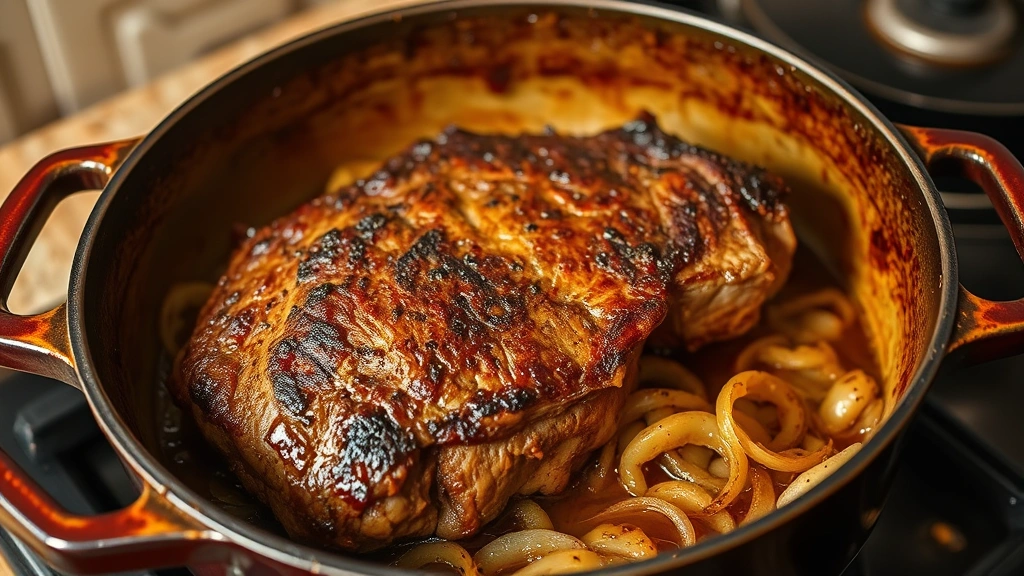
- Carefully place the brisket in the hot oil, fat-side down first. Sear for 4-5 minutes until a deep golden-brown crust forms on that side.
Flip the brisket and sear the other side for another 4-5 minutes until equally browned. This browning step is absolutely essential for flavor development.
- Remove the seared brisket from the pan and set it aside on a clean plate.
- In the same pan with the remaining oil and drippings, add the sliced onions and cook for 3-4 minutes, stirring occasionally, until they begin to soften and caramelize slightly.
- Add the halved garlic head to the pan and cook for 1 minute, stirring gently, until fragrant.
- Pour in the red wine, using a wooden spoon to scrape up all the browned bits from the bottom of the pan. Let the wine reduce by half, about 2-3 minutes, which concentrates the flavors.
- Add the beef broth, honey, red wine vinegar, and Dijon mustard to the pan, stirring well to combine all ingredients.
- Add the thyme sprigs, rosemary sprigs, and bay leaves to the liquid.
- Return the brisket to the pan, fat-side up, nestling it among the onions and aromatics. The liquid should come about halfway up the sides of the brisket—this is perfect for braising.
- Bring the liquid to a gentle simmer on the stovetop, then cover the Dutch oven with its lid or heavy foil.
- Transfer the covered pan to the preheated 325°F oven and braise for 3 hours, checking at the halfway point to ensure the liquid is maintaining a gentle simmer. Add more broth if needed to maintain the level.
- After 3 hours, carefully remove the pan from the oven. The brisket should be quite tender but not yet falling apart.
- If using carrots and potatoes, add them now around the brisket, nestling them into the liquid. If not using vegetables, skip to the next step.
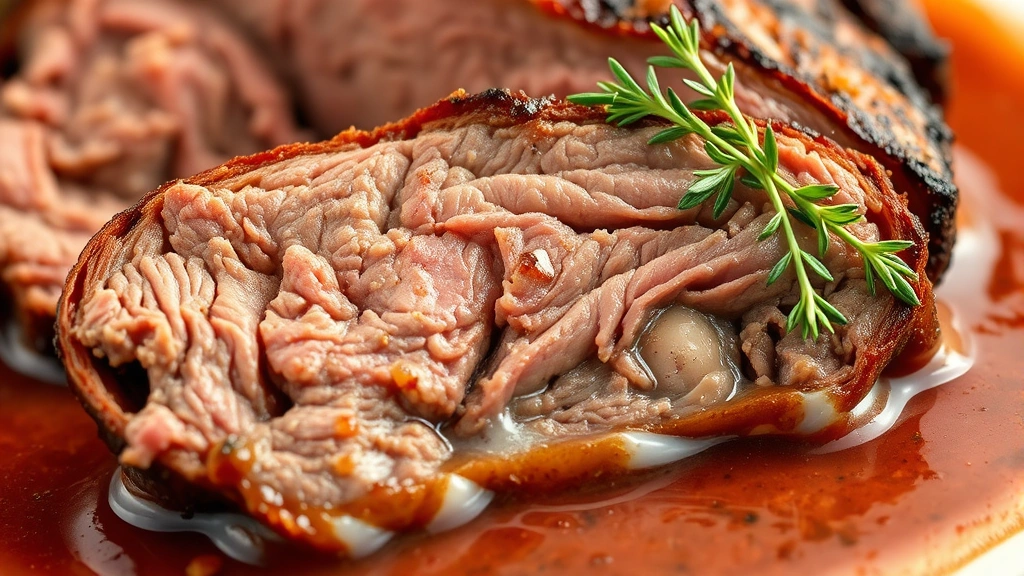
- Return the covered pan to the oven and continue braising for another 1 to 1.5 hours, until the brisket is fork-tender and easily shreds apart with gentle pressure.
- Remove the pan from the oven and carefully transfer the brisket to a cutting board, tenting it loosely with foil to keep it warm while you finish the sauce.
- Strain the braising liquid through a fine-mesh sieve into a large saucepan, discarding the onions, garlic, and herb sprigs but reserving any vegetables you cooked in the pan.
- Skim off as much fat from the surface of the liquid as possible using a large spoon or fat separator.
If you prefer a thicker sauce, simmer the liquid over medium heat for 5-10 minutes to reduce it and concentrate the flavors.
- Taste the sauce and adjust seasoning with additional salt and pepper if needed. Remember that the brisket itself is already well-seasoned.
- Slice the brisket against the grain into 1/2-inch thick slices, or shred it with two forks if you prefer.
- Arrange the sliced or shredded brisket on a serving platter, pour the warm sauce over the top, and arrange any cooked vegetables around it.
- Garnish with fresh parsley and serve hot. This dish is best served immediately while everything is warm, though it also reheats beautifully.
Pro Tips
- **Make-Ahead Magic**: This brisket is actually better when made 1-2 days ahead. After cooling completely, refrigerate in an airtight container with the sauce. The flavors continue to develop beautifully overnight. Simply reheat gently in a 325°F oven for 30-45 minutes, covered, until warmed through.
- **Freezer-Friendly**: This recipe freezes exceptionally well for up to 3 months. Cool completely, then transfer to freezer-safe containers with the sauce. Thaw overnight in the refrigerator before reheating as described above.
- **Wine Selection**: Use a dry red wine you’d be happy to drink. Avoid overly tannic wines, as they can become bitter during the long cooking process. Passover-approved wines are readily available during the holiday season.
- **Brisket Selection**: Look for brisket with good marbling throughout the meat—this fat is essential for tenderness and flavor. Ask your butcher for a brisket that’s about 2-3 inches thick and relatively uniform in thickness for even cooking.
- **Temperature Check**: For perfect doneness, use a meat thermometer. The brisket is ready when it reaches an internal temperature of 190-205°F (88-96°C), which is higher than most beef because this lower temperature range allows the collagen to break down fully into gelatin.
- **Braising Liquid Ratio**: The liquid should come about halfway up the sides of the brisket. Too much liquid will result in a weak sauce; too little will cause the meat to dry out. Adjust as needed during cooking.
- **Vegetable Variations**: Feel free to add root vegetables like parsnips, celery root, or additional carrots. Add hardy vegetables during the last hour of cooking so they don’t overcook and fall apart.
- **Wine-Free Option**: If you prefer not to use wine, simply substitute an additional cup of beef broth and increase the red wine vinegar to 4 tablespoons for acidity and depth of flavor.
- **Serving Suggestions**: This brisket pairs beautifully with mashed potatoes, roasted vegetables, or a simple green salad dressed with lemon vinaigrette. It’s the perfect centerpiece for your Seder table.
- **Leftover Magic**: Shredded leftover brisket makes incredible Passover “sandwiches” served on matzah, or can be used to top salads or vegetables throughout the holiday week.