

Pine nuts can break the bank, but that doesn’t mean you have to skip homemade pesto! This vibrant, herbaceous sauce is one of my absolute favorite condiments to have on hand, and honestly, I think this version without pine nuts is just as delicious—if not better. The secret is using a combination of toasted nuts and seeds that bring that same rich, nutty depth while keeping your wallet happy.
I’ve been making pesto for years, and I’ve experimented with everything from walnuts to almonds to sunflower seeds. What I’ve discovered is that the best pesto without pine nuts comes down to three things: quality basil, good olive oil, and the right nut-to-herb ratio. The beauty of this recipe is its versatility—you can use it on pasta, as a sandwich spread, swirled into soups, or even as a dip for vegetables.
My favorite part about this pesto recipe is how quickly it comes together. In just five minutes, you’ll have a restaurant-quality sauce that tastes infinitely better than anything jarred. Fresh basil is key here, and I always recommend making this during peak basil season when the herb is most fragrant and abundant. If you’re growing basil in your garden, this is the perfect way to use it up before the season ends.
What makes this recipe truly special is the combination of flavors working together harmoniously. The garlic provides a pungent backbone, the lemon juice adds brightness and helps preserve the vibrant green color, and the Parmesan brings that umami punch. But it’s really the toasted walnuts and sunflower seeds that make this version shine—they’re nutty, slightly sweet, and create that luxurious texture we all crave from pesto.
This pesto is also incredibly economical. Instead of spending $8-12 on a small handful of pine nuts, you can make an entire batch for a fraction of the cost. Plus, you’ll have that incredible fresh flavor that jarred pesto simply can’t compete with. I love storing a batch in the refrigerator for up to a week, or freezing it in ice cube trays for whenever the craving strikes.
Whether you’re making fresh pasta, tossing with roasted vegetables, or spreading on crusty bread, this pesto without pine nuts is genuinely one of the most versatile recipes in my kitchen rotation. It’s the kind of recipe that tastes like you spent hours in the kitchen, but you’ll know the truth—it takes mere minutes to prepare. Let me show you exactly how to make it.
Ingredients
- 2 cups fresh basil leaves, packed (about 2 large bunches)
- ½ cup walnuts or almonds, lightly toasted
- ¼ cup sunflower seeds or pumpkin seeds, lightly toasted
- 3 cloves garlic, minced
- ½ cup freshly grated Parmigiano-Reggiano cheese
- ¼ cup fresh lemon juice (about 1-2 lemons)
- ¾ cup extra-virgin olive oil
- ½ teaspoon fine sea salt
- ¼ teaspoon freshly ground black pepper
- Pinch of red pepper flakes (optional)
Instructions
- Toast your nuts and seeds: Place the walnuts (or almonds) and sunflower seeds in a dry skillet over medium heat. Toast for 3-4 minutes, stirring frequently, until fragrant and slightly darkened. Be careful not to burn them! Transfer to a plate and let cool for a minute.
- Roughly chop the toasted nuts and seeds so they’re in smaller, more manageable pieces—this helps them blend more evenly into your pesto.
- Wash and thoroughly dry your fresh basil leaves. This step is important because excess water can dilute your pesto and cause it to oxidize faster. Pat them completely dry with paper towels.
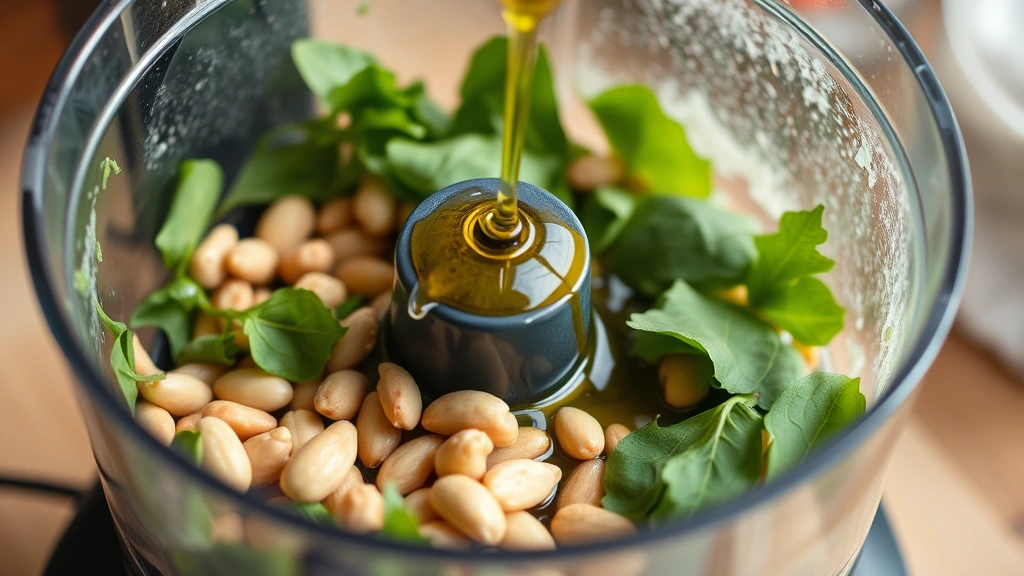
- Add the basil, cooled toasted nuts and seeds, and minced garlic to a food processor.
- Pulse the mixture 5-6 times until it’s roughly combined but still has some texture. You don’t want to over-process it into a completely smooth paste—pesto should have some body and texture.
- Add the grated Parmigiano-Reggiano cheese and pulse 2-3 more times to combine.
- With the food processor running on low speed, slowly drizzle in the extra-virgin olive oil. This gradual incorporation creates an emulsion and keeps your pesto from becoming too dense.
- Pour in the fresh lemon juice and pulse 2-3 times until just combined.
- Season with fine sea salt, freshly ground black pepper, and red pepper flakes if desired. Pulse once more to incorporate the seasonings.
- Taste and adjust: Add more salt, lemon juice, or garlic to your preference. Remember that Parmesan is salty, so taste before adding too much additional salt.
- Transfer your finished pesto to a serving bowl or airtight container. If storing in the refrigerator, press plastic wrap directly onto the surface of the pesto to prevent oxidation and browning.
- Use immediately on pasta, or store according to your preferred method.

Pro Tips
- **Nut Substitutions**: Walnuts are my top choice for this recipe because they have a rich, slightly earthy flavor that complements basil beautifully. However, almonds work wonderfully too and are a bit milder. Cashews are another excellent option if you want something creamier. Avoid using only sunflower seeds as they can be overpowering; the combination of two different nuts/seeds creates the best flavor balance.
- **Basil Selection**: Use fresh, young basil leaves if possible—they’re more tender and have a brighter flavor than larger, more mature leaves. If your basil is very large, tear the leaves into smaller pieces before processing. Never use wilted basil; it will negatively impact the final flavor.
- **Lemon Juice**: Fresh-squeezed lemon juice is essential here. Bottled lemon juice has a different flavor profile and won’t give you the same bright, fresh result. The acid from the lemon also helps preserve the vibrant green color.
- **Cheese Options**: While Parmigiano-Reggiano is traditional and my preference, you can also use Pecorino Romano for a sharper, slightly saltier flavor, or a combination of both. Make sure to grate it fresh—pre-shredded cheese contains anti-caking agents that affect texture.
- **Storage Methods**: Refrigerate in an airtight container for up to 5-7 days. For longer storage, freeze in ice cube trays (each cube is about 2 tablespoons), then transfer frozen cubes to a freezer bag for up to 3 months. To prevent browning, always cover pesto with a thin layer of olive oil before storing.
- **Preventing Oxidation**: The lemon juice and olive oil help prevent browning, but pressing plastic wrap directly onto the surface is your best defense against oxidation. Never leave pesto exposed to air.
- **Food Processor Tip**: Don’t over-process your pesto. Overworking it generates heat from friction, which can cause the basil to brown and lose its vibrant color. Pulse gently and stop frequently to check your progress.
- **Serving Suggestions**: Toss with hot pasta and a splash of pasta water to help emulsify the sauce. Use as a spread on sandwiches, crackers, or crostini. Swirl into soups like minestrone or tomato soup. Dollop onto roasted vegetables or fish. Mix into mayonnaise for a flavored spread.
- **Garlic Intensity**: If you prefer a milder garlic flavor, reduce to 2 cloves. For garlic lovers, go up to 4 cloves. Remember that raw garlic becomes more pungent over time, so pesto often tastes more garlicky after sitting in the refrigerator.
- **Achieving Perfect Texture**: The key to great pesto is achieving that perfect balance between chunky and creamy. It should be spreadable but still have visible pieces of basil and nuts. If it’s too thick, add a touch more olive oil; if too thin, add a few more nuts or cheese.