
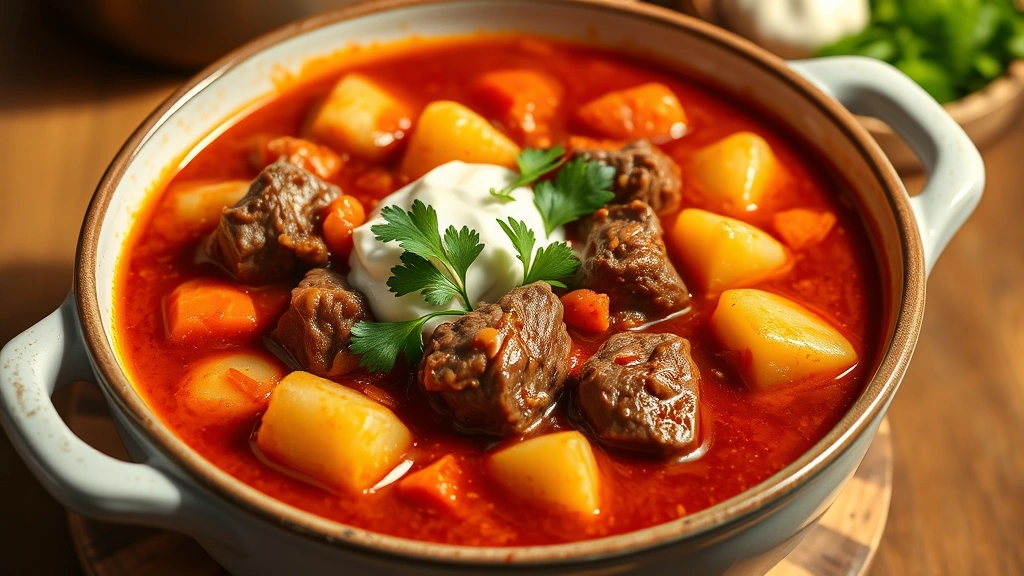
There’s something deeply comforting about a steaming bowl of goulash—that rich, paprika-spiced stew that feels like a warm hug on a chilly evening. This best goulash recipe is the one I return to again and again, and it’s become a family favorite for good reason. It’s simple enough for a weeknight dinner, yet impressive enough to serve to guests.
Goulash has such a beautiful history, originating from Hungary in the 9th century. What started as a meal for shepherds has evolved into this beloved comfort food that’s cherished across Europe and beyond. The magic of goulash lies in its simplicity—quality beef, aromatic vegetables, and that essential Hungarian paprika that gives it its signature deep red color and complex flavor.
I’ve been making goulash for years, and I’ve learned a few tricks along the way that truly elevate this dish from good to absolutely spectacular. The key is using quality beef cuts, taking time to properly brown the meat, and letting it simmer low and slow until everything becomes tender and the flavors meld beautifully together. This isn’t a dish you rush—it’s one you savor in the making.
What I love most about this recipe is its versatility. You can serve it over egg noodles for a classic presentation, with crusty bread for soaking up that incredible sauce, or even over mashed potatoes for extra coziness. Some people add sour cream on top, and while that’s delicious, I prefer to let the pure goulash flavors shine through.
The beauty of making goulash at home is that you control exactly what goes into it. There’s no mystery meat, no excessive sodium, just honest, wholesome ingredients that come together to create something truly special. Plus, your entire house will smell absolutely amazing while it’s cooking—that’s a bonus I didn’t expect when I first started making this recipe!
If you’re looking for comfort food recipes that won’t disappoint, goulash is absolutely at the top of my list. It’s the kind of dish that brings people together, that makes you feel cared for, and that tastes even better as leftovers the next day. Let me walk you through my method for creating the best goulash you’ve ever tasted.
For more inspiration on European cuisine, check out Bon Appétit’s European recipes and Serious Eats’ cooking guides. You might also enjoy exploring New York Times Cooking for more traditional preparations, and our beef stew recipes for similar comfort dishes.
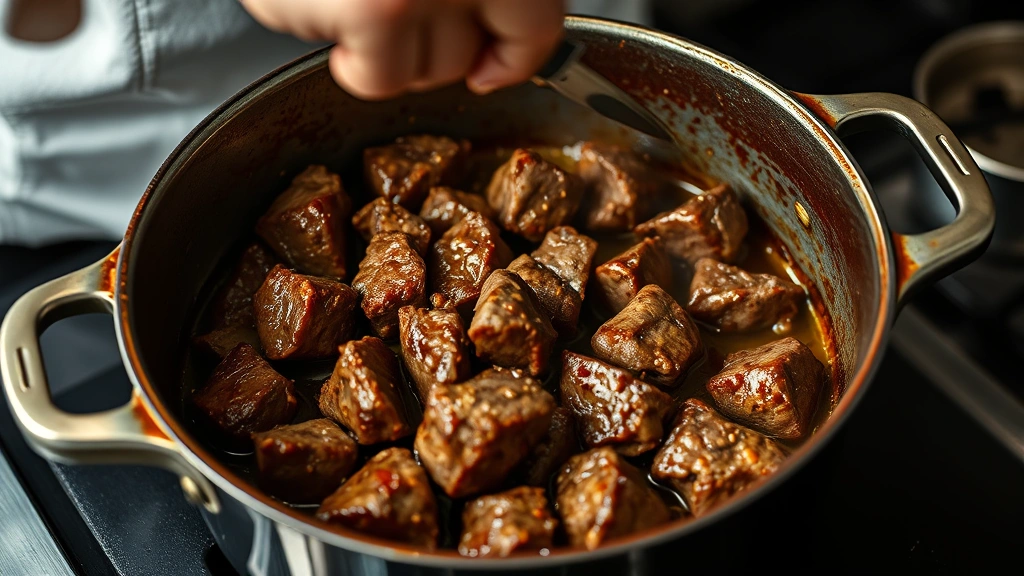
One more thing before we get started—don’t skip the step of browning the meat properly. This is where so much of the flavor develops, and it’s absolutely worth the extra few minutes. The Maillard reaction that occurs when you brown the meat creates those deep, savory notes that make this goulash so incredibly delicious. Trust me on this one!
Let’s create something wonderful together. This recipe serves 6-8 people, making it perfect for family dinners or meal prep. The cook time is generous because low and slow is the way to go with goulash, but the actual hands-on time is quite minimal.
Ingredients
- 3 pounds beef chuck roast, cut into 1½-inch cubes
- 3 tablespoons olive oil, divided
- 1 large yellow onion, diced
- 4 cloves garlic, minced
- 3 tablespoons Hungarian paprika (sweet)
- 1 tablespoon tomato paste
- 4 cups beef broth
- 1 can (14.5 ounces) diced tomatoes
- 3 medium carrots, cut into 1-inch pieces
- 3 medium potatoes, cut into 1-inch cubes
- 1 red bell pepper, diced
- 2 bay leaves
- 1 teaspoon dried thyme
- 1 teaspoon dried marjoram
- Salt and black pepper to taste
- 2 tablespoons cornstarch (if needed for thickening)
- Fresh parsley for garnish
- Sour cream for serving (optional)
Instructions
- Pat the beef cubes dry with paper towels and season generously with salt and pepper. This step is crucial for achieving a good brown crust on the meat.
- Heat 1½ tablespoons of olive oil in a large Dutch oven or heavy-bottomed pot over medium-high heat until it’s shimmering and very hot.
- Working in batches to avoid overcrowding the pan, brown the beef on all sides, about 3-4 minutes per side. Transfer the browned beef to a plate and repeat with remaining beef and oil.
- Once all the beef is browned and set aside, add the diced onion to the pot and cook for 3-4 minutes until it begins to soften and become translucent.
- Add the minced garlic and cook for another minute, stirring constantly, until fragrant.
- Sprinkle the paprika over the onions and garlic, stirring constantly for about 30 seconds to bloom the spice and release its flavors.
- Add the tomato paste and stir it into the mixture, cooking for 1-2 minutes until it darkens slightly and caramelizes a bit.
- Pour in the beef broth, scraping the bottom of the pot with a wooden spoon to release all those flavorful browned bits (this is called deglazing).
- Add the can of diced tomatoes with their juices, the bay leaves, thyme, and marjoram to the pot.
- Return the browned beef to the pot, stirring everything together. The liquid should come up to about ¾ of the way up the meat.
- Bring the mixture to a boil, then reduce the heat to low, cover the pot partially with a lid, and let it simmer gently for 1 hour and 15 minutes.
- After 1 hour and 15 minutes, add the carrots, potatoes, and red bell pepper to the pot.
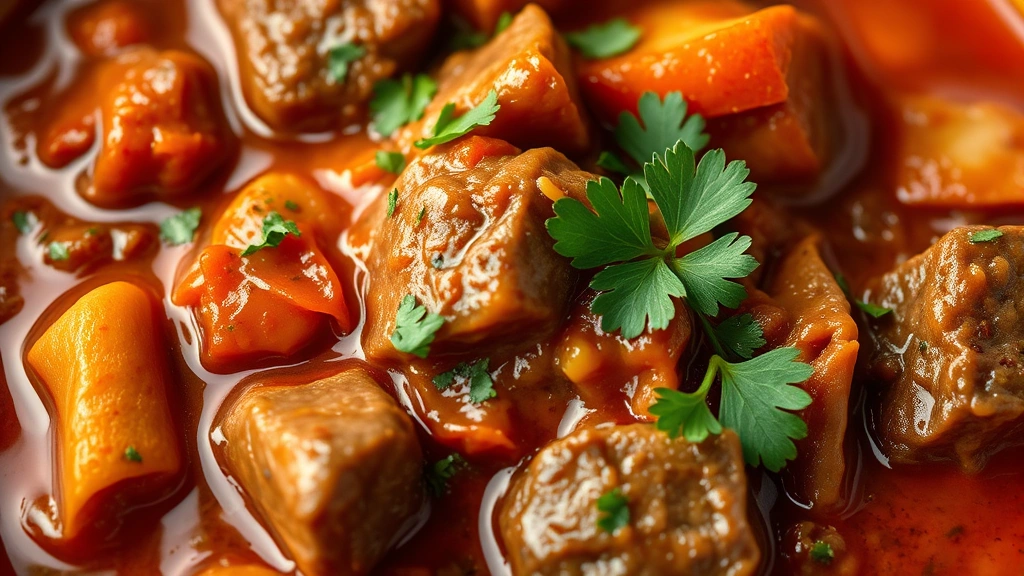
- Continue simmering for another 45 minutes to 1 hour, until the vegetables are tender and the beef is fork-tender.
- Taste the goulash and adjust the seasoning with additional salt and pepper as needed.
- If you prefer a thicker goulash, mix the cornstarch with 2 tablespoons of cold water to create a slurry, then stir it into the pot and simmer for 2 more minutes.
- Remove the bay leaves before serving.
- Ladle the goulash into bowls and garnish with fresh parsley. Serve with crusty bread, egg noodles, or mashed potatoes, and a dollop of sour cream if desired.
Pro Tips
- **Beef Selection**: Chuck roast is ideal because it has enough marbling and connective tissue to become incredibly tender during the long cooking process. You can also use beef stew meat from the store, though chuck roast tends to have better flavor.
- **Paprika is Key**: Don’t skip on quality Hungarian paprika—it’s the soul of this dish. Look for it in the spice aisle or specialty stores. There’s a noticeable difference between quality paprika and the generic stuff.
- **Browning the Meat**: This step takes extra time but is absolutely non-negotiable. Properly browned meat develops deep, savory flavors that are impossible to achieve otherwise. Don’t rush it.
- **Low and Slow**: Goulash is not a quick recipe, and that’s by design. The slow simmering allows the flavors to develop and the meat to become tender. Rushing this process will result in tough meat.
- **Make Ahead**: This dish actually tastes better the next day once the flavors have had time to meld. Make it a day ahead and reheat gently before serving.
- **Freezer Friendly**: Goulash freezes beautifully for up to 3 months. Let it cool completely before transferring to freezer containers. Thaw overnight in the refrigerator before reheating.
- **Serving Suggestions**: Serve over egg noodles for a classic presentation, with mashed potatoes for extra comfort, or with crusty bread for soaking up that incredible sauce.
- **Sour Cream**: While traditional goulash doesn’t always include sour cream, a dollop on top adds creaminess and a slight tang that complements the paprika beautifully. It’s optional but highly recommended.
- **Vegetable Variations**: Feel free to add mushrooms, green beans, or zucchini. Some people add a splash of red wine for extra depth—use about ½ cup if desired.
- **Dietary Adjustments**: For a lighter version, use leaner cuts of beef, though they may not be quite as tender. For a vegetarian version, substitute the beef with hearty vegetables like mushrooms, eggplant, and extra beans.
- **Pot Selection**: A Dutch oven is ideal because it distributes heat evenly and can go from stovetop to oven if desired. A regular pot works too, just monitor the heat to maintain a gentle simmer.
- **Thickening**: If your goulash is too thin, you can thicken it with cornstarch slurry or simply simmer uncovered for the last 15-20 minutes to reduce the liquid. If it’s too thick, add a bit more broth.