
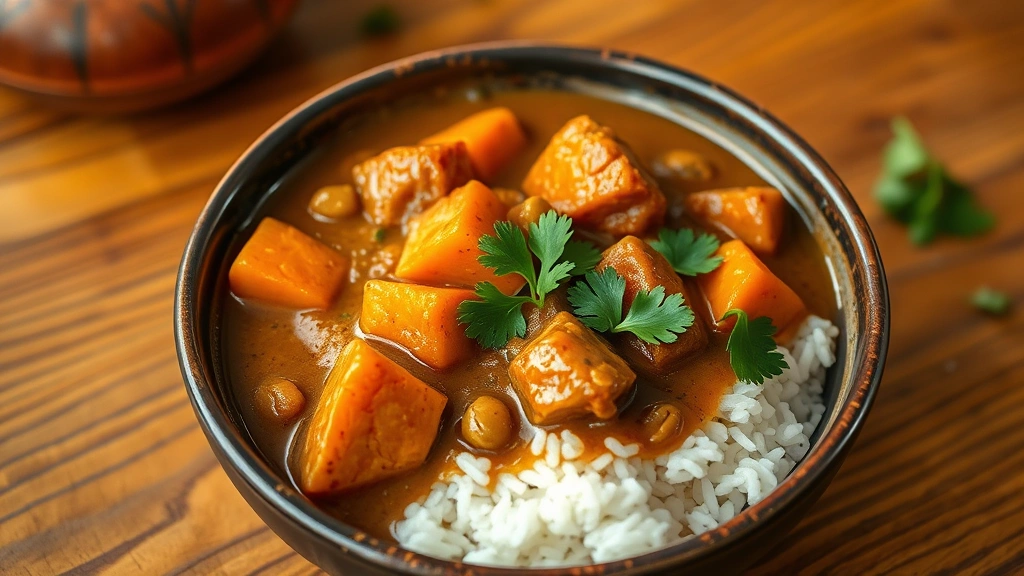
There’s something absolutely magical about African peanut stew – it’s warm, comforting, and bursting with rich, complex flavors that transport you straight to the heart of West Africa. This traditional dish, known as maafe in Senegal and similar variations throughout the continent, combines creamy peanut butter with tender vegetables and protein in a way that feels both humble and sophisticated.
What I absolutely love about this recipe is its versatility and accessibility. Whether you’re cooking for your family on a busy weeknight or impressing guests at a dinner party, this stew delivers restaurant-quality results from your own kitchen. The beauty of African peanut stew lies in its balance – the earthiness of peanuts, the sweetness of sweet potatoes and carrots, and the savory depth of tomatoes and spices create a symphony of flavors that keeps everyone coming back for seconds.
This particular version draws inspiration from traditional West African cooking methods while maintaining a modern, approachable technique. I’ve streamlined the process without sacrificing authenticity, so you get that incredible depth of flavor in about an hour. The stew is naturally gluten-free, can easily accommodate various dietary preferences, and tastes even better the next day when all those beautiful flavors have had time to meld together.
I typically serve this over fluffy white rice or with warm flatbread, though it’s equally delicious with quinoa or couscous. A fresh chickpea salad makes an excellent side that adds brightness and crunch. For those looking to add extra vegetables, pickled red onions provide a wonderful acidic counterpoint to the rich, creamy stew.
If you’re new to African cuisine, this is the perfect entry point – it’s approachable, forgiving, and absolutely delicious. Even experienced cooks will appreciate how this recipe honors traditional cooking methods while fitting seamlessly into modern meal planning. Let me walk you through creating this spectacular dish.
For more inspiration on building complex, layered flavors, check out Serious Eats’ collection of world cuisine. You might also enjoy exploring Bon Appétit’s global recipes and New York Times Cooking for African-inspired dishes. If you’re interested in learning more about peanut-based dishes from around the world, Serious Eats has an excellent guide, and Bon Appétit’s African recipes collection is wonderfully inspiring.
Ingredients
- 2 tablespoons olive oil or coconut oil
- 1 large yellow onion, diced
- 4 cloves garlic, minced
- 2 tablespoons fresh ginger, minced
- 1.5 pounds chicken thighs or beef stew meat, cut into bite-sized pieces (or 1.5 cups chickpeas for vegetarian)
- 1 teaspoon ground cumin
- 1 teaspoon ground coriander
- 0.5 teaspoon cayenne pepper (adjust to taste)
- 0.25 teaspoon turmeric
- 1 can (14 oz) diced tomatoes with their juices
- 1 can (14 oz) coconut milk or use 1 cup broth plus 0.5 cup heavy cream
- 0.75 cup natural peanut butter (creamy or chunky, your preference)
- 4 cups chicken or vegetable broth
- 2 medium sweet potatoes, peeled and cubed
- 2 large carrots, cut into thick coins
- 1 red bell pepper, diced
- 1 cup fresh spinach or kale (optional but recommended)
- 1 teaspoon salt, plus more to taste
- 0.5 teaspoon black pepper
- Juice of 1 lime
- Fresh cilantro for garnish (optional)
Instructions
- Heat the olive oil in a large, heavy-bottomed pot or Dutch oven over medium-high heat. Once shimmering, add the diced onion and a pinch of salt, cooking for about 5 minutes until softened and just beginning to turn golden around the edges, stirring occasionally.
- Add the minced garlic and fresh ginger to the pot, stirring constantly for about 1-2 minutes until fragrant – this is crucial for building flavor depth. Be careful not to burn the garlic.
- If using meat, add it now and cook for about 5-7 minutes, stirring occasionally, until the outside is no longer raw. You’re not looking for it to be fully cooked – just browned on the outside.
- Sprinkle the ground cumin, ground coriander, cayenne pepper, and turmeric over the mixture, stirring constantly for about 1 minute to bloom the spices and release their essential oils.
- Pour in the diced tomatoes with their juices, scraping up any browned bits from the bottom of the pot with your wooden spoon. This is where all that deep, savory flavor lives.
- Add the coconut milk and broth to the pot, stirring well to combine. Bring the mixture to a gentle simmer, then reduce heat to medium-low.
- Whisk the peanut butter with about 1 cup of the warm broth in a separate bowl until smooth and well combined – this prevents lumps from forming in your stew. Pour this mixture back into the pot, stirring thoroughly.
- Add the cubed sweet potatoes and carrot coins to the stew. Stir well and bring back to a gentle simmer. Season with 1 teaspoon of salt and black pepper.
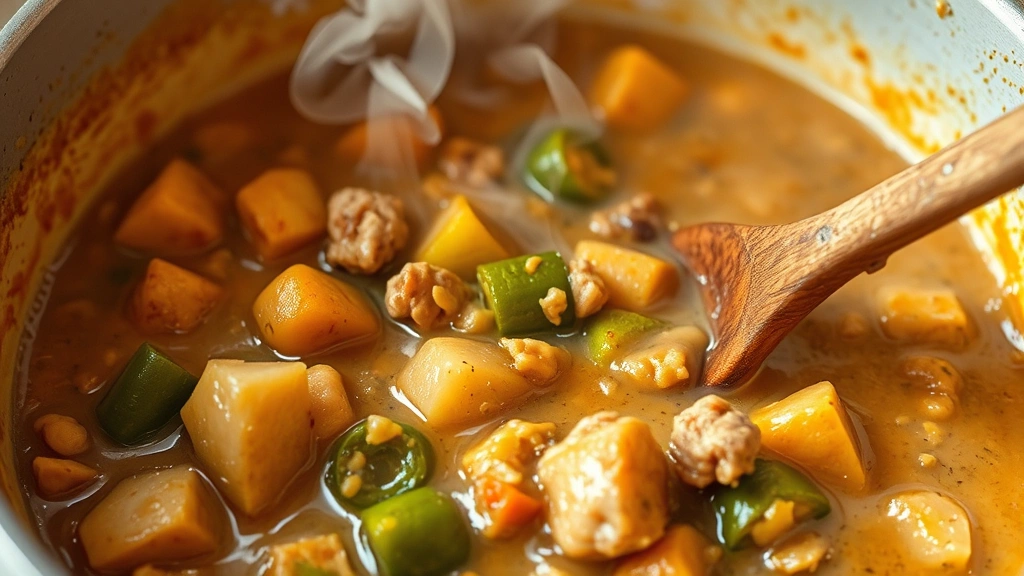
- Partially cover the pot with a lid and let it simmer for about 25-30 minutes, stirring occasionally, until the sweet potatoes are just tender and the carrots are beginning to soften.
- Add the diced red bell pepper and the fresh spinach or kale (if using), stirring to combine. Continue simmering for another 5-8 minutes until the pepper is tender-crisp and the greens have wilted.
- Taste the stew and adjust seasonings as needed – add more salt, pepper, cayenne, or lime juice depending on your preferences. The flavors should be well-balanced with no single element overpowering the others.
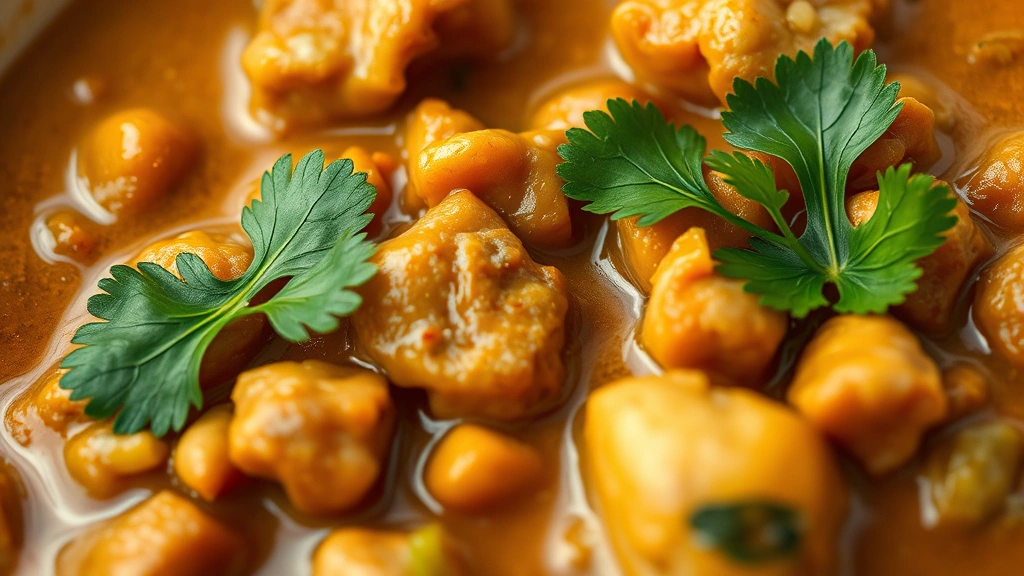
- Serve the African peanut stew hot over fluffy white rice, quinoa, or couscous, garnished with fresh cilantro, chopped peanuts, or a drizzle of lime juice if desired.
Pro Tips
- This stew is incredibly forgiving and welcomes substitutions and additions based on what you have on hand or your dietary preferences.
- For a vegetarian or vegan version, simply omit the meat and use vegetable broth instead of chicken broth. Chickpeas, white beans, or tofu all work beautifully and provide excellent protein.
- The heat level is entirely customizable – start with 0.25 teaspoon of cayenne and add more gradually if you prefer more spice. You can always add heat, but you can’t take it away.
- If your peanut butter is very thick or oil-heavy, you may need to adjust the consistency of the stew by adding more broth or reducing it further. The finished stew should be thick and hearty but still pourable.
- This recipe freezes exceptionally well for up to three months. I recommend cooling it completely, portioning into freezer-safe containers, and thawing in the refrigerator overnight before reheating gently on the stovetop.
- For best flavor development, make this stew a day ahead and refrigerate overnight. The flavors meld and deepen beautifully, making it taste even more authentic and complex.
- If you can’t find natural peanut butter, regular peanut butter works, though natural varieties tend to have deeper, more authentic flavor. Avoid peanut butter with added sugars for the most savory result.
- The stew can be made entirely on the stovetop as described, but if you have a slow cooker, you can brown the meat and aromatics on the stovetop, then transfer everything to a slow cooker on low for 6-8 hours for even more tender results.
- Don’t skip the fresh ginger – it adds an irreplaceable brightness and warmth that’s essential to this dish’s character.
- For a creamier stew, use coconut milk; for a brothier version, use all broth. You can also use a combination of both for a balanced texture.