
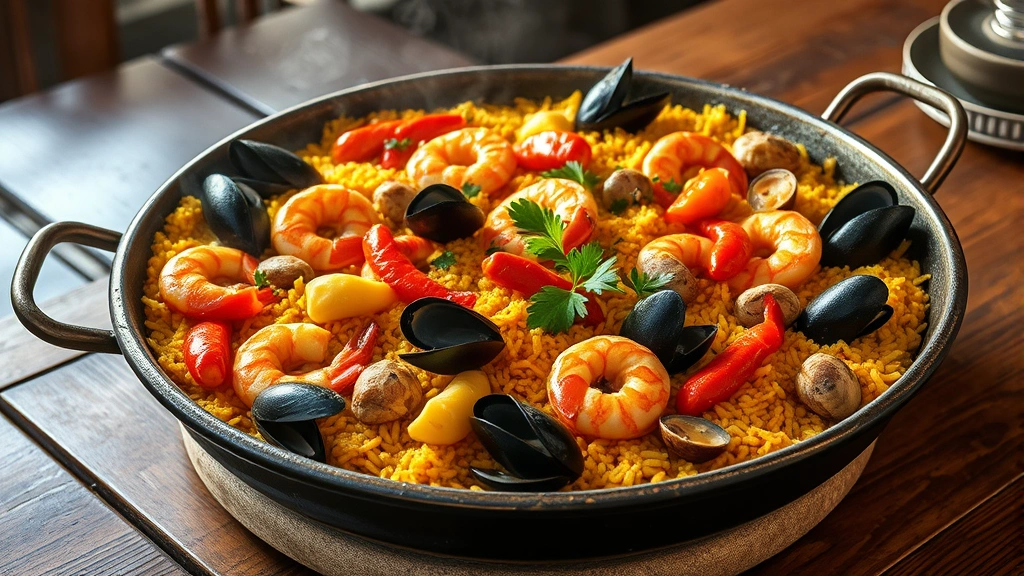
There’s nothing quite like authentic Spanish paella—a stunning one-pan dish that brings the vibrant flavors of Spain straight to your table. This recipe celebrates the traditional method with saffron-infused rice, succulent seafood, and tender chicken, all cooked together in one glorious pan. While it might seem intimidating, making paella at home is absolutely achievable with the right technique and quality ingredients.
The beauty of paella lies in its simplicity and the way each component comes together harmoniously. The key to success is using proper short-grain bomba or arborio rice, which absorbs the flavorful broth without becoming mushy. We’ll walk you through each step to ensure you create a restaurant-quality paella that will impress your guests and transport them to the Mediterranean coast.
This recipe serves 6-8 people and is perfect for entertaining. The combination of seafood and chicken, known as paella mixta, is a classic approach that offers something for everyone. Unlike some quick pasta dishes, paella requires patience and attention, but the results are absolutely worth the effort.
Before you start, gather all your ingredients—this is a dish where mise en place (having everything prepped and ready) truly makes a difference. The cooking process is relatively hands-on, but that’s part of the charm. You’ll develop a beautiful golden crust on the bottom of the pan called socarrat, which Spanish cooks consider essential to authentic paella.
For more inspiration on one-pan cooking, check out our guide to creamy sauce-based dishes and explore complementary flavors like pickled red onions for serving alongside. You might also enjoy learning to make charred peppers as a delicious side dish to round out your Spanish feast.
Ingredients
- 1/2 cup extra virgin olive oil
- 12 oz chicken thighs, cut into bite-sized pieces
- 1 large onion, finely diced
- 6 cloves garlic, minced
- 1 red bell pepper, sliced
- 1 yellow bell pepper, sliced
- 2 cups short-grain bomba or arborio rice
- 1 teaspoon saffron threads
- 1/4 cup dry white wine
- 5 cups chicken or seafood broth, warmed
- 1 cup diced tomatoes (fresh or canned)
- 12 oz large shrimp, peeled and deveined
- 8 oz mussels, cleaned and debearded
- 8 oz clams (littleneck or manila)
- 1 cup frozen peas
- 1 teaspoon smoked paprika
- 1/2 teaspoon cayenne pepper
- Salt and black pepper to taste
- 1/4 cup fresh parsley, chopped
- 2 tablespoons fresh lemon juice
- Lemon wedges for serving
Instructions
- Begin by steeping the saffron threads in 1/4 cup of the warm broth. Set aside and let the saffron release its beautiful color and flavor for at least 10 minutes. This infusion will be added to the paella later to give it authentic color and taste.
- Heat the olive oil in a large paella pan (14-16 inches) or wide shallow skillet over medium-high heat. Once the oil is shimmering, add the chicken pieces in a single layer and let them brown for 3-4 minutes without stirring. Turn and brown on the other side for another 3 minutes until golden. Remove the chicken to a plate and set aside.
- In the same pan with the remaining oil, add the diced onion and cook for 3-4 minutes, stirring frequently, until softened and beginning to turn golden. Add the minced garlic and cook for 1 minute more until fragrant, being careful not to burn it.
- Add the sliced red and yellow bell peppers to the pan and cook for 3-4 minutes, stirring occasionally, until they begin to soften. The vegetables should still have some texture at this point.
- Stir in the smoked paprika and cayenne pepper, cooking for about 30 seconds to toast the spices and release their flavors. The entire pan should smell wonderfully aromatic at this moment.
- Add the rice to the pan and stir constantly for 2-3 minutes. You want to coat every grain with the oil and slightly toast the rice. This step is crucial as it helps the rice maintain its texture during cooking and prevents it from becoming mushy.
- Pour in the white wine and stir until the rice has absorbed most of the liquid, about 1-2 minutes. This adds acidity and depth of flavor to the dish.
- Add the diced tomatoes and stir to combine. Cook for another minute, allowing the tomatoes to begin breaking down slightly and mixing with the other ingredients.
- Pour in 4 1/2 cups of the warm broth along with the reserved saffron infusion. Return the browned chicken pieces to the pan and stir everything together. Season with salt and pepper to taste, keeping in mind that the broth already contains some seasoning.
- Increase the heat to high and bring the mixture to a boil. Once boiling, reduce the heat to medium and do not stir from this point forward. Stirring at this stage would release excess starch from the rice and make it gluey.
- Let the paella simmer undisturbed for about 20 minutes. During this time, the rice will absorb the broth and begin to cook. If the paella seems very dry before this time is up, add the remaining 1/2 cup of warm broth in small amounts.
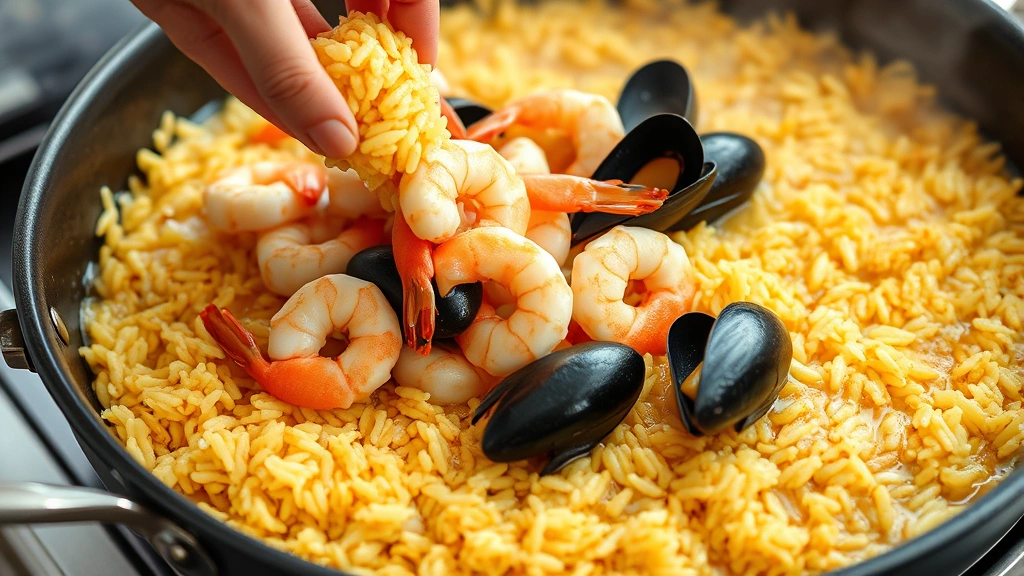
- After 20 minutes, nestle the shrimp, mussels, and clams into the rice in an even distribution across the pan. Scatter the frozen peas over the top. Do not stir; simply push the seafood gently into the rice.
- Continue cooking for another 8-10 minutes until the shrimp are pink and cooked through, the mussels and clams have opened, and the rice is tender but still has a slight firmness to each grain (this is called al dente). Discard any mussels or clams that haven’t opened.
- Increase the heat to high for the final 1-2 minutes of cooking. You’ll hear a gentle crackling sound—this is the formation of the socarrat, the prized golden crust on the bottom of the pan. Listen carefully; you want a light crackling, not a burning sound. This usually happens in the last minute or so.
- Remove the paella from the heat and let it rest for 5 minutes, uncovered. This resting period allows the rice to set and the flavors to meld together beautifully.
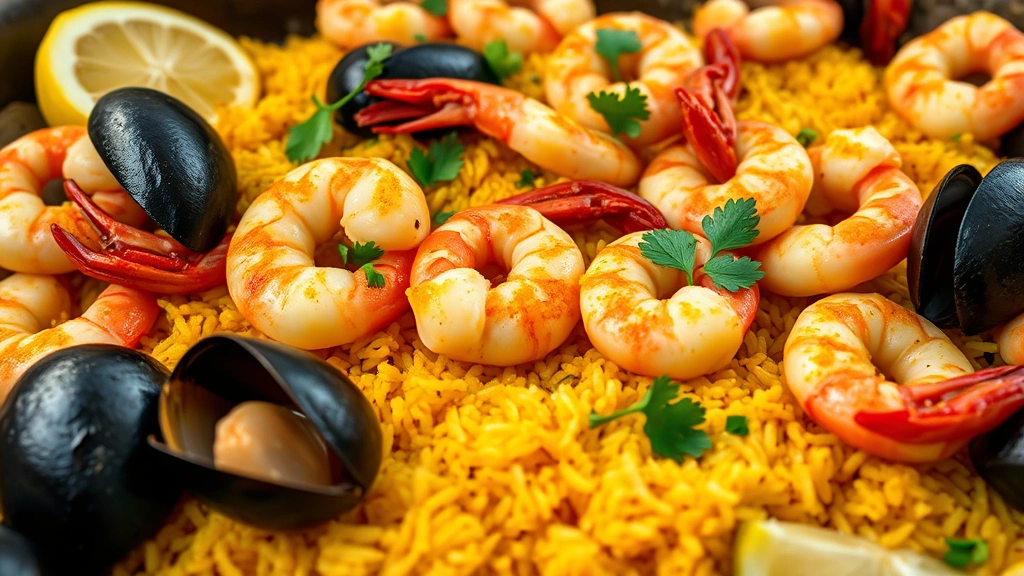
- Squeeze fresh lemon juice over the entire paella and garnish generously with fresh chopped parsley. Serve directly from the pan at the table for a stunning presentation, offering lemon wedges on the side for guests to add extra brightness if desired.
Pro Tips
- Saffron is expensive but essential for authentic Spanish paella. Don’t substitute it with turmeric or food coloring—they won’t provide the same delicate flavor. You can find quality saffron threads at specialty spice shops or online.
- Rice selection matters tremendously. Bomba rice is traditional and preferred because it absorbs liquid without becoming mushy, but arborio rice is an acceptable alternative. Avoid long-grain white rice as it will become too soft.
- Broth temperature is important—always use warm broth, never cold. Cold broth will stop the cooking process and result in unevenly cooked rice. You can heat your broth in a separate pot while preparing the other ingredients.
- The socarrat (golden crust) is a sign of properly cooked paella in Spain. A small amount of browning on the bottom is desirable and adds nutty flavor. Just listen carefully to avoid burning.
- Don’t skip the resting period after cooking. Those 5 minutes are crucial for allowing the rice to finish cooking from residual heat and for the flavors to come together.
- For a vegetarian version, omit the meat and seafood, use vegetable broth, and add more vegetables like artichoke hearts, zucchini, and green beans. Add chickpeas for protein.
- You can prepare the ingredients and brown the chicken and shrimp ahead of time, but once you start adding the rice and broth, the paella needs to be cooked through in one session.
- Paella is best served immediately while still warm. Leftovers can be refrigerated and reheated gently with a splash of broth, though the texture won’t be quite as good as freshly made.
- Customize the proteins based on availability and preference. You can use all seafood, all chicken, or add chorizo for a smokier flavor. The technique remains the same.
- A paella pan is ideal but not absolutely necessary—a large, shallow skillet or even a wide Dutch oven will work, though cooking time may vary slightly depending on the width.