
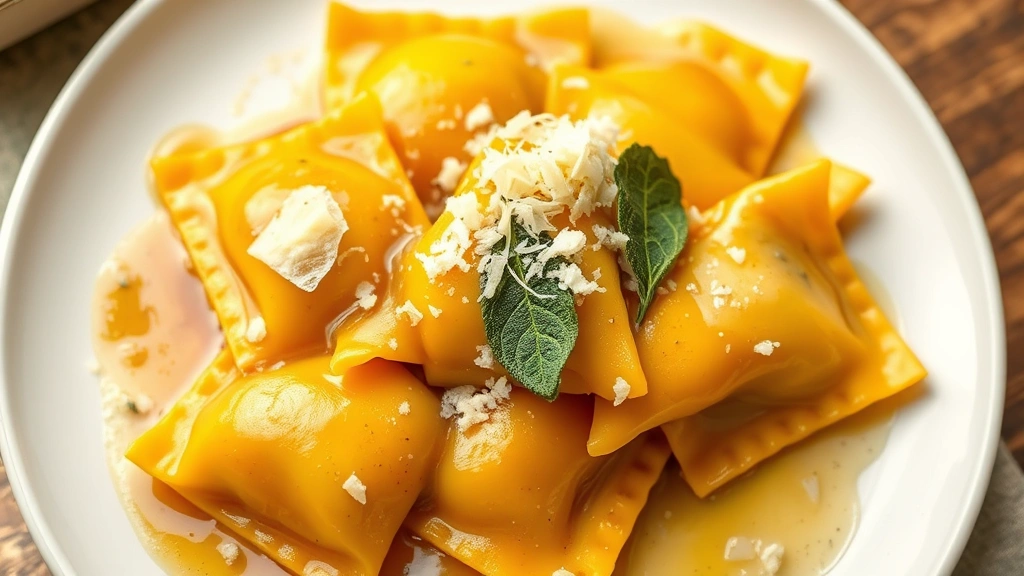
There’s something absolutely magical about butternut squash ravioli – it’s elegant enough for entertaining, yet comforting enough for a cozy weeknight dinner. This recipe combines homemade pasta dough with a luscious, slightly sweet butternut squash filling that’s been elevated with nutmeg, sage, and a touch of ricotta. Whether you’re a pasta-making pro or attempting ravioli for the first time, I’m here to guide you through every step of this showstopping dish.
The beauty of making ravioli at home is that you have complete control over the filling, the thickness of your pasta, and the sauce that accompanies it. My version features a simple brown butter sage sauce that lets the delicate flavors of the squash shine through. If you’re short on time, you can make the filling ahead and refrigerate it for up to two days, or even freeze your shaped ravioli for up to three months.
I’ve been making butternut squash ravioli for years, and I’ve learned a few tricks along the way. First, roasting the squash rather than boiling it concentrates the flavor and reduces excess moisture – this is crucial for a filling that holds together beautifully. Second, don’t skip the egg wash between the pasta layers; it acts like edible glue and ensures your ravioli stays sealed during cooking. Finally, a creamy sauce like a brown butter sage or even a light alfredo complements the earthiness of the squash perfectly.
For a lighter option, try serving your ravioli with a simple sage butter sauce and crispy sage leaves. If you want to add more vegetables to the plate, consider pairing it with pickled red onions for a pop of color and acidity, or serve alongside a fresh chickpea salad for a complete meal.
According to Bon Appétit, homemade pasta has seen a major resurgence in home cooking, and for good reason. There’s nothing quite like the tender, silky texture of fresh pasta sheets, and when you fill them with something as delicious as butternut squash, you’ve got a dish that feels restaurant-quality but is entirely doable in your own kitchen. Serious Eats also emphasizes the importance of proper pasta hydration and resting time, both of which I’ve incorporated into this recipe for optimal results.
This butternut squash ravioli recipe yields about 24 ravioli, which serves 4 as a main course or 6 as an appetizer. The entire process, from mixing dough to serving, takes about 2 hours, though you can certainly break it into stages. The ravioli can be assembled in advance and frozen, making this an excellent choice for meal prep or entertaining.
Whether you’re celebrating a special occasion or simply craving something a little more refined than your usual Tuesday night dinner, this butternut squash ravioli recipe is guaranteed to impress. The combination of homemade pasta, roasted squash, and silky sauce creates an unforgettable dish that tastes far more complicated than it actually is. Let’s get started!
Ingredients
- 2 cups all-purpose flour, plus more for dusting
- 3 large eggs
- 1 tablespoon olive oil
- 1 teaspoon salt
- 1 medium butternut squash (about 2 pounds), halved and seeded
- 2 tablespoons olive oil for roasting
- Salt and black pepper to taste
- ¾ cup whole milk ricotta cheese
- ¼ cup grated Parmesan cheese
- ¼ teaspoon freshly grated nutmeg
- 2 tablespoons fresh sage, finely chopped
- 1 egg yolk, for egg wash
- 1 tablespoon water, for egg wash
- 6 tablespoons unsalted butter for sauce
- 8-10 fresh sage leaves for garnish
- ¼ cup grated Parmesan cheese for serving
- Fleur de sel for finishing
- Freshly cracked black pepper for finishing
Instructions
- Make the pasta dough: On a clean countertop or large cutting board, mound the 2 cups of flour and create a well in the center. Crack the 3 eggs into the well and add 1 tablespoon of olive oil and 1 teaspoon of salt. Using a fork, beat the eggs together and gradually incorporate the flour from the sides of the mound. Once the mixture becomes shaggy, use your hands to knead everything together into a rough ball.
- Knead the dough for about 10 minutes, adding small amounts of flour as needed if it’s too sticky. The dough should be smooth, elastic, and slightly firm. Wrap it tightly in plastic wrap and let it rest at room temperature for at least 30 minutes while you prepare the filling.
- Roast the butternut squash: Preheat your oven to 400°F. Place the squash halves cut-side down on a rimmed baking sheet. Brush with 2 tablespoons of olive oil and season with salt and pepper. Roast for 35-40 minutes, until the flesh is very tender and golden brown at the edges.
- Remove the squash from the oven and let it cool until you can handle it comfortably. Using a spoon, scoop the soft flesh away from the skin into a bowl. You should have about 1½ cups of roasted squash.
- Prepare the filling: Transfer the roasted squash to a fine-mesh strainer and let it drain for a few minutes to remove excess moisture. This step is important for preventing soggy ravioli. Place the drained squash in a medium bowl and mash with a fork until smooth.
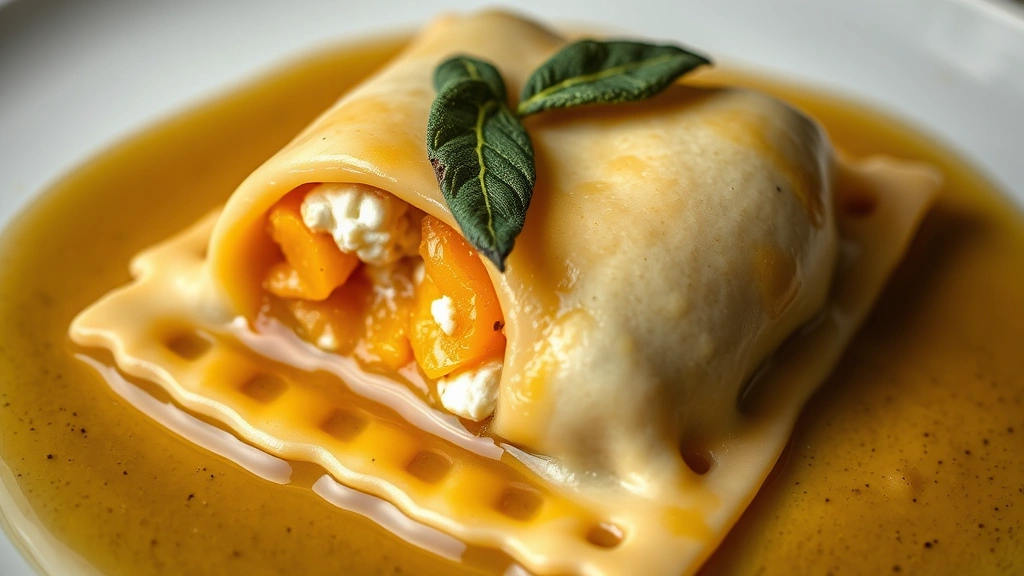
- Add the ricotta cheese, ¼ cup Parmesan, nutmeg, and chopped sage to the squash. Stir until well combined. Taste and adjust seasonings with salt and pepper as needed. The filling should be rich and flavorful. Set aside while you prepare the pasta sheets.
- Roll out the pasta dough: Divide the rested dough into 4 equal pieces. Work with one piece at a time and keep the others covered with plastic wrap to prevent drying. Using a pasta machine or rolling pin, roll the dough out to the thinnest setting (about 1/16-inch thick). The sheet should be large enough to cut 6 squares from.
- Cut the pasta sheets: Using a sharp knife or fluted pastry wheel, cut each pasta sheet into 3-inch squares. You should have about 48 squares total. Arrange them on a lightly floured baking sheet and cover with a damp towel to prevent drying.
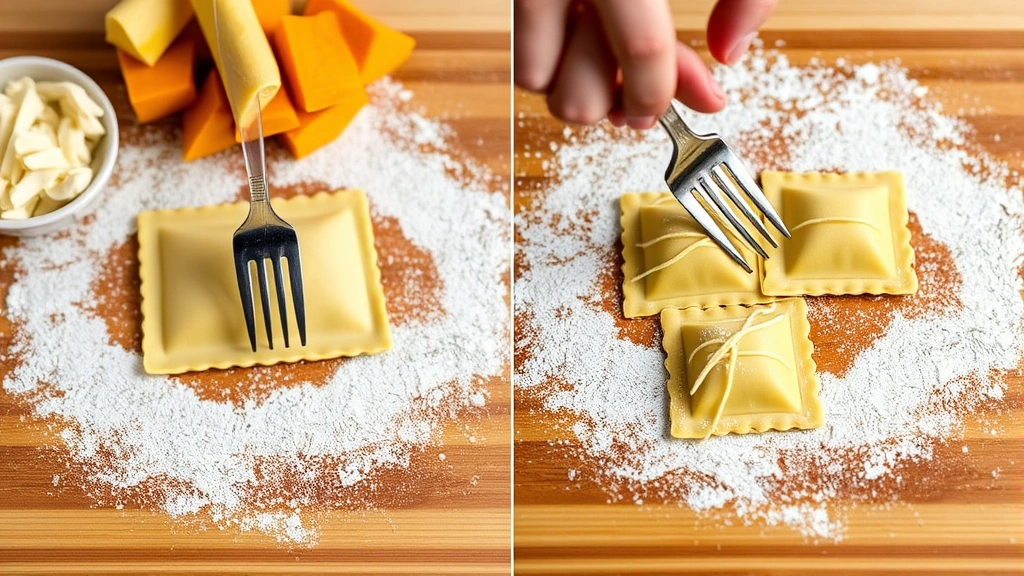
- Assemble the ravioli: In a small bowl, whisk together the egg yolk and water to create an egg wash. Place one pasta square on a clean work surface and spoon about 1 teaspoon of filling into the center. Using a small brush or your finger, brush the edges with egg wash.
- Top with another pasta square and press down gently around the edges to seal, being careful to remove any air pockets. Use the tines of a fork to crimp and seal the edges for a decorative finish. Place the finished ravioli on a floured baking sheet and cover with a towel while you complete the remaining ravioli.
- Bring a large pot of salted water to a rolling boil. Working in batches to avoid overcrowding, carefully drop the ravioli into the water. They’ll initially sink, then float to the surface after a minute or two. Once they float, cook for an additional 2-3 minutes until the ravioli are tender and the filling is heated through.
- While the ravioli cook, prepare the brown butter sauce: In a small saucepan, melt the 6 tablespoons of unsalted butter over medium heat. Continue cooking, swirling occasionally, until the milk solids turn golden brown and the butter smells nutty, about 5-7 minutes. Do not let it burn.
- Add the 8-10 fresh sage leaves to the brown butter and remove from heat. The residual heat will gently toast the sage and infuse the butter with its flavor.
- Using a slotted spoon, transfer the cooked ravioli to a serving platter or individual bowls. Drizzle generously with the brown butter sage sauce, ensuring each ravioli gets some of the toasted sage leaves and golden butter.
- Finish each serving with a sprinkle of Parmesan cheese, a pinch of fleur de sel, and freshly cracked black pepper. Serve immediately while the ravioli are still warm and the sauce is at its best.
Pro Tips
- Make-ahead option: You can prepare the pasta dough up to 1 day in advance. Wrap it tightly in plastic wrap and refrigerate. Allow it to come to room temperature for about 30 minutes before rolling.
- Filling storage: The butternut squash filling can be made up to 2 days ahead. Store it in an airtight container in the refrigerator.
- Freezing ravioli: Shaped ravioli can be frozen for up to 3 months. Arrange them in a single layer on a baking sheet and freeze until solid, then transfer to a freezer bag. Cook directly from frozen, adding an extra 2-3 minutes to the cooking time.
- Sauce variations: While brown butter sage is classic, you can also serve these ravioli with a light cream sauce, a tomato-based sauce, or simply with olive oil, garlic, and crispy sage.
- Pasta rolling tips: If you don’t have a pasta machine, you can use a rolling pin. Work slowly and patiently, allowing the dough to rest between rolls to prevent shrinkage.
- Testing for doneness: Ravioli are done when they float to the surface and remain there for 2-3 minutes. Overcooking will cause the pasta to become mushy and the filling may leak out.
- Serving suggestions: Pair with a crisp white wine like Pinot Grigio or Sauvignon Blanc. A fresh green salad with lemon vinaigrette provides a nice counterpoint to the rich ravioli.
- Scaling the recipe: This recipe can be easily doubled. Prepare the filling and dough in the same proportions; you’ll simply have more ravioli to shape.
- Equipment notes: A pasta machine makes rolling easier and more consistent, but it’s not absolutely necessary. A stand mixer with a dough hook attachment can also save time when mixing the pasta dough.