

Making homemade deer sausage is an absolute game-changer if you’re a hunter or have access to venison. This recipe transforms lean game meat into incredibly flavorful, restaurant-quality sausage that’s perfect for breakfast, dinner, or weekend entertaining. The key to the best deer sausage is balancing the rich, slightly gamey flavor of venison with the right fat content and seasonings that complement rather than mask the meat.
Deer meat is naturally very lean, which means it needs proper fat addition to create that juicy, succulent sausage texture we all crave. I use a combination of pork shoulder and pork belly to achieve the perfect ratio—this keeps the sausage moist while allowing the beautiful venison flavor to shine through. The spice blend is carefully crafted with a mix of garlic, black pepper, sage, and a touch of brown sugar to create that perfect savory-slightly-sweet profile that makes people ask for your secret.
What makes this recipe truly special is the attention to detail at every step. From properly chilling your equipment to understanding the importance of proper seasoning ratios, I’m walking you through everything you need to know to make sausage that rivals your favorite butcher shop. Whether you’re stuffing into natural casings for links or making bulk sausage patties, this method is foolproof and produces consistently delicious results.
The beauty of homemade sausage is that you control every ingredient. No mystery additives, no fillers, just pure, quality meat and seasonings. Once you make your first batch, you’ll be amazed at how much better it tastes than store-bought versions. Serve it alongside pickled red onions for a beautiful brunch, or pair with roasted shishito peppers for an impressive appetizer spread.
I’ve been making venison sausage for years now, and I’ve refined this recipe to absolute perfection. The techniques I’m sharing will help you achieve professional results in your own kitchen. Let me walk you through every step so you can create sausage that’s incredibly flavorful, perfectly textured, and absolutely delicious.
Ingredients
- 3 pounds ground venison, very cold
- 1.5 pounds pork shoulder, ground and very cold
- 0.5 pounds pork belly, ground and very cold
- 2 tablespoons kosher salt
- 1 tablespoon freshly ground black pepper
- 2 tablespoons brown sugar
- 1 tablespoon garlic powder
- 2 teaspoons fresh sage, finely minced
- 1 teaspoon thyme
- 0.5 teaspoon cayenne pepper
- 0.25 teaspoon nutmeg
- 0.5 cup ice water
- Natural hog casings, soaked in warm water
- 2 tablespoons fresh cracked black pepper for finishing
Instructions
- Start by ensuring all your equipment is extremely cold. Place your meat grinder, mixing bowl, and sausage stuffer attachment in the freezer for at least 2 hours before you begin. Cold equipment is absolutely essential for achieving the proper texture and consistency in your sausage.
- Pat all your venison and pork dry with paper towels. This step is crucial because excess moisture can affect the texture. Cut the meat into 1-inch cubes and spread on a chilled baking sheet.
- Place the cubed meat in the freezer for 30 minutes until it’s very cold but not frozen solid. You want it cold enough to grind smoothly but not so frozen that it’s difficult to work with.
- Grind the cold venison and pork together using the cold grinder attachment. Work quickly and keep everything as cold as possible. If the meat becomes warm during grinding, place it back in the freezer for 10 minutes.
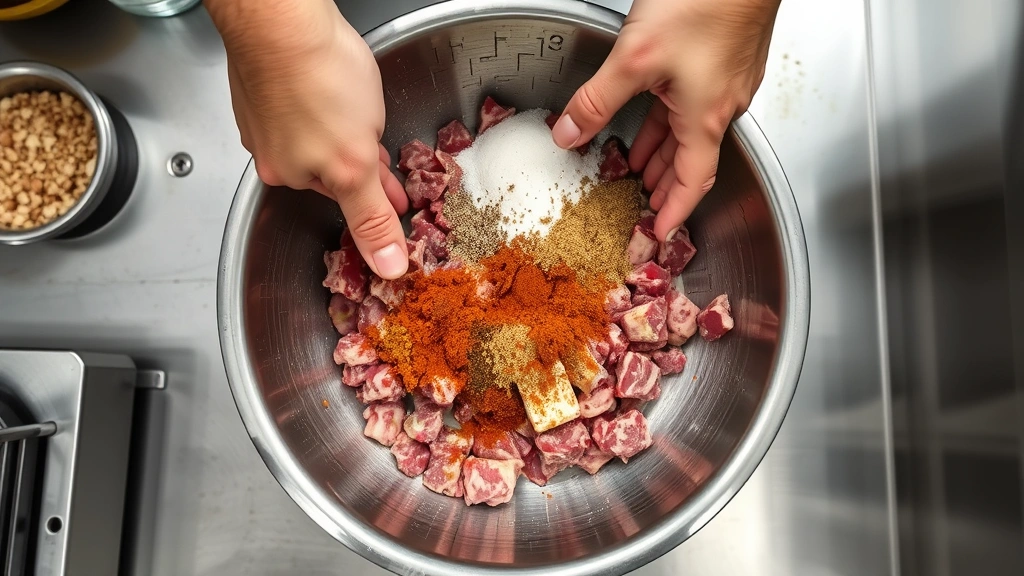
- Transfer the ground meat to your chilled mixing bowl. Add the kosher salt and ice water, then mix gently with your hands for about 2 minutes. The salt will help the meat develop the proper texture and binding capability.
- Add the brown sugar, garlic powder, sage, thyme, cayenne pepper, and nutmeg to the meat mixture. Mix thoroughly with your hands for about 3-4 minutes until everything is evenly distributed and the mixture becomes slightly sticky and cohesive.
- To test your seasoning, pinch off a small amount of the mixture and cook it in a small skillet over medium heat for 1-2 minutes until cooked through. Taste and adjust seasonings as needed. This is your chance to perfect the flavor before stuffing.
- Soak your natural casings in warm water for 30 minutes to make them pliable. Rinse them gently under cool running water, checking for any holes or tears.
- Attach the sausage stuffer to your grinder or use a handheld sausage stuffer. Slide a casing onto the stuffing tube, leaving about 2 inches hanging off the end.
- Begin feeding the seasoned meat mixture into the stuffer, gently guiding the casing as it fills. Work slowly and steadily, allowing the casing to fill evenly without overstuffing. The casing should be full but not stretched tightly.
- Once the casing is filled, gently squeeze the meat mixture toward the stuffer end, then carefully slide the casing off the tube. Tie one end with kitchen twine, leaving a small knot.
- Divide the sausage into individual links by pinching the casing at 4-5 inch intervals and twisting gently. Don’t cut the casing—just twist to create natural divisions. Prick each link with a needle in 3-4 places to prevent bursting during cooking.
- If making bulk sausage, skip the casing step and simply form the seasoned meat into patties about 2 inches thick. Refrigerate for at least 2 hours before cooking.
- Heat a cast iron skillet over medium-high heat until it’s quite hot. Add your sausage links or patties without crowding the pan—work in batches if necessary.
- Cook for 4-5 minutes on the first side without moving them around. You want a beautiful golden-brown crust to develop, which creates incredible flavor.
- Turn the sausages and cook for another 4-5 minutes on the second side until cooked through. The internal temperature should reach 160°F when measured with an instant-read thermometer.
- Transfer cooked sausage to a warm plate and let rest for 3 minutes before serving. This allows the juices to redistribute throughout the meat.
- Serve immediately while hot, garnished with fresh cracked black pepper. Pair with your favorite sides or condiments.

Pro Tips
- Venison is naturally lean game meat, which is why adding pork fat is essential. Never skip this step or your sausage will be dry and tough. The 60% venison to 40% pork ratio is scientifically calculated for optimal texture and moisture.
- Temperature control is absolutely critical when making sausage. Keep everything as cold as possible throughout the entire process. Warm meat won’t bind properly and will result in a crumbly, unpleasant texture.
- Natural casings are infinitely superior to synthetic casings. They’re made from animal intestines, have better permeability, and create that satisfying snap when you bite into them. You can find them at most butcher shops or online.
- Don’t grind your own meat if you’re not comfortable doing so. Ask your butcher to grind venison and pork together for you. Make sure they keep everything very cold and grind it fresh that day.
- If you don’t want to stuff casings, making bulk sausage is perfectly acceptable. Form the mixture into patties and cook the same way. Bulk sausage is also great for crumbling into pasta dishes or breakfast scrambles.
- The salt in this recipe is crucial for both flavor and texture. It helps the proteins in the meat bind together and creates that cohesive sausage texture. Don’t reduce the salt amount.
- Brown sugar adds a subtle sweetness that balances the earthiness of venison beautifully. It’s not overly sweet—just enough to round out the flavors.
- Make sure to prick each link before cooking to prevent them from bursting. The meat expands as it cooks, and the pricked holes allow steam to escape gradually.
- Store finished sausages in the refrigerator for up to 3 days or freeze for up to 3 months. Frozen sausages should be thawed in the refrigerator overnight before cooking.
- This recipe works equally well with elk, moose, or other lean game meats. Adjust any strong gamey flavors by adding an extra 0.5 teaspoon of sage or thyme.
- For a spicier version, increase the cayenne pepper to 1 teaspoon or add 0.5 teaspoon of red pepper flakes. You can also add fennel seeds for an Italian-style sausage variation.