
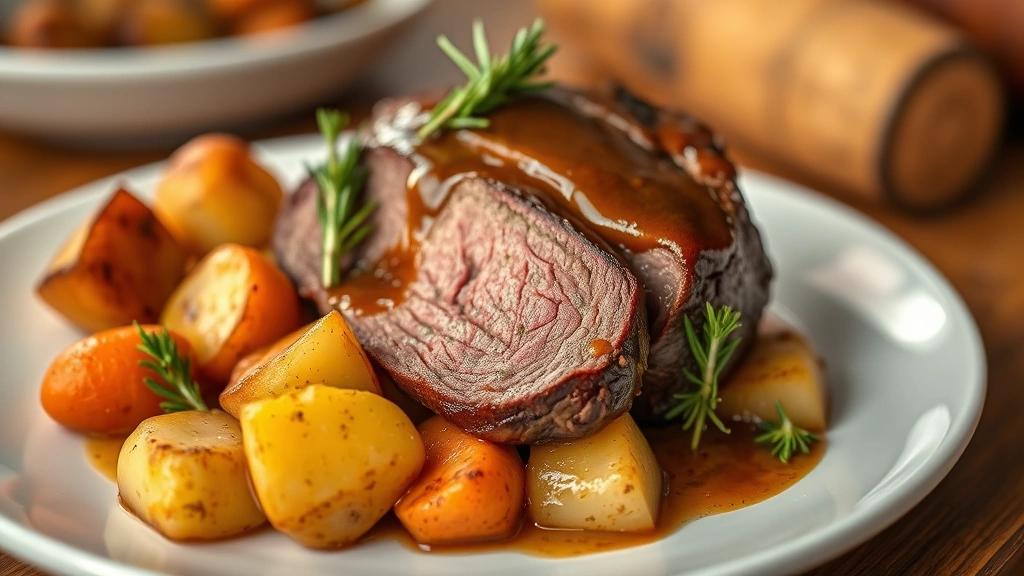
Eye of round roast is one of those beautiful cuts that deserves so much more love than it typically gets! This lean, affordable beef roast transforms into something absolutely spectacular with the right technique and a little patience. Whether you’re cooking for a weeknight family dinner or preparing for a special occasion, this recipe delivers tender, juicy, flavorful results every single time.
The key to mastering eye of round roast lies in understanding its nature—it’s a lean cut with minimal fat, which means it can dry out quickly if you’re not careful. But here’s the good news: when you treat it right with proper searing, low-and-slow cooking, and strategic resting periods, you’ll end up with a roast that’s absolutely mouthwatering. I’ve tested this recipe countless times, and I’m thrilled to share my foolproof method with you today.
This eye of round roast comes together beautifully with roasted vegetables on the side, and it’s substantial enough to serve alongside creamy pasta dishes for those who want something extra. The pan drippings make an incredible gravy, and honestly, there’s nothing quite like carving into a perfectly cooked roast at the dinner table.
What I absolutely love about this recipe is how adaptable it is. You can season it simply with just salt, pepper, and herbs, or dress it up with garlic, rosemary, and thyme for something more sophisticated. The cooking method remains the same, which means you get consistent, beautiful results no matter which flavor direction you choose. Plus, leftovers (if you have any!) are phenomenal sliced thin for sandwiches or chopped for salads.
One more thing—don’t skip the searing step! I know it adds a few extra minutes, but that beautiful crust that develops creates incredible flavor through the Maillard reaction. It’s truly what separates a good roast from an absolutely unforgettable one. Trust me on this one, and you’ll be making this eye of round roast again and again. For more inspiration on creating restaurant-quality meals at home, check out Serious Eats and Bon Appétit for additional techniques. You can also explore New York Times Cooking for more roast recipes and cream sauce ideas to pair alongside.
Ingredients
- 1 eye of round roast (3-4 pounds)
- 3 tablespoons kosher salt
- 2 tablespoons freshly ground black pepper
- 4 tablespoons olive oil, divided
- 1 large onion, quartered
- 1 pound baby potatoes, halved
- 1 pound carrots, cut into 2-inch pieces
- 6 cloves garlic, minced
- 4 sprigs fresh rosemary
- 4 sprigs fresh thyme
- 2 bay leaves
- 2 cups beef broth
- 1 cup red wine (optional, can substitute with additional broth)
- 2 tablespoons butter
- 2 tablespoons all-purpose flour
- 1 teaspoon Dijon mustard
- Fresh parsley for garnish
Instructions
- Remove the eye of round roast from the refrigerator 45 minutes before cooking to bring it to room temperature. This ensures even cooking throughout the roast.
- Pat the roast completely dry with paper towels—this is crucial for achieving a beautiful brown crust during searing.
- In a small bowl, combine kosher salt, black pepper, and set aside. Season the roast generously on all sides with this mixture, pressing gently so it adheres to the meat.
- Heat 2 tablespoons of olive oil in a large heavy-bottomed Dutch oven over medium-high heat until it shimmers and is very hot.
- Carefully place the seasoned roast in the hot oil and sear for 4-5 minutes without moving it, allowing a golden brown crust to develop on the bottom.
- Using tongs, turn the roast and sear the other side for 4-5 minutes until equally browned. Repeat with remaining sides until all surfaces have a beautiful golden crust (about 15-20 minutes total).
- Transfer the roast to a cutting board and set aside temporarily. Pour off all but 1 tablespoon of oil from the Dutch oven.
- Add the remaining 2 tablespoons of olive oil to the pot and add the quartered onion, cooking for 3-4 minutes until slightly softened.
- Stir in the minced garlic and cook for 1 minute until fragrant, being careful not to burn the garlic.
- Pour in the red wine (if using) and scrape up all the browned bits from the bottom of the pot with a wooden spoon—this is liquid gold for flavor!
- Add the beef broth and bring to a gentle simmer. Add the bay leaves, rosemary sprigs, and thyme sprigs to the liquid.
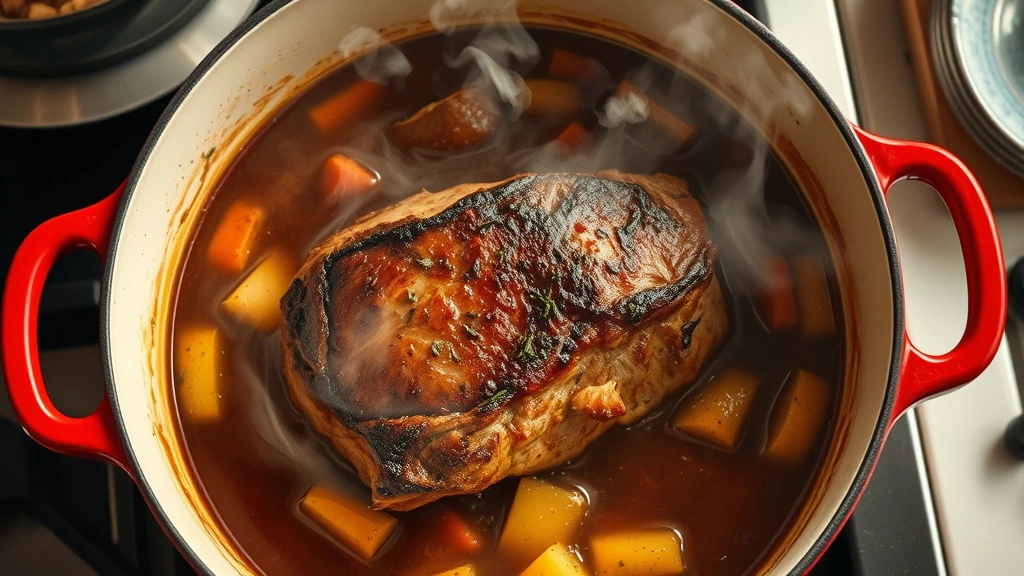
- Return the seared roast to the Dutch oven, positioning it so it’s partially submerged in the liquid. The liquid should come about halfway up the sides of the roast.
- Cover the Dutch oven with its lid and transfer to a preheated 325°F oven.
- Roast for 1 hour 45 minutes to 2 hours, depending on your desired doneness. For medium-rare, aim for an internal temperature of 135°F at the thickest part.
- After 1 hour of cooking, add the potatoes and carrots around the roast, nestling them into the liquid. Return to the oven to continue cooking.
- Check the roast at the 1 hour 45 minute mark with a meat thermometer inserted into the thickest part, being careful not to touch bone or fat.
- Once the roast reaches 135°F for medium-rare, carefully remove the Dutch oven from the oven using oven mitts.
- Transfer the roast to a cutting board and tent loosely with foil. Let it rest for 15 minutes—this allows the juices to redistribute throughout the meat, ensuring tender, juicy slices.
- While the roast rests, transfer the vegetables to a serving platter using a slotted spoon, covering them to keep warm.
- Strain the pan liquid through a fine-mesh sieve into a saucepan, discarding the herbs and aromatics. You should have about 1½ cups of liquid.
- In a small bowl, whisk together the butter and flour to create a paste (this is called beurre manié). Bring the strained liquid to a gentle simmer over medium heat.
- Whisk the butter-flour paste into the simmering liquid a little at a time, stirring constantly until the gravy thickens, about 3-4 minutes.
- Stir in the Dijon mustard and taste for seasoning, adjusting salt and pepper as needed.
- Slice the rested roast thinly against the grain, which helps ensure tenderness in each bite.
- Arrange the sliced roast on a serving platter with the roasted vegetables, drizzle with the warm gravy, and garnish with fresh parsley before serving.

Pro Tips
- **Choosing Your Cut**: Eye of round roast is typically found in the beef section of most grocery stores. Ask your butcher for a well-marbled cut if possible, and request that they tie it if it seems uneven in shape, which helps it cook more uniformly.
- **Temperature Guide**: Use a meat thermometer for accuracy. Rare is 125°F, medium-rare is 135°F, medium is 145°F, and medium-well is 155°F. Remember that the roast will continue cooking slightly during the resting period, so remove it 5°F before your target temperature.
- **Make-Ahead Magic**: You can prepare this roast up to the searing step the morning of serving. Season it, cover it, and refrigerate. Just allow extra time for it to come to room temperature before searing.
- **Wine Selection**: If using wine, choose something you’d actually drink—a Burgundy or Pinot Noir works beautifully. If you prefer not to use wine, simply substitute with additional beef broth without affecting the final result.
- **Vegetable Timing**: Root vegetables can handle the full cooking time, but if you prefer softer vegetables, add them during the last 45 minutes of cooking instead of the 1-hour mark.
- **Gravy Consistency**: If your gravy is too thick, whisk in a splash of broth. If it’s too thin, continue simmering to reduce it, or make another small batch of beurre manié.
- **Herb Variations**: Fresh thyme and rosemary are classic, but try tarragon, sage, or oregano for different flavor profiles. You can also use dried herbs—use half the amount of fresh herbs called for.
- **Storing Leftovers**: Slice any remaining roast and store it in an airtight container in the refrigerator for up to 4 days. It makes incredible sandwiches or can be diced for salads.
- **Freezing**: This roast freezes beautifully! Slice it, arrange on a baking sheet to freeze individually, then transfer to freezer bags for up to 3 months. Thaw in the refrigerator overnight before reheating gently in a 300°F oven.
- **Serving Suggestions**: Pair with mashed potatoes, creamy polenta, or crusty bread to soak up every drop of that incredible gravy. A simple green salad or fresh side dish provides a nice contrast to the rich, savory roast.