
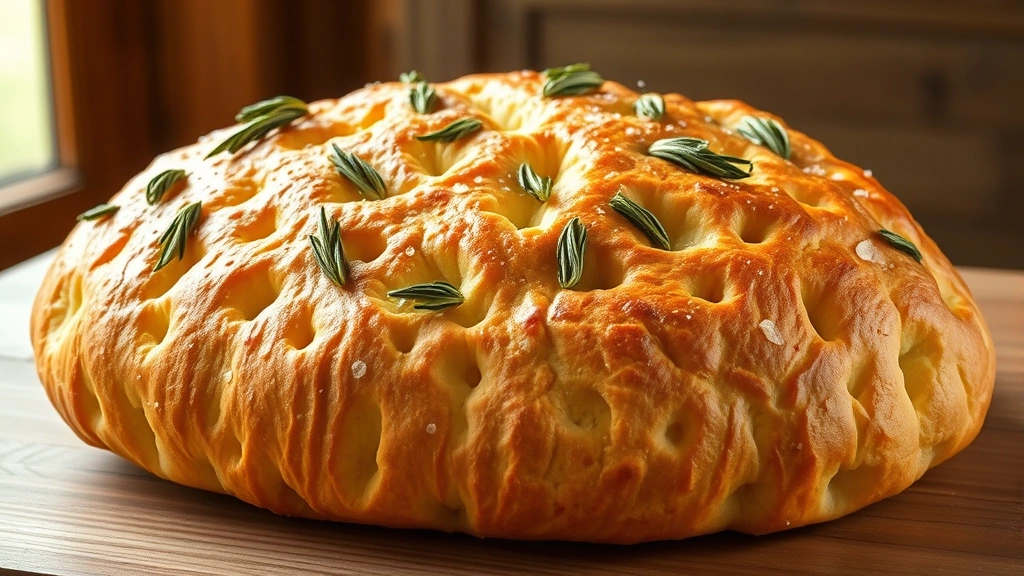
Focaccia is one of those magical breads that looks incredibly impressive but is actually quite forgiving to make, especially when you use sourdough starter! This recipe combines the tangy, complex flavor of sourdough with the pillowy, dimpled texture that focaccia is famous for. The beauty of sourdough focaccia is that it develops incredible depth of flavor during a long, slow fermentation—no commercial yeast required.
I’ve been making focaccia for years, and the sourdough version has become my absolute favorite. The starter adds this wonderful complexity that you just can’t replicate with instant yeast alone. Plus, if you already have a sourdough starter on hand, this is such a rewarding way to use it. The dough comes together easily, requires minimal hands-on time, and the result is a stunning bread that’s perfect for entertaining or meal prep.
This focaccia is ideal for serving alongside soups and salads, using as a base for sandwiches, or simply tearing into pieces and dipping in quality olive oil and balsamic vinegar. You can top it with classic rosemary and sea salt, or get creative with pickled red onions, caramelized onions, or even fresh herbs. I love making extra because it freezes beautifully and can be quickly refreshed in the oven.
The key to the best sourdough focaccia is patience with fermentation and generosity with olive oil. Don’t be shy—this bread is meant to be rich and luxurious. The long fermentation gives you flexibility; you can let it rise overnight in the refrigerator or do a quicker room-temperature fermentation. Either way, you’ll end up with a focaccia that has incredible flavor and the perfect texture: crispy on the outside with a tender, airy crumb inside.
For topping ideas, consider pairing this with chickpea salad for a Mediterranean-inspired meal, or use it as a vehicle for roasted shishito peppers. The versatility of this bread is part of what makes it so special. Whether you’re a sourdough enthusiast or new to baking with starter, this recipe will become a favorite in your rotation. Let me walk you through my process for creating focaccia that’s worthy of any bakery.
For more sourdough inspiration, check out resources from Serious Eats’ sourdough guide and New York Times’ sourdough recipes. You can also explore Bon Appétit’s focaccia variations for additional topping ideas and techniques.
Ingredients
- 500g (4 cups) all-purpose flour or bread flour
- 350ml (1.5 cups) room temperature water
- 150g (¾ cup) active sourdough starter, fed 4-8 hours prior
- 10g (2 teaspoons) sea salt
- 7g (1.5 teaspoons) instant yeast (optional, for faster rise)
- 75ml (5 tablespoons) extra virgin olive oil, divided
- 3-4 cloves garlic, minced or sliced
- 2 tablespoons fresh rosemary, chopped
- 1 tablespoon coarse sea salt for topping
- Freshly cracked black pepper to taste
- Additional olive oil for the pan and topping
Instructions
- In a large bowl or stand mixer, combine the room temperature water and active sourdough starter, stirring until mostly combined. The starter doesn’t need to be completely dissolved.
- Add the flour to the wet mixture and mix until all the flour is incorporated and you have a shaggy dough. Let this rest for 30 minutes to 1 hour (this is called the autolyse, and it helps develop gluten naturally).
- After the autolyse, sprinkle the sea salt over the dough. If using instant yeast, add it now as well. Knead by hand for 8-10 minutes or use a stand mixer on medium speed for 5-6 minutes until the dough becomes smooth and elastic.
- Transfer the dough to a lightly oiled bowl, cover with plastic wrap or a damp towel, and let it rise at room temperature for 2-3 hours, or until it has increased in volume by about 50-75% (you’re not looking for it to double).
- Perform a series of stretches and folds during the first 2 hours: every 30 minutes, wet your hand, grab one side of the dough, stretch it up and fold it over the center. Rotate the bowl and repeat this 4 times per fold session. Do this for the first 2 hours of bulk fermentation.
- After bulk fermentation, turn the dough out onto a lightly oiled surface and gently shape it into a rough rectangle. You want to preserve the air in the dough, so handle it gently.
- Pour 3-4 tablespoons of olive oil into a 9×13 inch baking pan (or similar size) and spread it around to coat the bottom and sides evenly.
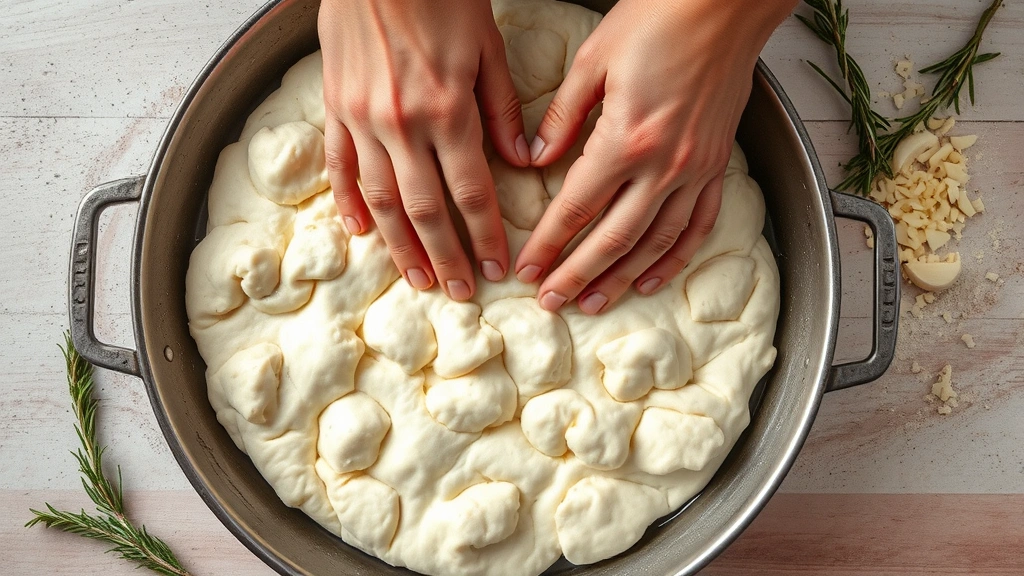
- Transfer the shaped dough to the oiled pan. Gently stretch it to fill the pan, working from the center outward. If the dough resists, let it rest for 10 minutes and try again.
- Cover the pan with plastic wrap and let it rise in the refrigerator overnight (8-12 hours), or at room temperature for 2-3 hours. The cold rise overnight is ideal for flavor development, but room temperature works too.
- Remove the focaccia from the refrigerator about 30 minutes before baking to bring it closer to room temperature. Preheat your oven to 425°F (220°C).
- Using your fingertips or a dimpling tool, gently press dimples all over the surface of the dough, creating the signature focaccia texture. Don’t press all the way to the bottom—you want to maintain some height.
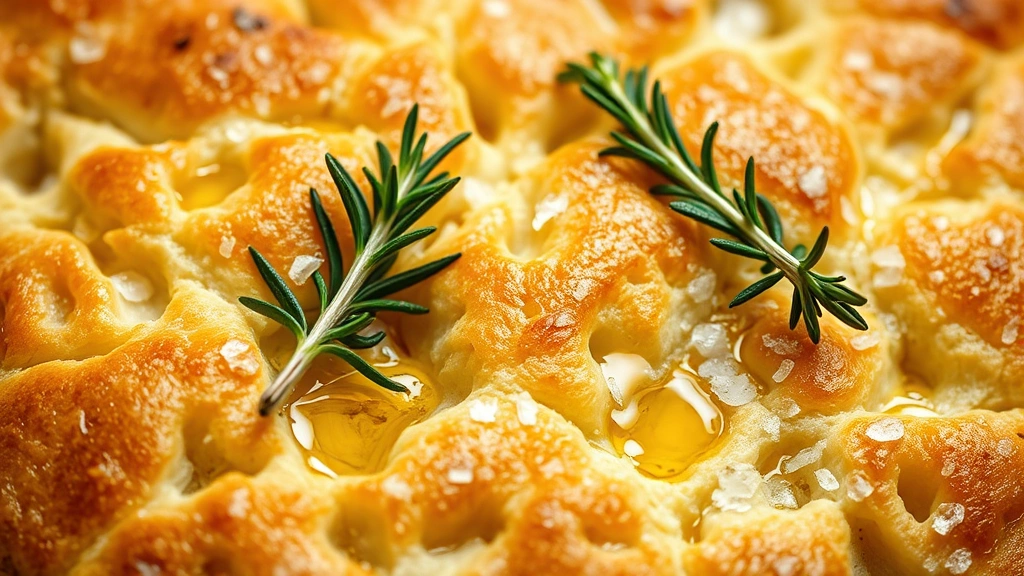
- Drizzle the remaining olive oil generously over the top of the focaccia, letting it pool in the dimples. This creates the beautiful golden exterior.
- Scatter the minced garlic, chopped rosemary, and coarse sea salt evenly over the top. Finish with a few cracks of black pepper.
- Place the focaccia in the preheated oven and bake for 25-30 minutes, until the top is golden brown and the edges are crispy. The focaccia should sound slightly hollow when tapped on the bottom.
- Remove from the oven and let cool in the pan for 5 minutes, then transfer to a wire rack. Serve warm or at room temperature, tearing into pieces or cutting into squares.
Pro Tips
- **Sourdough Starter Readiness**: Your starter should be active and bubbly when you use it. If you feed it 4-8 hours before mixing, it should be at peak activity (doubled in size with visible bubbles). If your starter is cold or sluggish, it will slow down the fermentation, which actually isn’t a bad thing—just plan for longer rising times.
- **Flour Flexibility**: Bread flour will give you a chewier, more structured focaccia, while all-purpose flour produces a slightly more tender crumb. Either works beautifully. You can also substitute up to 15% of the flour with whole wheat flour for added depth and nuttiness.
- **Temperature Matters**: Room temperature water helps the fermentation proceed at a predictable pace. Cold water will slow things down significantly. If your kitchen is particularly warm (above 78°F), use cooler water to prevent over-fermentation.
- **Bulk Fermentation Flexibility**: The beauty of this recipe is its flexibility. If you’re short on time, you can do a 3-4 hour room temperature fermentation. If you want maximum flavor, the overnight cold fermentation in the fridge is ideal. The dough will continue to ferment slowly in the cold, developing complex flavors.
- **Dimpling Technique**: Don’t be afraid to really press those dimples! They should be noticeable but not so deep that you break through the dough. The dimples trap the olive oil and seasonings, creating pockets of incredible flavor.
- **Optional Instant Yeast**: If you want to speed up the process or ensure a more reliable rise, you can add 7g of instant yeast. This is optional because the sourdough starter provides enough leavening power on its own—the yeast just accelerates the process.
- **Topping Variations**: Beyond the classic rosemary and sea salt, try caramelized onions, roasted garlic, olives, sun-dried tomatoes, or even thin slices of potato. You can also make half the focaccia savory and half sweet with just olive oil and a sprinkle of sugar.
- **Storage and Freezing**: Focaccia is best eaten fresh but stores well. Keep it in an airtight container at room temperature for up to 2 days. You can freeze baked focaccia for up to 3 months. Refresh frozen focaccia in a 350°F oven for 10-15 minutes until warmed through and the crust is crispy again.
- **Crust Crispiness**: For an extra-crispy crust, place a pan of hot water in the bottom of your oven while baking. The steam will help create a beautiful crust. Remove the water pan for the last 5 minutes to allow the crust to crisp up.
- **Hydration Note**: This dough is fairly wet (70% hydration), which contributes to the open crumb and airy texture. Don’t be alarmed if it seems sticky—that’s intentional and creates the perfect focaccia structure.
Pingback: How to make the BEST Leftover Pork Roast Tacos Recipe! – Simple Recipe Finder