
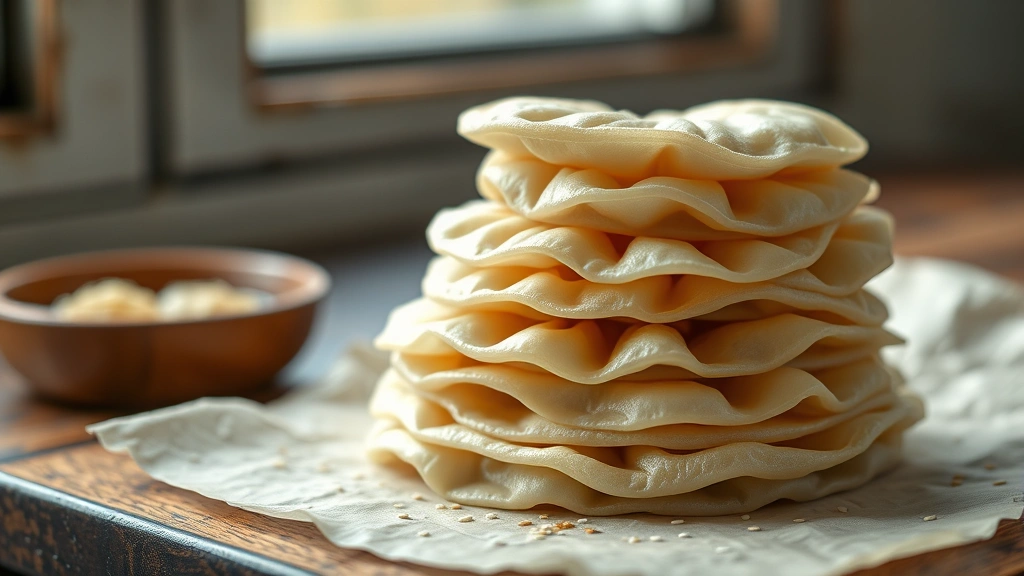
Making homemade dumpling wrappers from scratch is easier than you think, and the results are absolutely worth the effort! These tender, silky wrappers have the most delicate texture you simply cannot achieve with store-bought versions. Whether you’re planning to fill them with pork and chives, shrimp and vegetables, or anything in between, starting with perfectly crafted wrappers sets the foundation for restaurant-quality dumplings right in your own kitchen.
I’ve been making dumplings for years, and I can tell you that mastering dumpling wrapper dough is a game-changer. The technique is straightforward, but there are a few key secrets that transform ordinary dough into those gorgeous, chewy-yet-tender wrappers that make everyone ask for your recipe. The magic lies in the proper hydration of the dough, adequate resting time, and the right rolling technique. Once you nail this recipe, you’ll never go back to store-bought!
This dumpling wrapper recipe yields about 24-30 wrappers, depending on size. The dough comes together in just a few minutes, and while it does need time to rest, most of that is passive time. You can prep the dough in the morning and use it for dinner, or make a big batch and freeze extras for quick weeknight meals. I love keeping these on hand because they open up so many possibilities—beyond dumplings, you can use them for creative appetizers and pan-fried pockets filled with various ingredients.
The beauty of homemade wrappers is that you control the thickness and texture. Some people prefer ultra-thin, delicate wrappers that are nearly translucent, while others like theirs slightly thicker for more chew. This recipe gives you a dough that’s versatile enough to accommodate either preference. The dough is forgiving too—even if your first few wrappers aren’t perfectly round, they’ll still cook beautifully and taste amazing.
What makes these wrappers special is the combination of boiling water and room-temperature water, which creates steam during mixing and results in a more tender final product. This technique is used by professional dumpling makers and is the secret behind those silky wrappers you get at your favorite dim sum restaurant. I’m thrilled to share this method with you!
For filling inspiration, consider pairing these wrappers with creative protein combinations or traditional vegetable fillings. You might also enjoy making pickled red onions as a tangy accompaniment. Check out Serious Eats for amazing dumpling filling ideas and New York Times Cooking for additional dumpling techniques. For even more inspiration, visit Bon Appétit for creative variations on this classic recipe.
Once you master this basic wrapper recipe, you’ll find yourself making dumplings regularly. They’re perfect for meal prep, entertaining, or just satisfying those cravings for authentic, homemade dumplings. The satisfaction of biting into a dumpling you made from scratch is truly unmatched!
Ingredients
- 2 cups all-purpose flour, plus more for dusting
- 3/4 cup boiling water
- 1/4 cup room temperature water
- 1/2 teaspoon salt
- 1 teaspoon sesame oil (optional but recommended)
Instructions
- Place the flour and salt in a large mixing bowl. Create a well in the center of the flour mixture.
- Carefully pour the boiling water into the well, stirring gently with a fork or wooden spoon to combine. The dough will be very hot, so be careful not to burn yourself.
- Once the dough has cooled slightly, add the room temperature water and sesame oil, continuing to stir until the mixture begins to come together.
- Transfer the dough to a lightly floured work surface and knead for about 8-10 minutes until the dough becomes smooth, elastic, and slightly springy. If the dough is too sticky, add a teaspoon of flour at a time; if it’s too dry, add water one teaspoon at a time.
- Shape the kneaded dough into a smooth ball and place it in a lightly oiled bowl. Cover with a damp kitchen towel or plastic wrap.
- Let the dough rest at room temperature for at least 1 hour, or up to 2 hours. This resting period is crucial as it allows the gluten to relax and makes rolling much easier.
- After resting, turn the dough out onto a lightly floured surface. Knead briefly for 1-2 minutes to bring it back together.
- Divide the dough into 24-30 equal pieces depending on your desired wrapper size. A helpful trick is to divide the dough in half, then quarters, then into eighths, giving you consistent portions.
- Roll each piece of dough into a smooth ball between your palms, then place on a floured surface seam-side down.
- Cover the dough balls with a damp towel while you work to prevent them from drying out.
- Working with one dough ball at a time, flatten it slightly with your palm into a small disk about 1/2 inch thick.
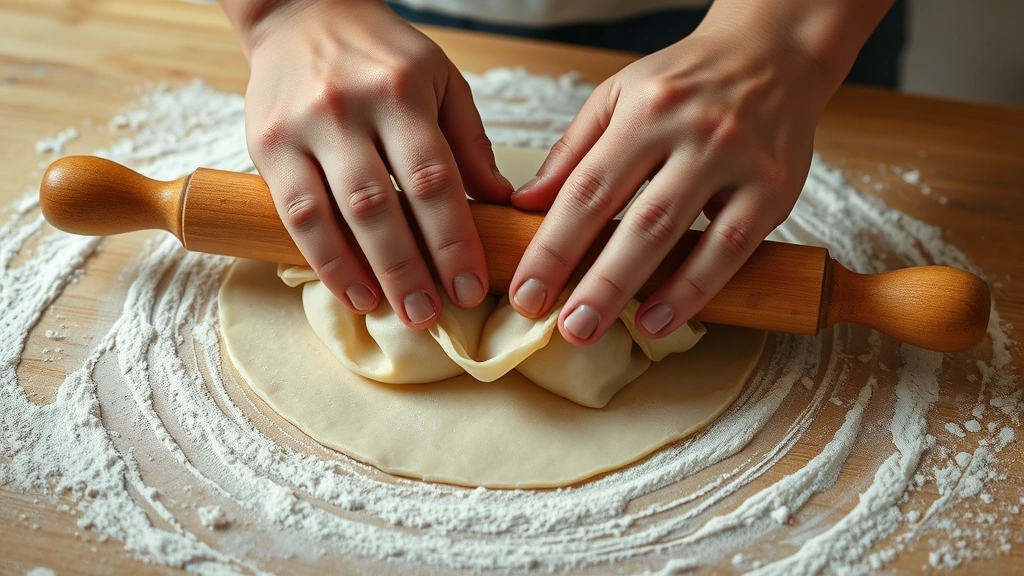
- Using a rolling pin, roll the disk from the center outward, rotating it about a quarter turn after each roll to maintain a round shape.
- Continue rolling until the wrapper is about 3-4 inches in diameter and about 1/8 inch thick. The edges should be slightly thinner than the center for better sealing.
- As you finish each wrapper, place it on a parchment paper or cornstarch-dusted surface, stacking them carefully with parchment between layers to prevent sticking.
- Once all wrappers are rolled, they’re ready to fill and cook, or you can store them in the refrigerator for up to 2 days, or freeze for up to 2 months.
- If freezing, lay wrappers in a single layer on a baking sheet, freeze for 2-3 hours until solid, then transfer to an airtight container or freezer bag. No need to thaw before using—simply add a minute or two to cooking time.
Pro Tips
- The boiling water technique is essential for tender wrappers. The steam created during mixing helps hydrate the flour evenly and creates a softer final product compared to using all room-temperature water.
- Don’t rush the resting period. This allows gluten to relax, making the dough much easier to roll and preventing it from snapping back.
- Consistency matters when dividing the dough. Use a kitchen scale for precise portions if you want all your dumplings to cook at the same rate.
- The thickness of your wrappers affects cooking time and texture. Thinner wrappers cook faster and have a more delicate texture, while thicker ones are more forgiving and chewier.
- Dust your work surface and rolling pin with flour or cornstarch, not oil, to prevent the dough from becoming slippery.
- If your wrappers crack while rolling, simply pinch the cracks together or use the piece to patch another wrapper.
- These wrappers work beautifully for both steamed and pan-fried dumplings. For boiled dumplings, they’re also excellent.
- Store-bought cornstarch is better than flour for dusting if you plan to stack the wrappers, as it won’t hydrate the dough like flour can.
- For the best flavor, use good quality sesame oil—it adds a subtle, delicious nuttiness to the wrappers.
- If you don’t have boiling water, you can use hot tap water, though the results won’t be quite as tender.
- These wrappers are slightly thicker and more forgiving than traditional ultra-thin dim sum wrappers, making them perfect for beginners.
- Make a double batch and freeze extras. Homemade wrappers are far superior to store-bought and freeze beautifully for up to three months.
- The dough should feel smooth and slightly elastic but not sticky. If it feels rough or dry, knead in water a teaspoon at a time.