
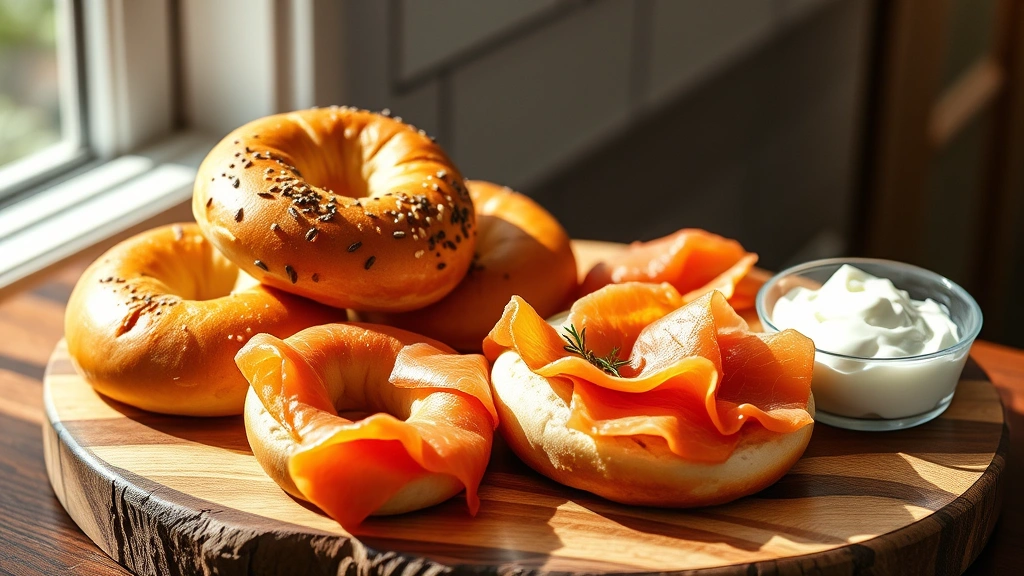
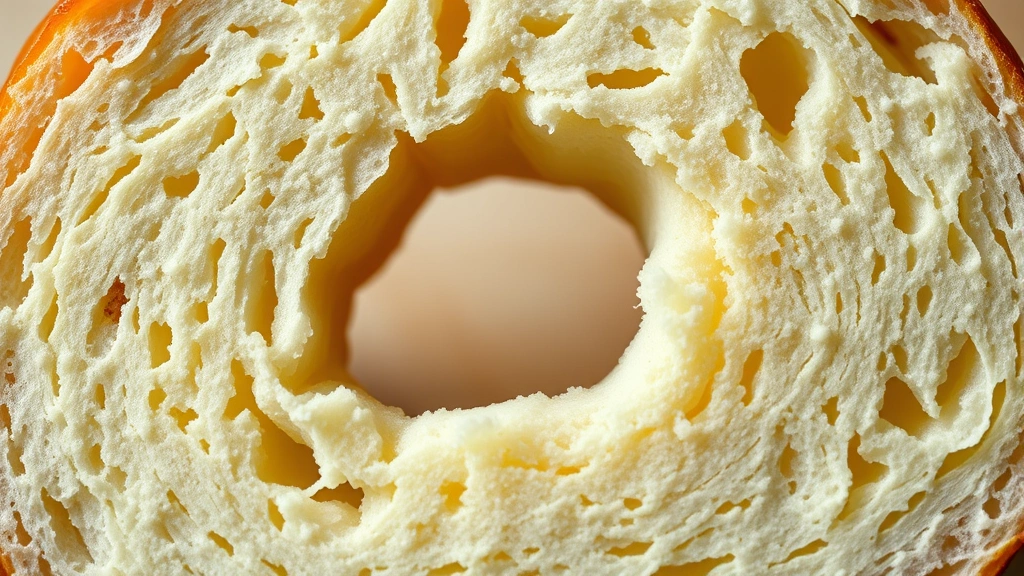
Making homemade bagels from scratch is easier than you might think, and the results are absolutely worth the effort! These beautiful, chewy bagels have that perfect dense crumb and satisfying bite that you simply can’t find in most store-bought varieties. The secret lies in the boiling process, which creates that signature chewy exterior while keeping the inside tender and fluffy.
This recipe walks you through every step to achieve bakery-quality bagels in your own kitchen. The dough comes together quickly, and while it does require some rising time, the hands-on work is minimal. You’ll love the aroma wafting through your home as these beauties bake, and your family will be thrilled when they bite into a warm, fresh bagel topped with their favorite spreads.
Whether you’re planning a leisurely weekend breakfast or want to impress guests with homemade treats, these bagels pair beautifully with cream cheese spreads and fresh toppings. The dough is versatile too—you can make plain bagels, everything bagels, sesame seed bagels, or even create savory variations for lunch.
Bagel-making is a wonderful baking project that teaches valuable techniques like proper dough hydration, shaping, and boiling. Once you master this basic recipe, you’ll find yourself making bagels regularly. Store-bought bagels will seem like a thing of the past! The texture, flavor, and satisfaction of biting into a bagel you made yourself is truly incomparable. Let me share my foolproof method for perfect homemade bagels that will become your new weekend ritual.
Ingredients
- 4 cups all-purpose flour or bread flour
- 2 teaspoons salt
- 1 tablespoon sugar
- 1½ teaspoons instant yeast
- 1¼ cups warm water
- 1 tablespoon honey or sugar (for boiling water)
- 2 tablespoons baking soda (for boiling water)
- Egg wash: 1 egg beaten with 1 tablespoon water
- Optional toppings: sesame seeds, everything seasoning, poppy seeds, coarse salt
Instructions
- In a large mixing bowl, combine flour, salt, and sugar. In a separate small bowl, dissolve instant yeast in the warm water and let sit for 5 minutes until foamy.
- Pour the yeast mixture into the flour mixture and stir with a wooden spoon until a shaggy dough forms. You may need to use your hands to bring it all together.
- Transfer dough to a lightly floured work surface and knead for 8-10 minutes until smooth and elastic. The dough should be firm and slightly stiff—this is what gives bagels their characteristic dense texture.
- Shape the dough into a ball and place in a lightly oiled bowl. Cover with a damp kitchen towel and let rise at room temperature for 1 hour until puffy and increased in size.
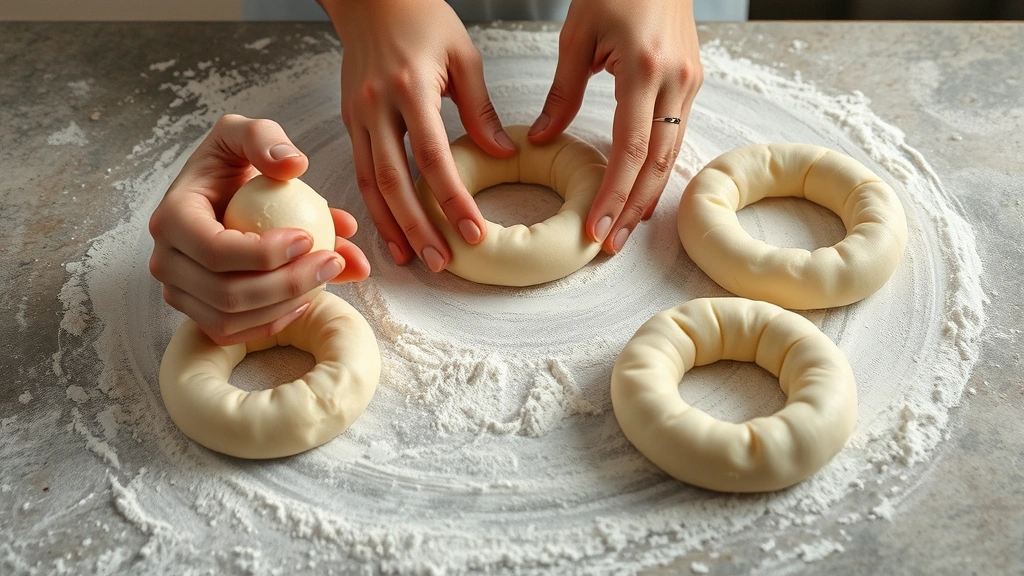
- Turn the dough out onto your work surface and gently punch it down. Divide into 8 equal pieces and roll each piece into a tight ball.
- Let the balls rest for 5 minutes, then poke your thumb through the center of each ball to create a hole. Gently stretch and shape each piece into a bagel ring, aiming for about 3-4 inches in diameter with a hole about 1 inch wide.
- Place shaped bagels on parchment paper, cover loosely with plastic wrap, and let proof at room temperature for 45 minutes to 1 hour. They should look slightly puffy but not doubled in size.
- While bagels proof, preheat your oven to 425°F. Fill a large pot with water, add honey or sugar and baking soda, and bring to a rolling boil. The baking soda helps develop the chewy crust.
- Working in batches of 2-3 bagels, carefully place them in the boiling water. They should sink initially, then float to the surface within 30 seconds.
- Once bagels float, boil for 1 minute on the first side, then flip and boil for another minute on the second side. Use a slotted spoon to gently turn and remove them.
- Place boiled bagels on a greased baking sheet. Brush with egg wash and immediately sprinkle with your desired toppings before the egg wash dries.
- Bake in the preheated oven for 20-25 minutes until deep golden brown and crispy on the outside. The bagels should sound hollow when tapped on the bottom.
- Remove from oven and let cool on a wire rack for at least 10 minutes before slicing and serving. For the fluffiest interior, wait until completely cooled before cutting.
Pro Tips
- The key to authentic bagels is using bread flour instead of all-purpose flour, which provides more protein and creates a chewier crumb. However, all-purpose flour works well too.
- Water temperature matters significantly—use water between 110-115°F for optimal yeast activation. Water that’s too hot will kill the yeast; water that’s too cold will slow fermentation.
- Don’t skip the boiling step, as this is what creates the characteristic bagel texture. The brief boil sets the exterior while keeping the interior soft and chewy.
- Baking soda in the boiling water is essential for developing that beautiful mahogany crust and authentic bagel flavor. It also helps prevent the bagels from absorbing too much water.
- Shape bagels tightly and uniformly so they cook evenly. If the hole is too small, it will close during boiling; if too large, the bagel will lose its shape.
- Fresh bagels are best consumed within 24 hours, but they can be frozen for up to 3 months. Thaw at room temperature and briefly toast before serving for a warm breakfast.
- Try making everything bagels with mixed toppings for variety, or keep some plain for creative sandwich combinations.
- For chocolate chip bagels, add chocolate chips to the dough during the final stages of kneading. For cinnamon raisin bagels, add raisins and cinnamon sugar swirls when shaping.
- The dough can be made ahead—after the first rise, you can refrigerate it overnight. Shape and proof the next day for fresh warm bagels in the morning.
- If your bagels spread too much during proofing, your dough may be too warm or overproofed. Reduce proofing time or try a cooler location.