
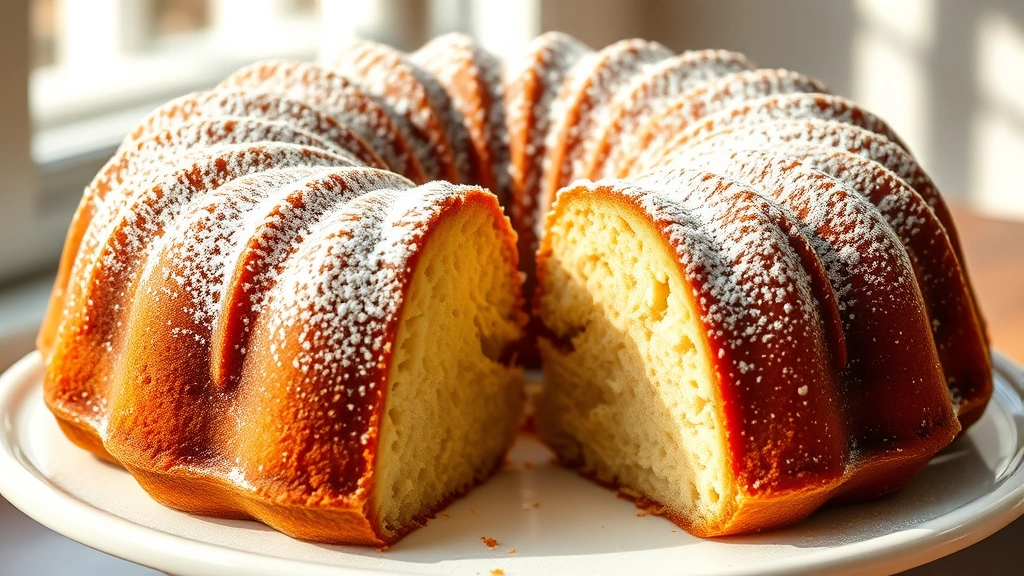
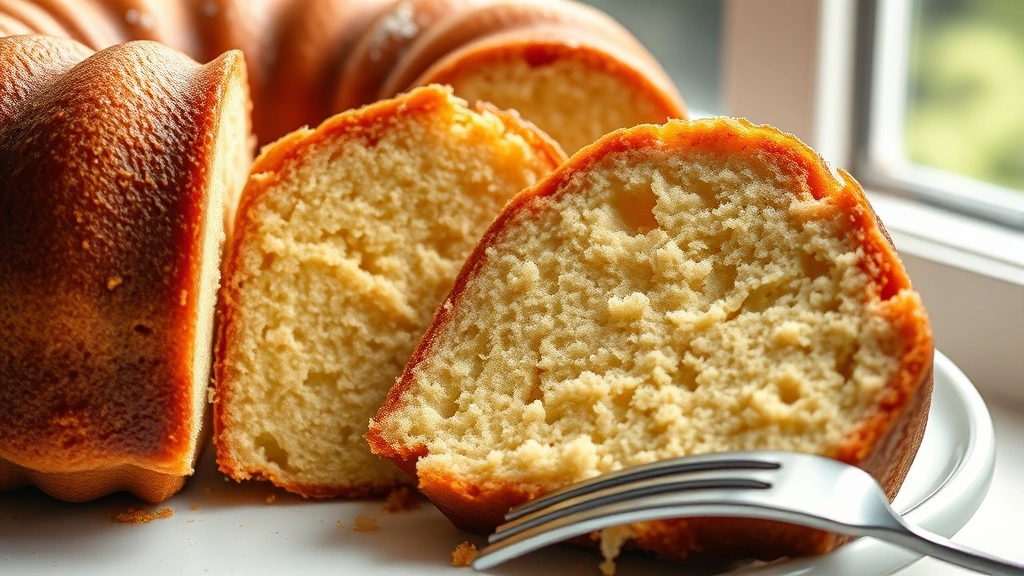
There’s something absolutely magical about a perfectly baked Bundt cake—that stunning golden exterior, the tender crumb, and the way it slices so beautifully. After years of testing and refining, I’m thrilled to share what I believe is truly the best Bundt cake recipe ever. This cake is incredibly moist, has the most delicate texture, and stays fresh for days. It’s foolproof enough for beginners but impressive enough to serve at your fanciest gatherings.
What makes this Bundt cake truly special is the combination of careful ingredient selection and proper technique. I use a mixture of butter and oil to ensure moisture and tenderness, plus a touch of sour cream for that signature tang and dense crumb. The secret to avoiding that dreaded tunneling that plagues so many Bundt cakes is proper mixing technique and not opening the oven door during baking. I’ve tested this recipe countless times, and it consistently delivers a cake that’s moist in the center, perfectly browned on the edges, and releases beautifully from the pan.
This versatile Bundt cake works wonderfully on its own with just a dusting of powdered sugar, or you can dress it up with a simple glaze, cream cheese frosting, or fresh berries. It’s perfect for brunch gatherings, holiday celebrations, or simply because you deserve a slice of something delicious. The recipe also scales beautifully, and you can customize the flavors by adding extracts, citrus zest, or even swirling in cinnamon sugar.
If you’re looking for other impressive desserts to add to your rotation, you might enjoy exploring our collection of citrus-forward recipes. For more baking inspiration and techniques, check out Bon Appétit’s baking guides and Serious Eats’ comprehensive baking section. I also recommend keeping a collection of go-to recipes handy for entertaining, and don’t miss New York Times Cooking’s tested recipes for additional inspiration.
Let me walk you through the process of creating this stunning cake. The key is following each step carefully, measuring your ingredients accurately, and giving yourself plenty of time for proper mixing and baking. This isn’t a rushed recipe—it’s one to savor and enjoy creating.
Ingredients
- 1 cup (2 sticks) unsalted butter, softened to room temperature
- ½ cup neutral oil such as canola or vegetable oil
- 2 cups granulated sugar
- 4 large eggs, room temperature
- 1 cup sour cream, room temperature
- ½ cup whole milk, room temperature
- 2 teaspoons vanilla extract
- ½ teaspoon almond extract (optional but recommended)
- 2¼ cups all-purpose flour
- ½ teaspoon baking soda
- ¼ teaspoon baking powder
- 1 teaspoon salt
- Non-stick cooking spray or butter for greasing the Bundt pan
- 1 tablespoon flour for dusting the pan
Instructions
- Preheat your oven to 325°F. This lower temperature ensures even baking and prevents the outside from browning too quickly before the inside cooks through.
- Thoroughly prepare your Bundt pan by coating it generously with non-stick cooking spray, making sure to get into all the crevices and decorative details.
Dust the entire pan with 1 tablespoon of flour, tapping out excess. This extra step is crucial for ensuring your cake releases perfectly without sticking.
- In a medium bowl, whisk together the flour, baking soda, baking powder, and salt. Set aside.
- In the bowl of an electric mixer, combine the softened butter and oil on medium speed for about 1 minute until well blended and pale.
- Gradually add the sugar to the butter mixture, beating on medium speed for 3-4 minutes until the mixture is light, fluffy, and creamy. This step is essential for incorporating air into the batter.
- Add eggs one at a time to the sugar mixture, beating well after each addition and scraping down the bowl with a spatula. This ensures proper emulsification and even distribution.
- In a separate small bowl or measuring cup, whisk together the sour cream, milk, vanilla extract, and almond extract if using.
- Add the dry ingredients to the butter mixture in three additions, alternating with the sour cream mixture, beginning and ending with the dry ingredients.
Beat on low speed after each addition just until combined. Do not overmix, as this can develop gluten and result in a tough cake.
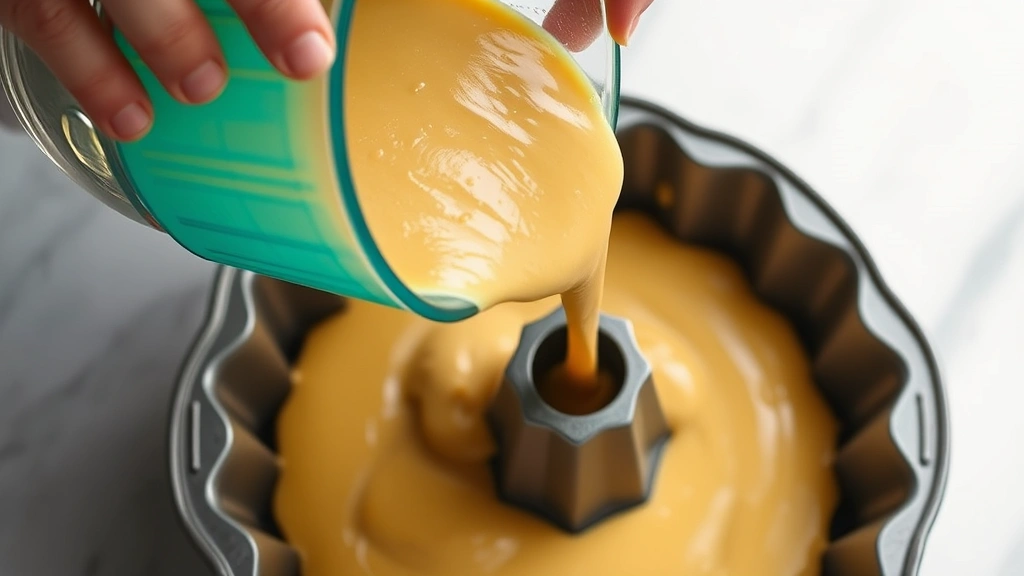
- Pour the batter evenly into the prepared Bundt pan, smoothing the top with an offset spatula or the back of a spoon.
- Place the Bundt pan on a baking sheet (this catches any potential drips) and transfer to the preheated 325°F oven.
- Bake for 50-60 minutes, until a toothpick or cake tester inserted into the thickest part comes out with just a few moist crumbs. The top should be golden brown.
- Remove the cake from the oven and let it cool in the pan for 15 minutes. This resting period is crucial—it allows the cake to set slightly while still being warm enough to release easily.
- Place a wire cooling rack or serving plate over the top of the Bundt pan and carefully invert the cake onto the rack.
Gently lift away the pan. If the cake doesn’t release immediately, run a thin knife around the edges and try again.
- Allow the cake to cool completely on the wire rack before glazing, frosting, or serving, approximately 1-2 hours.
- Once cooled, you can dust with powdered sugar, drizzle with a simple glaze, or top with your favorite frosting.
Pro Tips
Oven Temperature Matters: The 325°F temperature is lower than typical cake recipes because it allows the cake to bake evenly without the edges browning too quickly. This prevents doming and tunneling.
Don’t Skip the Bundt Pan Prep: Taking extra time to thoroughly coat the pan with cooking spray and dust it with flour ensures your beautiful cake releases perfectly without sticking or crumbling.
Mixing Technique: When alternating wet and dry ingredients, start and end with dry ingredients. This prevents overmixing and keeps the batter tender. Mix on low speed just until combined.
Testing for Doneness: Use the toothpick test—a few moist crumbs are okay, but you don’t want wet batter. If the toothpick comes out wet, bake for another 5 minutes and test again.
Cooling Process: Don’t skip the 15-minute cooling period in the pan. This allows the cake structure to set enough to release cleanly while still being warm enough to come out easily.
Storage: Store covered at room temperature for up to 3 days, or refrigerate for up to 5 days. This cake also freezes beautifully for up to 3 months when wrapped tightly in plastic wrap and foil.
Flavor Variations: Add 1-2 tablespoons of citrus zest (lemon, orange, or lime) to the batter. For spiced cake, add 1 teaspoon cinnamon, ½ teaspoon nutmeg, and ¼ teaspoon cloves. For chocolate, replace ¼ cup flour with cocoa powder.
Glazing Options: A simple glaze of 1 cup powdered sugar mixed with 2-3 tablespoons milk creates an elegant finish. For cream cheese frosting, beat 8 oz cream cheese with ½ cup butter, then add 3 cups powdered sugar and 1 teaspoon vanilla.
Making Ahead: You can prepare the dry ingredients in advance and store them in an airtight container. Mix the wet ingredients just before combining them with the dry ingredients.
Pan Size: This recipe is specifically designed for a standard 10-12 cup Bundt pan. Using a different size will affect baking time and results.