
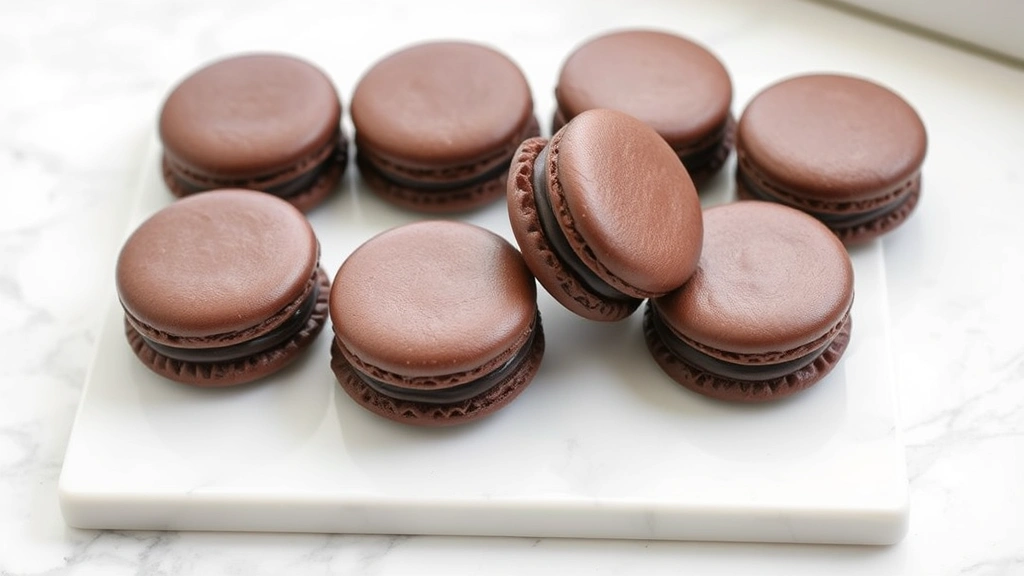
French macarons are the ultimate delicate dessert that looks intimidating but is absolutely achievable with the right technique and a little patience. These chocolate macarons feature a perfectly smooth almond meringue shell with a glossy dome and ruffled feet, paired with a luxurious chocolate ganache filling that melts on your tongue. Whether you’re baking for a special occasion or simply wanting to impress your friends, this chocolate macaron recipe will guide you through every step to create bakery-quality results at home.
The key to perfect macarons lies in understanding the French meringue method, which combines whipped egg whites with almond flour and powdered sugar in a specific way. Many home bakers struggle with macarons because they don’t properly fold the batter, resulting in shells that are either too thick, too thin, or completely hollow inside. I’ll walk you through the precise folding technique, the ideal batter consistency (what we call “lava-like”), and how to pipe them for those coveted ruffled feet that make macarons so visually stunning.
Making chocolate macarons at home requires precision and patience, but the reward is absolutely worth it. You’ll need an oven thermometer to ensure your oven is at the correct temperature, a kitchen scale for accurate measurements, and a stand mixer for whipping your egg whites to stiff peaks. The technique and precision required reminds me of other French cooking methods that demand attention to detail. Once you master this chocolate macaron recipe, you’ll find yourself making batch after batch, experimenting with different fillings and flavors.
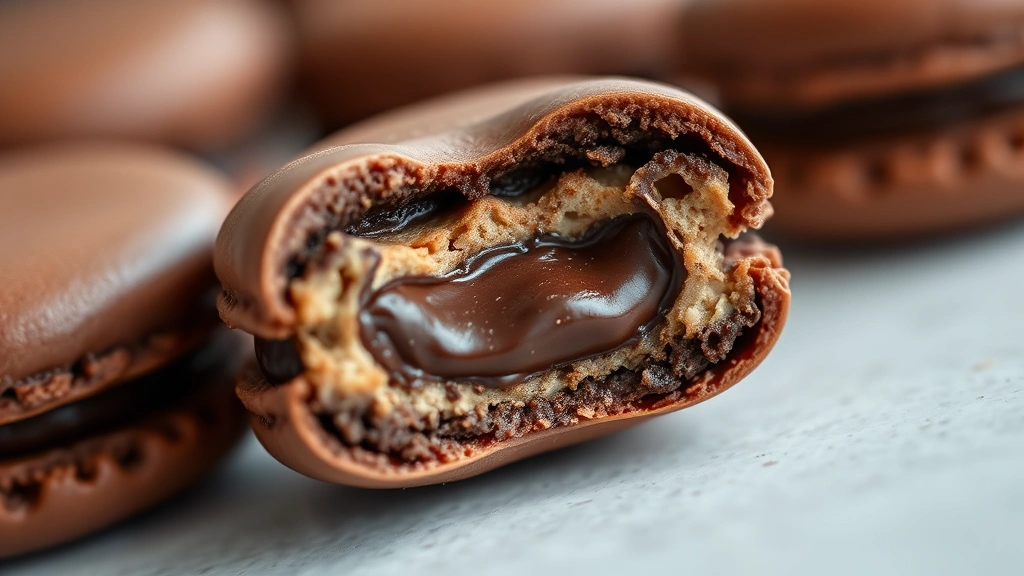
The chocolate ganache filling is equally important as the shells themselves. A proper macaron filling should be thick enough to hold its shape but soft enough to create that signature smooth bite. You can use dark chocolate, milk chocolate, or white chocolate depending on your preference. Some bakers prefer a buttercream filling, while others swear by jam or lemon curd for a more adventurous twist. For this recipe, I’m sharing my favorite dark chocolate ganache that pairs beautifully with the delicate almond shells.
One of the most common mistakes home bakers make is overmixing or undermixing the batter. The batter should be thick enough to hold its shape when piped, but fluid enough to create smooth shells without visible peaks. You want it to slowly flow together into a smooth circle within a few seconds of piping. I recommend practicing the fold technique with a small batch first, adding the dry ingredients gradually and mixing until you reach that perfect consistency.
Temperature control is absolutely crucial when making macarons. Your oven should be preheated for at least 15 minutes, and an oven thermometer is essential because many home ovens are inaccurate. The macarons need to bake at a relatively low temperature so they cook through without browning too much on top. If your macarons are browning too quickly, your oven is too hot. If they’re not developing feet, your oven might be too cool or your batter isn’t the right consistency.
Another pro tip: let your piped macarons rest on the baking sheet for 20-30 minutes before baking. This resting period allows a skin to form on top of the shells, which is essential for creating those beautiful ruffled feet during baking. During this time, the macarons will also dry out slightly, which helps them maintain their shape. Many bakers skip this step and end up with macarons that spread too much during baking.
The consistency and texture of your final macarons depends on getting every element right. The egg whites must be room temperature and completely free of any yolk. The almond flour should be finely ground and sifted to remove any lumps. Even small imperfections in your technique can result in macarons that don’t turn out quite right. This is why many professional pastry chefs spend years perfecting their macaron technique.
Once your macarons are baked and cooled, you can sandwich them together with ganache. The quality of your ingredients makes a huge difference in the final product. Use good quality chocolate for your ganache, and don’t skip on the butter. These small details elevate your homemade macarons from good to absolutely exceptional.
If you’re storing your macarons, keep them in an airtight container in the refrigerator for up to five days. They actually taste better after a day or two because the filling has time to set and the flavors meld together beautifully. You can also freeze unbaked macaron shells for up to a month, which makes it convenient to have them on hand for unexpected gatherings or when you want a quick dessert.
This chocolate macaron recipe is perfect for anyone looking to master a classic French pastry technique. Whether you’re a beginner or an experienced baker, these detailed instructions and pro tips will help you create macarons that look like they came straight from a Parisian patisserie. Don’t be discouraged if your first batch isn’t perfect – even experienced pastry chefs occasionally have a batch that doesn’t turn out quite right. The beauty of macarons is that each attempt teaches you something new about the technique.
For more inspiration on precision baking, check out Serious Eats for their detailed macaron troubleshooting guide. You might also enjoy Bon Appétit’s macaron variations for inspiration on different flavor combinations. For additional French pastry techniques, New York Times Cooking has excellent step-by-step video tutorials that show the folding technique in real time.
Ingredients
- 120 grams (about 1 cup) blanched almond flour
- 240 grams (2 cups) powdered sugar
- 100 grams (about 3 large) egg whites, room temperature
- 25 grams (2 tablespoons) granulated sugar
- 1/2 teaspoon vanilla extract
- 1/4 teaspoon salt
- 10 grams (2 tablespoons) unsweetened cocoa powder
- For the chocolate ganache filling:
- 170 grams (6 ounces) dark chocolate, finely chopped
- 120 milliliters (1/2 cup) heavy cream
- 15 grams (1 tablespoon) butter
- 1 tablespoon light corn syrup
- 1/4 teaspoon salt
Instructions
- Sift together the almond flour, powdered sugar, and cocoa powder in a large bowl, pressing the mixture through the sieve to remove any lumps. This step is crucial for smooth shells, so don’t skip it.
- In the bowl of a stand mixer fitted with the whisk attachment, combine the room temperature egg whites and salt. Whip on medium-high speed until foamy, about 1 minute.
- Gradually add the granulated sugar while continuing to whip. Continue beating until stiff, glossy peaks form, about 3-4 minutes total. The peaks should be completely stiff and not curl over when you lift the whisk.
- Add the vanilla extract and mix for just 10 seconds to combine.
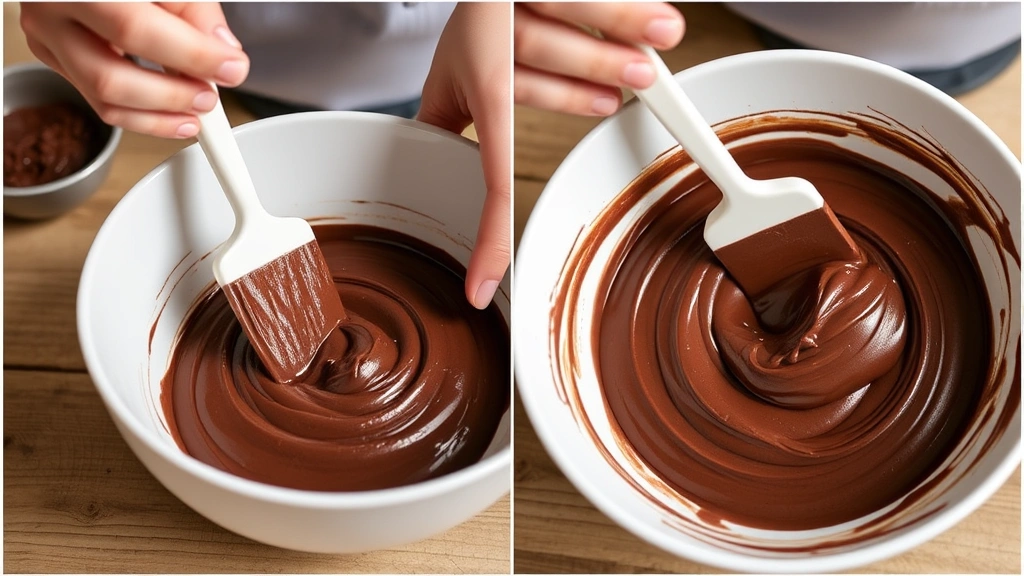
- Add the almond flour mixture to the egg whites in three additions. Using a rubber spatula, gently fold the mixture after each addition, using a J-motion from the bottom of the bowl upward.
- Continue folding gently until the batter reaches the correct consistency – it should be thick like lava and slowly flow together into a smooth puddle when you lift the spatula. This should take about 8-10 folds total after all dry ingredients are added. The batter should not have any visible peaks.
- Transfer the batter to a piping bag fitted with a round tip (size 12 or similar).
- Line two baking sheets with parchment paper. Pipe the batter into 1-inch circles, holding the piping bag perpendicular to the baking sheet and releasing pressure as you lift away.
- Let the piped macarons rest on the baking sheet at room temperature for 20-30 minutes. You should see a thin skin form on top of each macaron.
- Preheat your oven to 300°F (150°C) with an oven thermometer inside for at least 15 minutes to ensure accurate temperature.
- Once the macarons have rested and developed a skin, bake for 16-18 minutes. They should not brown significantly – they should remain pale with just a slight color.
- Remove the baking sheets from the oven and let the macarons cool completely on the baking sheet for 10 minutes before carefully peeling them off the parchment paper.
- While the macarons cool, prepare the chocolate ganache filling. Finely chop the dark chocolate and place it in a heatproof bowl.
- Heat the heavy cream until it just begins to steam (do not boil). Pour the hot cream over the chopped chocolate and let it sit for 1 minute without stirring.
- Add the butter, corn syrup, and salt to the chocolate and cream mixture.
- Stir gently until completely smooth and glossy. Let the ganache cool to room temperature, stirring occasionally, until it reaches a thick but spreadable consistency (about 10-15 minutes).
- Once the ganache has cooled and the macarons have completely cooled, transfer the ganache to a piping bag fitted with a small round tip.
- Pipe a small amount of ganache onto the flat side of a macaron shell. Top with another shell of similar size, flat side down, and press gently to create a sandwich.
- Repeat with remaining shells and ganache until all macarons are filled.
- Store the filled macarons in an airtight container in the refrigerator for up to 5 days. They taste best after sitting for 1-2 days as the filling sets and flavors develop.
Pro Tips
- Temperature is absolutely critical when making macarons. Use an oven thermometer to ensure your oven is actually at 300°F. Even a 25-degree difference can result in macarons that don’t turn out properly.
- Egg whites must be room temperature and completely free of any yolk or fat, which will prevent them from whipping properly. Separate eggs carefully and use them immediately after they reach room temperature.
- The almond flour must be finely ground blanched almond flour, not almond meal which contains the skin. Make sure to sift it thoroughly to remove any lumps that will create holes in your shells.
- The folding technique is where most home bakers struggle. Use a gentle J-motion from the bottom of the bowl upward to combine the dry ingredients without deflating the meringue. Stop folding as soon as the batter reaches the correct lava-like consistency.
- If your batter is too thick, the shells will have peaks and won’t spread into smooth circles. If it’s too thin, the macarons will spread too much and lose their shape. Practice makes perfect with this step.
- Never skip the resting period before baking. This crucial 20-30 minute rest allows a skin to form on top of the macarons, which is essential for creating those beautiful ruffled feet during baking.
- Ruffled feet are a sign of perfectly baked macarons. If your macarons don’t have feet, your batter consistency might be off, or your resting period wasn’t long enough.
- The chocolate ganache should be thick enough to hold its shape but not so thick that it’s difficult to pipe. If it becomes too firm, gently reheat it over a double boiler, stirring constantly.
- You can make macaron shells ahead of time and freeze them for up to one month. Thaw them before filling, and they’ll taste just as good as fresh shells.
- Different cocoa powders can affect the flavor and color of your shells. Use high-quality unsweetened cocoa powder for the best chocolate flavor without any bitter aftertaste.
- If macarons spread too much during baking, your oven temperature is too high or your batter is too thin. If they dome too much and don’t develop feet, your oven temperature might be too low.
- Humidity affects macaron making. On very humid days, you may need to add an extra minute or two to your resting period so the macarons develop a proper skin.