
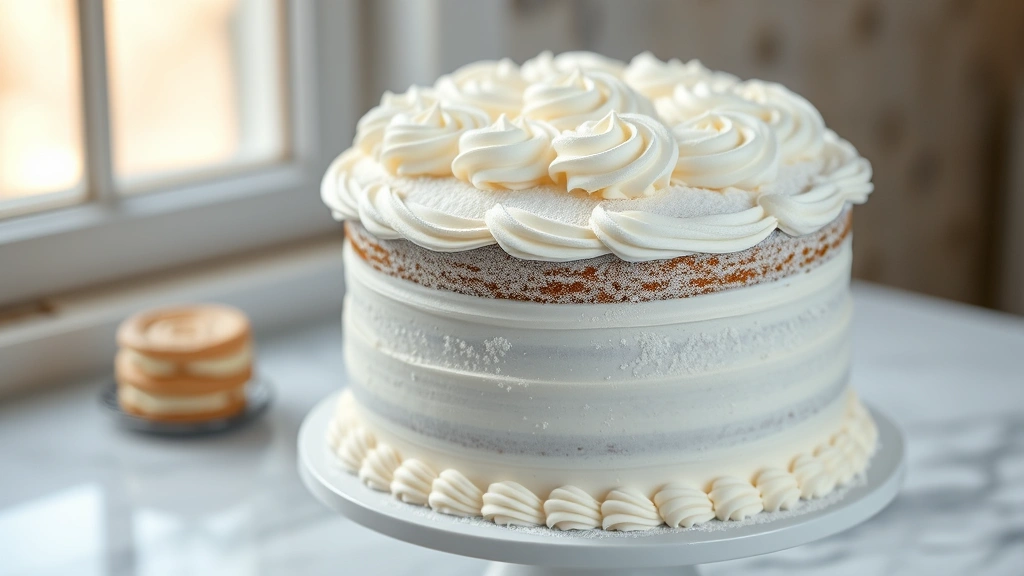
There’s something absolutely magical about powdered sugar icing – it’s the crowning glory that transforms ordinary baked goods into bakery-quality masterpieces. Whether you’re decorating cookies for a holiday party, frosting a layer cake for a special celebration, or topping cupcakes for an afternoon tea, this classic confection deserves to be perfected.
I’ve been making powdered sugar icing for years, and I’m thrilled to share my foolproof method that yields silky-smooth, perfectly pipeable frosting every single time. The secret isn’t complicated – it’s all about understanding the ratios, using quality ingredients, and knowing exactly how to incorporate them. This recipe is wonderfully versatile too. You can make it as thick as you need for piping intricate designs or thin it out for a delicate glaze that pools beautifully over cookies and cakes.
What I absolutely love about this icing is its simplicity. With just a handful of pantry staples, you can create something that tastes like it came straight from a professional pastry kitchen. The texture is impossibly smooth, the flavor is pure vanilla sweetness, and it sets up beautifully for that professional finish.
I always recommend having all your ingredients at room temperature before you start – this makes a tremendous difference in achieving that perfect consistency. Room temperature butter incorporates more smoothly, and your liquid ingredients blend seamlessly into the powdered sugar without creating lumps. I’ve also included several flavor variations so you can customize this basic recipe to match any theme or preference.
This versatile frosting works beautifully on everything from delicate sugar cookies to rich chocolate cakes. For more decorating inspiration, check out my guide on creative cake toppings. You can even pair this with savory applications – I’ve used similar techniques for decorative drizzles on special dishes.
For even more frosting expertise, check out Bon Appétit’s meringue buttercream guide or Serious Eats’ royal icing techniques. The New York Times also offers excellent frosting variations that can inspire your next creation.
Ingredients
- 3 cups powdered sugar, sifted
- 4 tablespoons unsalted butter, at room temperature
- 3-4 tablespoons heavy cream or whole milk
- 1 teaspoon pure vanilla extract
- ¼ teaspoon fine sea salt
- Optional: 1-2 tablespoons meringue powder for stability
- Optional food coloring or gel food coloring
Instructions
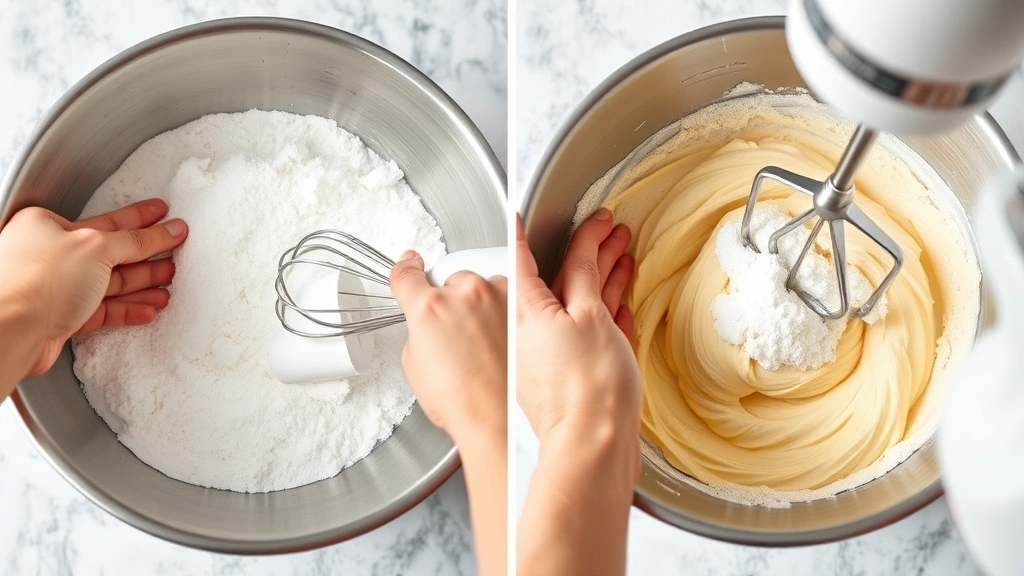
- Sift your powdered sugar into a large mixing bowl, breaking up any clumps that may have formed during storage. This step is crucial for achieving a smooth, lump-free icing that pipes beautifully.
- Add the room temperature butter to the powdered sugar and begin mixing on low speed with an electric mixer, allowing the butter and sugar to combine gradually to avoid creating a cloud of powdered sugar.
- Once the butter and sugar are mostly combined, add 3 tablespoons of heavy cream, the vanilla extract, and the fine sea salt.
- Continue mixing on low to medium speed for 2-3 minutes until the icing reaches a smooth, creamy consistency that holds stiff peaks.
- If your icing seems too thick for your desired application, add additional cream one teaspoon at a time, mixing well after each addition until you reach the perfect consistency.
- For a thicker icing suitable for piping decorative borders and flowers, keep the consistency stiff; for a thinner glaze that pools smoothly over cookies, add more cream gradually.
- If you plan to pipe this icing and want it to hold its shape for extended periods, fold in the meringue powder after reaching your desired consistency.
- Add food coloring if desired, mixing thoroughly until the color is completely uniform throughout the icing.
- Use immediately for best results, or store in an airtight container at room temperature for up to 3 days.

Pro Tips
- Start with room temperature butter – this is absolutely essential for achieving a smooth, lump-free frosting that incorporates properly
- Always sift your powdered sugar before using, as it compacts during storage and can create lumps in your finished icing
- The consistency of your icing depends on your application – use less cream for piping borders and details, more cream for a drizzle or glaze
- Heavy cream creates a richer, more luxurious icing than milk, but either works beautifully
- If you accidentally add too much liquid and your icing becomes too thin, simply add more powdered sugar one tablespoon at a time
- Meringue powder adds stability and helps the icing hold its shape longer, making it ideal for cookies that will be stacked or transported
- For chocolate icing, replace ½ cup powdered sugar with ½ cup unsweetened cocoa powder, sifted
- For lemon icing, replace the vanilla with ½ teaspoon lemon extract and use fresh lemon juice instead of cream
- For almond icing, replace vanilla with almond extract for a delicate, sophisticated flavor
- Store any unused icing in an airtight container at room temperature for up to 3 days, or refrigerate for up to 1 week
- If your icing becomes too soft after sitting, simply refrigerate for 15-20 minutes to firm it up
- For a vegan version, use dairy-free butter and oat cream or coconut cream
- This icing works best when applied to completely cooled baked goods
- If piping decorations, allow them to set at room temperature for at least 30 minutes before moving or stacking
Pingback: Quick & Tasty PF Chang Lettuce Wraps Recipe! – Simple Recipe Finder