
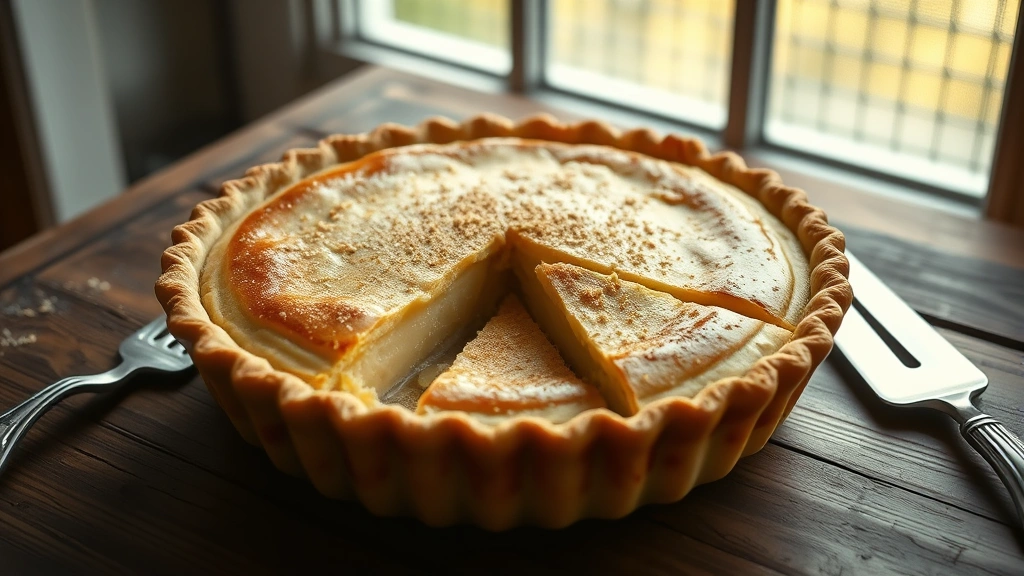
Vinegar pie is one of those charming, old-fashioned desserts that feels like it should be complicated, but honestly? It’s absolutely foolproof! This Southern classic has been passed down through generations, and for good reason. With just a handful of pantry staples—vinegar, butter, sugar, and eggs—you can create a pie that tastes like a dreamy cross between chess pie and lemon meringue. The magic happens in the oven when these simple ingredients transform into a silky, custardy filling with the most delicate tang.
I first discovered vinegar pie at my grandmother’s kitchen table, and I’ve been obsessed ever since. The beauty of this recipe is that it comes together in minutes, making it perfect for unexpected guests or when you need a showstopping dessert without the fuss. Unlike more temperamental pies, vinegar pie is incredibly forgiving—there’s no blind baking required, no finicky techniques, just pure, unadulterated simplicity that yields stunning results every single time.
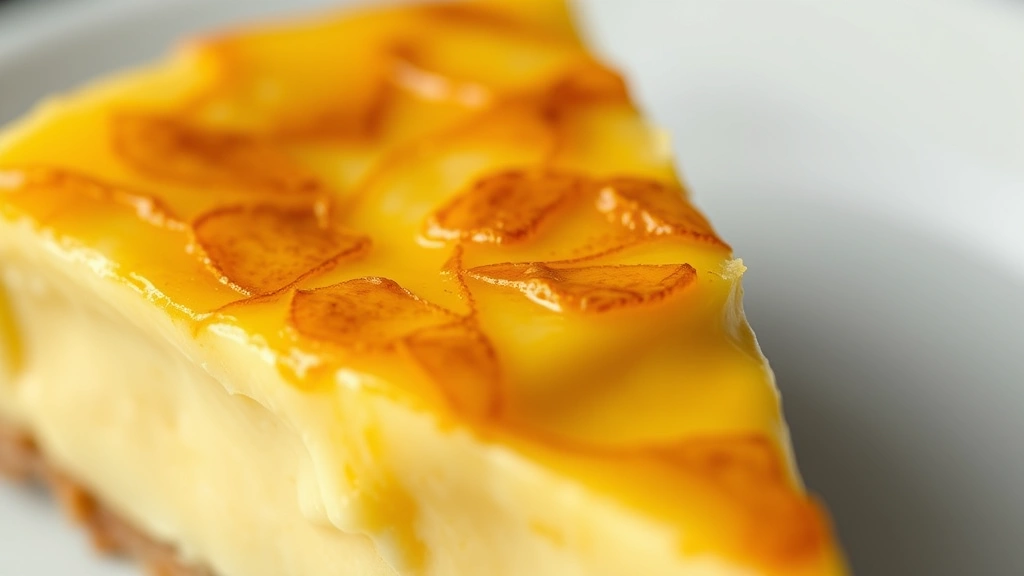
What makes this vinegar pie recipe the BEST? It’s all about balance. The filling achieves that perfect sweet-tart harmony, with a subtle complexity that keeps people guessing what that mysterious ingredient is. The crust stays buttery and crisp, while the filling sets up to a gorgeous golden color with those coveted little crackles on top. This is the kind of pie that makes you look like a baking genius, even though you barely tried.
Perfect for Sunday dinners, holiday tables, or just because you want something special, this homemade dessert recipe is truly versatile. Serve it warm with a scoop of vanilla ice cream, or enjoy it at room temperature with a cup of coffee. You can make it ahead, freeze it, or prepare the filling the night before—it’s that convenient. Whether you’re a seasoned baker or a complete novice, this vinegar pie recipe will become your new go-to dessert. Trust me, once you make it, you’ll be making it again and again.
I’ve tested this recipe dozens of times to ensure it’s absolutely foolproof, and I’m thrilled to share my secrets for achieving that perfect custard-like filling and golden, slightly crispy top. This isn’t just a recipe; it’s a little piece of culinary history that deserves a place on your table.
Ingredients
- 1 unbaked 9-inch pie crust (store-bought or homemade)
- 4 tablespoons unsalted butter, melted
- 1 1/2 cups granulated sugar
- 3 large eggs, room temperature
- 1 tablespoon cornstarch
- 1/2 teaspoon salt
- 1/3 cup white vinegar (or apple cider vinegar for deeper flavor)
- 1 teaspoon vanilla extract
- 1/4 cup whole milk or heavy cream
- 1/4 teaspoon nutmeg (optional, for garnish)
- Pinch of sea salt (optional, for garnish)
Instructions
- Preheat your oven to 350°F. If using a frozen pie crust, allow it to thaw slightly at room temperature for about 5 minutes—you want it pliable enough to work with but still cold.
- In a large mixing bowl, whisk together the melted butter and granulated sugar until well combined. The mixture should be slightly pale and well-incorporated.
- Add the room temperature eggs one at a time, whisking thoroughly after each addition to ensure the mixture is light and fluffy. This helps create that signature silky texture in the filling.
- Sprinkle the cornstarch and salt over the egg mixture and whisk until completely smooth. These ingredients help stabilize the filling and prevent it from being too runny.
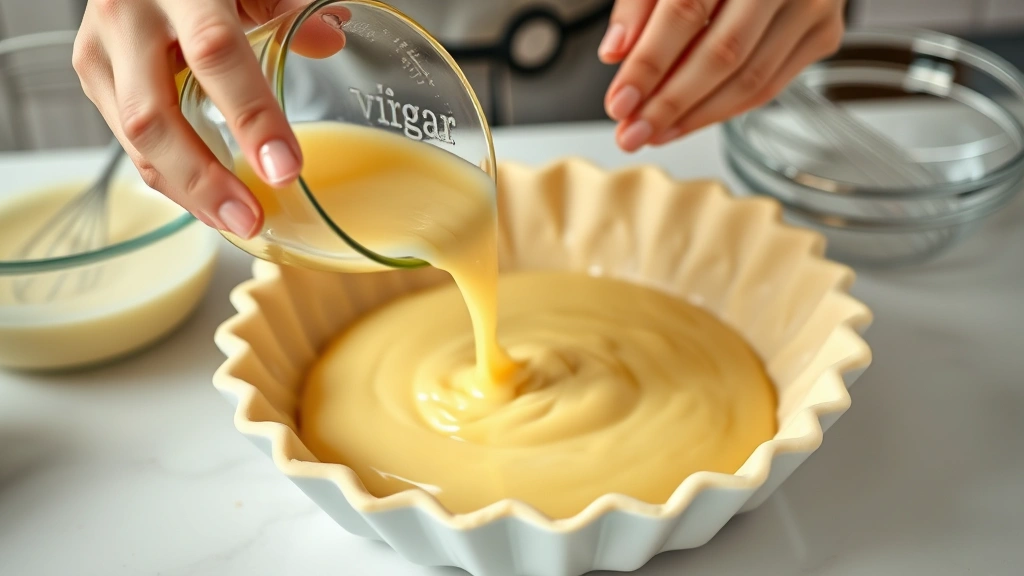
- Pour in the white vinegar and vanilla extract, whisking continuously until the filling is completely smooth and homogeneous. The batter should look slightly thick and creamy.
- Gently stir in the milk or heavy cream, folding it in carefully to maintain the airiness you’ve built into the mixture. Don’t overmix at this stage.
- Place your unbaked pie crust on a baking sheet (this makes it easier to transfer in and out of the oven). Pour the vinegar filling directly into the crust, filling it about three-quarters full.
- Carefully transfer the pie to the preheated 350°F oven. Bake for 40-45 minutes, until the filling is set but still slightly jiggly in the very center—about a 2-inch circle in the middle should have a gentle wobble.
- The top should be golden brown with some slight crackles. If the crust edges are browning too quickly, tent with foil for the final 15 minutes of baking.
- Remove the pie from the oven and let it cool completely on a wire rack. This usually takes about 2-3 hours. The filling will continue to set as it cools.
- For a beautiful finishing touch, dust the cooled pie with a light sprinkle of nutmeg and sea salt just before serving. This enhances the sophisticated flavor profile.
- Slice with a sharp knife dipped in hot water (wiping between cuts) for clean, beautiful slices. Serve at room temperature or slightly warmed, with vanilla ice cream or whipped cream on the side.
Pro Tips
Vinegar Options: While white vinegar is traditional, you can experiment with apple cider vinegar, white wine vinegar, or even rice vinegar for different flavor profiles. Each brings its own subtle complexity to the dish.
Crust Matters: A good quality pie crust is essential. If making from scratch, ensure your butter is cold and handle the dough minimally. You can also use a quality store-bought option for convenience without compromising taste.
Don’t Overbake: The key to this pie’s success is not overbaking. You want that center to jiggle just slightly—it will firm up perfectly as it cools. Overbaking results in a dry, cracked filling that’s less desirable.
Make-Ahead Option: Prepare the filling the night before and refrigerate it in an airtight container. Pour it into your crust and bake the next day. You may need to add 2-3 minutes to the baking time if baking from cold.
Storage: Store your cooled vinegar pie in an airtight container at room temperature for up to 3 days, or refrigerate for up to 5 days. You can also freeze the baked pie for up to 2 months—thaw overnight in the refrigerator before serving.
Serving Suggestions: This pie pairs beautifully with vanilla ice cream, fresh whipped cream, or even a dollop of crème fraîche. For a more decadent option, try a brown butter ice cream or salted caramel sauce. Consider serving it alongside bright pickled elements or a fresh salad for contrast.
Flavor Enhancements: Add a teaspoon of lemon zest for brightness, or include a pinch of cinnamon and cloves for a spiced version. Some bakers love adding a splash of bourbon or sherry for depth.
Troubleshooting: If your filling looks curdled, it may have gotten too warm. Make sure all ingredients are at room temperature. If the crust puffs up, prick it gently with a fork halfway through baking.
Nutritional Information: This is a rich, indulgent dessert—one slice is quite satisfying. Perfect for portion control and special occasions.
Traditional Twist: For authentic Southern preparation, some cooks prefer a slightly more vinegary filling. Increase vinegar to 1/2 cup if you prefer a tangier result, though start with the suggested amount and adjust to taste.