
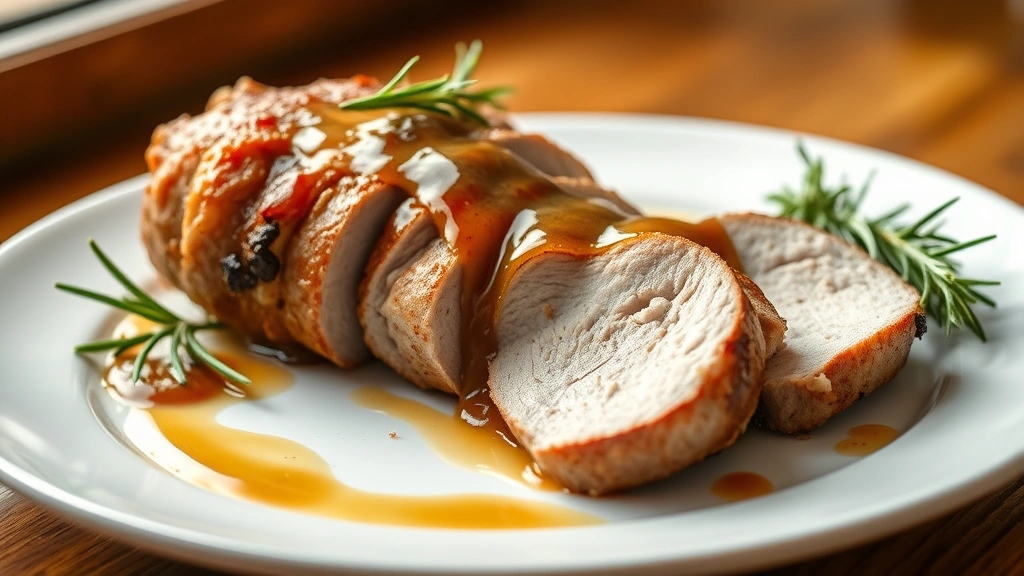
There’s something absolutely magical about a perfectly roasted pork loin – it’s elegant enough for a dinner party, yet simple enough for a weeknight meal. This recipe has been my go-to for years, and I’m thrilled to share all my secrets with you today.
A beautiful pork loin roast is all about balance: a golden, crispy exterior that gives way to incredibly juicy, tender meat inside. The key is understanding proper seasoning, temperature control, and resting time. I’ve learned from countless kitchen experiments that most people either underseason their pork or overcook it, and this recipe solves both problems.
What I absolutely love about this dish is its versatility. You can serve it with elegant sides like creamy Alfredo sauce for a fancy presentation, or pair it with something lighter like pickled red onions for brightness and tang. The roast itself is the star, but these accompaniments really elevate the entire meal.
I learned many of my roasting techniques from Serious Eats’ pork roasting guide, and I’ve adapted them to create what I truly believe is the most foolproof method. The magic happens in three stages: proper seasoning and preparation, high-heat searing, and gentle oven roasting to the perfect temperature.
The beauty of pork loin is that it’s a lean cut, which means it requires careful attention to avoid drying out. But when you follow this method – especially the crucial step of bringing the meat to room temperature first and using a meat thermometer – you’ll achieve restaurant-quality results every single time. I promise you, once you master this recipe, you’ll be making it constantly. Your family will be asking for it, and your dinner guests will be impressed. Let’s get started!
For more inspiration on how to prepare proteins perfectly, check out this bacon carbonara recipe which teaches excellent technique with pork products. You might also enjoy exploring creamy pasta dishes that pair beautifully with leftover pork loin, and don’t forget that chickpea salad makes a wonderful fresh side to balance the richness of the roast.
Ingredients
- 1 bone-in or boneless pork loin roast (3-4 pounds)
- 3 tablespoons kosher salt
- 2 tablespoons freshly ground black pepper
- 2 tablespoons garlic powder
- 1 tablespoon onion powder
- 2 teaspoons dried thyme
- 2 teaspoons dried rosemary
- 1 teaspoon paprika
- 3 tablespoons olive oil, divided
- 4 cloves fresh garlic, minced
- 1 cup chicken or vegetable broth
- 1/2 cup dry white wine (optional but recommended)
- 2 tablespoons butter
- Fresh rosemary and thyme sprigs for garnish
- Lemon slices for serving
Instructions
- Remove your pork loin from the refrigerator 45 minutes to 1 hour before cooking. This is absolutely critical – allowing the meat to come to room temperature ensures even cooking throughout. A cold center will cook at a different rate than the exterior, leading to uneven doneness.
- While the pork is coming to temperature, preheat your oven to 425°F (220°C). Position your rack in the middle of the oven.
- In a small bowl, combine the kosher salt, black pepper, garlic powder, onion powder, dried thyme, dried rosemary, and paprika. Mix thoroughly with a fork, breaking up any clumps.
- Pat the pork loin completely dry with paper towels. This step is non-negotiable for achieving that beautiful golden crust. Any moisture on the surface will steam rather than sear.
- Generously rub the entire pork loin – all sides and ends – with your seasoning mixture. Don’t be shy here; this is your flavor foundation. Make sure every surface is well-coated.
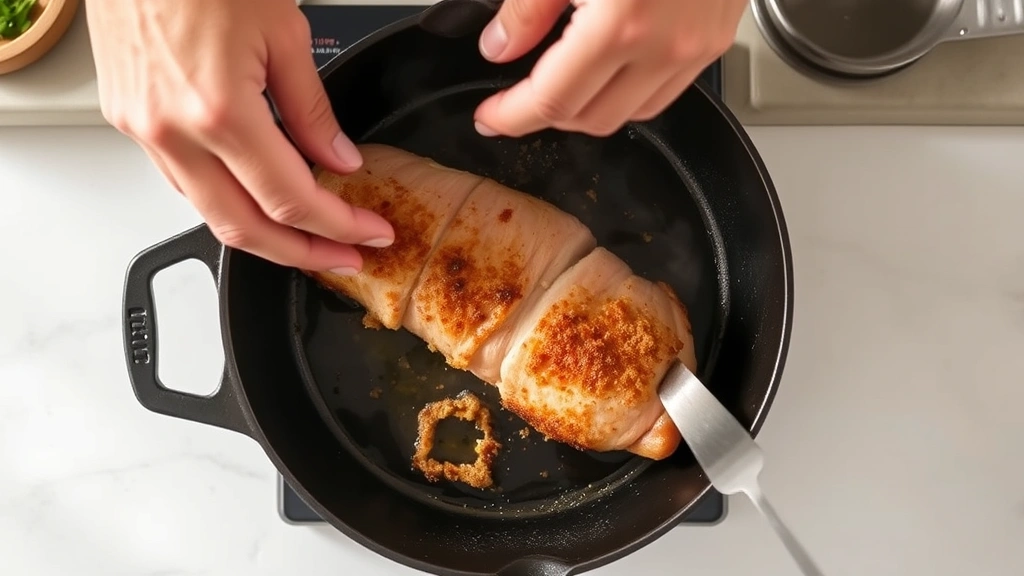
- Heat 2 tablespoons of olive oil in a large oven-safe skillet (cast iron works beautifully) over medium-high heat. You want the oil to shimmer and be almost smoking.
- Once the oil is hot, carefully place the pork loin in the skillet. Sear for 3-4 minutes without moving it, allowing a golden crust to develop. This creates what we call the Maillard reaction, which builds deep, savory flavor.
- Turn the pork and sear the second long side for 3-4 minutes until golden. Then sear the two short ends for about 2 minutes each, rotating carefully. You’re building a crust on all sides.
- Remove the skillet from heat. Add the minced fresh garlic to the hot oil around the pork, stirring gently for about 30 seconds until fragrant.
- Pour the chicken broth and white wine (if using) around the pork, not over it. Add the fresh rosemary and thyme sprigs.
- Transfer the skillet to your preheated 425°F oven. Roast for 20-25 minutes for medium-rare (around 145°F internal temperature), or 25-30 minutes for medium (around 160°F). Start checking with a meat thermometer at the 20-minute mark.
- Insert your meat thermometer into the thickest part of the roast without touching bone. For juicy, tender pork, aim for 145°F (63°C) for medium-rare, which is the USDA safe temperature and yields the most tender results.
- Once your pork reaches the target temperature, remove it from the oven and transfer it to a cutting board. This is the crucial resting step – let it rest for 10-15 minutes tented loosely with foil.
- While the pork rests, place the skillet back on the stovetop over medium heat. The pan drippings are liquid gold. Add 2 tablespoons of butter and stir, scraping up any browned bits stuck to the bottom of the pan.
- Simmer the pan sauce for 3-5 minutes until it reduces slightly and becomes more concentrated in flavor. Season with a pinch of salt and pepper to taste. This creates a simple but elegant sauce.
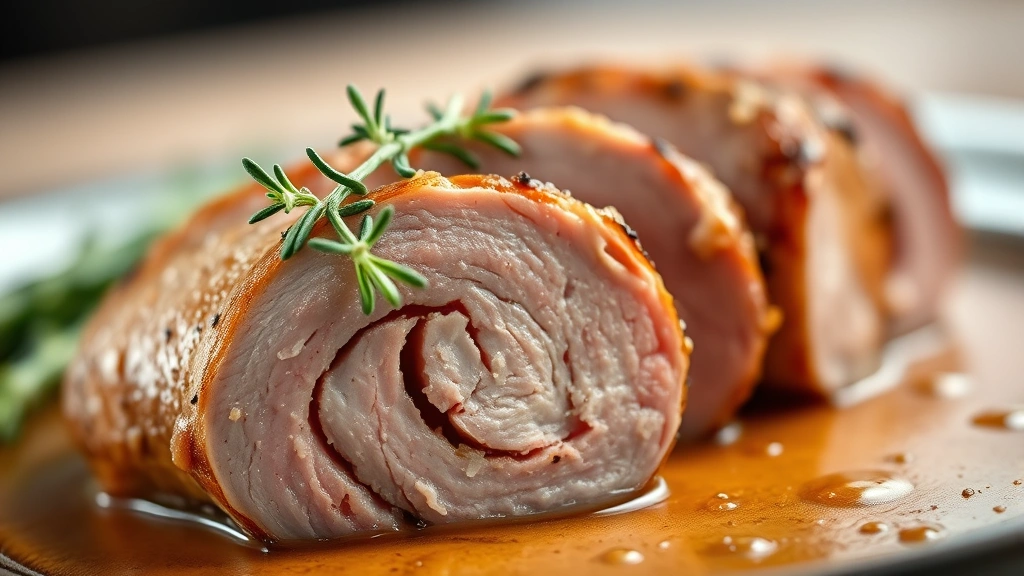
- Slice the pork loin against the grain into half-inch thick slices. This is important – slicing against the grain makes each bite more tender.
- Arrange the sliced pork on a serving platter, drizzle with the warm pan sauce, and garnish with fresh herbs and lemon slices. Serve immediately while still warm.
Pro Tips
Investment in a meat thermometer: This is the single best tool for perfect pork every time. Don’t rely on timing alone – different ovens vary, and pork loin thickness varies. A simple instant-read thermometer takes the guesswork out completely.
Why this temperature matters: The USDA safe temperature for pork is 145°F, which actually yields incredibly juicy, tender meat – not the dry, overcooked pork of decades past. Modern pork farming practices mean we can confidently cook it to this temperature.
Cast iron is your friend: An oven-safe skillet, particularly cast iron, is ideal for this recipe. It retains heat beautifully for that perfect sear and transfers seamlessly from stovetop to oven. If you don’t have cast iron, any oven-safe skillet works fine.
Don’t skip the searing step: The golden crust created by searing is where much of the flavor comes from. It takes only 15 minutes total and makes an enormous difference in the final dish.
Pan sauce is simple elegance: Those browned bits stuck to the bottom of your pan (called fond) are pure umami flavor. Deglazing with wine and broth, then finishing with butter creates a restaurant-quality sauce with minimal effort.
Slicing technique matters: Always slice pork against the grain. This shortens the muscle fibers, making each bite tender. If you slice with the grain, you’re biting through long muscle fibers, which feels tougher regardless of how perfectly you cooked it.
Leftovers are delicious: This roast is wonderful served cold or at room temperature the next day, making it perfect for sandwiches or salads. Store wrapped tightly in the refrigerator for up to 4 days.
Seasoning flexibility: While this blend is my favorite, don’t be afraid to customize. Cajun spice blends, Italian herb blends, or even Asian-inspired seasonings work beautifully with pork loin.
Wine note: The white wine is optional but truly elevates the pan sauce. If you prefer not to use wine, simply increase the broth to 1.5 cups.