
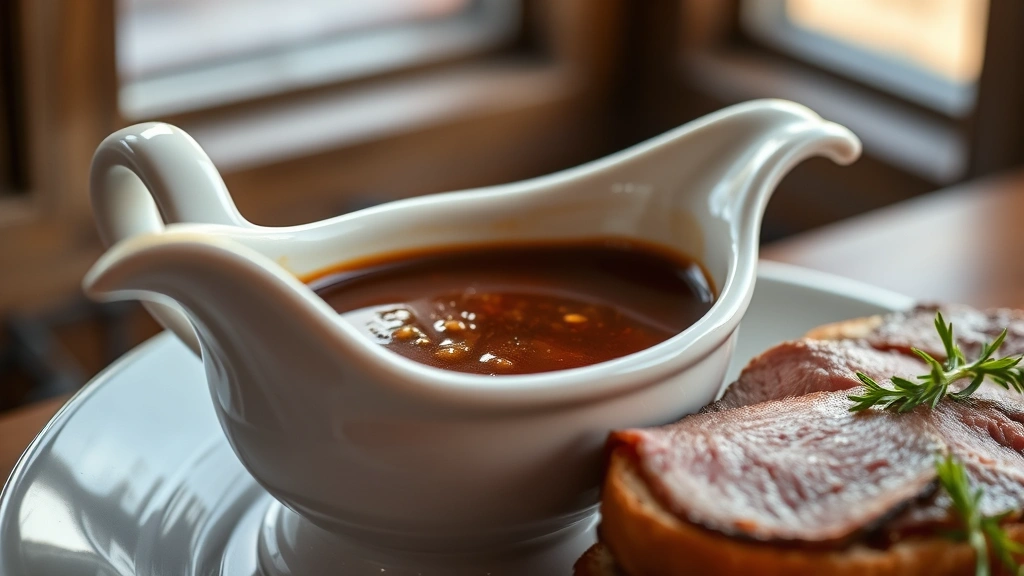
An au jus recipe is one of those kitchen skills that feels fancy but honestly couldn’t be easier to master. This French classic—which literally means “with juice”—is just a deeply flavorful beef broth that transforms simple sandwiches and roasted meats into something restaurant-worthy. The best part? You can have it ready in just 15 minutes, and I’m going to show you exactly how.
I grew up watching my grandmother make au jus for family dinners, and I remember thinking it required some kind of culinary magic. Turns out, it’s just beef stock, pan drippings, and a few simple seasonings coming together in perfect harmony. Once you understand the basic technique, you’ll find yourself making it constantly—for dipping sandwiches, serving alongside prime rib, or elevating a simple weeknight dinner.
Jump To Section
Why This Recipe Works
The magic of this au jus recipe lies in building layers of flavor quickly and efficiently. We’re using beef broth as our foundation, which means you skip the hours of simmering required for traditional stock-based versions. The umami-rich broth gets boosted with pan drippings (if you have them), Worcestershire sauce, and a touch of garlic and herbs that tie everything together.
What makes this method different from complicated versions is the balance. Too many recipes overcomplicate things with cornstarch slurries or excessive reduction time. This approach respects your schedule while delivering that rich, beefy flavor you crave. Additionally, the quick cooking time means the flavors stay bright and fresh rather than becoming one-dimensional from hours of simmering.
Ingredient Tips & Substitutions
Starting with quality beef broth makes all the difference here. I recommend using low-sodium store-bought broth or, if you have homemade beef stock on hand, even better. The beauty of this recipe is its flexibility—you’re not locked into one specific ingredient list.
For the umami punch, Worcestershire sauce is traditional, but soy sauce works beautifully as a substitute if that’s what you have in your pantry. A splash of balsamic vinegar adds subtle sweetness and depth, though you can skip it entirely if you prefer a cleaner beef flavor. Fresh garlic is ideal, but garlic powder works in a pinch—just use about a quarter teaspoon since it’s more concentrated than fresh.
The herbs are flexible too. Fresh thyme is my go-to, but dried thyme, rosemary, or even a bay leaf will work wonderfully. Some people love adding a pinch of red pepper flakes for subtle heat, while others stick to the classics. Meanwhile, if you’re making this after roasting beef, those precious pan drippings are liquid gold—don’t skip them, as they add incredible flavor that’s impossible to replicate.
If you’re serving this alongside a steak quesadilla or a smash burger, you might want to adjust the seasoning slightly to complement those dishes. For instance, the steak applications might benefit from a touch more Worcestershire, while burger pairings could use a whisper of smoked paprika.
Serving Suggestions & Pairings
The classic pairing is French dip sandwiches—pile thinly sliced roast beef on a crusty baguette and dip away. But honestly, this sauce deserves so much more credit. Serve it alongside a steak salad for a gourmet touch, or drizzle it over mashed potatoes for pure comfort food bliss.
Au jus is phenomenal with prime rib, beef tenderloin, or any roasted beef dish. However, don’t limit yourself to beef alone. This gravy-like sauce works wonderfully with roasted lamb, and I’ve even used it to elevate a simple vegetable beef soup. The concentrated beef flavor makes it perfect for dipping bread, spooning over rice, or using as a base for other sauces.
Additionally, if you’re preparing a special dinner, consider serving au jus in a small gravy boat alongside your main dish. It looks elegant, smells incredible, and guests will be genuinely impressed. For a fun twist, try it with smashburger sauce as a side option—some people love having both options available.
Storage & Make-Ahead Tips
One of the best things about this au jus recipe is that it actually improves when made ahead. The flavors meld beautifully over a day or two, making it perfect for meal planning. Store it in an airtight container in the refrigerator for up to five days, or freeze it for up to three months.
When reheating, simply warm it gently over medium-low heat, stirring occasionally. If it thickens too much during storage, thin it with a splash of beef broth or water. For freezing, I recommend using ice cube trays—this way, you can grab exactly the amount you need for future recipes without thawing a whole container.
Want to make this even easier? Prepare it the morning of your dinner party, store it in the fridge, and simply reheat it while your main dish rests. This approach means less last-minute stress and more time enjoying your guests. Furthermore, having homemade au jus on hand in your freezer means you’re always prepared for impromptu sandwich nights or when you want to elevate a simple meal into something special.
Pro Tips for Perfect Au Jus Every Time
Temperature matters more than you might think. Keep your heat at medium or medium-high—never let it boil aggressively. A gentle simmer allows the flavors to meld without reducing too quickly or becoming bitter from over-concentration. This restraint is what separates homemade au jus from watered-down versions.
Taste as you go. After combining your ingredients, give it a minute to warm through, then taste and adjust seasonings. Need more saltiness? A few dashes of Worcestershire sauce. Want deeper beef flavor? Add a splash more broth. This is your chance to make it perfect for your palate.
For extra richness, some people add a knob of butter at the end, whisking it in just before serving. This creates a silkier mouthfeel and adds luxurious depth. Meanwhile, if you want to deepen the color and intensify the beef flavor, a teaspoon of tomato paste works wonders—just whisk it in thoroughly so there are no lumps.
Consider this: if you’ve just roasted beef and have beautiful pan drippings, deglaze your roasting pan with beef broth directly over medium heat, scraping up all those flavorful browned bits. Pour this into your au jus and you’ve just created something even more special. According to Serious Eats, this deglazing technique is a professional secret that home cooks often overlook.
If you’re serving this alongside something like stir fry sauce, you’ll notice how different these flavor profiles are—which makes having both in your recipe arsenal incredibly valuable. This au jus recipe is your reliable classic, while those other sauces give you options for international exploration.
The beauty of mastering an au jus recipe is that it opens doors to so many possibilities. French dip sandwiches, elegant dinner parties, casual weeknight meals—this versatile sauce does it all. Once you make it a few times, you’ll find yourself creating it from muscle memory, impressing everyone at your table with what feels like effortless sophistication. That’s the real magic of this recipe: it’s simple enough for beginners but impressive enough for any occasion.
Ingredients
- 2 cups beef broth (preferably low-sodium)
- 2 tablespoons pan drippings or beef fat (optional but recommended)
- 1 tablespoon Worcestershire sauce
- 2 cloves fresh garlic, minced
- 1 teaspoon fresh thyme (or ½ teaspoon dried thyme)
- ½ teaspoon salt
- ¼ teaspoon black pepper
- 1 bay leaf
- 1 teaspoon balsamic vinegar (optional)
- 1 tablespoon butter (optional, for extra richness)
Instructions
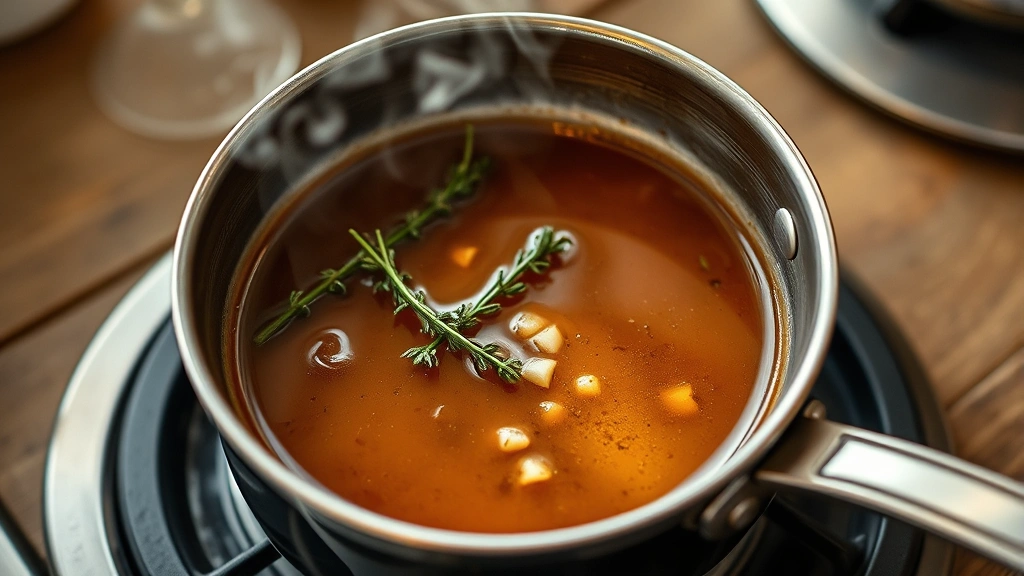
- If you have pan drippings from roasted beef, pour them into a small saucepan over medium heat. If not, simply add the beef broth directly to the saucepan and proceed to the next step.
- Add the beef broth to the saucepan with the pan drippings. Stir well to combine, scraping up any flavorful browned bits from the bottom if they’re present.
- Add the minced garlic and fresh thyme to the broth. Stir gently and let it warm for about 1 minute, allowing the garlic to become fragrant without browning.
- Pour in the Worcestershire sauce and add the bay leaf. Season with salt and pepper to taste. Stir thoroughly to ensure all ingredients are evenly distributed.
- Bring the mixture to a gentle simmer over medium heat. Let it simmer for 5-7 minutes, allowing the flavors to meld together beautifully.
- If you’re using balsamic vinegar, add it now and stir well. Taste the au jus and adjust seasonings as needed—add more Worcestershire if you want deeper umami, or more salt and pepper to your preference.
- If desired, whisk in the butter for a silkier, more luxurious sauce. Remove from heat immediately after adding butter.
- Remove the bay leaf from the saucepan. Pour the au jus into a serving vessel or gravy boat and serve immediately alongside your roasted beef, French dip sandwich, or desired dish.
- If you’re making this ahead, simply cool it to room temperature, transfer to an airtight container, and refrigerate until ready to use. Reheat gently over medium-low heat before serving.
Pro Tips
The key to great au jus is using quality beef broth as your foundation. While store-bought broth works perfectly fine for this quick recipe, homemade beef stock will give you even richer flavor. If you only have bouillon cubes on hand, dissolve them according to package directions—they work in a pinch, though the flavor won’t be quite as deep.
Pan drippings are truly the secret ingredient here. When you roast beef, those caramelized bits at the bottom of your pan contain concentrated beef flavor that’s impossible to replicate. If you’re making au jus without having just roasted beef, you can still create amazing results using just broth, but consider adding a teaspoon of tomato paste for extra depth and color.
Worcestershire sauce is traditional, but it does contain anchovies, which some people prefer to avoid. Soy sauce makes an excellent substitute—use the same amount and you’ll get similar umami richness with a slightly different flavor profile. Meanwhile, if you’re making this for someone avoiding gluten, look for tamari or certified gluten-free Worcestershire sauce.
The cooking time matters more than you might think. Simmering for 5-7 minutes allows the garlic and herbs to infuse the broth without becoming bitter or overpowering. Going longer than 10 minutes of total cooking time can cause the sauce to reduce too much and become overly concentrated. Keep it gentle and brief.
Storage is simple and flexible. Refrigerate for up to five days in an airtight container, or freeze for up to three months. The sauce will thicken slightly when chilled due to any fat content, but it returns to the perfect consistency when gently reheated over medium-low heat. Add a splash of broth if it becomes too thick during storage.
For a restaurant-quality presentation, serve au jus in a small gravy boat alongside your main dish. This allows guests to add as much or as little as they prefer, and it looks absolutely elegant on the table. Additionally, having extra on hand means people can use it for dipping bread or adding to side dishes like mashed potatoes or roasted vegetables.
If you’re meal prepping, this sauce actually improves over a day or two as the flavors continue to meld together. Make it the day before your dinner party, store it properly, and simply reheat before serving. This advance preparation takes pressure off your cooking timeline and ensures everything is perfectly ready when your guests arrive.