
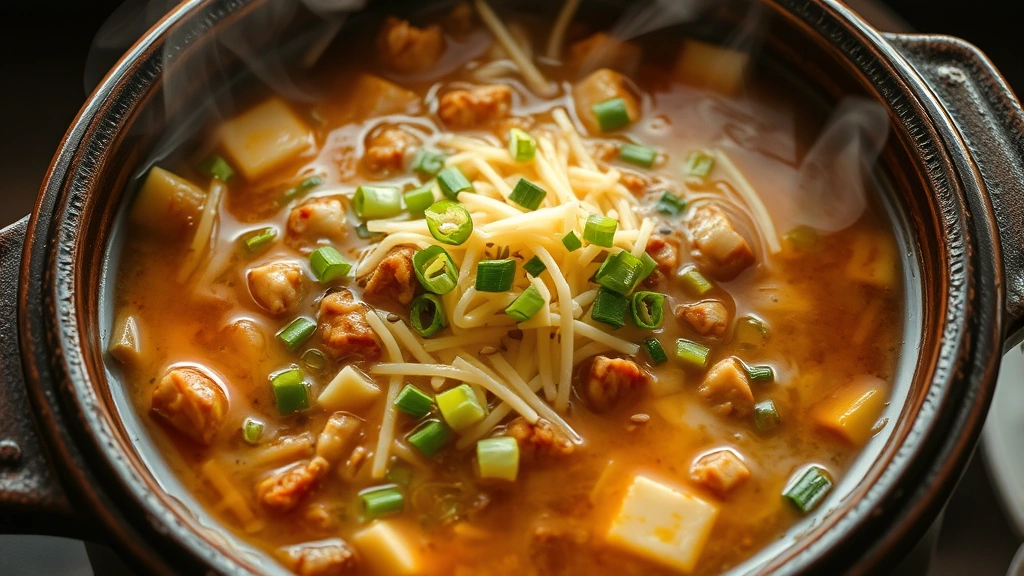
A budae jjigae recipe is one of those dishes that tells a story—a beautiful, delicious story of Korean resourcefulness and culinary creativity born from history. This iconic Korean army stew combines bold flavors, hearty ingredients, and the kind of comfort that makes you want to gather around a bubbling pot with friends and family.
The origins of budae jjigae are fascinating. After the Korean War, American military bases left behind surplus ingredients like Spam, hot dogs, and canned beans. Rather than waste them, Korean cooks ingeniously transformed these Western staples into something uniquely their own. They layered them with traditional Korean ingredients—gochujang paste, doenjang broth, kimchi, and fresh vegetables—creating a stew that somehow bridges two food cultures in the most harmonious way.
Jump To Section
What makes this dish so special? It’s the contrast. You get the umami-rich depth of Korean gochugaru (red chili flakes) and fermented pastes alongside the familiar comfort of Spam and hot dogs. The kimchi adds a punchy sourness. Fresh mushrooms and vegetables bring earthiness. When everything simmers together in that spicy, savory broth, it becomes something greater than the sum of its parts.
Why This Recipe Works
This budae jjigae recipe succeeds because it respects both the history and the ingredients. You’re not trying to hide the Spam or apologize for it—you’re celebrating it as part of the dish’s identity. The key is using quality versions of each component. Good Spam, real Korean gochugaru, and authentic doenjang paste make all the difference.
The layering technique matters too. When you arrange ingredients thoughtfully in the pot, they cook evenly and develop better flavor. The broth becomes infused with each element. Additionally, the communal cooking aspect—where the stew bubbles away at the table—is part of the experience. Everyone cooks their own perfect bite, mixing in noodles, cheese, or an egg yolk as they wish.
I love serving this alongside a simple Italian dressing pasta salad for a lighter side, though the stew itself is incredibly filling. However, if you’re looking for other comforting stew options, you might enjoy exploring a vegetable beef soup recipe for comparison, or diving into international flavors with a perfect Tom Yum soup recipe.
Ingredient Tips & Substitutions
Let’s talk about the star players here. Spam is non-negotiable if you want authentic budae jjigae, but I understand it’s not for everyone. If you absolutely must substitute, use quality hot dogs or diced pork belly, though you’ll lose some of that distinctive salty richness. The Spam should be sliced thin and lightly fried before adding to the pot—this gives it crispy edges that add textural interest.
Gochugaru (Korean red chili flakes) and gochujang (red chili paste) are also essential. They’re readily available online and in most Asian markets now. Don’t substitute with regular chili powder or sriracha—these won’t give you the same fermented, complex heat. The doenjang provides a salty, funky umami that makes the whole broth sing.
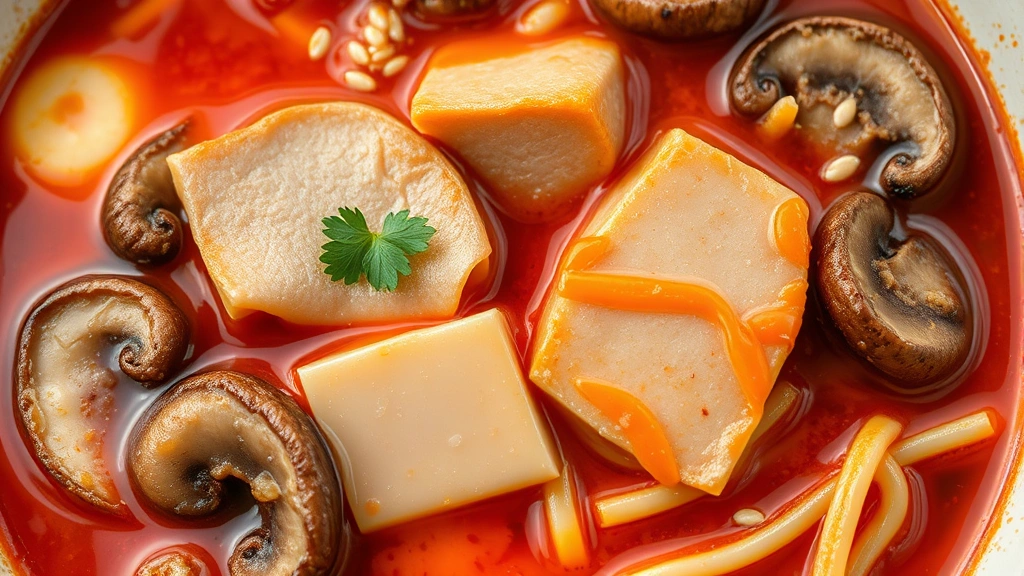
For vegetables, feel free to adapt based on what you have. Mushrooms are wonderful—use shiitake, oyster, or cremini. Zucchini, cabbage, and green onions are traditional. Some people add corn, carrots, or even leafy greens. The beauty of Korean stew cooking is flexibility. Meanwhile, the noodles can be ramen, instant noodles, or even udon. I prefer using fresh ramen for better texture, though instant works beautifully for weeknight cooking.
American cheese slices might sound odd, but they melt into the broth creating a creamy richness that’s absolutely addictive. It’s another throwback to the dish’s post-war origins, and it genuinely works. If you want to skip it, that’s fine, though you’ll want to add an extra egg for richness.
Cooking Tips for Perfect Results
The foundation of great budae jjigae is a good broth. I start by sautéing the gochujang and doenjang in a bit of oil to bloom their flavors before adding liquid. This step—often overlooked—transforms the broth from flat to deeply flavorful. The aromatics (garlic and ginger) should be minced fine so they distribute evenly throughout.
When adding ingredients, consider cooking time. Harder vegetables like carrots go in earlier. Delicate items like mushrooms and leafy greens go in toward the end. The noodles should be added about 5 minutes before serving so they don’t become mushy. For an authentic experience, cook this in a clay pot (ttukbaegi) or shallow braising pan that can go directly on your table. The bubbling, active cooking is part of the fun.
Don’t skip the Spam-frying step. Browning it in a separate skillet creates caramelization that adds complexity. Some people also fry the hot dogs lightly. These extra minutes make a noticeable difference in the final flavor. Furthermore, taste as you go and adjust the seasoning. Korean cooking often requires more salt and spice than Western palates expect initially, but it’s delicious once you embrace it.
Serving Suggestions & Customization
This is where budae jjigae really shines as a communal dish. Set the pot on a portable burner at the table so it stays hot and bubbling throughout the meal. Provide small bowls, spoons, and chopsticks for everyone. Let guests customize their experience by adding toppings and adjusting spice levels in their individual bowls.
Common additions include a raw egg yolk stirred into the broth (it cooks gently and adds richness), sesame seeds, fresh cilantro, or a squeeze of lime. Some people like adding kimchi directly to their bowl for extra funk. Rice on the side is traditional—use it to soak up that incredible broth. You might also consider serving it with a fresh steak salad recipe for a lighter contrast, or prepare a salad in a jar ahead of time.
For beverages, ice-cold beer is traditional and works wonderfully with the spicy, salty flavors. Alternatively, try a crisp white wine or even a ginger ale for non-alcoholic options. The key is something cold to balance the heat of the stew.
Storage & Make-Ahead Instructions
Budae jjigae actually tastes better the next day as flavors meld together. Store the broth separately from the solids if possible—this prevents noodles from getting too soft. In an airtight container, the broth keeps for 3-4 days in the refrigerator or up to 2 months in the freezer. The Spam and hot dogs should also be stored separately.
To reheat, simply warm the broth gently on the stovetop and add fresh noodles, vegetables, and proteins. You can also add new ingredients when reheating—fresh mushrooms, greens, or cheese. This flexibility makes it perfect for meal prep. Additionally, you can prepare the broth completely one day ahead, then add fresh components when you’re ready to cook and serve. This approach saves time on busy nights while maintaining that fresh, vibrant taste.
If you’re familiar with other satisfying one-pot meals, you might enjoy exploring a pastalaya recipe for a similar communal dining experience. Both dishes celebrate bringing people together around food that nourishes body and soul.
This budae jjigae recipe represents something wonderful about food culture—how it evolves, adapts, and creates beauty from unexpected combinations. It’s comfort food with history, accessibility with authenticity, and pure joy in a bubbling pot. Whether you’re experiencing it for the first time or recreating childhood memories, this Korean army stew will become a beloved favorite.
Ingredients
- 1 can (12 oz) Spam, sliced into ¼-inch thick pieces
- 4 hot dogs, sliced into ½-inch rounds
- 3 tablespoons gochujang (Korean red chili paste)
- 2 tablespoons doenjang (Korean soybean paste)
- 4 cups beef or vegetable broth
- 2 cups water
- 3 cloves garlic, minced
- 1 tablespoon ginger, minced
- 2 tablespoons gochugaru (Korean red chili flakes)
- 1 tablespoon sesame oil
- 8 oz mushrooms (shiitake, oyster, or cremini), sliced
- 1 small zucchini, sliced into half-moons
- 4 green onions, cut into 2-inch pieces
- 2 cups napa cabbage, chopped
- 2 servings instant ramen noodles (or fresh ramen)
- 4 slices American cheese
- 1 block (8 oz) firm tofu, cubed
- 1 can (15 oz) kidney beans, drained and rinsed
- 2 tablespoons soy sauce
- 1 teaspoon sugar
- Salt and pepper to taste
- Sesame seeds for garnish
- Fresh cilantro for garnish (optional)
Instructions
- Heat 1 tablespoon sesame oil in a skillet over medium-high heat. Add the sliced Spam pieces and fry for 2-3 minutes on each side until the edges are lightly browned and crispy. Transfer to a plate and set aside. In the same skillet, quickly brown the hot dog slices for about 1-2 minutes, then set aside.
- In a large pot or clay pot (ttukbaegi), heat the remaining sesame oil over medium heat. Add the minced garlic and ginger, stirring constantly for about 30 seconds until fragrant—this blooms their flavors beautifully.
- Add the gochujang and doenjang to the pot, stirring well to combine with the oil and aromatics. Cook for 1-2 minutes, allowing the pastes to caramelize slightly and deepen in color.
- Pour in the broth and water, stirring to combine all the pastes smoothly. Add the gochugaru, soy sauce, and sugar. Bring the mixture to a boil, then reduce heat to medium.
- Once the broth is simmering, add the cooked Spam and hot dogs back to the pot. Then add the tofu cubes, kidney beans, and mushrooms. Let everything simmer for about 5 minutes.
- Add the zucchini and cabbage to the pot. Continue simmering for another 5 minutes until the vegetables begin to soften. Taste the broth and adjust seasoning with additional salt, pepper, or gochugaru as desired.
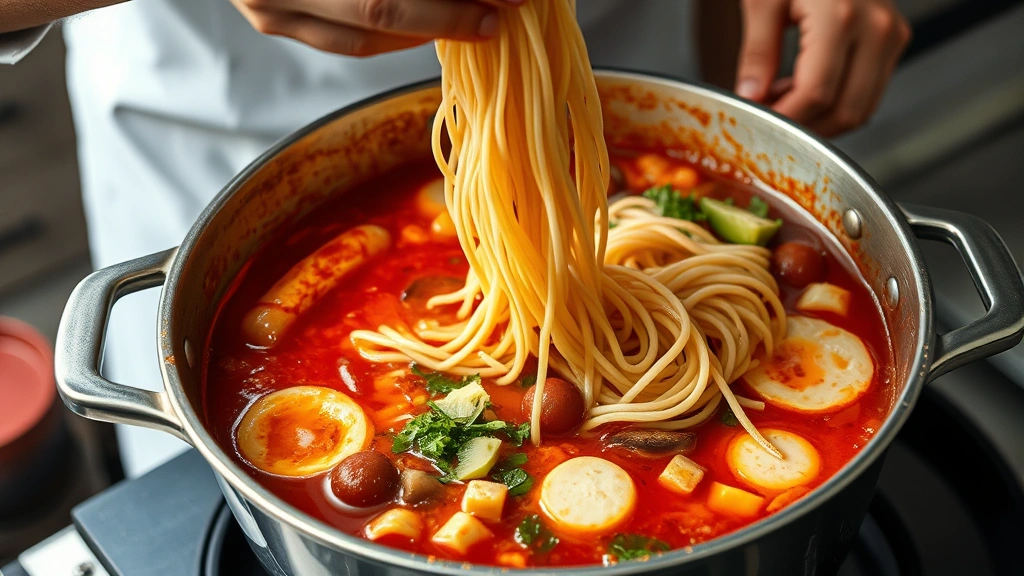
- Break the ramen noodles into the pot (if using instant noodles, you can break them or add them whole). Stir gently and cook for 3-4 minutes, or according to package directions. The noodles should be tender but not mushy.
- Arrange the cheese slices on top of the stew and let them melt into the broth for 1-2 minutes. The melted cheese creates a creamy, rich texture throughout.
- Add the green onions and stir gently to combine. If cooking at the table, you can stop here and let guests add their own toppings and customize their bowls.
- Ladle the budae jjigae into individual bowls, making sure each person gets an equal share of broth, noodles, and ingredients. Garnish with sesame seeds and fresh cilantro if desired. Serve immediately while hot and bubbling.
Pro Tips
This budae jjigae recipe is best served in a shallow pot that can sit on a portable table burner. The bubbling, active cooking is part of the authentic experience and keeps the stew at the perfect temperature throughout the meal.
For authentic flavor, don’t skip the step of frying the Spam and hot dogs separately. This caramelization adds depth and prevents them from becoming rubbery. The browning creates complex flavors that just boiling them won’t achieve.
The beauty of Korean stew cooking is flexibility. Feel free to swap vegetables based on what you have available. Carrots, corn, leafy greens, or even potatoes work wonderfully. Meanwhile, if you prefer a vegetarian version, omit the Spam and hot dogs, increase the tofu and vegetables, and use vegetable broth for a lighter but equally satisfying meal.
Make sure your gochujang and doenjang are authentic Korean products. The fermentation and depth of flavor in these pastes cannot be replicated with substitutes. They’re now widely available in regular grocery stores and Asian markets, making it easier than ever to achieve genuine budae jjigae flavor.
If you don’t have a clay pot, a regular large pot or shallow braising pan works perfectly fine. The important thing is that it can accommodate all ingredients and maintain a gentle simmer. Some people prefer using a wide, shallow pot so more surface area stays at the table.
This dish reheats beautifully. In fact, many Korean cooks will tell you it tastes even better the next day after flavors have melded. Store the broth and solids separately if possible. When reheating, simply warm the broth gently and add fresh noodles, vegetables, or proteins for a completely new meal.
For serving variations, consider offering toppings on the side: raw egg yolks for stirring in, extra kimchi, scallions, sesame seeds, and sriracha for those who want additional heat. This interactive element makes budae jjigae perfect for entertaining and creates a fun, engaging dining experience.
The ratio of broth to solids can be adjusted based on preference. If you like a brothier stew, add an extra cup of liquid. If you prefer it thicker with more noodles and vegetables, reduce the liquid slightly. Taste and adjust as you cook—Korean cooking rewards boldness in seasoning.