
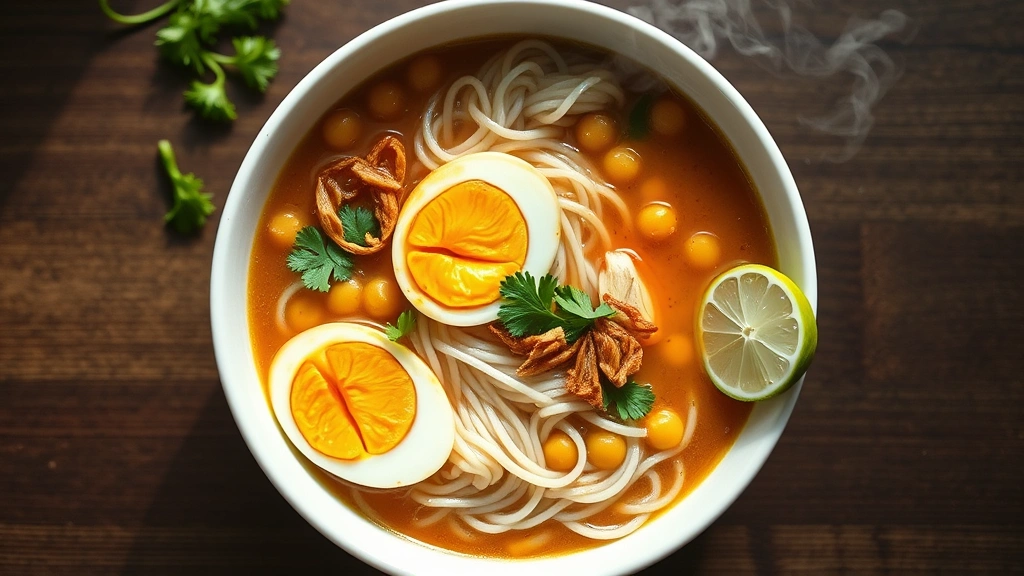
Burmese food recipes mohinga is arguably one of the most beloved and iconic dishes from Myanmar, and once you taste it, you’ll understand why this aromatic noodle soup has captured hearts across generations. This isn’t just breakfast food—it’s comfort in a bowl, a celebration of bold flavors, and a dish that brings families together around steaming pots and shared memories. What makes mohinga so special is its perfect balance of creamy coconut broth, tender rice noodles, and that unmistakable depth that comes from toasted chickpea flour and fragrant spices.
I first encountered authentic mohinga during a culinary adventure, and I was immediately struck by how such humble ingredients could create something so profoundly satisfying. The golden-hued broth glistens with oil from fried shallots and garlic, while the noodles beneath seem to absorb every ounce of that rich, complex flavor. Unlike many Asian noodle soups that rely heavily on stock or broth, mohinga gets its body and richness from a carefully balanced flour paste that’s almost velvety on the palate.
Jump To Section
Why This Recipe Works
The magic of burmese food recipes mohinga lies in the technique of creating a roux-based foundation. By toasting chickpea flour and gram flour separately before combining them with aromatics, you develop a deep, nutty flavor that no pre-made broth can replicate. This method ensures your mohinga tastes authentic and delivers that signature creamy texture without any cream whatsoever.
The layering of flavors is absolutely crucial here. Turmeric provides earthiness, garlic and shallots offer pungency, and fish sauce brings umami depth. Meanwhile, those crispy fried shallots and garlic chips scattered on top add textural contrast and concentrated flavor bursts. It’s the combination of all these elements working in harmony that transforms simple ingredients into something genuinely memorable.
Additionally, the cooking method matters tremendously. Rather than rushing through the process, taking time to slowly build your base and let flavors meld creates a more refined, balanced dish. You’ll notice the broth becoming silkier and more cohesive as it simmers—that’s exactly what you’re aiming for. For similar noodle soup techniques, check out our perfect shoyu ramen recipe which uses comparable layering methods.
Ingredient Tips & Substitutions
Chickpea flour is essential here—it’s what gives mohinga its characteristic body and flavor. However, if you’re in a pinch, you can substitute with gram flour or even finely ground blanched peanuts, though the taste will shift slightly. Fish sauce is non-negotiable for authenticity; it’s what makes mohinga distinctly Burmese. If you absolutely cannot use it, soy sauce is a distant second choice, but the dish won’t taste quite the same.
For the broth, some recipes call for chicken stock, but I prefer using water and allowing the toasted flours and aromatics to create the foundation. This gives you cleaner, more pronounced flavors. The rice noodles should be thin—the kind used in pho or ramen work beautifully. Look for fresh varieties at Asian markets if possible; they cook faster and have better texture than dried.
Fresh turmeric root, if you can find it, will elevate your dish tremendously compared to ground turmeric. Similarly, use the freshest garlic and shallots available. These aromatics are the soul of your mohinga, so quality matters. For complementary side dishes, our tasty Thai cucumber salad recipe pairs wonderfully with mohinga’s rich broth.
Understanding Burmese Culinary Traditions
Mohinga represents the heart of Burmese cuisine—it’s humble yet sophisticated, accessible yet deeply flavorful. Unlike many Southeast Asian cuisines that rely heavily on coconut milk, traditional burmese food recipes mohinga uses a flour-based thickening method that creates a lighter, more refined mouthfeel. This technique has been passed down through generations, perfected in home kitchens and street stalls across Myanmar.
The dish also reflects Myanmar’s geography and available ingredients. Chickpea flour is a staple in Burmese cooking, and fish sauce connects the cuisine to its maritime heritage. Understanding these cultural foundations helps you appreciate not just the recipe, but the story behind it. You’re not simply following instructions—you’re participating in a culinary tradition that extends back centuries.
Serving Suggestions
Authentic mohinga is traditionally served with an array of crispy toppings and fresh accompaniments. Hard-boiled eggs, sliced lengthwise, nestle into the noodles and add richness and substance. Fried tofu, crispy chickpeas, and cooked shrimp are equally traditional. Fresh cilantro, crispy fried shallots, and a squeeze of lime juice brighten each spoonful.
The beauty of mohinga is its flexibility at the table. Diners customize their bowls by adding preferred toppings and adjusting seasonings to taste. This interactive element makes it perfect for family meals or casual entertaining. Serve with a side of tasty Mediterranean salad recipe to provide fresh, cool contrast to the warm broth.
For drinks, Burmese iced tea or a crisp lager beer complements the dish beautifully. The sweetness of traditional Burmese tea balances the rich, savory broth, while beer’s carbonation cuts through the richness cleanly. In Myanmar, mohinga is often enjoyed as breakfast, but it works equally well for lunch or dinner—there are no rigid rules here.
Storage & Reheating
The broth keeps beautifully in the refrigerator for up to four days and can be frozen for up to three months. I recommend storing the broth separately from the noodles, which prevents them from becoming mushy. When you’re ready to enjoy your mohinga again, simply reheat the broth gently over medium heat, stirring occasionally, and prepare fresh noodles or reheat them quickly in boiling water.
The fried shallots and garlic should always be made fresh or stored in an airtight container for no more than two days. These crispy elements are what give your dish that textural contrast and concentrated flavor, so they’re worth the small effort. Hard-boiled eggs and other protein toppings can be prepared ahead, making mohinga a surprisingly convenient dish for meal preparation.
However, if you find yourself with leftover complete bowls of mohinga, you can refrigerate them for one day, though the noodles will have absorbed quite a bit of broth. Rather than discarding them, try reheating gently in a pot with a splash of water—the resulting porridge-like consistency is actually delicious and offers a different eating experience. For other Asian soups with similar keeping qualities, check out our best Taiwanese beef noodle soup recipe.
Making burmese food recipes mohinga at home connects you to Myanmar’s rich culinary heritage in the most delicious way possible. This is the kind of dish that rewards patience and attention to detail, yielding bowls of soul-warming comfort that’ll have everyone asking for seconds. Whether you’re exploring Southeast Asian cuisine or simply seeking your next favorite noodle soup, mohinga absolutely deserves a place on your table. For additional inspiration on building complex flavors in soups, our best traditional pasta fagioli recipe demonstrates similar layering techniques across different cuisines.
Ingredients
- 1 cup chickpea flour
- 3 tablespoons gram flour
- 4 cups water
- 3 tablespoons fish sauce
- 1 tablespoon turmeric powder (or 2 tablespoons fresh turmeric, minced)
- 6 cloves garlic, minced
- 4 shallots, minced
- 2 tablespoons vegetable oil (for cooking base)
- 4 tablespoons vegetable oil (for frying shallots and garlic)
- 1 tablespoon dried chili flakes
- 1 teaspoon salt
- ½ teaspoon white pepper
- 12 ounces fresh rice noodles (or 6 ounces dried rice noodles)
- 2 hard-boiled eggs, halved
- ¼ cup fried shallots
- 2 tablespoons fried garlic
- Fresh cilantro for garnish
- 2 limes, cut into wedges
- Crispy chickpeas for topping (optional)
- Cooked shrimp for topping (optional)
Instructions
- In a small dry skillet over medium heat, toast the chickpea flour for 3-4 minutes, stirring constantly, until it becomes fragrant and slightly darker. Transfer to a bowl and repeat with gram flour. This step develops the nutty flavor that defines authentic mohinga.
- In the same skillet, heat 2 tablespoons of vegetable oil over medium heat. Add minced garlic and shallots, cooking for 2-3 minutes until softened and fragrant but not browned.
- Add turmeric powder to the garlic and shallots, stirring constantly for about 30 seconds to bloom the spice and incorporate its flavor into the oil.
- Sprinkle the toasted chickpea and gram flour mixture over the aromatics, stirring continuously to create a paste-like consistency. This should take 2-3 minutes of constant stirring to avoid lumps.
- Gradually add the 4 cups of water, pouring slowly while whisking constantly to prevent lumps from forming. The mixture should become smooth and creamy as you add the liquid.
- Bring the mixture to a gentle simmer over medium-high heat, stirring occasionally. Let it simmer for 15-20 minutes, allowing the flavors to meld and the broth to thicken slightly. You’ll notice it becoming silkier as it cooks.
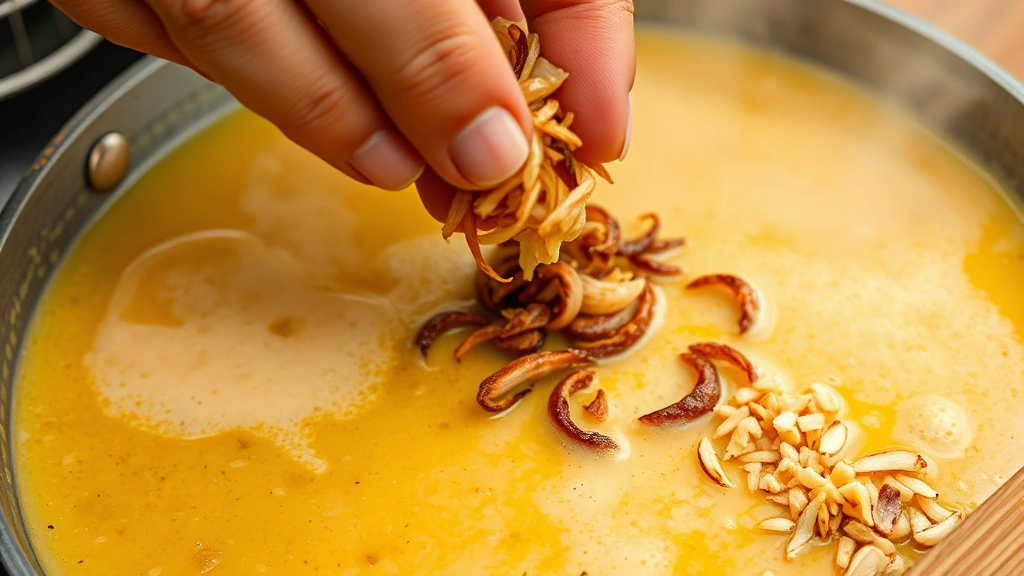
- While the broth simmers, prepare the crispy toppings. In a small skillet, heat 4 tablespoons of vegetable oil over medium-high heat. Add thinly sliced shallots and cook, stirring frequently, for 4-5 minutes until golden and crispy. Remove with a slotted spoon and drain on paper towels.
- In the same oil, add minced garlic and cook for 1-2 minutes until fragrant and lightly golden. Remove and drain on paper towels. Be careful not to burn either the shallots or garlic, as burned bits will taste bitter.
- Stir fish sauce, salt, white pepper, and dried chili flakes into the simmering broth. Taste and adjust seasonings as needed—the broth should be richly flavored, savory, and slightly spicy.
- In a large pot of boiling water, cook the rice noodles according to package directions (usually 2-3 minutes for fresh noodles, or 4-5 minutes for dried). Drain well and divide among serving bowls.
- Ladle the hot mohinga broth over the noodles, dividing equally among the four bowls. The broth should generously cover the noodles.
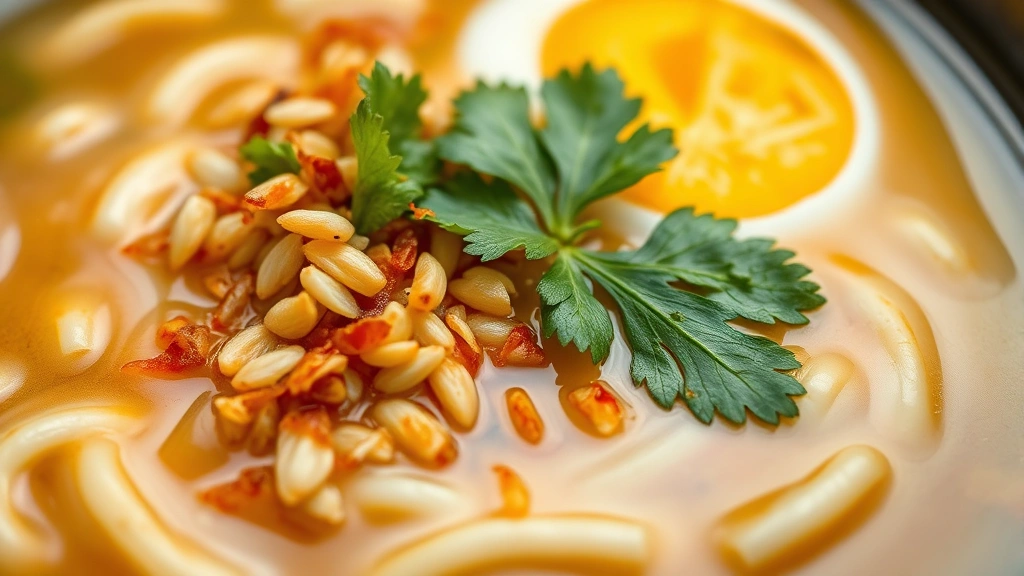
- Top each bowl with a halved hard-boiled egg, fried shallots, fried garlic, fresh cilantro, and any additional toppings like crispy chickpeas or shrimp.
- Serve immediately with lime wedges on the side, allowing diners to squeeze fresh lime juice into their bowls according to personal preference.
Pro Tips
The foundation of exceptional mohinga is the toasted flour mixture—don’t skip this step or rush it. By toasting the flours separately in a dry pan, you develop complex, nutty flavors that cannot be achieved any other way. The slight color change and aroma indicate that the Maillard reaction is occurring, creating depth and sophistication in your finished dish.
When creating your paste with the aromatics and flour, patience is your friend. Constant stirring prevents lumps and ensures the flour distributes evenly throughout the oil. This creates a smooth, velvety foundation that will make your broth noticeably better. The paste should look almost like wet sand before you add water.
Fish sauce is genuinely irreplaceable in burmese food recipes mohinga. While its aroma might seem overwhelming when you first open the bottle, it mellows considerably during cooking and provides essential umami depth. The final broth should taste savory and complex, not fishy. If you’re concerned about the flavor, start with slightly less fish sauce and adjust upward—you can always add more, but you cannot remove it.
The fried shallots and garlic are what transform mohinga from good to exceptional. These crispy elements provide textural contrast and concentrated flavor bursts that keep each spoonful interesting. If possible, make these fresh on the day of serving. However, if you’re in a time crunch, quality store-bought fried shallots and garlic work acceptably well, though homemade versions taste significantly better.
For dietary accommodations, mohinga is naturally vegetarian if you omit the fish sauce and substitute with soy sauce or tamari, though the flavor profile shifts considerably. The dish is also gluten-free as written, assuming your rice noodles contain no wheat additives. Always verify noodle packages, as some brands include wheat flour.
The cooking temperature is crucial throughout this recipe. Maintain medium to medium-high heat rather than boiling vigorously, which can cause the flour to become grainy rather than silky. You’re aiming for a gentle simmer that allows flavors to develop gradually. If your broth seems too thick after simmering, add warm water a little at a time until you reach desired consistency.
Customization is absolutely encouraged when serving mohinga. Different regions of Myanmar and different families have their own preferred toppings and flavor adjustments. Some prefer additional heat, others want more lime juice, and some add peanuts or crispy chickpeas. This interactive element makes mohinga perfect for feeding groups with varying preferences.