

This chiles en nogada recipe brings one of Mexico’s most iconic dishes straight to your kitchen—a stunning celebration of flavors that honors Mexican independence and culinary tradition. With roasted poblano peppers stuffed with a savory meat filling, crowned with a luxurious walnut cream sauce, and finished with pomegranate seeds and cilantro, this dish is pure magic on a plate. It’s the kind of recipe that looks intimidating but rewards you with incredible results and plenty of impressed dinner guests.
I first encountered chiles en nogada at a family gathering, and honestly? I was convinced it required professional chef skills. Turns out, it’s actually quite manageable when you break it down into simple steps. The beauty of this dish lies in its three-part harmony: the smoky, slightly charred poblano pepper, the rich ground beef picadillo filling with its blend of spices and dried fruits, and that dreamy nogada sauce that ties everything together. Each component shines on its own, but together they create something truly unforgettable.
Jump To Section
Why This Recipe Works
Poblano peppers are the star here, and for good reason. They’re mild enough to eat whole but flavorful enough to stand up to bold fillings. When you char them over an open flame and let them steam in a plastic bag, the skin practically falls off—no fuss required. This traditional technique isn’t just authentic; it’s genuinely the easiest way to get those peppers ready for stuffing.
The picadillo filling is where things get interesting. Ground beef mixed with onions, garlic, and a medley of spices creates a savory base that’s enhanced with dried fruit—raisins and almonds bring sweetness and texture that balance the heat and depth. Think of it like a sophisticated, savory-sweet combination that makes every bite memorable. Additionally, the nogada sauce (made from fresh walnuts, cream, and a hint of cinnamon) is nothing short of luxurious, creating a velvety coating that’s rich without being heavy.
What makes this authentic Mexican classic so special is how it represents Mexican flag colors—the green pepper, white sauce, and red pomegranate seeds. It’s not just delicious; it’s a work of edible art that celebrates heritage and tradition.
Ingredient Tips & Substitutions
Finding poblano peppers shouldn’t be difficult in most supermarkets, especially during late summer and fall. However, if you can’t locate them, you can substitute with other mild chiles like Anaheim or even bell peppers (though the flavor will be slightly different). Meanwhile, the walnut cream sauce is genuinely non-negotiable—regular walnuts work beautifully, but make sure they’re fresh and haven’t been sitting in your pantry for months.
For the filling, you’ll want ground beef with a bit of fat content (80/20 blend is perfect), which keeps everything moist and flavorful. If you prefer, ground pork or turkey also work wonderfully. The dried fruit element is crucial—raisins and sliced almonds create textural contrast and subtle sweetness. For instance, if you’re not a fan of raisins, try chopped dried apricots or dried cranberries instead.
Fresh pomegranate seeds add both flavor and stunning visual appeal, but if they’re out of season, cherry tomatoes offer a nice alternative. The cilantro is essential though—it’s not just garnish; it’s a flavor component that brings freshness to the rich sauce below.
Preparation & Technique
The key to success is taking your time with each component. Don’t rush the charring of the poblanos—you want that skin completely blackened so it steams off easily. Use a kitchen torch, grill, or even hold them over a gas burner with tongs. The steam step is crucial: seal those charred peppers in a plastic bag for 10-15 minutes, and the skin will slip off without much effort.
When making the nogada sauce, ensure your walnuts are blanched (skin removed) and fresh. Soak them briefly in warm water, then blend with crema or heavy cream, queso fresco, and just a pinch of cinnamon. The sauce should be pourable but creamy—think of it like a sophisticated salad dressing consistency. If it’s too thick, thin it with a splash of milk or crema.
Assembly is where you get to be creative. Carefully slit each pepper lengthwise and remove the seeds and membrane without tearing the flesh. Stuff generously but gently—the filling should be tucked inside without bursting the pepper. Arrange on a serving platter, drizzle with that luxurious nogada sauce, then top with pomegranate seeds and fresh cilantro for that striking presentation.
Serving Suggestions
Chiles en nogada is elegant enough for special occasions but comforting enough for a memorable weeknight dinner. Serve it as the main course accompanied by simple sides like Mexican corn salad or Mexican cucumber salad for freshness and lightness. The cool, crisp salads provide wonderful contrast to the warm, rich stuffed peppers.
A simple Mexican rice pilaf or warm tortillas are traditional accompaniments that round out the meal beautifully. For drinks, reach for something refreshing—a classic Mexican agua fresca, hibiscus tea, or even a crisp Mexican beer pairs wonderfully. If you’re looking for additional vegetable sides, a Southwest salad recipe adds color and nutrition without overwhelming the main event.
This dish is traditionally served at room temperature or slightly warm, which actually makes it perfect for entertaining—you can prepare it ahead and let it sit until serving time. It’s impressive enough to serve at dinner parties but approachable enough that your family will request it again and again.
Storage & Make-Ahead Tips
You can prepare chiles en nogada up to one day in advance. Keep the stuffed peppers and sauce separate in the refrigerator until serving time. When ready to serve, arrange the peppers on a platter and drizzle with the nogada sauce, then add the pomegranate seeds and cilantro just before presenting. This prevents the peppers from getting soggy and keeps all the elements fresh and vibrant.
Leftovers can be stored in an airtight container for up to three days, though the peppers are best served at room temperature or gently warmed. To reheat, place stuffed peppers on a baking sheet and warm in a 300°F oven for about 10 minutes until heated through. The nogada sauce can be reheated separately over low heat, stirring gently to maintain its creamy texture.
This recipe absolutely freezes well—freeze the stuffed peppers without sauce for up to two months. Thaw overnight in the refrigerator, warm as directed above, then top with freshly made or warmed nogada sauce before serving. The walnut sauce itself doesn’t freeze as successfully, so it’s best made fresh or within a day of serving.
Making this chiles en nogada teaches you about balance in Mexican cooking—the interplay of savory and sweet, creamy and crispy, cool and warm. It’s a celebration dish that honors tradition while being completely achievable in your home kitchen. Once you master this recipe, you’ll have a showstopper in your entertaining arsenal that never fails to impress.
Ingredients
- 4 poblano peppers
- 1 pound ground beef
- 1 medium white onion, finely diced
- 3 garlic cloves, minced
- 1/2 cup raisins
- 1/2 cup sliced almonds
- 1/4 cup diced dried apricots
- 2 tablespoons tomato paste
- 1 teaspoon cumin
- 1/2 teaspoon cinnamon
- 1/4 teaspoon ground cloves
- Salt and pepper to taste
- 2 tablespoons vegetable oil
- 1 cup fresh walnuts, blanched and shelled
- 3/4 cup heavy cream or Mexican crema
- 1/2 cup crumbled queso fresco
- 2 tablespoons fresh lime juice
- 1/4 teaspoon cinnamon (for sauce)
- Salt to taste
- 1 cup pomegranate seeds
- 1/4 cup fresh cilantro, chopped
Instructions
- Char the poblano peppers directly over a gas flame using tongs, or place them on a grill or under the broiler. Rotate frequently until the skin is completely blackened on all sides, about 8-10 minutes total. This step is essential for easy peeling.
- Transfer the charred peppers to a plastic bag and seal it closed. Let them steam for 10-15 minutes—this makes the skin slip off much more easily. Once cooled slightly, gently rub the skin away under cool running water, keeping the pepper intact. Carefully make a lengthwise slit and remove the seeds and membrane without tearing the flesh.
- Heat the vegetable oil in a large skillet over medium-high heat. Add the diced onion and sauté for about 3 minutes until it becomes translucent and fragrant.
- Add the minced garlic and cook for another 30 seconds until aromatic. Then add the ground beef, breaking it apart with a wooden spoon as it cooks. Continue cooking for 5-7 minutes until the beef is completely browned and no pink remains.
- Stir in the tomato paste and cook for 1 minute to deepen the flavor. Then add the cumin, cinnamon, and ground cloves, stirring well to coat the meat evenly with the spices.
- Add the raisins, sliced almonds, and diced dried apricots to the meat mixture. Stir thoroughly and cook for another 2-3 minutes, allowing the flavors to meld. Season with salt and pepper to taste. Remove from heat and let the filling cool slightly before stuffing.
- While the filling cools, prepare the nogada sauce. Soak the blanched walnuts in warm water for 5 minutes, then drain them well. Place the walnuts in a blender with the heavy cream, crumbled queso fresco, lime juice, cinnamon, and a pinch of salt.
- Blend the sauce until it’s smooth and creamy, about 1-2 minutes. If the sauce is too thick, add more cream or a splash of milk to achieve a pourable consistency. Taste and adjust seasoning as needed. Set aside.
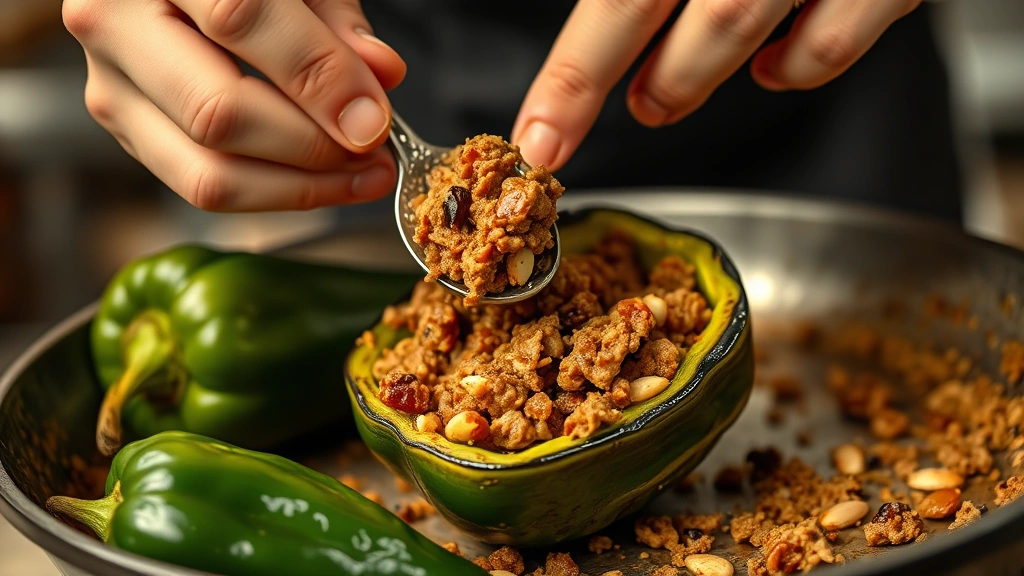
- Carefully fill each prepared poblano pepper with the cooled picadillo filling, spooning it gently into the slit and distributing it evenly throughout. Be gentle to avoid tearing the pepper flesh.
- Arrange the stuffed poblanos on a serving platter. Pour the nogada sauce over and around the peppers, creating a beautiful presentation.
- Top each pepper with a generous sprinkle of pomegranate seeds and fresh cilantro. Serve at room temperature or slightly warm, making sure each serving includes plenty of sauce, peppers, and garnish.

Pro Tips
The walnut sauce is the soul of this dish, so don’t skip the blanching step—it removes any bitterness and creates a silky texture. If you can’t find blanched walnuts, simply blanch them yourself by boiling for 2 minutes, then rubbing off the skins.
Timing matters here: assemble the chiles en nogada close to serving time so the sauce stays creamy and the pomegranate seeds remain plump and juicy. However, the filling can be made several hours ahead and stored in the refrigerator, which actually allows the flavors to develop further.
For a vegetarian version, substitute the ground beef with a mixture of chopped mushrooms, walnuts, and chickpeas cooked with the same spices—the result is surprisingly satisfying. Additionally, you can make the picadillo filling more robust by adding a diced potato, which adds heartiness without changing the essential character of the dish.
If pomegranate is out of season or difficult to find, cherry tomatoes cut in half offer similar visual appeal and a bright, fresh taste. Meanwhile, the cilantro garnish is absolutely essential—it provides a fresh herbal note that balances the richness of the sauce beautifully.
The nogada sauce can be made up to 24 hours ahead and stored in an airtight container in the refrigerator. Simply stir well before serving and add a splash of milk if it thickens during storage. Some cooks prefer to serve this dish completely at room temperature, which actually enhances the flavors and makes it perfect for warm weather entertaining.
Pro tip: when charring the peppers, don’t worry about getting every bit of skin completely black—just aim for about 80% coverage. A few small patches of green skin are actually authentic and won’t affect the taste. The goal is to loosen the skin enough for easy removal, not to incinerate the pepper.