

Coca Cola and PepsiCo recipe changes have transformed how we cook and bake in modern kitchens, and honestly, it’s fascinating to explore what’s actually inside these beloved beverages now. Whether you’re a curious home cook wondering about ingredient transparency or someone interested in how major food companies adapt their formulas, understanding these shifts helps us make informed choices about what we bring to our tables. The evolution of these iconic drinks reflects broader changes in consumer preferences, health consciousness, and ingredient sourcing that impact everything from classic cola cakes to innovative culinary creations.
For decades, Coca-Cola and PepsiCo have been staples in American kitchens—not just as beverages, but as key ingredients in beloved recipes passed down through generations. Think of that moist, tender cola cake your grandmother made, or the glazed ham with cola that showed up at holiday gatherings. These recipes worked because the formula was consistent, predictable, and created that perfect balance of sweetness and depth. However, recent Coca Cola and PepsiCo recipe changes have shifted the ingredient landscape in ways that actually matter to home cooks.
Jump To Section
Understanding Recent Formula Modifications
The biggest Coca Cola and PepsiCo recipe changes center around sweetener adjustments and reduced sugar options becoming more prominent in mainstream products. Both companies have introduced or expanded their lines with alternatives like aspartame, sucralose, and stevia-based sweeteners to meet growing demand for lower-calorie options. What this means for your kitchen is that a bottle of cola you buy today might behave slightly differently in your recipes compared to what your favorite vintage recipe was originally designed for.
Additionally, natural flavor components have been refined and reformulated across both brands. The companies have worked to enhance taste profiles while adjusting to ingredient availability and supply chain considerations. This isn’t necessarily bad—it’s actually an interesting case study in how global food companies adapt. However, it does mean that when you’re recreating a classic recipe, the exact taste profile might differ slightly from the original version your mother or grandmother made.
How Recipe Changes Affect Your Cooking
When you’re using cola in cooking, the sweetness level matters tremendously. Classic cola recipes rely on that specific sugar content to create caramelization, moisture, and depth of flavor. With Coca Cola and PepsiCo recipe changes introducing more diet and zero-sugar options into regular product lines, you might find that your cola cake turns out drier or less flavorful if you accidentally grab a product formulated with different sweeteners. The chemistry of baking changes when you swap refined sugar for synthetic sweeteners.
Meanwhile, the acidity levels in these beverages have also been adjusted in some formulations. Acidity is crucial in baking because it reacts with baking soda to create lift and texture. A recipe that called for regular Coca-Cola in 1985 operates on completely different chemical principles than one made with today’s reformulated versions. That’s why understanding what’s in your cola bottle before you cook with it makes a real difference in your results.
The carbonation levels have evolved too, which affects how quickly the liquid incorporates into batters and doughs. Interestingly, Serious Eats has explored how different cola formulations impact baking outcomes, and the findings are genuinely eye-opening for recipe developers.
Ingredient Transparency and What’s Really Inside
Both Coca-Cola and PepsiCo have increased transparency about their ingredient lists, which is actually wonderful for home cooks who care about what goes into their food. You can now easily find detailed information about caffeine content, artificial ingredients, and allergen information on company websites. However, the Coca Cola and PepsiCo recipe changes also mean that ingredient labels have become more complex, with multiple versions of each product existing simultaneously on store shelves.
For instance, you might find original Coca-Cola, Coca-Cola with real sugar, Diet Coke, Coke Zero Sugar, and various other formulations in your local grocery store—all with different ingredient profiles. Similarly, PepsiCo offers numerous variations across their portfolio. Understanding which product version will work best for your specific recipe is now part of being an informed home cook. Reading labels has become less of a nice-to-have habit and more of an essential skill.
The phosphoric acid levels, caramel coloring sourcing, and natural versus artificial flavoring ratios have all shifted in recent years. These aren’t massive changes, but they’re noticeable to anyone who’s been cooking with these products for decades. Some home cooks have even started experimenting with alternative sweeteners and homemade cola syrups to recreate the exact taste and texture their recipes demand.
Adapting Classic Recipes to Modern Formulations
If you’re working with a cherished recipe that specifically calls for cola, you have several smart options. First, consider using the full-sugar version of whichever brand the recipe originally specified—this usually gives you the closest chemical behavior to what the recipe developer intended. The Coca Cola and PepsiCo recipe changes mean that going back to basics with full-sugar formulations often yields the most reliable results for traditional baking and cooking projects.
You might also experiment with adjusting the quantities slightly if you’re using diet or zero-sugar versions. Sometimes reducing the liquid by a tablespoon or two and adding a bit more of another acid (like lemon juice or vinegar) can help compensate for the different sweetener profile. Additionally, increasing your oven temperature by 25 degrees and reducing cooking time slightly can help with browning and caramelization, since diet colas don’t caramelize quite like their full-sugar counterparts.
Testing is your best friend here. Make a small batch first, note what works and what doesn’t, and adjust for your next attempt. Home cooking is forgiving in ways that professional baking sometimes isn’t, so don’t be afraid to iterate. According to New York Times Cooking, many professional chefs have also had to adapt their recipes following these industry changes.
Storage and Using Cola in Your Kitchen
Here’s something important that connects to Coca Cola and PepsiCo recipe changes: how you store these products affects their behavior in recipes. Once opened, cola loses carbonation over time, which changes how it functions in cooking. For recipes where carbonation matters (like certain cake batters), using a freshly opened bottle gives you more reliable results than using one that’s been sitting open in your fridge for a week.
Temperature also matters—cold cola behaves differently than room-temperature cola in recipes. Most vintage recipes were developed when kitchens were warmer and refrigeration worked differently. Taking your cola out of the fridge 15-20 minutes before cooking can actually help you achieve better results, especially in glazes and sauces where the liquid needs to reduce properly.
Consider storing your cooking cola separately from your drinking cola if you cook with it regularly. This prevents the frustration of grabbing a half-empty bottle when you need a full one for a recipe. Many home cooks keep a dedicated bottle in the pantry specifically for cooking purposes, away from the regular refrigerator stash.
The landscape of Coca Cola and PepsiCo recipe changes continues to evolve, reflecting both consumer demands and ingredient innovations. Rather than seeing these changes as obstacles, they’re actually opportunities to become a more thoughtful, adaptable cook who understands the ‘why’ behind recipes, not just the ‘what.’ Your favorite dishes will taste just as delicious—you’re simply learning to work with modern ingredients and formulations, much like cooks have always done throughout culinary history. By staying informed and willing to experiment, you’ll continue creating memorable meals that taste amazing, whether you’re using classic cola recipes or inventing entirely new ones.
Ingredients
- 1 cup Coca-Cola (full-sugar version, room temperature)
- 1¾ cups all-purpose flour
- ¾ teaspoon baking soda
- ½ teaspoon salt
- ¼ teaspoon ground cloves
- ¼ teaspoon ground cinnamon
- 6 ounces unsalted butter, softened
- 1 cup granulated sugar
- 2 large eggs, room temperature
- ½ cup sour cream
- 1 teaspoon vanilla extract
- ½ cup chopped pecans or walnuts (optional)
Instructions
- Preheat your oven to 350°F and grease a 9-inch round cake pan with butter or cooking spray, then line the bottom with parchment paper for easy removal.
- In a small saucepan, gently warm the Coca-Cola over low heat for 2-3 minutes just to take off the chill—you want it room temperature, not hot, which helps it incorporate smoothly into the batter.
- Whisk together the flour, baking soda, salt, cloves, and cinnamon in a medium bowl, making sure the spices are evenly distributed throughout the dry ingredients.
- In a large mixing bowl, cream together the softened butter and granulated sugar, beating for about 3-4 minutes until the mixture is light, fluffy, and pale in color.
- Add the eggs one at a time to the butter mixture, beating well after each addition and scraping down the bowl’s sides to ensure even mixing.
- Stir in the vanilla extract, then alternate adding the flour mixture and sour cream to the wet ingredients, starting and ending with the flour mixture—this prevents overmixing and keeps the cake tender.
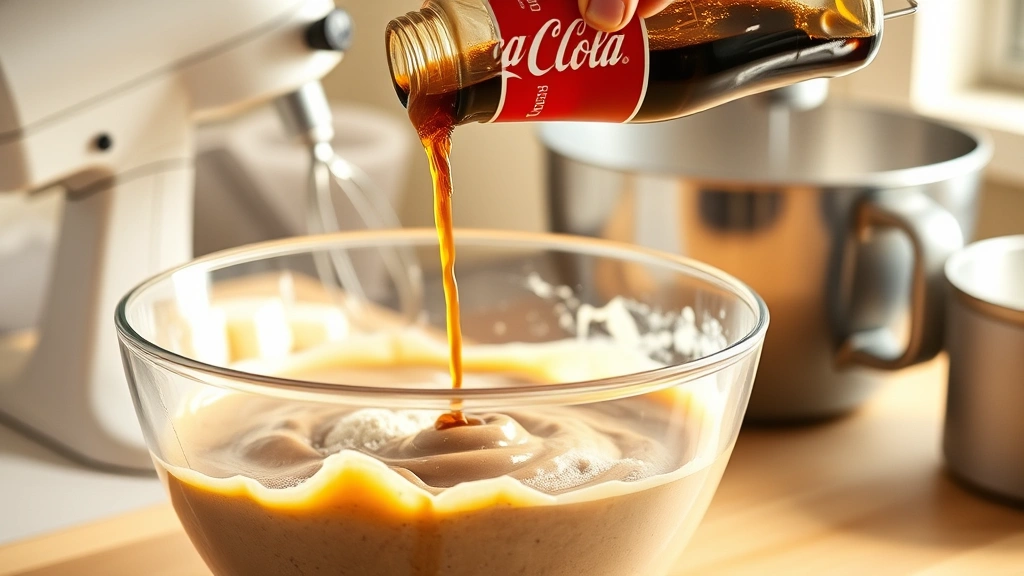
- Gently pour in the room-temperature Coca-Cola in a thin stream while folding it in with a spatula, being careful not to overmix the batter as the carbonation helps create a light texture.
- If using nuts, fold them in gently at the very end, distributing them evenly throughout the batter.
- Pour the batter into your prepared pan and smooth the top with a spatula, tapping the pan gently on the counter a few times to release any large air bubbles.
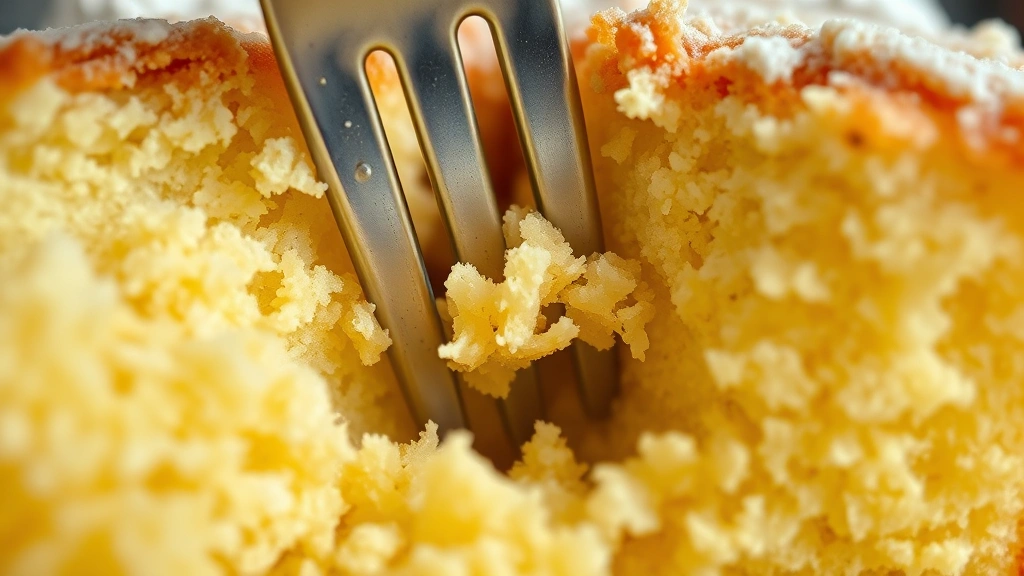
- Bake for 40-45 minutes, or until a toothpick inserted into the center comes out clean or with just a few moist crumbs—don’t overbake, as cola cakes can dry out quickly.
- Allow the cake to cool in the pan for 10 minutes, then turn it out onto a wire rack to cool completely before frosting or serving.
Pro Tips
Using full-sugar Coca-Cola rather than diet versions is crucial for this recipe because the sugar content affects both the flavor depth and the browning process. Diet colas contain sweeteners that don’t caramelize the same way, which can result in a paler, less flavorful cake. If you only have diet cola available, reduce it by adding a tablespoon of additional sugar to your batter and increase the oven temperature to 375°F to encourage better browning.
Room temperature ingredients are your secret weapon here. Cold eggs, butter, and cola can cause the batter to break and result in a dense, heavy cake. Take everything out of the refrigerator about 30 minutes before you start baking—this simple step makes a measurable difference in your final texture.
The sour cream is non-negotiable in this recipe because it adds moisture and tenderness while also reacting with the baking soda to create lift. However, if you’re out of sour cream, you can substitute with Greek yogurt in a pinch, though the flavor will be slightly different. Plain Greek yogurt works better than sweetened varieties for this purpose.
Speaking of Coca Cola and PepsiCo recipe changes, you might notice that modern cola cakes sometimes taste slightly different from versions your grandmother made—this is likely due to formula adjustments. If you want to recreate the exact vintage taste, some bakers have had success using Mexican Coca-Cola (made with cane sugar) or seeking out specialty bottled versions. The investment is worth it for special occasions.
Storage is straightforward: keep your cooled cake covered at room temperature for up to two days, or wrap it tightly and refrigerate for up to four days. You can also freeze the unfrosted cake for up to three months—wrap it well in plastic wrap and aluminum foil to prevent freezer burn. Thaw at room temperature for about two hours before frosting.
For frosting, a simple chocolate frosting pairs beautifully with this cake. Combine 6 ounces of unsalted butter with ⅔ cup of cocoa powder, ⅔ cup of milk, 1 pound of powdered sugar, and 1 teaspoon of vanilla extract. Beat until smooth and fluffy, then spread over the cooled cake. Some bakers even use a cola-based frosting by reducing ½ cup of Coca-Cola with 2 tablespoons of butter until syrupy, then mixing it into their chocolate frosting for extra depth.
This cake is wonderfully versatile—it works for casual weeknight desserts, potlucks, or special celebrations. The spices give it a subtle warmth that feels comforting and nostalgic, while the cola adds a sophisticated complexity that guests often can’t quite identify but absolutely love.