
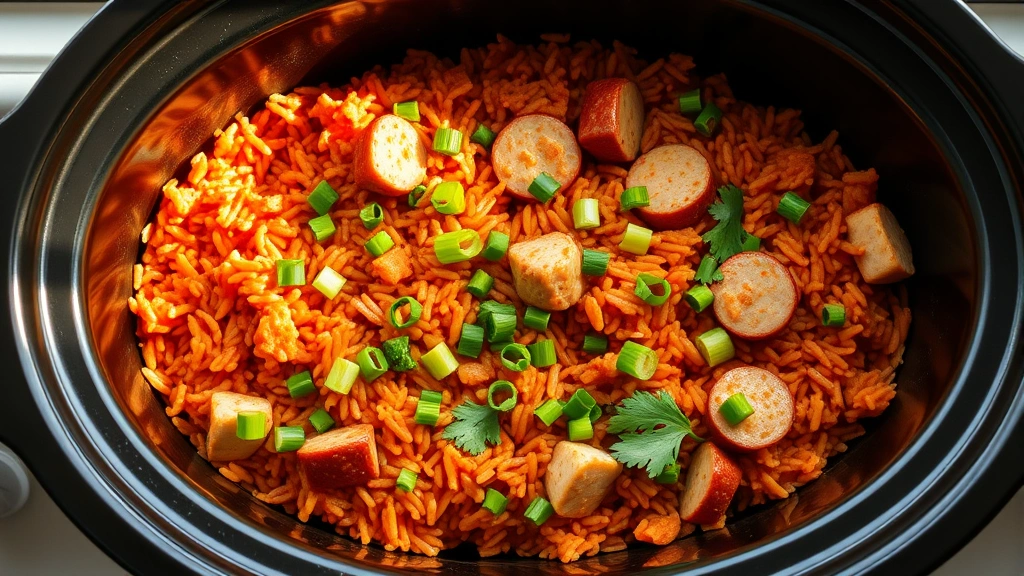
This crockpot jambalaya recipe is your ticket to authentic New Orleans flavor without spending hours in the kitchen. I absolutely love how the slow cooker transforms simple ingredients into a rich, deeply flavored dish that tastes like it’s been simmering all day—because it has.
There’s something magical about jambalaya. It’s the kind of one-pot meal that brings people together, fills your home with incredible aromas, and delivers restaurant-quality results from your own kitchen. The beauty of making it in a slow cooker? You dump everything in, turn it on, and come back to dinner that’s ready to serve.
Jump To Section
I first fell in love with jambalaya during a trip to Louisiana years ago. The bold spices, the tender meat, the way the rice soaks up all that flavorful broth—it was unforgettable. But honestly, I was intimidated to recreate it at home. Then I discovered the slow cooker method, and everything changed. Now I make this recipe at least twice a month, and my family can’t get enough of it.
Why This Recipe Works
The slow cooker is perfect for jambalaya because it allows all the flavors to meld together beautifully. The low, steady heat means the chicken and sausage become incredibly tender, while the spices have time to develop their full depth. Unlike stovetop versions that require constant stirring and monitoring, this hands-off approach is genuinely foolproof.
What makes this recipe authentic is the holy trinity of Cajun cooking: onions, celery, and bell peppers. These three vegetables form the flavor foundation of traditional jambalaya, and they work together to create something you simply can’t replicate with shortcuts. Additionally, the combination of chicken and andouille sausage gives you complex, layered flavors that keep people coming back for more.
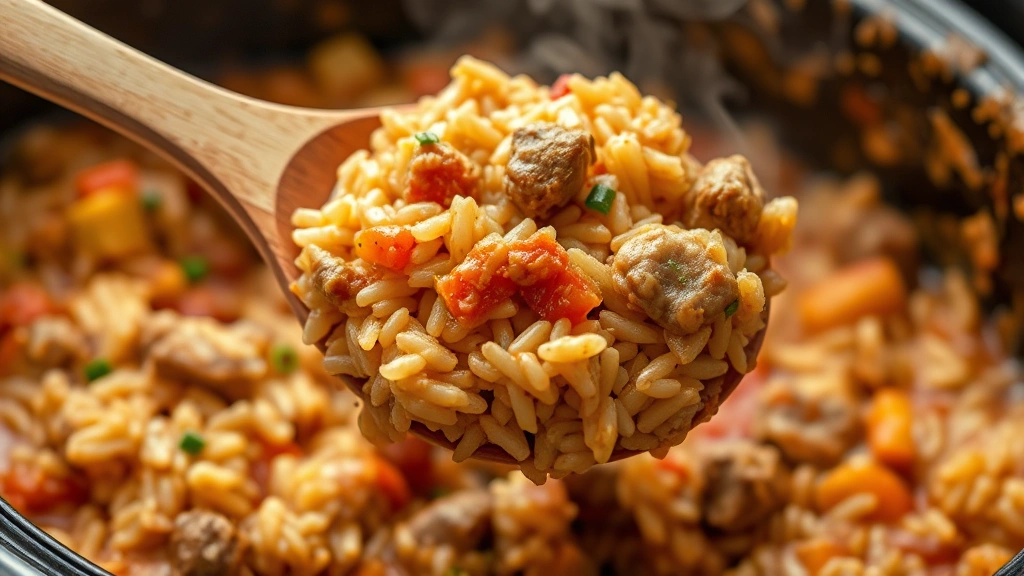
The rice cooks directly in the broth, absorbing all those delicious juices and spices. This is different from some slow cooker recipes where you cook the rice separately. Here, everything happens in one pot, which means less cleanup and more flavor. For instance, the rice grains become slightly plump and tender while still maintaining their structure—exactly what you want in authentic jambalaya.
Ingredient Tips & Substitutions
Start with quality andouille sausage if you can find it—this smoked Cajun sausage is really the star of the show. If your local grocery store doesn’t carry it, ask the butcher counter or check specialty markets. However, if you absolutely can’t find andouille, smoked kielbasa works as a decent substitute, though the flavor will be slightly different.
For the chicken, I recommend using bone-in, skin-on thighs rather than breasts. Thighs stay moist and tender during the long cooking time, while breasts can dry out. They also contribute more flavor to the broth. Meanwhile, if you’re watching calories, boneless skinless breasts work too—just add an extra 15 minutes to the cook time to ensure they’re fully cooked.
The spice blend is crucial. Cayenne pepper, paprika, and dried thyme create that authentic Cajun heat and earthiness. Don’t skip the hot sauce—a dash of your favorite brand adds brightness and complexity. Additionally, fresh garlic and onions are non-negotiable; they’re what give jambalaya its soul.
Regarding the rice, use long-grain white rice for traditional jambalaya. Brown rice changes the texture significantly and requires different liquid ratios. The stock should be chicken broth—either homemade or quality store-bought. I prefer low-sodium so I can control the seasoning myself.
Serving Suggestions & Pairings
Jambalaya is wonderful served with simple sides that complement rather than compete with the bold flavors. A fresh cucumber salad provides a cool, crisp contrast to the warm, spicy jambalaya. The acidity and crunch work beautifully alongside the rich, savory main dish.
For a more traditional approach, serve with crusty cornbread or garlic bread to soak up every last bit of that amazing broth. A simple green salad with a tangy vinaigrette also works wonderfully. Meanwhile, if you want something heartier, try pairing jambalaya with a Mexican corn salad for a fun fusion twist.
For beverages, iced tea is the classic choice—either sweet or unsweet, depending on your preference. Cold beer pairs nicely too, particularly lighter lagers that won’t overpower the dish. Hot sauce lovers should definitely have bottles on the table; everyone will want to customize their heat level.
Storage & Reheating
Jambalaya keeps beautifully in the refrigerator for up to 4 days in an airtight container. The flavors actually deepen overnight, making leftovers even better than the first serving. To reheat, add a splash of chicken broth to restore moisture, then warm gently on the stovetop over medium heat, stirring occasionally.
You can also freeze jambalaya for up to 3 months. Transfer cooled jambalaya to freezer-safe containers, leaving a little headspace for expansion. When you’re ready to use it, thaw overnight in the refrigerator, then reheat as described above. However, note that the rice texture changes slightly when frozen and thawed—it becomes softer—but the flavor remains excellent.
For meal prep, this recipe is a game-changer. Make a big batch on Sunday, portion it into containers, and you have lunch or dinner ready for most of the week. Additionally, jambalaya freezes and reheats so well that it’s perfect for busy families or anyone looking to simplify their cooking routine.
Tips for Perfect Results Every Time
Brown the sausage and chicken before adding them to the slow cooker if you have time. This extra step creates a flavorful fond (those browned bits) that adds depth to your jambalaya. It’s not absolutely necessary, but it elevates the final dish. Simply use a skillet over medium-high heat for about 5-7 minutes until nicely browned on the outside.
Don’t skip sautéing the holy trinity of vegetables. Even though you’re using a slow cooker, spending 3-4 minutes cooking the onions, celery, and bell peppers in the same skillet (after removing the meat) helps release their flavors and creates a better foundation for your dish. This small effort makes a noticeable difference in the final result.
Stir the jambalaya once halfway through cooking to ensure even distribution of heat and seasonings. If your slow cooker has hot spots, this also prevents any part of the dish from cooking too quickly. For the last 15 minutes of cooking, if the mixture seems too wet, leave the lid off to allow some liquid to evaporate.
Taste and adjust seasoning just before serving. Slow cooking can sometimes mute spices slightly, so you might need an extra pinch of cayenne, more salt, or another dash of hot sauce. This final tasting ensures your jambalaya is perfectly seasoned for your preferences.
If you’re interested in other slow cooker meals, check out this best slow cooker soup recipe for another hands-off approach to delicious comfort food. Similarly, a taco rice recipe offers another one-pot meal that’s full of flavor.
For a lighter meal option, the tasty southwest salad recipe brings similar bold flavors in a fresh format. These recipes share jambalaya’s love of spice and robust seasoning while offering different textures and presentations.
Want to explore more Cajun-inspired cooking? Food blogs like Serious Eats have incredible resources on Louisiana cuisine. Additionally, Bon Appétit regularly features regional American dishes that celebrate authentic flavors. New York Times Cooking also has wonderful variations on classic recipes worth exploring.
This crockpot jambalaya recipe has become a weeknight staple in my house because it delivers big flavors with minimal effort. The slow cooker does all the work while you go about your day, and dinner is ready when you need it. I hope it becomes a favorite in your kitchen too!
Ingredients
- 2 tablespoons olive oil
- 1 pound boneless, skinless chicken thighs, cut into bite-sized pieces
- 1 pound andouille sausage, sliced into rounds
- 1 large yellow onion, diced
- 3 celery stalks, diced
- 1 large bell pepper (red or green), diced
- 4 cloves garlic, minced
- 2 cups long-grain white rice, uncooked
- 4 cups chicken broth
- 1 can (14.5 ounces) diced tomatoes with juice
- 2 teaspoons paprika
- 1½ teaspoons cayenne pepper
- 1 teaspoon dried thyme
- 1 teaspoon dried oregano
- ½ teaspoon black pepper
- 1 teaspoon salt (adjust to taste)
- 3 dashes hot sauce (your favorite brand)
- 2 bay leaves
- Chopped fresh parsley for garnish
- Green onions for garnish
Instructions
- Heat olive oil in a large skillet over medium-high heat. Add the chicken pieces and cook for about 4-5 minutes until lightly browned on the outside (they don’t need to be fully cooked). Transfer to a plate and set aside.
- In the same skillet, brown the sliced andouille sausage for 3-4 minutes until it releases its oils and develops a light crust. Remove and set aside with the chicken.
- Add the diced onion, celery, and bell pepper to the skillet (add a bit more oil if needed) and sauté for 3-4 minutes, stirring occasionally, until the vegetables begin to soften and release their aromas.
- Stir in the minced garlic and cook for about 30 seconds until fragrant. This step is quick but important for building flavor.
- Transfer the sautéed vegetables and cooked meats to your slow cooker. Add the uncooked rice, chicken broth, diced tomatoes with juice, paprika, cayenne pepper, dried thyme, oregano, black pepper, salt, hot sauce, and bay leaves.
- Stir everything together thoroughly, making sure the rice is distributed evenly and all ingredients are well combined. The mixture should be slightly soupy.
- Cover the slow cooker and cook on low for 6 hours. Stir once halfway through cooking (around the 3-hour mark) to ensure even cooking and prevent sticking.
- About 15 minutes before serving, check if the rice is tender and has absorbed most of the liquid. If the mixture seems too wet, leave the lid off for these final minutes to allow some liquid to evaporate.
- Taste the jambalaya and adjust seasonings as needed. You might want to add more salt, cayenne pepper, or hot sauce depending on your preferences.
- Remove the bay leaves, then garnish generously with fresh chopped parsley and sliced green onions. Serve hot, with additional hot sauce on the side for those who like extra heat.
Pro Tips
Make sure to use bone-in, skin-on chicken thighs if possible—they stay incredibly moist during the long slow cooking time. However, boneless skinless thighs work fine too if that’s what you prefer or have on hand. Breasts tend to dry out, so I really don’t recommend them for this recipe.
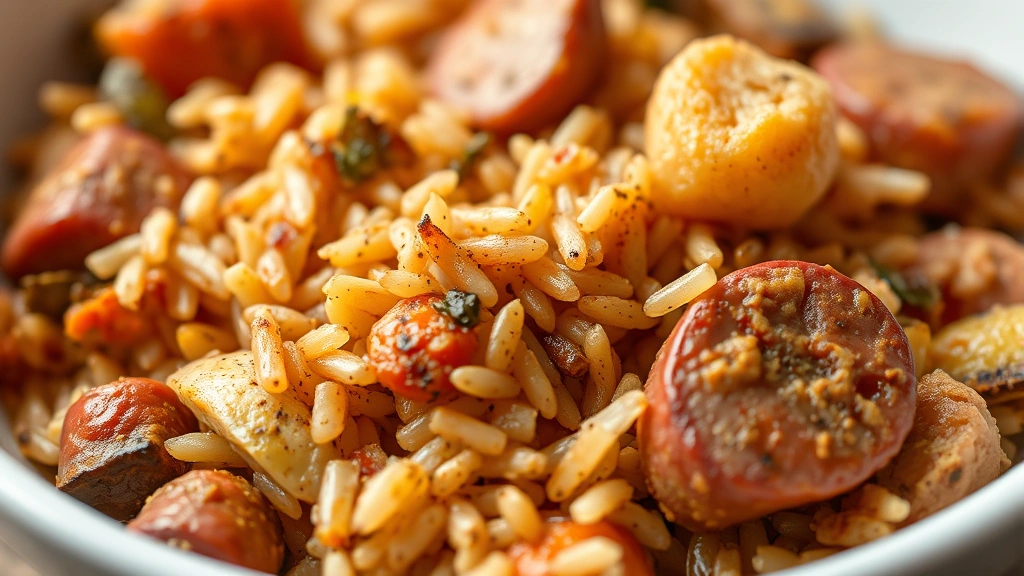
Andouille sausage is worth seeking out because it’s what gives authentic jambalaya its distinctive smoky, spicy character. If your regular grocery store doesn’t carry it, try specialty markets, Cajun food suppliers, or order online. The difference it makes is absolutely worth the effort.
Don’t skip the sautéing step at the beginning. I know it seems like extra work when you’re using a slow cooker, but browning the meat and vegetables creates deeper, more complex flavors. The Maillard reaction that happens during browning adds a richness that you simply can’t get by throwing everything in raw.
The rice cooks directly in the broth in this recipe, which is different from some slow cooker versions. This method is more authentic and allows the rice to absorb all those delicious flavors. The key is using the right amount of liquid—too much and you get mushy rice, too little and it’s crunchy. The 4 cups broth to 2 cups rice ratio works perfectly.
Stir once halfway through cooking to ensure even distribution of heat and seasonings. Some slow cookers have hot spots, and stirring helps prevent any part of the dish from cooking too quickly or unevenly.
If you find your jambalaya is too soupy near the end of cooking, simply leave the lid off for the final 15-20 minutes. This allows excess moisture to evaporate and gives you the perfect consistency. Conversely, if it seems too thick, add a splash of broth and stir.
Storage is simple: keep leftover jambalaya in an airtight container in the refrigerator for up to 4 days. The flavors actually improve as they sit, making day-two jambalaya even better than the first serving. To reheat, add a little chicken broth and warm gently on the stovetop over medium heat.
Freezing works wonderfully too. Transfer cooled jambalaya to freezer-safe containers and freeze for up to 3 months. Thaw overnight in the refrigerator before reheating. The rice texture softens slightly after freezing, but the flavor remains fantastic.
For meal prep, this recipe is incredibly practical. Make a big batch on Sunday and portion it into containers for the week. You’ll have flavorful, satisfying meals ready to go, which is perfect for busy families or anyone trying to eat healthier by planning ahead.
Feel free to customize the vegetables based on what you have on hand. Diced zucchini, green beans, or corn all work nicely in jambalaya. Just keep the holy trinity (onions, celery, bell pepper) as your base and add other veggies as you like.