
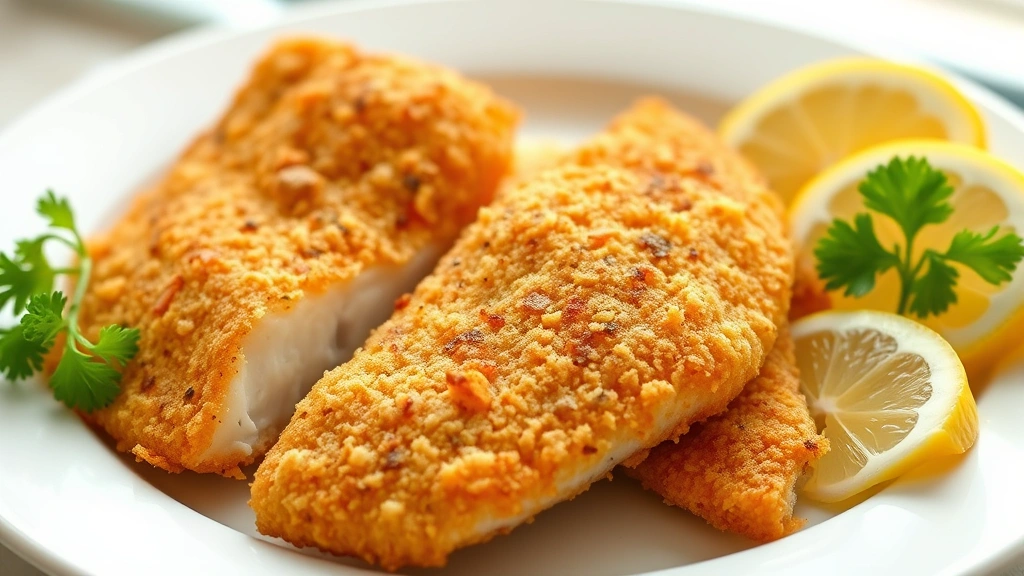
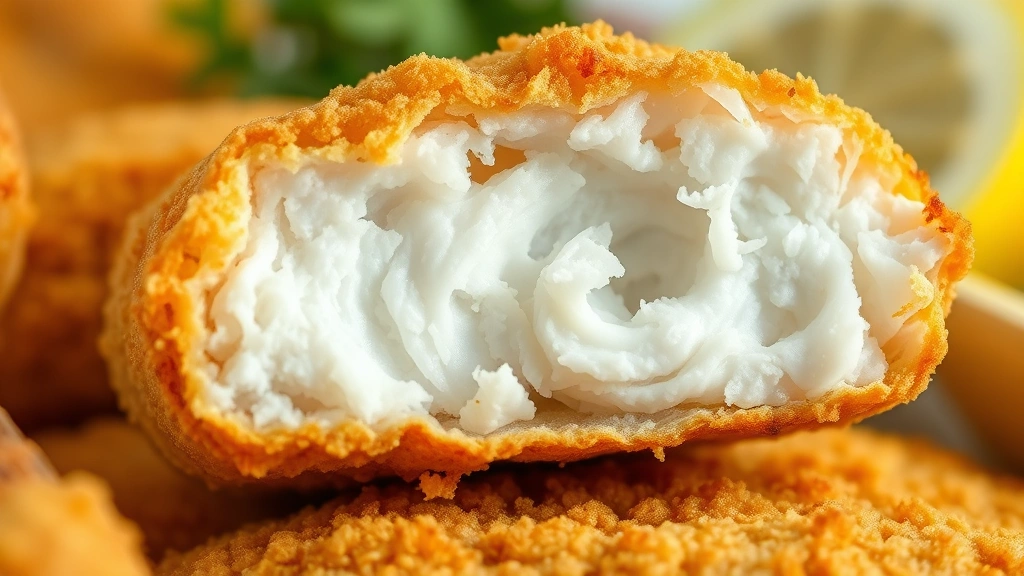
There’s something absolutely magical about a perfectly breaded fish fillet—crispy on the outside, tender and flaky on the inside, and ready in just minutes. This easy breaded fish recipe is my go-to weeknight dinner that tastes like it came straight from your favorite seafood restaurant, but honestly, it’s so simple you’ll wonder why you haven’t been making it all along.
I grew up watching my grandmother bread fish in her tiny kitchen, and she taught me the secret: it’s all about the technique, not complicated ingredients. The beauty of this recipe is that it works with virtually any white fish—whether you’re using cod, tilapia, halibut, or flounder. What matters most is that you follow the proper breading method and don’t skip any steps, because each one builds on the last to create that irresistible golden crust.
What I love most about this breaded fish recipe is how versatile it is. Serve it with easy pickled red onions for a fresh, tangy contrast, or pair it with creamy alfredo sauce for something more indulgent. You could even create a delicious fish sandwich or serve it alongside chickpea salad for a lighter meal. The possibilities are endless, and that’s what makes this recipe such a staple in my kitchen.
One thing I always tell people is that the key to perfectly breaded fish every single time is investing in a good quality fish. Visit your local fish market if you can—the fishmonger can recommend the best options and often will skin and debone the fillets for you. Fresh fish makes all the difference in the final result, and it’s worth the extra trip.
The breading technique is truly where the magic happens. We’re using a three-step process: flour, beaten eggs, and seasoned breadcrumbs. This creates multiple layers of texture and flavor that you simply cannot achieve any other way. The flour helps the egg adhere properly, the egg acts as your binding agent, and the breadcrumbs create that gorgeous golden exterior. When you fry the fish in hot oil, the outside sets immediately while the inside stays moist and delicate—it’s pure perfection.
I recommend using panko breadcrumbs for this recipe because they’re larger and create a crunchier, more satisfying texture than regular breadcrumbs. If you want to elevate this even further, you can make your own breadcrumbs from day-old bread, which gives you even more control over the final texture. Some people like to add grated Parmesan cheese to their breadcrumb mixture, and while that’s not traditional, it does add a wonderful savory depth.
Temperature control is absolutely essential when frying breaded fish. If your oil isn’t hot enough, the fish will absorb too much oil and become greasy rather than crispy. If it’s too hot, the outside will burn before the inside cooks through. I use a cooking thermometer to maintain the oil at exactly 350°F, which is the sweet spot for perfectly fried breaded fish. This ensures the outside gets golden and crispy while the fish inside remains tender and flaky.
Another pro tip: don’t skip the resting time before breading. Let your fish fillets sit on paper towels for about fifteen minutes after you remove them from the refrigerator. This helps them dry out slightly, which means the breading will stick better and won’t slide off during cooking. Moisture is the enemy of good breading, so this step is non-negotiable.
For those who prefer a lighter cooking method, you can absolutely bake this breaded fish instead of frying it. Simply spray your breaded fillets lightly with cooking oil and bake them at 400°F for about twelve to fifteen minutes until the coating is golden and the fish flakes easily. It won’t be quite as crispy as the fried version, but it’s still delicious and much healthier.
Serving suggestions are truly endless with this recipe. A squeeze of fresh lemon juice brightens everything up beautifully, or you could serve it with tartar sauce for that classic fish and chips experience. Creamy pasta makes an elegant side dish, or keep it simple with roasted vegetables and rice. This is the kind of recipe that adapts to whatever you’re in the mood for.
For more inspiration on coating and frying techniques, check out Serious Eats’ guide to fried foods, which has excellent information about oil temperatures and frying methods. You might also enjoy Bon Appétit’s seafood collection for more fish recipe ideas, or New York Times Cooking for additional breading inspiration.
This easy breaded fish recipe has been a favorite in my kitchen for years, and I’m so excited to share it with you. It’s the kind of recipe that makes you feel like a professional chef, but requires absolutely no special skills or fancy equipment. Once you master this technique, you’ll be making it again and again—it’s that good, that easy, and that delicious.
Ingredients
- 4 white fish fillets (cod, tilapia, or halibut), about 6 ounces each
- 1 cup all-purpose flour
- 2 large eggs
- 2 tablespoons milk or water
- 1.5 cups panko breadcrumbs
- 1 teaspoon salt
- 1/2 teaspoon black pepper
- 1/2 teaspoon garlic powder
- 1/2 teaspoon paprika
- Oil for frying (vegetable or canola oil)
- Lemon wedges for serving
- Fresh parsley for garnish (optional)
Instructions
- Remove fish fillets from refrigerator and place them on paper towels. Pat dry thoroughly on both sides, then let them rest for about 15 minutes to remove excess moisture. This step is crucial for proper breading adhesion.
- While the fish is resting, set up your breading station with three shallow bowls. In the first bowl, combine flour with 1/4 teaspoon salt and 1/4 teaspoon black pepper. In the second bowl, whisk together eggs and milk until well combined. In the third bowl, mix panko breadcrumbs with remaining salt, pepper, garlic powder, and paprika.
- Fill a large skillet or Dutch oven with oil to a depth of about 2 inches. Heat the oil over medium-high heat to 350°F, using a cooking thermometer to monitor the temperature accurately. This temperature is essential for achieving a golden crust without burning.
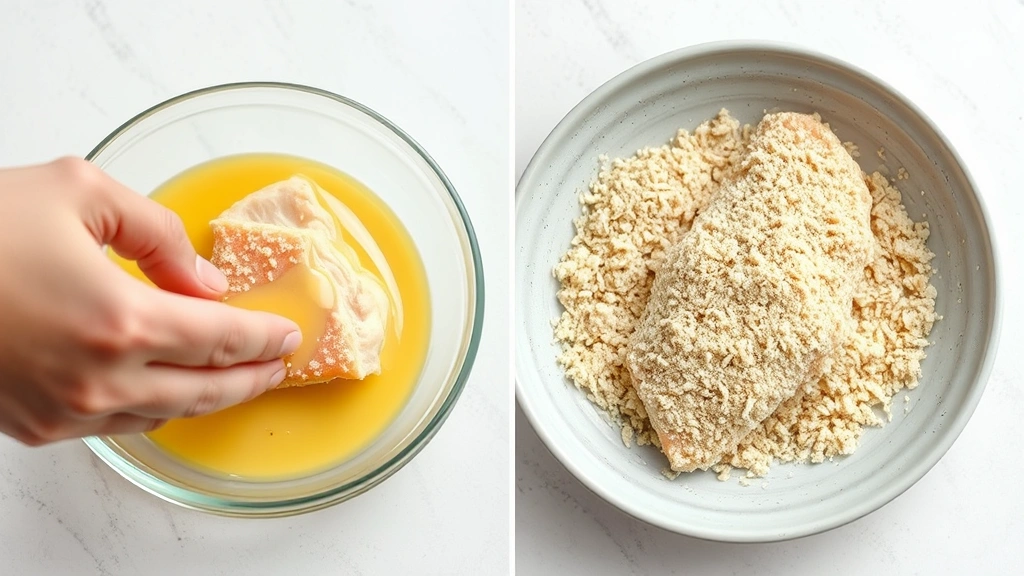
- Once the oil reaches temperature, take the first fish fillet and coat it completely in the flour mixture, shaking off any excess. The flour should create a thin, even layer covering all sides.
- Immediately transfer the floured fillet to the egg mixture and turn it gently to coat both sides completely. Let any excess egg drip back into the bowl—you want a light coating, not a thick layer.
- Transfer the egg-coated fillet to the breadcrumb mixture and press gently so the breadcrumbs adhere evenly to all surfaces. Make sure the entire fillet is covered with breadcrumbs, then place it on a clean plate. Repeat this process with the remaining three fillets.
- Carefully place the first breaded fillet into the hot oil, laying it away from you to avoid splatters. Maintain the oil temperature at 350°F—adjust your heat if necessary. Fry for 3 to 4 minutes until the coating is golden brown on the first side.
- Carefully flip the fillet using a spatula or slotted spoon and fry for another 2 to 3 minutes until the second side is equally golden brown and the fish flakes easily when tested with a fork.
- Using a slotted spoon, transfer the cooked fillet to a plate lined with paper towels to drain excess oil. Repeat the cooking process with the remaining three fillets, maintaining the oil temperature throughout.
- Once all fillets are cooked, transfer them to a serving platter, garnish with fresh parsley if desired, and serve immediately with lemon wedges and your choice of sauce or side dishes.
Pro Tips
Panko breadcrumbs are strongly recommended over regular breadcrumbs because they’re larger and create a superior texture. You can find panko in most supermarkets in the baking aisle, and it’s worth seeking out for the improved crunch factor.
Don’t skip the resting time for the fish fillets. This allows excess moisture to evaporate, which helps the breading stick properly and prevents it from sliding off during cooking. Pat them as dry as possible with paper towels before this resting period.
Oil temperature is critical and cannot be overemphasized. Use an instant-read cooking thermometer to maintain exactly 350°F throughout the cooking process. Too-cool oil results in greasy, soggy fish, while too-hot oil burns the exterior before the interior cooks through.
For a lighter version, you can bake the breaded fish instead of frying. Spray lightly with cooking oil and bake at 400°F for twelve to fifteen minutes until golden. This method is healthier but produces a less crispy exterior.
The three-step breading process is non-negotiable. Each step serves a specific purpose: flour creates a foundation, egg acts as an adhesive, and breadcrumbs create the final texture. Never skip any step or combine them.
Fresh lemon juice squeezed over the finished fish brightens the flavors beautifully. Keep lemon wedges on hand at serving time for this purpose.
Leftover breaded fish can be reheated in a 350°F oven for about five minutes, though it’s best enjoyed immediately after cooking while the coating is at peak crispiness.
This recipe adapts beautifully to different seasonings. Try adding Old Bay seasoning, cayenne pepper, or dried herbs to your breadcrumb mixture for flavor variations.
Serve with tartar sauce, cocktail sauce, or a simple aioli made from mayonnaise and garlic for dipping.