
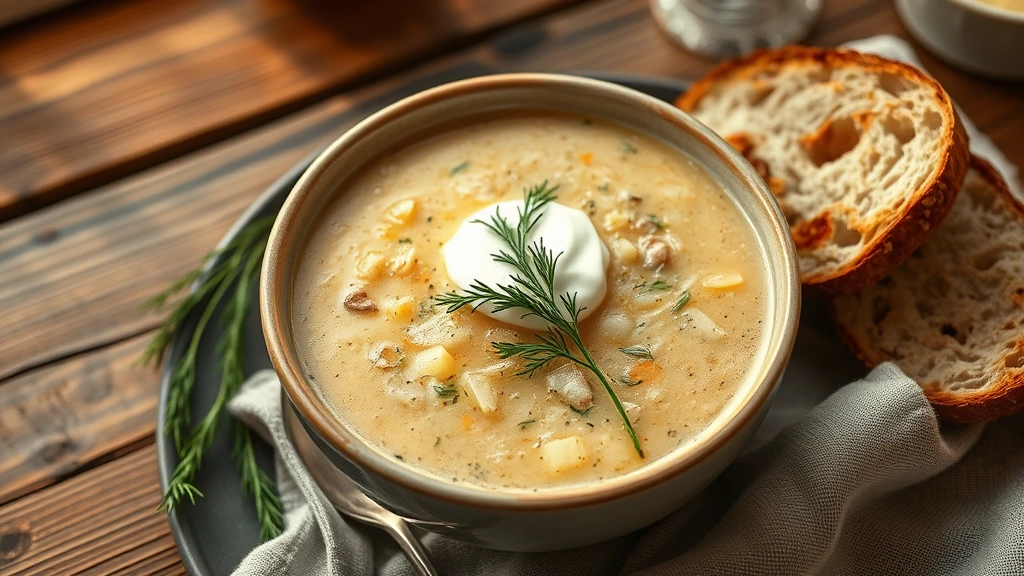
Kapusta is a beloved Eastern European dish that celebrates the humble cabbage in the most delicious way possible. This traditional recipe has been passed down through generations, and for good reason—it’s comforting, flavorful, and comes together faster than you’d expect. Whether you’re looking for a cozy weeknight dinner or want to explore authentic European cuisine, this kapusta recipe delivers restaurant-quality results in your own kitchen.
What makes kapusta so special is its simplicity. At its core, it’s cabbage slowly cooked with aromatic ingredients until it becomes tender and deeply flavorful. The beauty of this dish lies in the caramelization of the vegetables and the development of complex flavors through patient cooking. Unlike some elaborate recipes, kapusta rewards you with minimal effort but maximum satisfaction.
I first learned to make kapusta from my grandmother, who insisted that the key was using quality ingredients and not rushing the process. While this recipe is faster than her traditional version, it maintains all the authentic flavors you’d expect. The combination of cabbage, tomatoes, and warm spices creates a dish that’s simultaneously hearty and elegant.
This kapusta recipe is incredibly versatile. Serve it as a main course with crusty bread and sour cream, alongside roasted meats, or even as a vegetarian centerpiece. You can also pair it with other traditional dishes—try it with quick tasty bacon carbonara for an eclectic dinner party, or enjoy it with best pickled red onion for added brightness.
The beauty of kapusta is that it actually improves after a day or two, making it perfect for meal prep. The flavors deepen and meld together beautifully, so don’t hesitate to make a double batch. This recipe serves 6-8 people as a side dish or 4-6 as a main course, making it ideal for family dinners or entertaining.
For those interested in exploring more cabbage-forward dishes, check out this best chickpea salad recipe which offers a fresh, raw alternative. You might also enjoy exploring delicious heavy cream pasta for another comfort food option.
According to food historians at Serious Eats, kapusta has roots in multiple Eastern European cuisines, with variations found throughout Poland, Ukraine, and Russia. Each region has its own take, but the fundamental technique remains consistent. The New York Times Cooking section has excellent resources on traditional cooking methods, while Bon Appétit frequently features modern interpretations of classic European dishes.
What I love most about this kapusta recipe is how it transforms simple ingredients into something truly special. The cabbage becomes silky and sweet, the tomatoes create a rich base, and the spices add warmth and depth. It’s the kind of dish that fills your home with an amazing aroma and brings people together at the table.
Ingredients
- 3 tablespoons unsalted butter
- 2 tablespoons olive oil
- 1 large yellow onion, thinly sliced
- 4 cloves garlic, minced
- 1 medium head green cabbage (about 2 pounds), thinly sliced
- 1 can (28 ounces) crushed tomatoes
- 1 can (6 ounces) tomato paste
- 2 cups vegetable or chicken broth
- 2 tablespoons apple cider vinegar or red wine vinegar
- 1 tablespoon sugar or honey
- 2 bay leaves
- 1 teaspoon caraway seeds
- 1 teaspoon paprika
- ½ teaspoon black pepper
- 1 teaspoon kosher salt, plus more to taste
- ¼ teaspoon cayenne pepper (optional)
- Fresh dill for garnish
- Sour cream for serving
Instructions
- Heat the butter and olive oil in a large, heavy-bottomed pot or Dutch oven over medium heat until the butter is foaming and fragrant, about 1 minute.
- Add the sliced onion and cook, stirring occasionally, until it becomes soft and translucent, approximately 5-7 minutes. Don’t rush this step, as the caramelization of the onions is crucial for building flavor.
- Stir in the minced garlic and cook for another 1-2 minutes until fragrant, being careful not to let it burn.
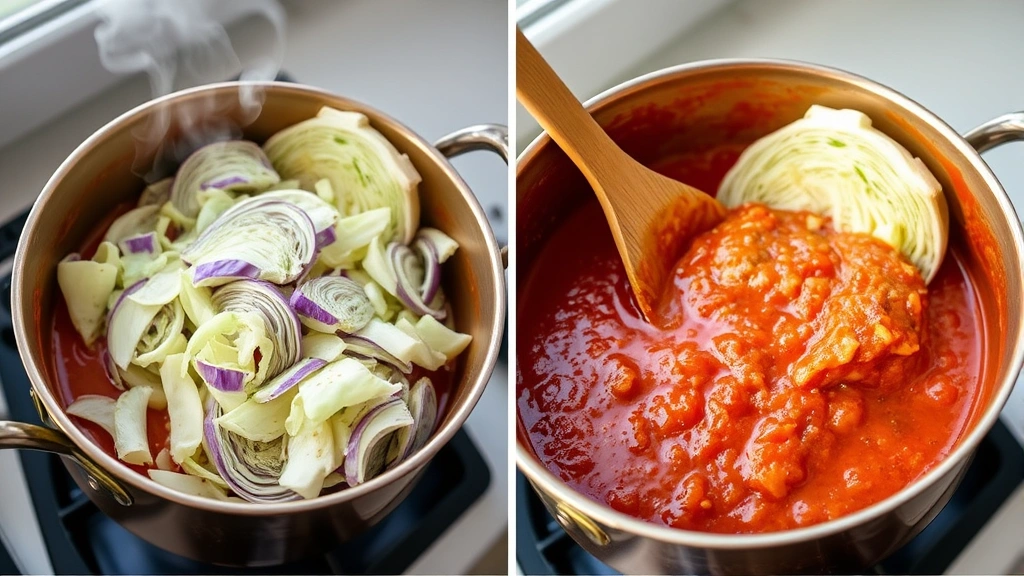
- Add the sliced cabbage in batches, stirring well after each addition. The cabbage will initially seem like too much, but it will wilt significantly as it cooks. Continue adding until all the cabbage is in the pot.
- Pour in the crushed tomatoes, tomato paste, and broth. Stir well to combine all ingredients thoroughly, breaking up any clumps of tomato paste.
- Add the apple cider vinegar, sugar, bay leaves, caraway seeds, paprika, black pepper, salt, and cayenne pepper if using. Stir everything together until well combined.
- Bring the mixture to a gentle simmer over medium heat, then reduce the heat to medium-low to maintain a steady, gentle simmer.
- Cook uncovered for 35-40 minutes, stirring occasionally to ensure even cooking and prevent sticking on the bottom. The kapusta is ready when the cabbage is very tender and the flavors have melded together.
- Taste and adjust seasonings as needed, adding more salt, vinegar, or sugar depending on your preference and the acidity level.
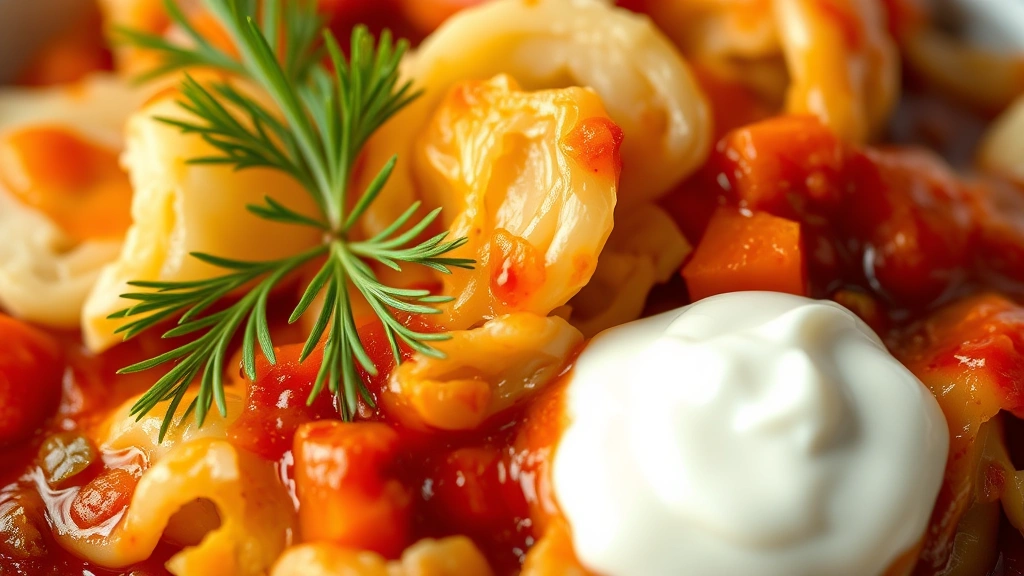
- Remove the bay leaves before serving. Garnish with fresh dill and serve hot with a dollop of sour cream on the side.
- Store leftovers in an airtight container in the refrigerator for up to 5 days. The flavors actually improve after a day, making this dish perfect for meal prep.
Pro Tips
- Cabbage Selection: Use a firm, heavy head of green cabbage. You want one that feels dense when you pick it up, which indicates freshness and quality. Red cabbage can be substituted for a different flavor profile and stunning color, though it may require slightly longer cooking time.
- Caraway Seeds: These are essential to authentic kapusta and provide a distinctive warm, slightly earthy flavor. Don’t skip them, but if you absolutely cannot find them, fennel seeds are a reasonable substitute, though the flavor will be slightly different.
- Vinegar Variations: Apple cider vinegar provides a subtle sweetness that complements the dish beautifully, but you can use red wine vinegar, white vinegar, or even fresh lemon juice depending on what you have available.
- Cooking Time Flexibility: While this recipe is designed to be faster than traditional kapusta, you can simmer it for up to 90 minutes if you prefer a softer, more melded flavor profile. The longer it cooks, the more the flavors develop and deepen.
- Make-Ahead Instructions: Kapusta is one of those wonderful dishes that tastes even better the next day. You can make it up to 3 days in advance and simply reheat gently before serving. The flavors continue to develop as it sits.
- Serving Suggestions: Serve kapusta with crusty rye or sourdough bread for soaking up the delicious sauce. It pairs wonderfully with roasted chicken, pork, or beef. For a vegetarian main course, serve with boiled potatoes or alongside the best heavy cream alfredo sauce recipe over egg noodles.
- Sour Cream is Essential: Don’t skip the sour cream garnish—it provides a cooling, tangy contrast that elevates the entire dish and is traditional in Eastern European cuisine.
- Dietary Modifications: This recipe is naturally vegetarian and can easily be made vegan by substituting olive oil for butter and using vegetable broth. It’s also naturally gluten-free.
- Scaling the Recipe: This recipe doubles beautifully if you’re feeding a crowd. Simply multiply all ingredients and increase the cooking time by 10-15 minutes.
- Potato Addition: Some traditional recipes include diced potatoes. If you’d like to add them, include 1-2 cups of diced potatoes in step 5 along with the broth, and increase cooking time to 50-55 minutes.