
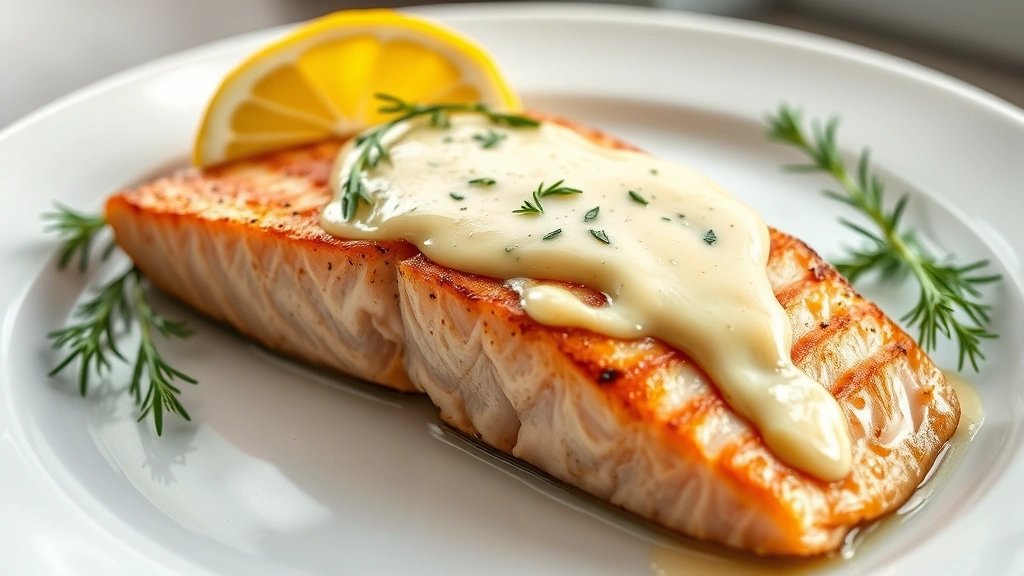
This elegant yet effortless salmon dill recipe is a game-changer for weeknight dinners that feel restaurant-quality. With just 20 minutes from start to table, you’ll have a beautifully flaked salmon fillet infused with bright, herbaceous dill that pairs perfectly with lemon and butter. The beauty of this dish lies in its simplicity—quality ingredients and proper technique are all you need.
When I first started cooking salmon at home, I was intimidated by the prospect of getting it just right. But after years of testing and refining, I’ve discovered that the secret to perfectly cooked salmon is understanding your heat source and not overthinking the process. This recipe uses a simple pan-searing method that creates a gorgeous golden exterior while keeping the inside tender and moist.
Dill is the star here, and for good reason. This delicate herb has a slightly sweet, anise-like flavor that complements salmon’s rich, oily texture beautifully. Fresh dill is absolutely worth seeking out—the frozen variety just doesn’t have the same vibrant punch. If you can’t find fresh dill at your local market, check the specialty produce section or ask your grocer when they receive fresh herb shipments.
The beauty of this recipe is its versatility. You can serve it over rice, with roasted vegetables, or alongside a crisp salad. I love pairing it with simple sides that don’t compete with the salmon’s delicate flavor. For an impressive presentation, try plating the salmon on a bed of buttered greens with lemon wedges on the side.
One of my favorite tricks is preparing the dill butter ahead of time. You can make it up to three days in advance, which means dinner prep becomes even faster. Just let it come to room temperature before using, and you’ll have a restaurant-quality meal ready in minutes. This technique also works wonderfully for other quick cooking methods where you want to add richness without fuss.
For the best results, invest in quality salmon. Look for wild-caught salmon with bright color and firm texture. If you’re buying frozen, thaw it overnight in the refrigerator rather than at room temperature to maintain the best quality. The salmon should smell like the ocean, not fishy—that’s your sign of freshness.
Pro tip: Pat your salmon completely dry before searing. This step is crucial for achieving that beautiful golden crust and prevents the fish from steaming rather than searing. I use paper towels and press gently, then season the fish right before cooking to prevent the salt from drawing out moisture.
This recipe scales beautifully whether you’re cooking for two or feeding a crowd. Simply multiply the ingredients by the number of fillets you need, and adjust cooking time slightly if your fillets are particularly thick. Thicker fillets (about 1.5 inches) will need an extra 2-3 minutes per side compared to thinner cuts.
The dill sauce comes together in seconds and adds incredible depth to the finished dish. You can adjust the lemon juice and dill according to your taste preferences—some people love extra brightness, while others prefer a more subtle herbal note. The butter is essential for richness and helps carry all those wonderful dill flavors.
I always recommend having all your ingredients prepped and at hand before you start cooking. This is especially important with such a quick recipe where there’s no time to pause and chop things mid-cooking. Having everything organized means you can focus on achieving perfect doneness on the salmon.
If you’re new to cooking fish, this recipe is an excellent starting point. The 20-minute timeframe removes pressure and allows you to pay attention to visual cues that indicate when your salmon is properly cooked. You’ll want to look for the salmon to flake easily with a fork and have an opaque appearance throughout, with just a hint of translucency near the center for optimal moisture.
For more seafood inspiration, check out Serious Eats’ fish section for additional techniques and variations. You might also love exploring Bon Appétit’s salmon recipes for other flavor combinations with this versatile fish.
This salmon dill recipe has become a staple in my kitchen because it delivers impressive results with minimal effort. Whether you’re cooking for a special someone or feeding your family on a busy weeknight, this dish proves that elegant doesn’t have to mean complicated. The combination of tender salmon, vibrant dill, and silky butter sauce creates something truly special in just 20 minutes.
Ingredients
- 2 salmon fillets, 6 ounces each, skin-on
- 3 tablespoons butter, divided
- 1/4 cup fresh dill, finely chopped
- 2 cloves garlic, minced
- Juice of 1 lemon
- 1/2 teaspoon salt
- 1/4 teaspoon black pepper
- 1/4 teaspoon red pepper flakes
- 1 tablespoon olive oil
- Lemon slices for garnish
Instructions
- Pat the salmon fillets dry with paper towels, pressing gently to remove excess moisture. This ensures a beautiful golden crust when searing.
- Season both sides of the salmon with salt, black pepper, and red pepper flakes. Let sit for 2 minutes to allow the seasonings to adhere properly.
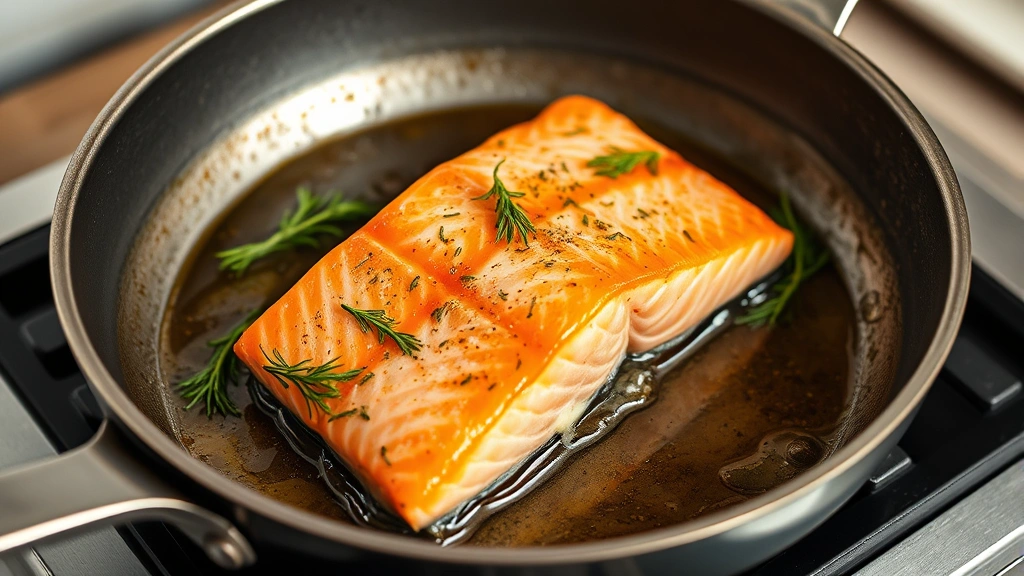
- Heat olive oil in a large skillet over medium-high heat until the oil shimmers and is almost smoking, about 2-3 minutes.
- Carefully place the salmon fillets skin-side down into the hot skillet. You should hear an immediate sizzle—this is the sound of a perfect sear.
- Cook the salmon skin-side down for 4-5 minutes without moving the fillets. This allows the skin to become crispy and protects the delicate flesh underneath.
- Gently flip the salmon using a thin spatula or fish turner, being careful to keep the fillet intact. The skin should release easily if it’s cooked enough.
- Add 1.5 tablespoons of butter to the pan around the salmon fillets. Tilt the pan to distribute the melting butter.
- Add the minced garlic to the butter and cook for 30 seconds, stirring gently. The garlic should become fragrant but not brown.
- Cook the salmon for another 3-4 minutes on the second side until it flakes easily with a fork and appears opaque throughout.
- Remove the skillet from heat and add the remaining 1.5 tablespoons of butter, allowing it to melt from the residual heat.
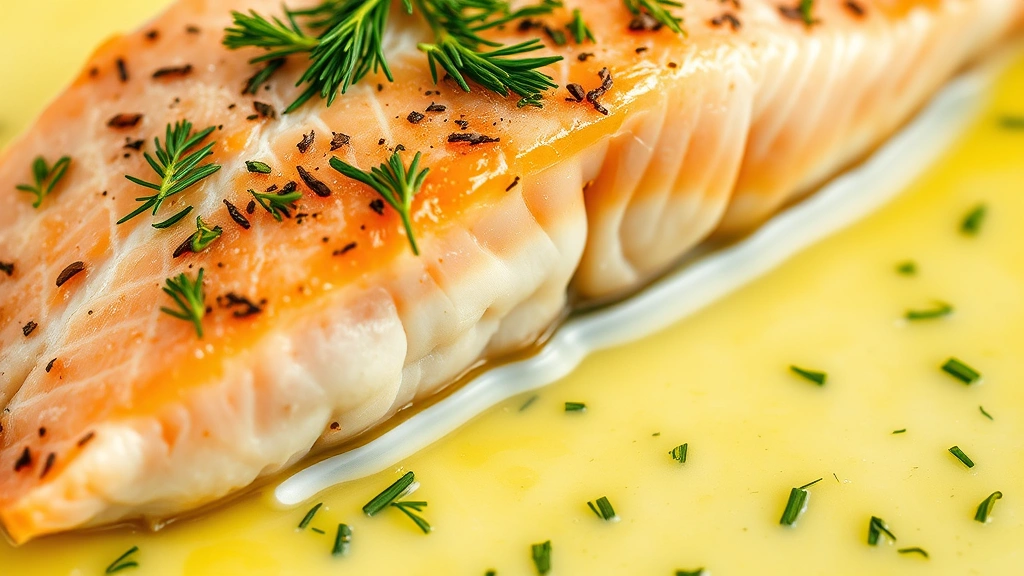
- Stir in the fresh chopped dill and lemon juice, combining gently to create a silky sauce that coats the salmon.
- Transfer the salmon fillets to serving plates and spoon the warm dill butter sauce over the top.
- Garnish with fresh lemon slices and additional dill sprigs if desired. Serve immediately while the salmon is warm and the sauce is at its most flavorful.
Pro Tips
Dill intensity can be adjusted to your preference. If you love the herb, use up to 1/3 cup fresh dill. For a more subtle approach, start with 3 tablespoons and add more to taste.
The skin-on salmon is important for this recipe. The skin protects the delicate flesh and creates a barrier between the fish and the hot pan. It also becomes wonderfully crispy and adds textural interest to the finished dish.
Timing is everything with salmon. Use visual cues rather than strict timing—the fish should flake easily when done. Overcooked salmon becomes dry and loses its appeal, so err on the side of slightly underdone in the very center.
Lemon juice can be adjusted based on your tartness preference. Some prefer the brightness of fresh lemon, while others like a more subtle citrus note. You can also substitute lime juice for a different flavor profile.
This recipe pairs beautifully with simple sides like roasted asparagus, steamed broccoli, or a light salad. The dill butter sauce is rich enough that heavy sides aren’t necessary.
Make dill butter ahead by combining softened butter with minced dill, garlic, and lemon zest. Refrigerate in a small container for up to three days, then use as needed for quick weeknight meals.
If your salmon fillets are particularly thick (over 1.5 inches), reduce heat to medium and extend cooking time by 2-3 minutes per side to ensure the center cooks through without the exterior burning.
For a vegetable-forward meal, serve over sautéed greens or roasted vegetables that complement the bright dill flavors.
Leftover salmon keeps for two days in an airtight container in the refrigerator. Reheat gently in a 300°F oven for 5-7 minutes rather than using a microwave to maintain texture and moisture.
For additional inspiration on quick fish cooking, explore New York Times Cooking for other seafood techniques.