
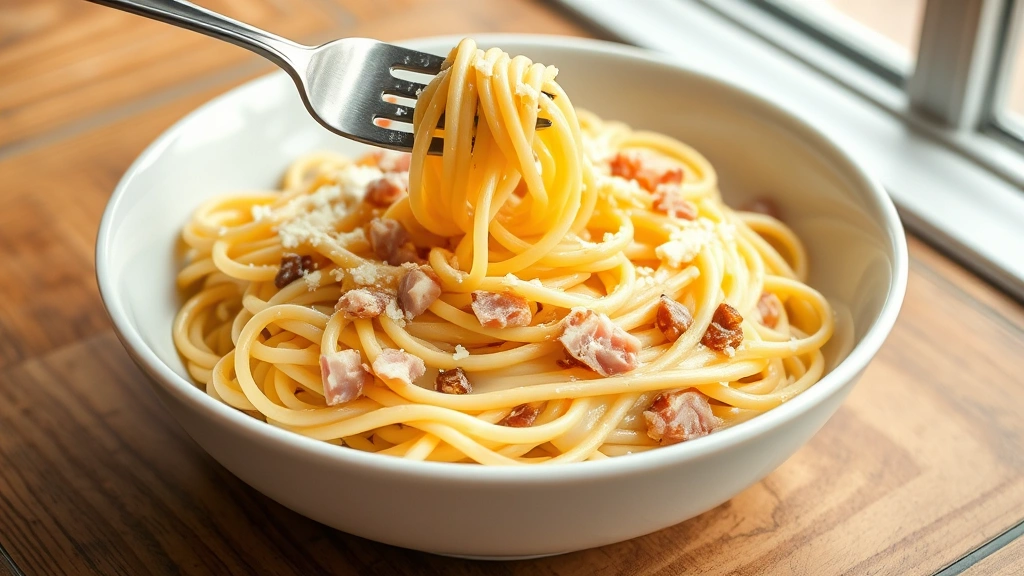
There’s something absolutely magical about a perfectly executed creamy carbonara—it’s the kind of dish that feels fancy enough for a dinner party yet simple enough for a weeknight supper. This classic Italian pasta dish has been elevated to an art form, and today I’m sharing my foolproof method for creating a restaurant-quality carbonara right in your own kitchen.
The beauty of carbonara lies in its elegant simplicity: just a few quality ingredients come together to create something truly spectacular. Unlike some of the heavier cream-based versions you might find in American restaurants, authentic carbonara relies on the emulsification of egg yolks, cheese, and pasta water to create that luxurious, silky sauce. However, this creamy carbonara recipe adds a touch of heavy cream to ensure a foolproof result that won’t break or separate—perfect for home cooks who want guaranteed success.
I’ve been making this recipe for years, and it never fails to impress. The key is understanding the science behind what makes the sauce work: the heat from the pasta cooks the eggs without scrambling them, while the starchy pasta water helps create that signature creamy texture. The guanciale (or pancetta, if you prefer) adds a smoky, salty depth that elevates the entire dish, and the Pecorino Romano cheese brings a sharp, tangy bite that balances everything beautifully.
What I love most about this creamy pasta recipe is how adaptable it is. Whether you’re cooking for two or feeding a crowd, this carbonara scales beautifully. I’ve included tips for customizing it to your taste, plus troubleshooting advice so you can achieve perfect results every single time. This is the kind of dish that will have your guests asking for the recipe, and you’ll be delighted to share how surprisingly easy it is to make.
For more inspiration on cream-based pasta sauces, you might enjoy my heavy cream Alfredo sauce recipe or my heavy cream pasta recipe. If you’re looking to add protein, my chicken Alfredo recipe is another family favorite. And don’t overlook simple sides—fresh shishito peppers or a bright chickpea salad pair beautifully with this rich pasta.
Let me walk you through creating this creamy carbonara masterpiece. I promise that once you’ve made this recipe, it will become a regular in your dinner rotation. The technique is straightforward, the ingredients are accessible, and the results are absolutely divine. Let’s get started!
Ingredients
- 1 pound spaghetti or linguine
- 8 ounces guanciale or pancetta, diced into small cubes
- 4 large egg yolks
- 1 large whole egg
- 1 cup freshly grated Pecorino Romano cheese
- ½ cup heavy cream
- 3 cloves garlic, minced
- Salt and freshly ground black pepper, to taste
- Red pepper flakes, for garnish (optional)
- Fresh parsley, chopped (optional)
- Reserved pasta water
Instructions
- Bring a large pot of salted water to a rolling boil. The water should taste like the sea—this is your only opportunity to season the pasta itself.
- While the water heats, prepare your guanciale by cutting it into small, uniform cubes about ¼-inch in size. This ensures even cooking and allows the fat to render properly.
- In a large skillet or Dutch oven over medium heat, add the diced guanciale and cook, stirring occasionally, until the edges are crispy and the fat has rendered, about 8-10 minutes. You should see the meat turn a golden brown and hear it sizzle.
- Add the minced garlic to the skillet with the rendered guanciale and stir constantly for about 1 minute until fragrant. Be careful not to burn the garlic, as it can become bitter.
- Reduce the heat to low and remove the skillet from direct heat. This is important—you’ll be adding the egg mixture soon, and low heat is crucial to prevent scrambling.
- In a medium bowl, whisk together the egg yolks, whole egg, heavy cream, and grated Pecorino Romano cheese until well combined and smooth. Season with a pinch of salt and several grinds of black pepper. The cream helps stabilize the sauce and makes it more forgiving.
- Add the spaghetti to the boiling water and cook according to package directions until al dente, usually about 9-11 minutes. Stir occasionally to prevent sticking.
- Before draining the pasta, reserve at least 1 cup of the starchy pasta cooking water in a separate container. This water is liquid gold for your sauce—the starch helps create that silky texture.
- Drain the cooked pasta thoroughly, shaking the colander to remove excess water.
- Add the hot drained pasta directly to the skillet with the guanciale and rendered fat. The heat from the pasta will gently warm the pan without overcooking the eggs.
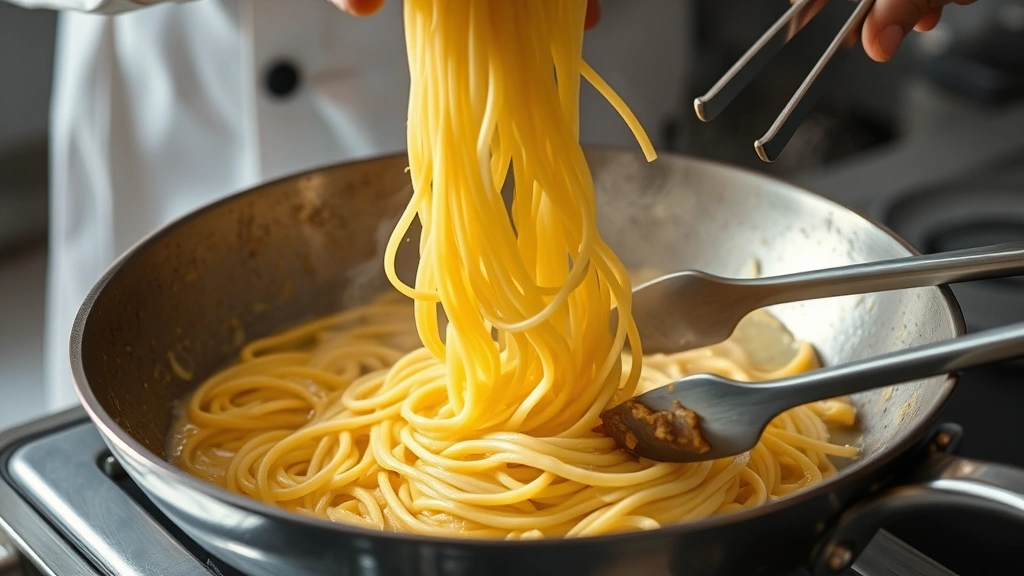
- Remove the skillet from heat and immediately pour the egg mixture over the hot pasta, tossing constantly and vigorously with tongs or two forks. Work quickly but carefully.
- As you toss, gradually add pasta water, about ¼ cup at a time, until you reach your desired consistency. The sauce should be creamy and coat each strand of pasta beautifully. You may not need all of the reserved water.
- Continue tossing for 2-3 minutes to ensure the eggs are fully incorporated and the sauce is silky smooth. The residual heat will cook the eggs without scrambling them.
- Taste and adjust seasonings with additional salt, black pepper, or red pepper flakes as desired.
- Divide the creamy carbonara among four bowls or plates, ensuring each serving gets a generous portion of the guanciale and its rendered fat.
- Garnish with additional grated Pecorino Romano cheese, fresh cracked black pepper, and fresh parsley if desired.
- Serve immediately while piping hot, as carbonara is best enjoyed right away before the sauce cools and thickens.
Pro Tips
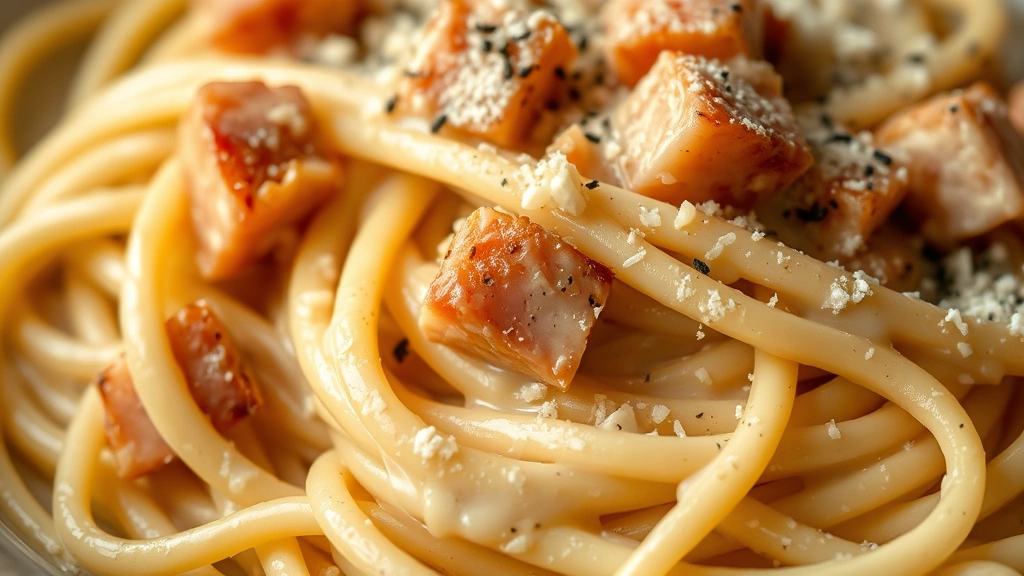
- The key to creamy carbonara success is keeping the temperature low when combining the egg mixture with the pasta. High heat will scramble the eggs, resulting in a grainy texture rather than a silky sauce.
- Guanciale is traditional and worth seeking out at specialty markets or online—it’s cured pork jowl with incomparable flavor. However, pancetta makes an excellent substitute if guanciale isn’t available.
- Never skip the pasta water! The starch in this water is essential for creating the creamy texture. Regular water won’t work the same way.
- Pecorino Romano is sharper and more traditional than Parmigiano-Reggiano, though either works. For the best flavor, always grate your cheese fresh from a block rather than using pre-grated versions.
- The heavy cream in this recipe acts as insurance—it helps prevent the sauce from breaking if the temperature gets slightly too high. Purists might argue this isn’t traditional, but it ensures delicious results every time.
- Timing is everything with carbonara. Have all ingredients prepped and ready before you start cooking the pasta. Once the pasta hits the water, you’re on a timeline.
- For a lighter version, you can reduce the heavy cream to ¼ cup and increase the pasta water accordingly. The sauce will be slightly less rich but still delicious.
- If you accidentally end up with scrambled eggs, don’t panic! Remove the pan from heat immediately, add more pasta water, and stir vigorously. The residual heat should help smooth things out.
- This recipe serves 4 as a main course or 6 as a lighter appetizer. It doesn’t scale up as easily as some pasta recipes, so it’s better to make two batches if feeding a larger crowd.
- Leftovers can be stored in the refrigerator for up to 2 days, though carbonara is truly best fresh. To reheat, add a splash of pasta water and warm gently over low heat while stirring constantly.
- Black pepper is essential here—don’t be shy with it. The pepper provides crucial flavor and aromatics that define the dish.
- For a special occasion version, add fresh peas, diced asparagus, or crispy pancetta bits cooked separately.